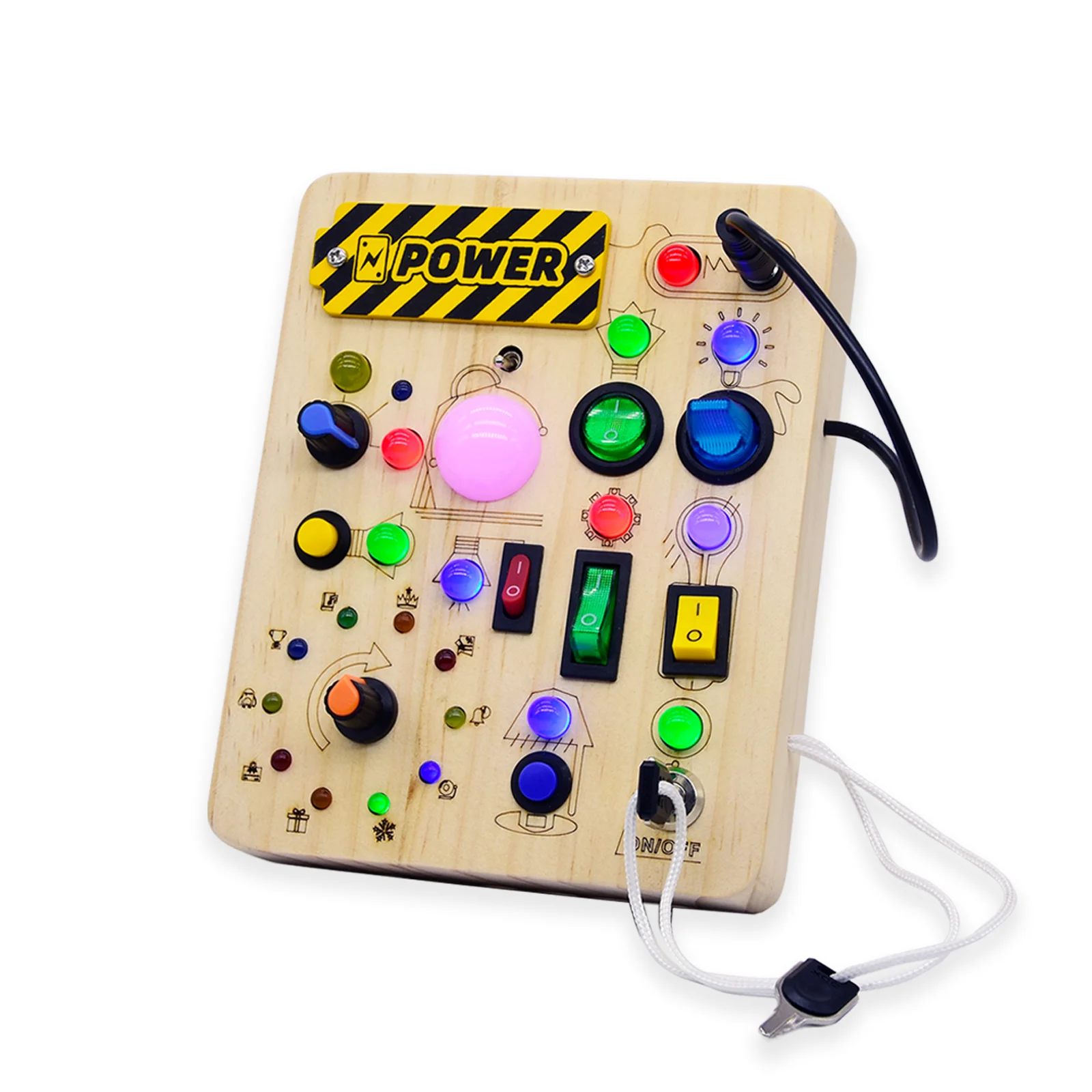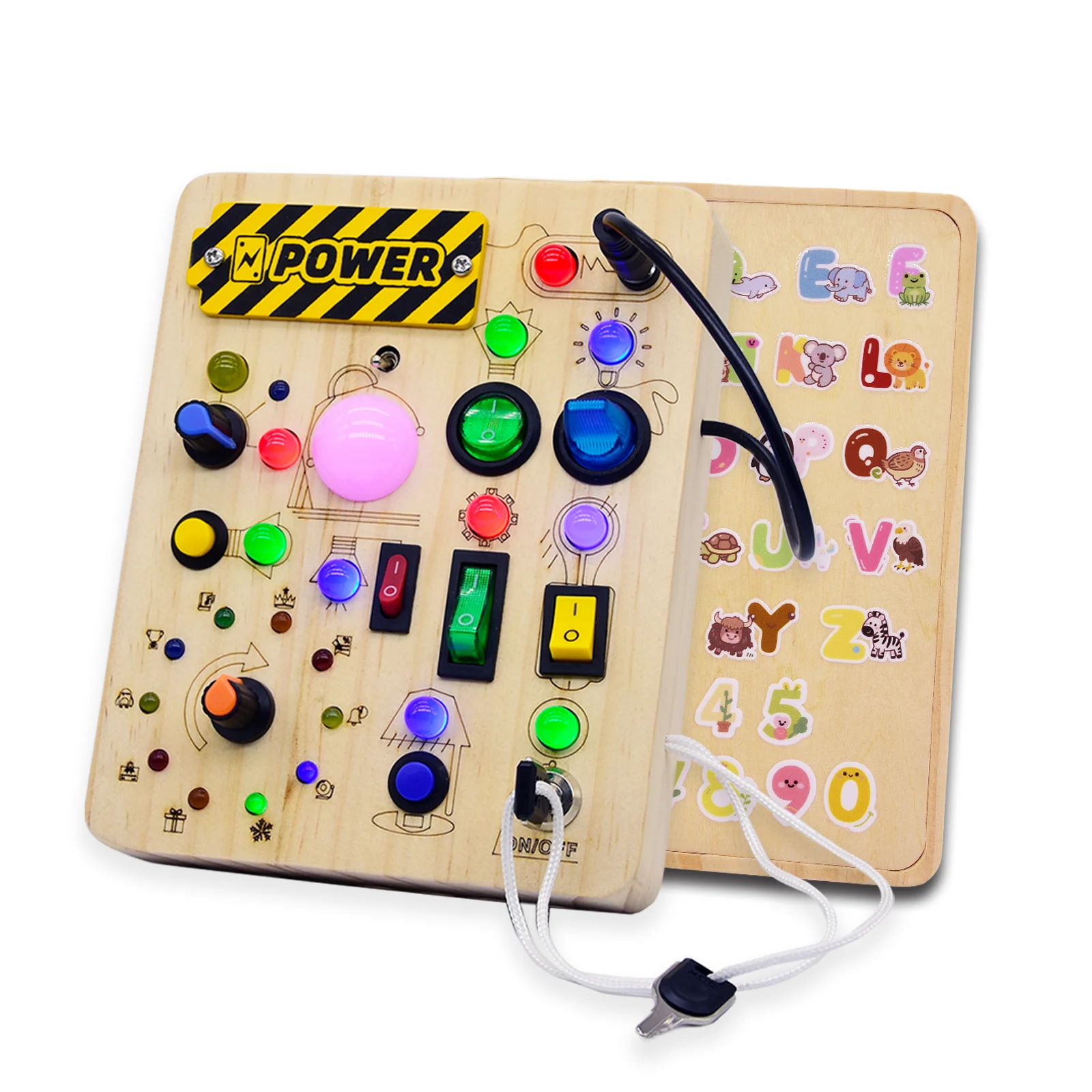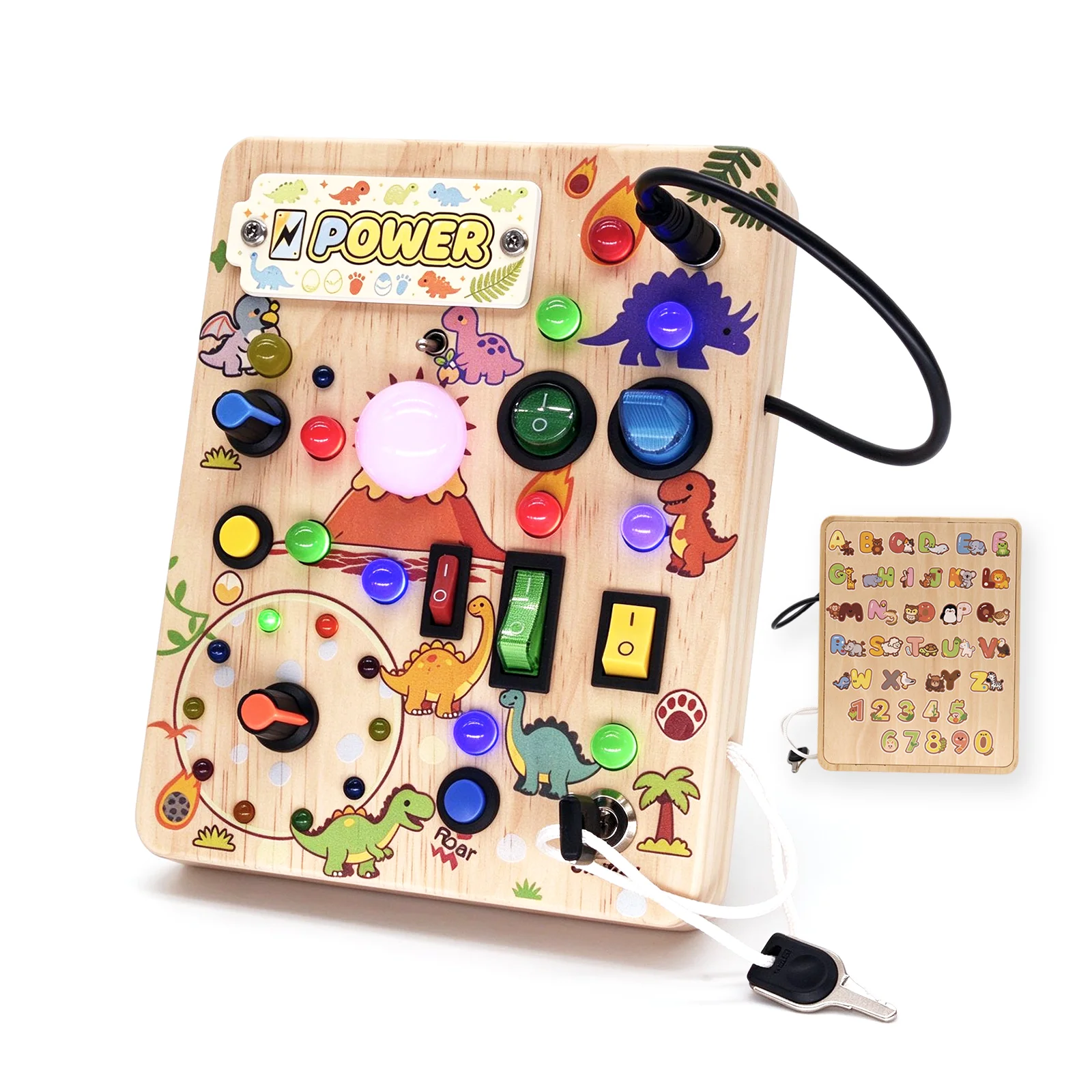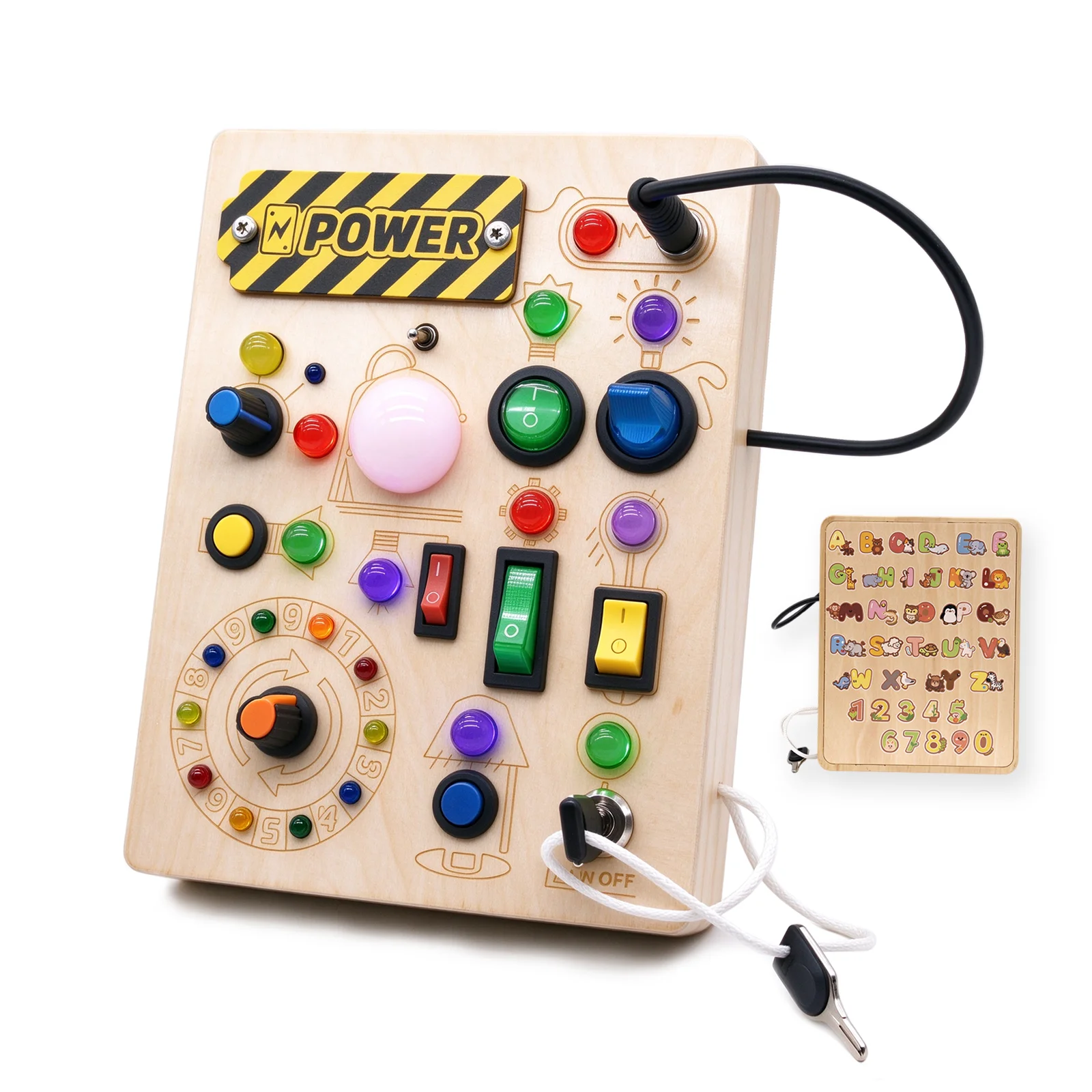
Short answer: a busy board brand can be started on a first order of 100 units and roughly $2,500–5,000 of working capital, and most of that cash leaves your account before you sell the first board. Sourcing is the easy part. We run the line in Wenzhou, so read the rest knowing the factory is the one telling you the factory work is not the hard bit. What decides whether this becomes a business or an expensive hobby is whether you can build something an adult can tell apart from the twenty other busy boards on the same shelf, and whether you can produce the photos, video and copy that actually move it.
Busy boards are a crowded category. That is not a reason to avoid them. Crowded usually means the demand is real; it also means the lazy version of this plan, buy a stock board, list it, hope, rarely covers its own costs.
What follows is the roadmap we would hand a friend who wanted to start a brand rather than simply buy wholesale: whether the category is worth entering, what it costs stage by stage, how many to order first, the unglamorous infrastructure, pricing by channel, and the mistakes we watch founders repeat.
Quick facts
- MOQ: 100 pcs per model from the catalogue · 200 pcs for your own artwork or engraving · 500–1,000 pcs for full OEM
- Samples: 1–10 pcs, 3–7 days, cost credited back against the bulk order
- Lead time: 15–25 days after deposit and artwork approval
- Certifications: CE / CPC / ST reports on current models (tested to EN 71 and ASTM F963)
- FOB at MOQ: $8.90 Classic · $9.20 Alphabet · $9.50 Dino
- Recommended retail: $20–35
Is a busy board brand actually worth starting?
A busy board becomes a commodity the moment you decide to make it one. The board that retails at $24 and the one at $9 often sit on the same wooden platform, run the same controller, and take the same batteries. What separates them is what the founder wrapped around it.
Five places where a small brand can still pull ahead of the listing next to it:
- Design and artwork. A theme that means something to a parent, a child's name, a nursery palette, turns a generic board into a gift. Custom artwork is the change we are asked for most.
- Age positioning. A board tuned for a one-year-old and one built for a three-year-old are different products with different switch sets. Most sellers blur them into a single listing.
- Scenario. Travel, car journeys, waiting rooms, clinics, elderly care. The board barely changes; the story, photos and packaging change completely.
- Packaging as the experience. A printed box with an inner tray and a short parent guide reads as a brand.
- Content ability. If you can shoot fifteen seconds of a real toddler working a switch, you have something no factory can copy for you.
If you can honestly claim two of those five, you have a reason to start a busy board brand. If the plan is to undercut the existing listings on price alone, understand what you are walking into: you would be competing with sellers who buy ten times your volume, and price is the one lever they will always win. We would rather say that now than sell you 100 boards and let you find out.
What launching actually costs, stage by stage
Most first launches run two to four months from decision to first sale. Custom artwork, engraving, or a slow freight method can stretch that to five or six. Here is where the money goes, and roughly when.
| Stage | Roughly when | Cash out (typical) | What it covers |
|---|---|---|---|
| Samples | Week 1–2 | $60–150 | 1–10 pcs plus courier; cost credited against the bulk order |
| Custom artwork or plates | Week 1–4 | $0–300 | Design and engraving or print plates for your pattern |
| Deposit (30%) | After sample approval | ~$270 on 100 pcs | Books the production slot |
| Balance before shipment | 15–25 days later | ~$620 on 100 pcs | The rest of the FOB value |
| Freight and duties | After production | $300–900 | Sea cheaper and slower, air faster and dearer; depends on port |
| Certification, if the artwork is new | Runs in parallel | $0–1,200 | Existing reports reuse free; a new model needs testing |
| Photos, video, copy | Before launch | $300–1,200 | The line item founders under-budget most often |
On 100 pieces of an $8.90 board, the goods are about $890 FOB. Add the landing costs, freight, duties, port and last-mile fees, and you are typically at $1,600–2,800 landed, depending on how you ship. Then the brand layer sits on top: a trademark, a basic store, and content. A realistic all-in budget to reach a first sale is $2,500–5,000, and it is the brand layer, not the boards, that most people get wrong. If you want the cost structure behind that $8.90 before you accept any quote, our busy board wholesale price guide breaks it into blocks.
Three costs nobody budgets for.
Certification. If your model already has current CE / CPC / ST reports, reusing them is free, which is a real argument for starting from a catalogue model rather than a blank sheet. Change the electronics or design a new board and testing becomes a fresh expense and a fresh delay before you can sell at all. Ask what your supplier's reports actually cover: the safety mark on the box and the test report behind it are two different documents, as our guide to busy board safety certifications explains.
Freight and the fees around it. Founders budget the freight and forget the duties, port charges, last-mile delivery and customs broker. On a small first order those extras can rival the freight itself. If you expect to move a full container later, read how importing busy boards from China before you sign anything.
Content. A listing with phone snapshots and a copied description sells nothing. Eight to ten clean product shots, two or three lifestyle shots, a short video, and copy written for a parent will cost between $300 and $1,200 if you buy it, or several weekends if you do not, and it is cheaper to sort out before the stock lands than after.
How big should the first order be?
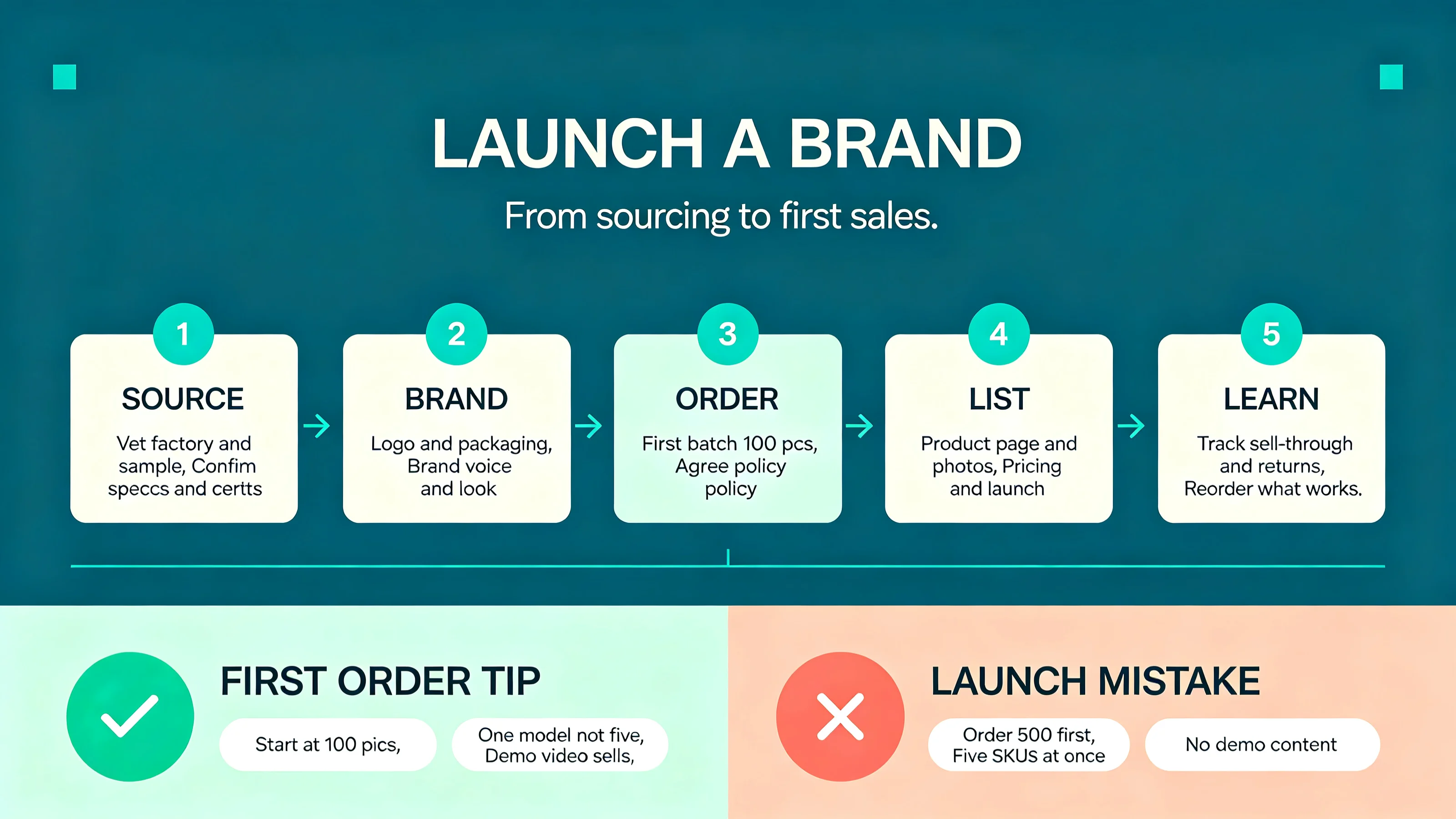
One hundred, and the reason is arithmetic rather than caution.
Run the two outcomes. Say you order 100 of the $8.90 Classic, land them at about $14 each after freight and duties, and set the retail price at $28.
If it sells: 100 boards at $28 is $2,800 in revenue, against $1,400 landed. Channel fees take a slice, call it $400 across direct and marketplace, leaving roughly $1,000 before you subtract your content. Not a fortune. But you have proven demand, you know your return rate, and you own reviews and photos to build the next order on.
If it does not sell: you are sitting on about $1,400 of boards in a spare room. It stings, you will probably move some at cost to free the cash, and you have paid for a lesson rather than an opinion.
Now run the same board at 1,000 pieces. If it sells, the unit economics are better and you have a genuine business. If it does not, you are holding $14,000 of inventory, renting storage for it, and watching a season you mistimed. The downside went from annoying to serious, and in both cases the product was still unproven.
That asymmetry is the whole argument for 100. You give up the better per-unit price in exchange for the option to walk away cheaply, and on a product nobody has bought from you yet, that is the right trade. The price curve flattens faster than founders expect, so the gap you give up is smaller than it looks. The full breakdown across quantities sits in our MOQ, pricing and lead time guide.
The boring infrastructure every busy board brand needs
Nobody enjoys this section, so most founders skip it and pay for it later.
Trademark. Register the name early, ideally before you print a single box. In the US it is first-to-file; if someone else files your name first you may be forced to rebrand after printing 1,000 boxes and collecting reviews under it. Toys typically sit in class 28 and retail services in class 35, and filings run a few hundred dollars per class, more with an attorney. File when you are reasonably sure of the name, not after the line becomes a hit.
Packaging. Decide the retail box, the barcode, the age grading, the warnings and the responsible-party details before production, because all of it is printed into the box. This is also where your brand is most visible, and a printed box with a tray and a short parent guide is the cheapest way to look like more than a reseller. If you will ship direct or through a marketplace, the carton has to survive a courier; if it goes in a container, it has to survive that too. Our packaging and shipping guide covers the specs.
Listing assets. Plan for eight to ten product photos, a few lifestyle shots, a short video and your copy. The video matters more than most founders think, because it is what turns a scroll into trust. Shoot it on the samples you already paid for, before you commit an artwork to 1,000 units you cannot change.
After-sales. Write down your return window, your warranty, and what happens when a switch fails or a battery cover goes missing, then decide up front that you will not ship batteries and say so clearly, because loose cells add a shipping classification and paperwork that costs more than the batteries ever would.
Pricing and channels: DTC, marketplace, wholesale
The retail price, $20–35, is roughly the same wherever you sell. What changes is how much of it you keep.
| Channel | Typical retail | Roughly what you keep per unit | The catch |
|---|---|---|---|
| Your own site (DTC) | $28–35 | $14–20 | You pay for every visitor; no traffic, no sales |
| Marketplace (Amazon, eBay) | $22–30 | $6–11 | Referral fee around 15%, fulfilment fees, price competition |
| Wholesale to shops | you sell at $14–16 | $4–6 | Thin margin; the buyer carries the demand risk |
Direct to consumer
The best margin and the hardest demand. You keep the retail price minus your landed cost and minus the cost of getting a stranger to buy, and that last part is where most DTC brands live or die. If video is your strength, this is where a small busy board brand can out-earn a competitor several times its size.
Marketplace
Demand comes to you, and the fee structure comes with it. Figure on a referral fee around 15%, plus fulfilment whether you handle it yourself or hand it to FBA. It is the fastest route to a first sale and the fastest route to a price war. The sourcing and fee maths for this channel are laid out in our piece on busy board Amazon FBA sourcing.
Wholesale
You sell to a shop at roughly half of retail and the shop does the selling. Margin per unit drops to a few dollars, but you move volume, you can often get paid before you ship, and the retailer absorbs the demand risk. Once you have a real product in a printed box, wholesale is frequently what finally gets you onto shelves.
Most first brands should run one channel properly for a full season before adding a second. Splitting one product across three channels usually means doing none of them well.
Three failure patterns we keep seeing
These are the ones we watch from the factory side, in rough order of how often they show up.
Everything in the first batch. A founder raises $12,000 and puts all of it into 800 boards. The boards are fine. The problem is there is nothing left for photography, the trademark, the ads, or the second order when the first sells out mid-season. Inventory you cannot sell is cash you cannot spend.
Straight onto a marketplace with no content. Listing a phone photo of a board you never shot properly, in a category with thousands of other listings, and expecting the algorithm to rescue it. Marketplaces reward conversion, conversion follows content, and content is the step the founder skipped. This is the most common way a genuinely good product dies quietly.
1,000 pieces before the artwork was validated. A custom design feels like the whole point of having a brand, so founders jump straight to a large custom run. Then the print alignment is slightly off, or the theme that looked sharp on a screen reads as cluttered on wood, and now 1,000 wrong boards exist. Do 100 first, even in your own artwork, so you can fix the plate before it multiplies. Our custom and OEM busy board guide covers what changes when the artwork is yours.
What the ones that work have in common
Three things, and none of them are glamorous.
They treat the first order as a test, not a bet. The founders who get through it order small, read the numbers honestly, and scale only what worked. They are not braver than the ones who fail; they are simply less attached to being right the first time.
They own one channel completely before chasing a second. A brand that sells well on one marketplace for a season is worth more than one spread across five. When your budget is small, depth beats breadth.
They reinvest in content and the product, not in more stock. The instinct after a good month is to double the inventory; the better move is to fix the listing, shoot better video, and add the one product customers actually asked for.
Questions buyers ask us every week
Do I need a trademark before I place my first order? Ideally yes, or at least a filed application. You do not need the registration in hand to start, but you do not want to print 1,000 boxes with a name you cannot protect. If the budget is tight, file first and order second. The filing is cheap; a forced rebrand is not.
Can I start a busy board brand with $3,000? Sometimes, if you sell direct and shoot your own content. It is tight for anything involving a custom design plus paid traffic. Below about $2,500 you are relying on skills, photography, copy and ads, that you would otherwise be paying for. That is a real advantage if you have them, and a wall if you do not.
How long until I make money? Most first brands do not profit on order one. The first 100 usually pays for itself and the learning, and profit, if there is any, shows up on the second or third order once your content and reviews are working. Anyone promising a fast return on a first order is selling you something other than a board.
Should I sell direct, on a marketplace, or wholesale? Pick the one that matches your strength. Content and patience point to direct sales. Speed and no appetite for marketing point to a marketplace. A real product in a printed box points to wholesale. Running all three at once with a single product is the most reliable way to do all three badly.
Do you sell to other brands using the same board? Yes, and we would be lying if we said otherwise. Busy boards are not an exclusive category. What you are buying from a factory is the ability to add your own artwork, packaging and story, and to do it well enough that sharing a platform stops mattering. If exclusivity is central to your model, ask for it and get it in writing. It costs more, and it should.
What we would do in your position
If it were our money and our first brand, this is the order we would do it in.
Pick one catalogue model that fits your shelf and shoot a real sample before anything else. Settle the name and file the trademark. Order 100 pieces, plain box, and put the difference into photos, video and a small ad test. Run one channel for a full season and read the numbers honestly. Only then come back for 500 with your own artwork, your own box and your own barcode, and negotiate the better per-unit price from a position where you already know the board sells.
If you would rather start with your own design on day one, start it at 200 pieces so you learn what the printing process needs without betting the business on it, and bring your supplier in early on the artwork rather than after. That is the whole point of our guide to choosing a busy board supplier.
None of this is exciting, and that is the point. A busy board brand that lasts is built on a small first order, a name you own, content you control, and one channel you genuinely understand. Send us your target quantity, port and packaging, and we will give you the same stage-by-stage breakdown we would give any buyer, so you can plan the cash before you commit it.
Two more angles on this: Custom & Personalized Busy Boards: OEM Options for Brands covers the sourcing end, Best Busy Board Manufacturers in China: How to Shortlist Suppliers covers what buyers ask about first, and Selling Busy Boards on Amazon FBA: A Sourcing Playbook is the one we send when someone asks for the whole picture.