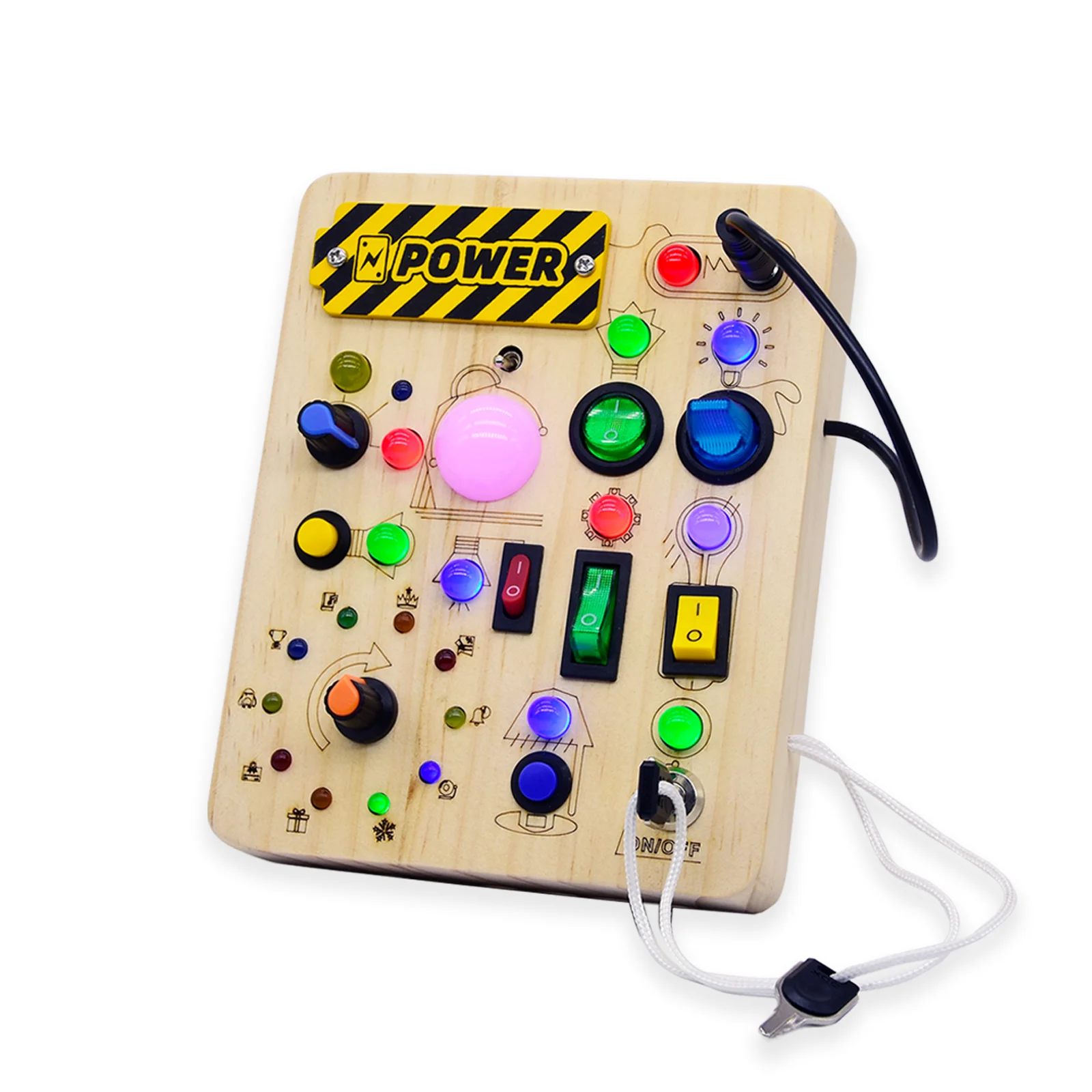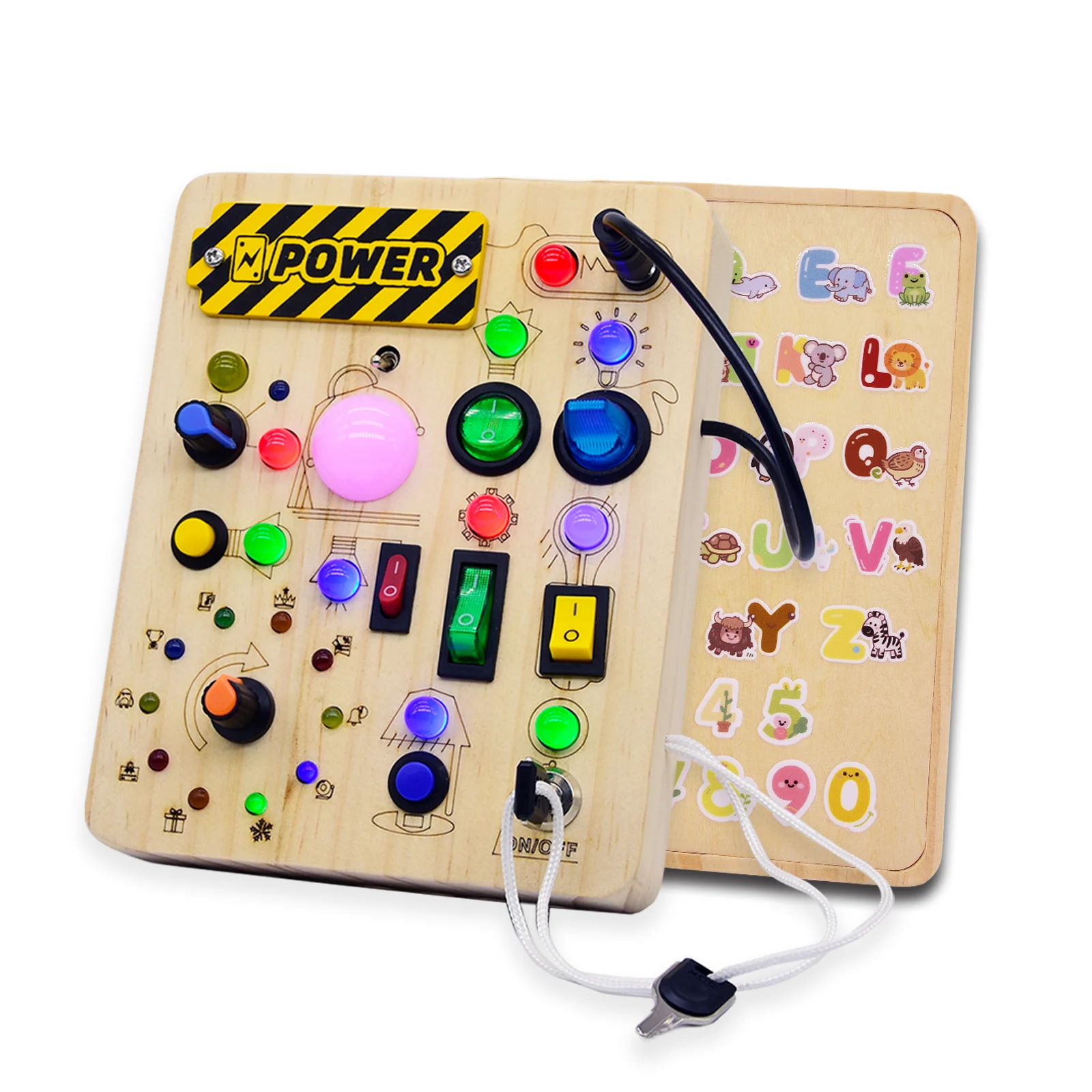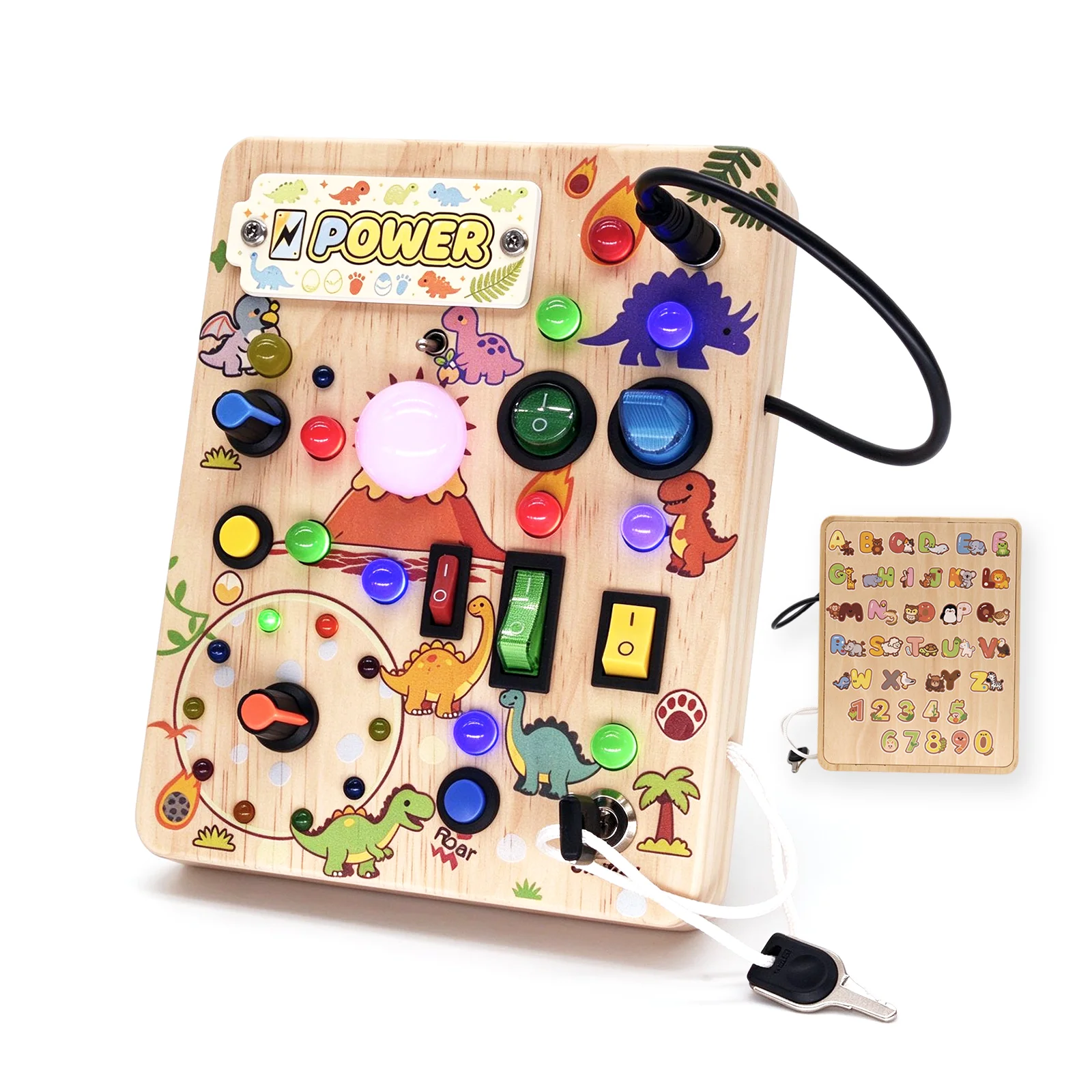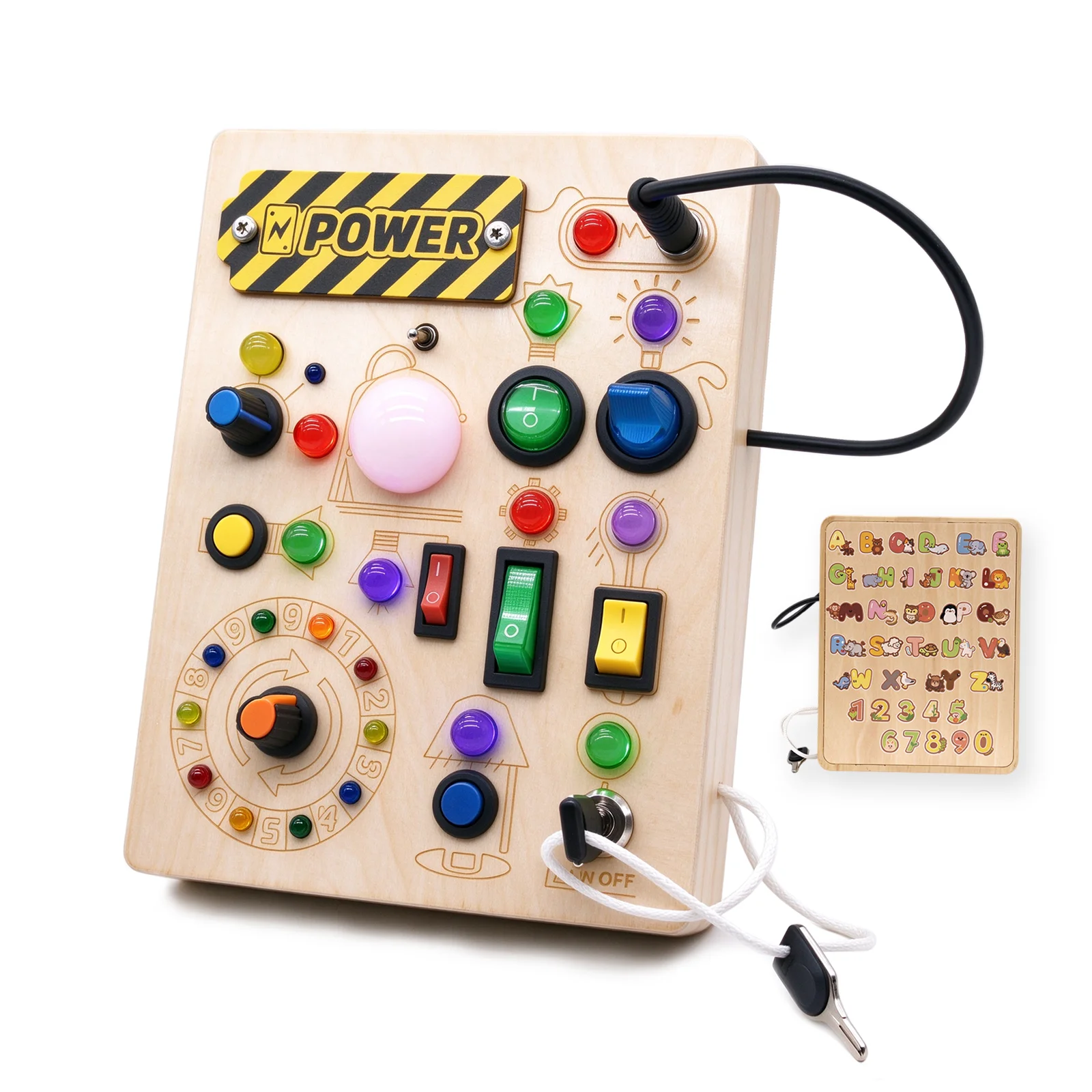
Short answer: a busy board Amazon FBA listing looks like a simple reseller play until you put freight, storage, prep and returns into the same spreadsheet as the unit price, and the board that looked cheap at 100 pieces starts to look thin. The sellers who last in this category treat it as a sourcing problem first and an Amazon problem second. We build these boards in Wenzhou, so read what follows knowing we sell to people who list them and we clearly have an interest in you buying the version that doesn't come back.
The honest version, before anything else: this is not a category where you upload a few photos, run a small ad test and watch orders appear. It is crowded, the review bar is high, and most of the money is decided before the product reaches a warehouse. You control your cost structure, your paperwork and your reorder timing. You don't control what thirty other sellers do with a similar board and a similar catalogue photo.
What follows is the order we'd actually walk a new Amazon seller through. It assumes you already understand how the platform works. It's about the board, the box and the arithmetic behind them.
Quick facts
- MOQ: 100 pcs per model · 200 pcs for your own artwork · 500–1,000 pcs for full OEM
- Samples: 1–10 pcs, 3–7 days, credited against the bulk order
- Lead time: 15–25 days after deposit and artwork approval
- Certifications: CE / CPC / ST reports on current models (tested to EN 71 and ASTM F963)
- FOB at MOQ 100: $8.90 Classic · $9.20 Alphabet · $9.50 Dino
- Recommended retail: $20–35
Why a busy board Amazon FBA listing is harder than it looks
Open the search results for this category on the US site and count what sits on page one. You'll find listings carrying hundreds or thousands of ratings, most priced between $22 and $29, several of them bundles. Now put your first listing at $29 with no reviews next to a two-thousand-review listing at $26. You are not competing on price at that stage. You're competing on nothing until you have reviews, and reviews arrive slowly for a product most households buy once, as a gift.
The barrier is the review count rather than the price. From what sellers tell us, the practical level to hold a mid-tail keyword is somewhere around 50–150 reviews with a rating above 4.3. Below that, ad spend buys clicks that don't convert. Above it, the listing starts to carry itself. The boards that got there usually did it by being visibly different from the pack, whether that's a larger board, a stronger lighting setup, or a bundle nobody else assembled.
Seasonality matters more than new sellers expect. These are gift-shaped toys, so the year is Q4-weighted: a large November–December spike, a smaller September bump when Montessori-minded parents and preschools restock, and a soft summer. The sourcing consequence is slightly counterintuitive. You place the order that supplies Q4 in late summer or early autumn, because production plus sea freight is a long pipeline. If you start looking for a supplier in November, that year's window has already closed.
Single board or bundle: the decision that sets your price
Every busy board Amazon FBA seller meets the same fork in the road, and it's usually framed as a sourcing choice when it's really a pricing one. A single board competes against every other single board on the page. A board plus a matching accessory, or two boards boxed as a set, competes against far fewer listings, gives you a reason to sit at $32 instead of $26, and softens the raw price comparison a crowded category invites.
Where you should not live is the bottom of the price band. Listings under roughly $20 are almost always built on a $4–5 FOB board: fixed bulbs instead of a controller, a plywood core with a veneer, and no current test report. Those boards are real and they do sell. They also come back more often, and a single complaint-driven safety review can take a listing down with the inventory stranded in the fulfilment centre. A board retailing at $19 with no certificate isn't a cheaper version of our $9.50 board. It's a different risk.
Here's the arithmetic that decides your price, on a Classic board at MOQ:
| Line | Typical figure |
|---|---|
| FOB at MOQ 100 | $9.00 |
| Sea freight + duty to a US FC | $1.50–2.50 |
| FBA fulfilment fee (boxed, this weight class) | ~$5–6 |
| Prep, labels, poly bag if required | ~$0.30 |
| Storage + returns allowance | $1–2 |
| Landed cost before advertising | ~$17–20 |
| Amazon referral on a $29 retail | ~$4.35 |
Work down that column and the margin is thin enough that a 5% return rate, or one heavy ad month, turns it negative. Check the current FBA fee schedule before you build a plan on these numbers, because they move, but the shape of the problem doesn't. This is why the low band is a trap rather than a bargain: there is no room left in it for the costs you can't see from a search page. Our guide to busy board wholesale pricing breaks down what sits inside the FOB figure.
The inventory math behind a busy board Amazon FBA restock
The mistake we see most often is planning a restock around production time and forgetting the transit behind it. Your real pipeline is production plus freight plus a receiving buffer, and every extra week in it is capital doing nothing.
For any busy board Amazon FBA plan, the pipeline is the whole game, because there is no way to conjure stock in a week without paying air-freight prices for it.
Sea versus air
Sea freight is the default for a board like this. Door to door it is commonly 30–45 days to a US receiving centre, and it costs a few dollars per unit depending on the rate you lock and the port. Air freight runs 7–12 days and is priced by weight; for a boxed board with an electrical element it can cost several times the sea rate per unit. Air is for rescuing a stockout, not for routine replenishment.
| Sea | Air | |
|---|---|---|
| Transit, door to door | typically 30–45 days | typically 7–12 days |
| Cost per unit | lower, rate-sensitive | several times sea |
| Best used for | planned replenishment | emergency restock |
| Main risk | rate swings, port delays | cost, weight limits |
Storage fees that punish dead stock
FBA charges monthly storage by volume, and the rate steps up during the October–December peak. On top of that, units that sit unsold for a long stretch attract a long-term storage surcharge. The practical lesson is simple: don't land a whole year of stock in one shipment. Land 60–90 days of demand, watch the sell-through, and reorder. Dead inventory in a fulfilment centre gets taxed every month it stays there.
The reorder cycle and what a stockout costs
Add it up. If production is 15 days and sea is 35 days, your pipeline is about 50 days before you add receiving and a safety buffer. If you sell 300 units a month, you want roughly 500–600 units in some stage of that pipeline at all times, with the next reorder placed before the last shipment clears. A stockout doesn't only cost the sales you missed. It drops your ranking, and rebuilding a ranking you already paid to earn is one of the more expensive things a seller can do. When you weigh a bigger order against the cheaper per-unit price, remember that the cost of running dry is usually larger than the saving on the batch.
CPC is a listing gate, not paperwork
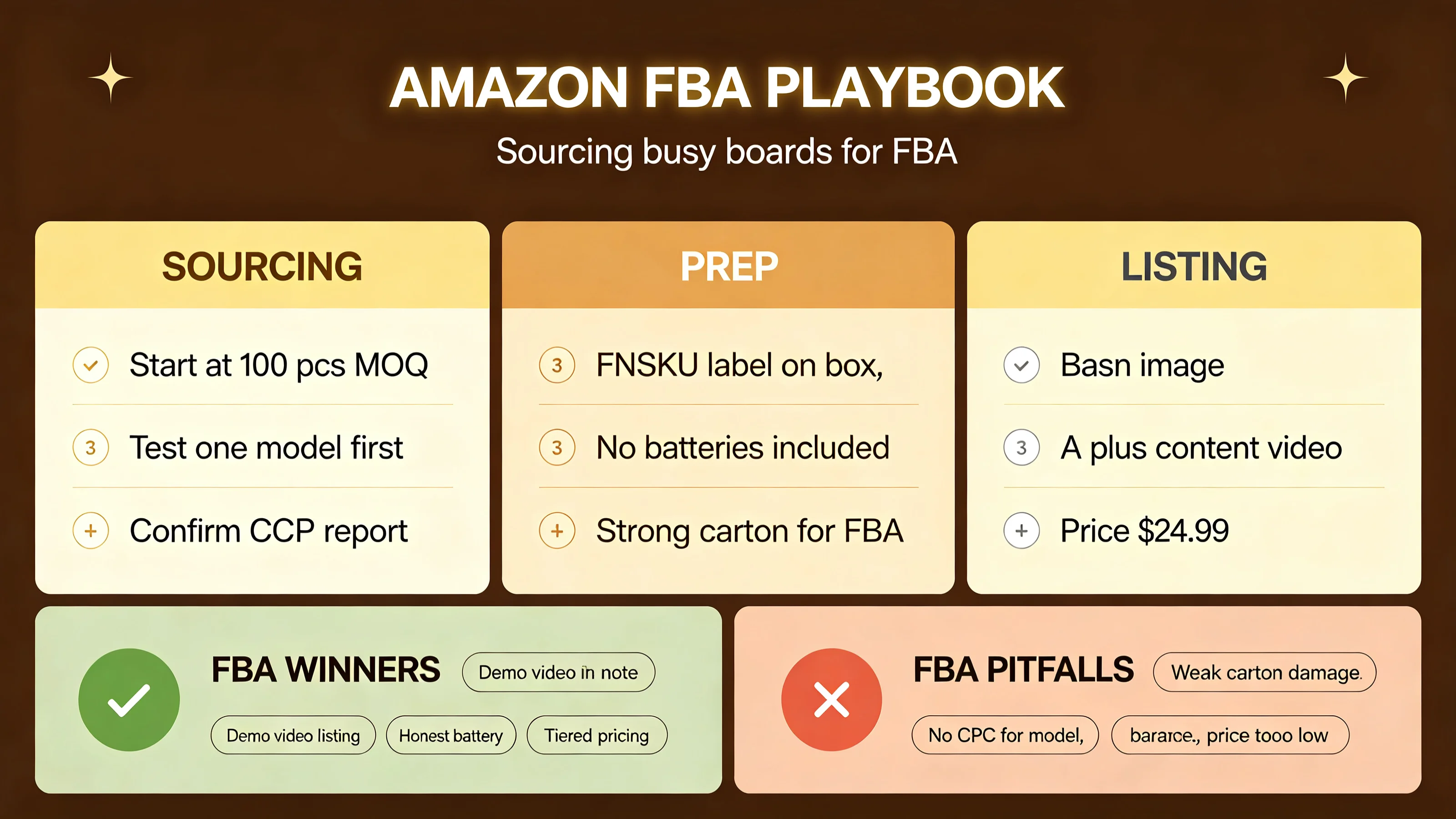
For a children's product on Amazon US, a Children's Product Certificate is a condition of selling. It rests on testing at a CPSC-accepted lab against the toy safety standard and the relevant CPSIA rules. Amazon can ask for the report at any time, and it frequently does on new listings in the toy categories, or after a safety complaint. Without it, the listing can be suppressed and your inventory can sit in the fulfilment centre while you sort it out.
Europe is a parallel story: CE marking, plus testing to the toy standard, plus the supporting declaration of conformity. Amazon's European marketplaces can request the paperwork in the same way.
Two details trip sellers up. First, the report has to cover the exact model you're shipping; a certificate for a sister SKU is worth nothing at the moment it's requested. Second, your listing's age recommendation has to match the certificate's age grading, because these boards typically carry small parts and a battery compartment. We keep current CE, CPC and ST reports on our models, tested to EN 71 and ASTM F963, and we'll send the PDF with the model number visible. More on what each mark actually covers is in our busy board certification guide.
FBA prep: what has to be true before the carton leaves the factory
Prep is where a good product quietly becomes unsellable, so it's worth settling with the supplier rather than with a third party at the receiving dock.
The unit needs its own FNSKU barcode, which is not the same as the UPC you may already own. Best practice is to have the FNSKU printed directly on the box, because applied labels peel in transit and a missing label means an unfulfillable unit. Ask the factory whether they'll print it.
Poly bags are the second thing to get right. A bag with an opening of five inches or more needs a suffocation warning, and the warning has to be printed on the bag or on a label affixed to it. A board packed in a printed colour box usually needs no poly bag at all, which is one reason the printed box is worth its cost. Whichever way you go, the suffocation warning and the country-of-origin marking both need to be present and legible.
If you sell a set, Amazon treats it as a set: the pieces have to be packaged so the set can't be separated, and the FNSKU goes on the outside of that package, with the required set label. Carton labelling and per-box weight limits are the last check before the goods leave. The longer version of this is in our packaging and shipping guide.
Returns are the quiet tax on this category
Toys return at one of the higher rates on the platform, and this product has its own reasons. "Smaller than it looked" tops the list, which is a photography problem as much as a product one: shoot the board with a child or a hand in frame and the size argument mostly disappears. Transit damage is second, and it's usually a box problem rather than a board problem. A close third is the batteries. We ship without cells on purpose, because adding them turns the product into a dangerous-goods shipment with paperwork that costs more than the batteries themselves, but a customer who expects cells and finds an empty compartment leaves a one-star review for it. Say "batteries not included" in the title bullet and in the images, not only in the fine print.
The financial side is where returns really bite, and on a busy board Amazon FBA listing they deserve their own line in the plan. Amazon charges a return processing fee on top of the referral fee you don't fully recover, and a returned unit sometimes goes back to sellable stock and sometimes doesn't, in which case you pay to have it removed or disposed of. The outbound shipping you already paid is gone either way. A return rate of a few percent is survivable. One that climbs into double digits can erase the margin on the whole batch, which is the strongest argument there is for solid wood, rounded edges and a box that survives a courier.
What to settle with your supplier before you pay a deposit
Most of the expensive surprises in this category are avoidable at the quoting stage. These are the things worth getting in writing:
- A small trial order. 100 pieces matches our MOQ and is the right size for a first Amazon test.
- Whether the factory can ship direct to the Amazon warehouse, or whether you're arranging the forwarder yourself from FOB. This changes your landed cost and decides who is responsible if the labels are wrong.
- A reorder lead-time commitment, and not a first-order date alone. 15–25 days after deposit and artwork approval is our normal, and it's what you should be able to plan a restock around.
- Whether they'll print the FNSKU on the box and apply labels, poly bags or suffocation warnings to your listing's requirements.
- Current certification reports with model numbers that match your SKU. Ask for the PDF, not a picture of a logo.
- Payment terms. 30% deposit with the balance before shipment is our standard, and it is the basis our prices assume.
The MOQ, pricing and lead-time guide walks through how volume changes the number, and if you're still choosing between factories, our notes on how to choose a busy board supplier cover the questions that separate a manufacturer from a reseller.
Questions buyers ask us every week
Can I start with 100 pieces and still make FBA work? Yes, and we'd encourage it. 100 pieces is our standard MOQ and it's enough to learn how the product behaves, what your photos need to fix, and what your real return rate is. The per-unit saving at 500 is not worth sitting on 400 boards you can't price.
My competitor sells at $19 and I'm at $29. Am I wrong? Probably not. Take the $19 board apart on paper: fixed bulbs or a controller, solid wood or a veneer, and whether current test reports exist for that exact model. Often the comparison ends at the certificate. If a $19 board genuinely has all of it and still sells, that's a different product decision than you assumed, and the answer is usually your bundle rather than your price.
Do I actually need a CPC to list on Amazon? If it's sold as a children's product, yes. It's a condition of listing, not a formality, and Amazon can demand the report without warning. No report means a suppressed listing and inventory that is stuck while you fix it.
Will you ship straight to the Amazon warehouse? We can hand the goods to your forwarder at FOB, and we can work on direct-to-FC arrangements depending on the route and the quantity. It's a cost question as much as a logistics one, so tell us your target fulfilment centre and we'll price both options.
How much safety stock should I hold? Enough that a two-week slip in production or freight doesn't take you out of stock. For most sellers that's a few weeks of demand on top of the transit pipeline. It feels like dead capital until the month your supplier runs late, and then it looks like the cheapest insurance you bought all year.
Will you put my brand on the box? Yes, from 200 pieces with your artwork, and from 500–1,000 pieces for full OEM with your own barcode and private label. Artwork approval takes longer than most people plan for, so it's worth starting it early.
What we'd do in your position
If the product is unproven, buy 100 pieces, ship sea, and spend what you saved on good photos and a small, bounded ad test. Price at the top of what the reviews can support rather than the bottom of the market, and keep the listing honest about size and batteries from day one.
If you already sell on FBA and your margin keeps narrowing, don't jump suppliers on price. Put your current board next to a new one on the same spreadsheet: cost, freight, FBA fee, storage allowance, returns allowance, referral fee. The gap is almost always in one line, and it's usually returns or storage rather than the unit price.
If you're building a brand rather than flipping, start at 200 pieces with your own box so you learn what the printing and labelling process needs before you commit to a thousand. And place your first Q4 order in the summer, not the autumn. Most busy board Amazon FBA sellers who miss Q4 are not late on production. They are late on deciding.
If you want the numbers for your own plan, send us your target quantity, your port, and how you intend to pack the product. We'll come back with a cost structure you can drop straight into your spreadsheet, so you're comparing a cost structure to a cost structure instead of one price to another.
Related, and worth opening before you commit: Busy Board Gift Market: Holiday & Occasion Selling Guide, then Busy Board Packaging & Shipping Guide for Wholesale Buyers, and if the numbers are the sticking point, Busy Board Wholesale Price Guide: What Actually Drives Your Cost Per Unit.