Importing Toys to Germany: CE, EN 71, GS Mark & the Packaging Act (LUCID) (2026)
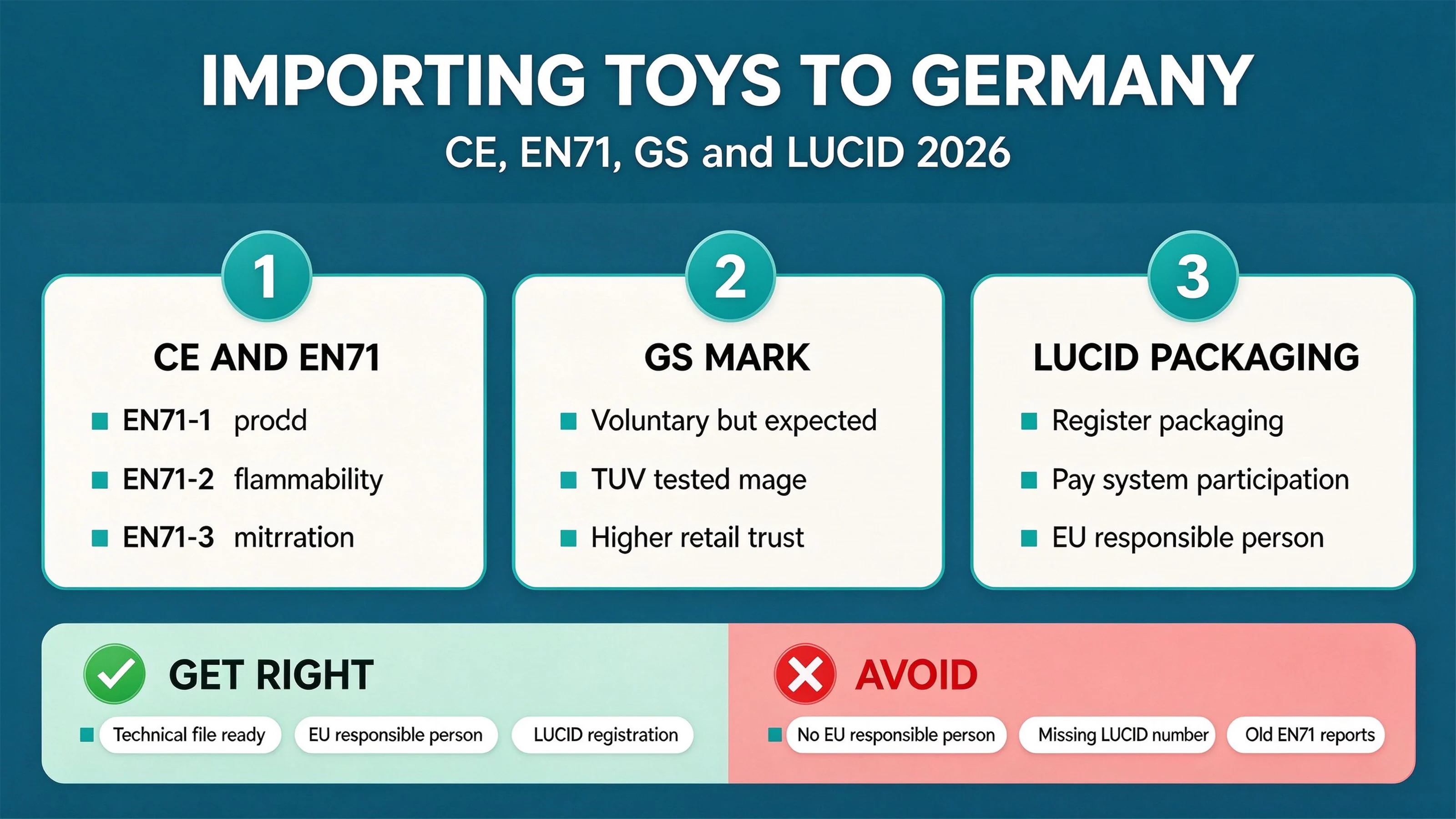
Short answer: importing toys to Germany clears two separate gates, and they are not the same gate. The mandatory one is a CE mark with test reports to EN 71-1, EN 71-2 and EN 71-3, a technical file under the Product Safety Act, and, since 13 December 2024, a responsible person inside the EU under the General Product Safety Regulation. The gate that catches people later is the one German buyers ask about first: the GS mark, which is voluntary in law but close to compulsory on a retail shelf, and the LUCID packaging register, where a missing registration number can stop a purchase order before the goods ever ship. We build wooden LED busy boards in Wenzhou and export to more than fifteen countries, so read the closing section knowing we have an interest in what you decide.
Germany is not the EU with a flag on it. At the EU level a toy is a toy; the same CE and EN 71 baseline applies in Lisbon, Warsaw and Hamburg. What changes when you are importing toys to Germany is the layer on top of that baseline: a domestic enforcement law in ProdSG, and two requirements that catch cross-border sellers off guard, the GS mark and the LUCID register.
Most of the failures I see are not testing failures. They are registration and paperwork failures that surface months after import, at a platform account or a retailer's onboarding form. This article sticks to the German-specific parts. If you want the wider EU picture first, our overview of EU toy safety compliance covers the common baseline; this one covers what Germany adds to it.
Quick facts
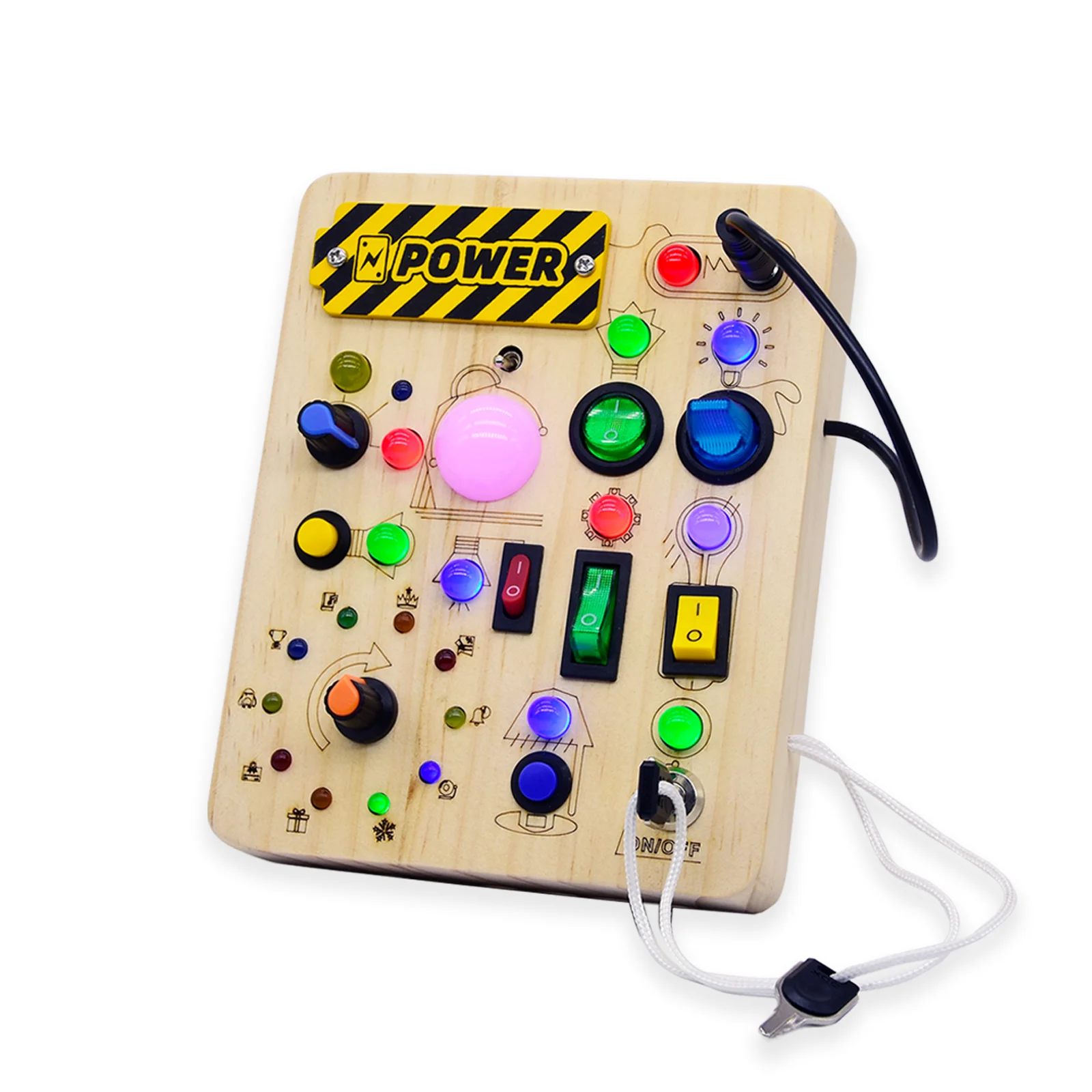
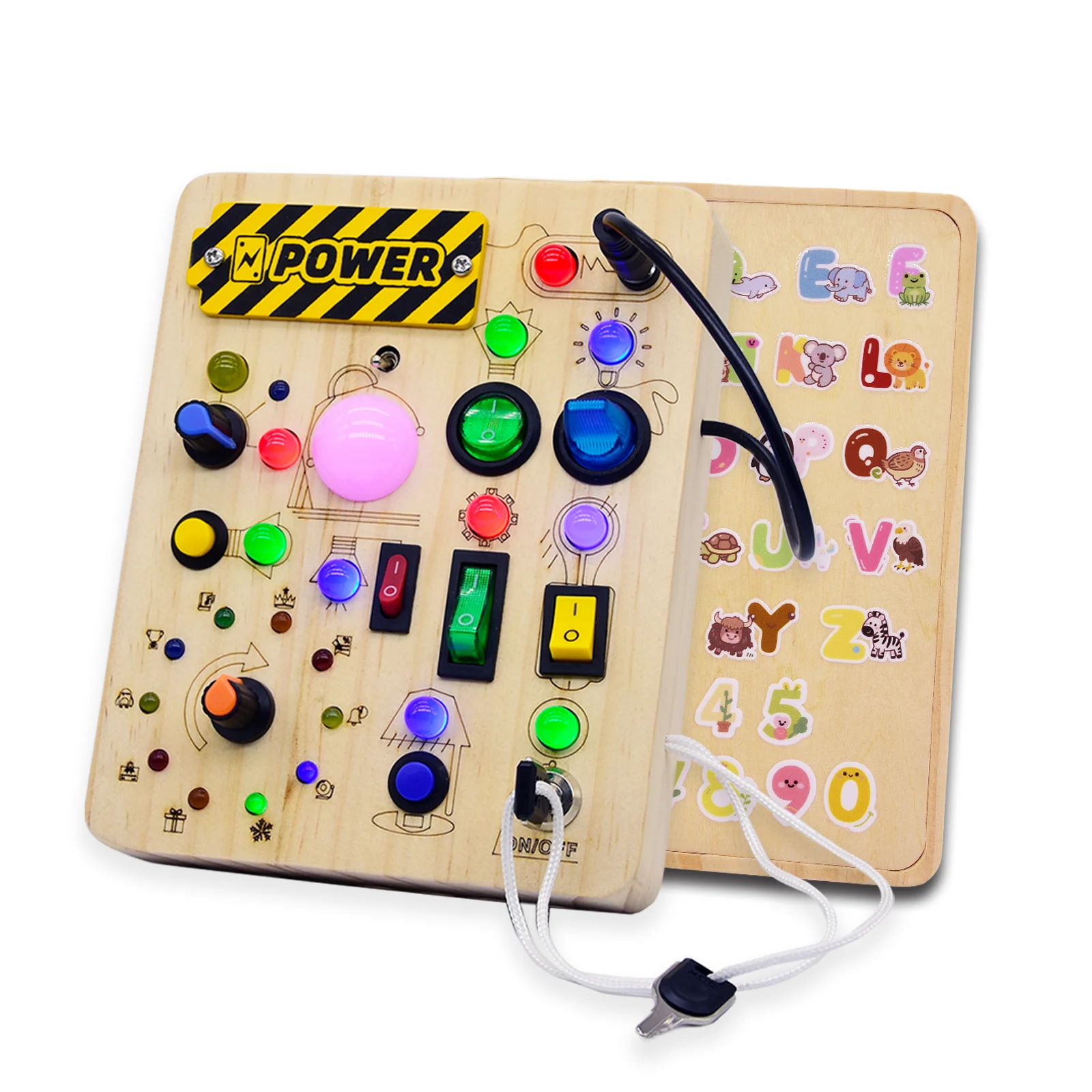
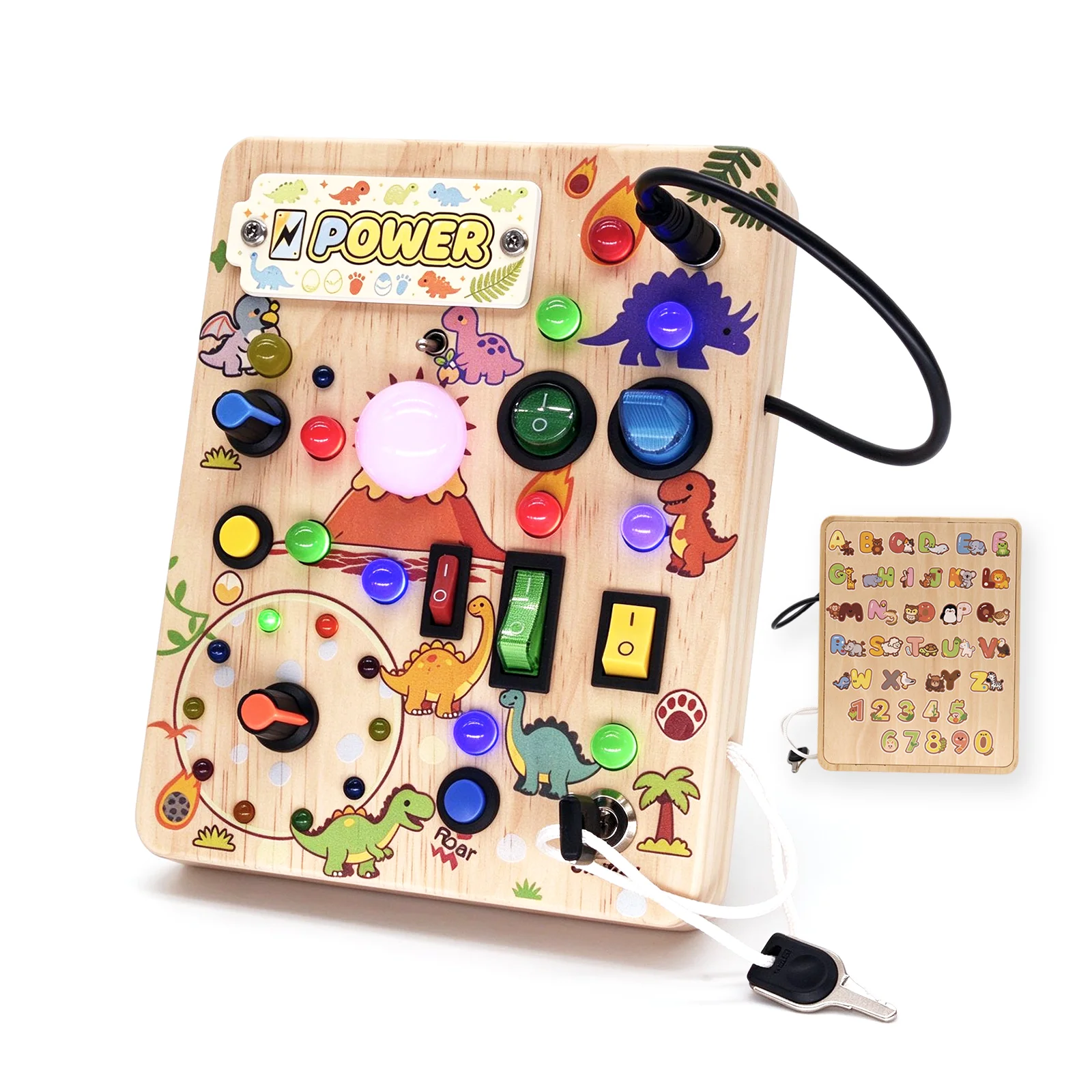
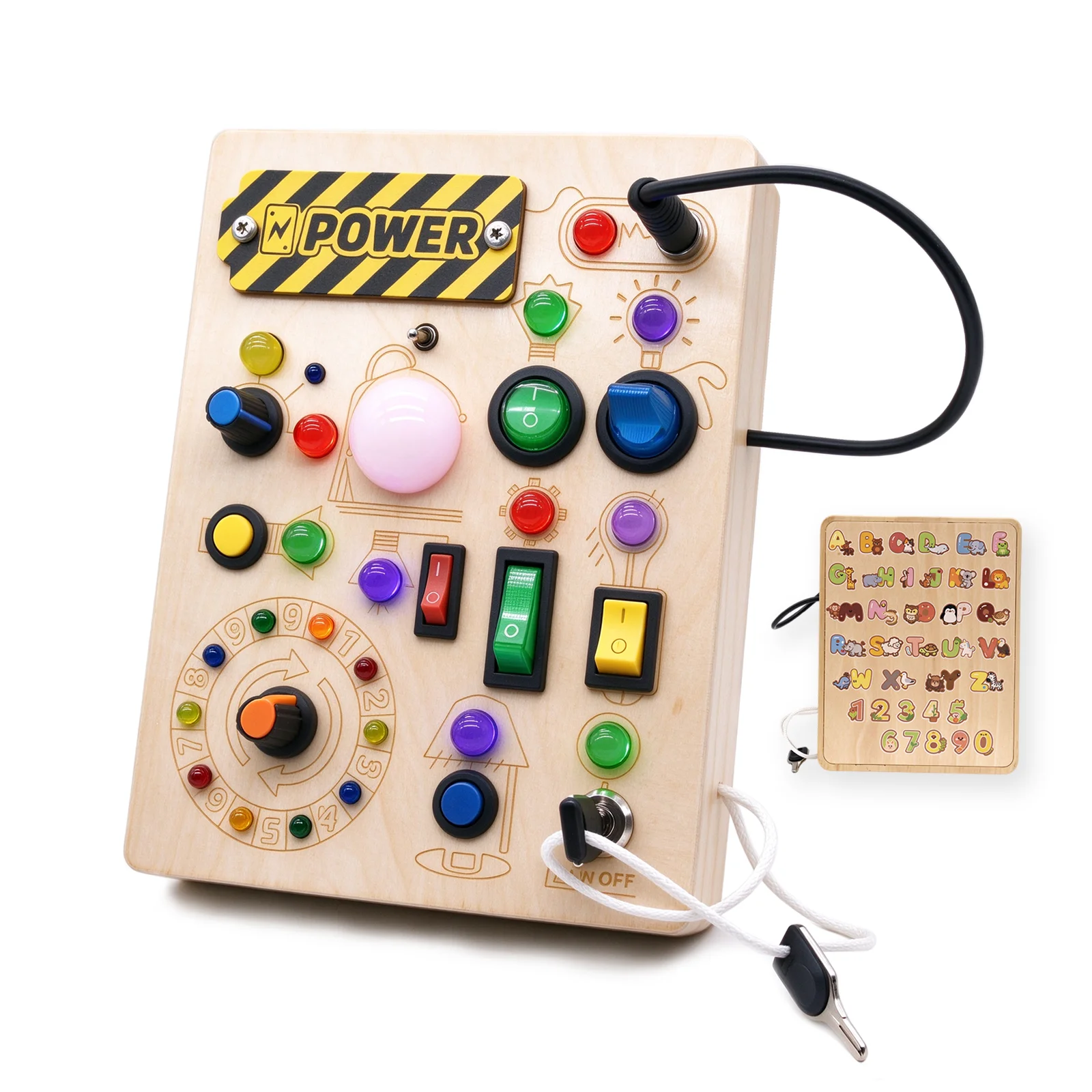
- Product: solid-wood LED busy boards, 12 mixed switches, 23 lighting modes, 2 × AAA batteries (not included)
- FOB at MOQ 100: $8.90 Classic · $9.20 Alphabet · $9.50 Dino · recommended retail $20–35, and German retail runs higher
- MOQ: 100 pcs standard · 200 pcs for your artwork or engraving · 500–1,000 pcs full OEM private label
- Samples: 3–7 days, fee credited back against the bulk order
- Production: 15–25 days after deposit and approved artwork
- Reports on current models: CE, CPC, ST and PSC, tested to EN 71 and ASTM F963
- Payment: 30% deposit, balance before shipment · 1.2 million boards shipped · 98% on-time
Why importing toys to Germany is a different job from the rest of the EU
Spielwarenmesse, the Nuremberg toy fair, is the largest in the world, and it sets the rhythm of the German year. Retailers plan around it, and a lot of stocking decisions are effectively made in that one week in late January. If you want German volume, the fair is where the relationships start, and it is also where you first hear the two words that decide the deal: GS and LUCID.
The other difference is willingness to pay. Our German and Benelux buyers argue about compliance, age grading and packaging far more than they argue about the last ten cents, and noticeably more than our buyers in southern Europe do. That is not sentimentality. A German chain carries its own liability if a non-compliant product reaches a shelf, so it would rather pay a little more for a supplier whose file is in order than save on a board it later has to defend.
What this means for you is that the German market rewards preparation more than price. Turn up with the reports, the EU responsible-person address, and a LUCID registration number, and you clear a bar that a lot of the cheap competition across the border never bothers to clear.
The mandatory baseline: CE and EN 71-1, -2 and -3
Every toy sold in Germany needs a CE mark and a technical file behind it. For anyone importing toys to Germany, the harmonised standard is EN 71, and three of its parts matter on paper. EN 71-1 covers mechanical and physical properties, where sharp edges, small parts and gaps that trap a finger get tested. EN 71-2 covers flammability. EN 71-3 covers the migration of certain elements, the heavy metals that can leach out of a coating a child mouths.
On a wooden board a few of those clauses do most of the work. Edges and corners have to be smooth, which is why ours come off the line sanded round. Small parts have to survive a pull test, because a switch that comes loose is a choking part. Surface coatings have to pass the migration limits, which is a question about which paint and which primer, not a marketing claim.
Read the letters as well as the number. On a toy that also lights up, the low-voltage and EMC directives enter the picture on top of EN 71, a common trip-up on an LED board. Our guide to busy board safety certifications breaks down which report covers which clause, and which model each report actually names.
GPSR and the responsible person most Chinese sellers miss
Since 13 December 2024 the EU General Product Safety Regulation, Regulation (EU) 2023/988, has applied. Its practical effect on a small Chinese exporter fits in a sentence: if you place a product on the EU market, you need a responsible person established in the EU, and their name, address and contact details have to appear on the product, the packaging or the accompanying documents.
This is the step where a lot of sellers quietly stall. The responsible person is not a postbox. They take on duties, they keep the technical documentation, and they are the contact if a market-surveillance authority has a question. Some sellers act as their own through a European entity. Others appoint a service provider or their importer of record, and that appointment has to be real, in writing, and named on the goods.
In Germany the enforcement layer is ProdSG, the Product Safety Act, the national law that gives the EU rules their teeth here. The GPSR sets the obligation; ProdSG is what a German authority points to when it inspects. If your file carries a CE mark but no named EU responsible person, you are not compliant in Germany no matter how clean the test reports are. If you are still setting up the import side, our walkthrough of importing busy boards from China shows where the responsible-person appointment sits in the sequence.
The GS mark: voluntary on paper, a gate in practice
The GS mark, Geprüfte Sicherheit, or tested safety, is not required by law. A toy can be fully legal in Germany with CE and no GS. In practice, though, the larger German retailers and chains treat GS as a threshold, and a buyer shopping for GS mark toys will ask whether you have it in the first two emails. When a chain lists GS mark toys, it is buying two things beyond the board: a test stricter than CE, and a factory that someone else has already inspected.
GS is issued by accredited bodies such as TÜV and DEKRA, not by the manufacturer, and it goes further than a CE self-declaration. There is product testing against the relevant standard, a factory audit of the production process, and an annual re-check that keeps the mark valid. That ongoing cost is exactly why GS means something: it is hard to hold dishonestly.
| CE (mandatory) | GS (voluntary, retail-driven) | |
|---|---|---|
| Required by law in Germany | Yes | No |
| Who issues it | manufacturer self-declaration | TÜV, DEKRA and similar bodies |
| Testing depth | EN 71 report | EN 71 plus factory audit |
| Ongoing obligation | technical file kept | annual re-check to stay valid |
| Do buyers ask | always | most chains, early |
For an exporter, the honest position is to be clear about where you stand. A factory that claims GS without a certificate number and an issuing body is telling you something useful about how it handles everything else. Our own reports are CE, CPC, ST and PSC on current models, tested to EN 71 and ASTM F963, and we tell buyers that plainly. If a German buyer needs GS mark toys for a specific chain, that is a conversation about scope, cost and timeline rather than a box to tick in a chat thread.
VerpackG and the LUCID packaging register
The rule that surprises the most cross-border sellers is the German Packaging Act, VerpackG. Any business that puts packaged goods on the German market, including by cross-border e-commerce and direct mail, has to register in the LUCID packaging register run by the Zentrale Stelle Verpackungsregister (ZSVR), license its packaging through a dual system, pay by material and weight, and report volumes every year.
Three details trip people up. First, LUCID registration is not the same as system participation; you register once, but you also have to buy a licence from a dual recycling system such as Der Grüne Punkt or Lizenzero for the packaging you actually ship. Second, a non-German company generally needs a German authorised representative to register, a second appointment alongside the EU responsible person. Third, this applies to the shipping carton and the retail box, not only to the product.
The enforcement side is real. Failure to register can bring fines up to €200,000, and the marketplaces act on their own: Amazon and eBay suspend non-compliant seller accounts in Germany, so a missing number can take a listing down before any authority writes to you. The 2024 annual report from the German Environment Agency noted more than 450,000 foreign companies registered in LUCID, a large share of them sellers from China. A registration number is now something German buyers ask to see on your paperwork, and a buyer who has been burned once will ask for it before the deposit.
Packaging design and VerpackG overlap more than people expect. Weight and material decide the licence cost, so how you pack the board is a compliance decision as much as a logistics one. Our packaging and shipping guide covers box proofing and how it stacks against the production clock.
The money side of importing toys to Germany: duty, VAT and tiers
Two numbers dominate the landed cost of importing toys to Germany, and only one of them usually moves.
At the EU tariff level, toys under HS 9503 arriving from China are typically subject to a 0% duty rate, which is why the headline tariff number rarely scares anyone. Treat that as the general case rather than a promise: the exact rate depends on the goods code you declare and the tariff in force on the day, so confirm it with your customs broker against your own HS line.
The number that does move is import VAT, charged at 19% in Germany at the point of import, on the value of the goods plus freight and insurance. On an $8.90 board that VAT is not a rounding error across a container, and unlike duty it applies whether or not the tariff rate is zero. It is usually recoverable if you are VAT-registered in Germany, but it is real cash out before any recovery.
Beyond the tax, the per-unit maths is the same one we quote everywhere. Here is how the tiers sit:
| Order | Quantity | What changes | Unit price |
|---|---|---|---|
| Trial | 100 | standard board, stock artwork | $8.90–$9.50 FOB |
| Custom artwork or engraving | 200 | your design, engraved back panel | base plus artwork charge |
| Full OEM / private label | 500–1,000 | your box, barcode and brand | quoted per spec, falls with volume |
Add the two appointments, the EU responsible person and the German LUCID representative, the annual dual-system licence, and any GS work if a chain wants it, and you have the German-specific cost that sits on top of the board. None of it is large per unit at volume. All of it is large if you discover it after the goods land.
Where buyers get tripped up
This is the section that saves money.
Assuming CE is the finish line. CE gets you onto the market legally, and it does not get you onto a German shelf. The retailer gate is GS plus LUCID plus a German-language warning, and it is checked before the order, not after arrival. Sellers who treat CE as the whole job tend to find out at the onboarding form.
Leaving the responsible person to the last minute. Under GPSR the address has to be on the product, the packaging or the documents. If that detail is settled after the cartons are printed, you are reprinting cartons.
Registering in LUCID and stopping there. LUCID is the register. The dual-system licence is the second step, and skipping it is the one that produces a fine and a suspended listing.
Sending English-only warnings. German buyers expect German instructions and safety warnings, or at least German safety information, and they will notice. This is cheap to fix at the artwork stage and expensive to fix afterwards.
Treating a GS claim as free. A certificate costs money and a factory audit, so a supplier offering GS for the price of a cheaper board is either quoting the wrong model or planning to cut something. Ask for the certificate number and the issuing body.
Assuming the reports travel with the goods. They do not. A report that names the Classic does not cover the Dino for a German audit. Check the model number on the file against the model number on the carton.
If you are comparing workshops on this alone, our guide to choosing a busy board supplier turns it into questions you can send to each one.
Questions buyers ask us every week
Do we need GS to sell in Germany? Legally, no. CE with EN 71 reports is the mandatory baseline. But the larger German retailers and chains often require GS, and a buyer will ask for it early. It is a channel requirement more than a legal one, and that distinction is worth knowing before you promise it to a customer.
Can you ship to a German buyer without a LUCID number? In most direct-to-retail setups the buyer is the one placing the packaged goods on the German market, but cross-border e-commerce is squarely in scope. In practice a serious German buyer will want to see the register number and the dual-system licence on your paperwork. It is cleaner on both sides to have it ready than to argue about whose obligation it is at the port.
Does our LED board pull us into the battery law? Not on our boards, because we ship them without batteries, 2 × AAA not included. That keeps the product out of the battery-registration layer under BattG, and German sellers like it because it removes one registration from their side too. If you add batteries yourself at packing, that obligation can move to you.
How long before we can be compliant and shipping? The board does not slow you down. Production runs 15–25 days after deposit and approved artwork, and samples are 3–7 days, credited against the bulk order. The variable is the paperwork: the EU responsible person and the LUCID steps take days rather than weeks if you start them early, and weeks if you start them after the artwork is approved.
Is a German retailer's compliance check the same as a customs check? No, and this is the point most sellers miss. Customs cares about HS code, duty and VAT. The retailer cares about GS, LUCID, German warnings and the report that names the exact model. They are two different audits, and passing one does nothing for the other.
What we'd do in your position
I would not wait for the first order to sort the paperwork. Before quoting a German buyer, I would have the EU responsible person appointed in writing, a LUCID registration with a dual-system licence behind it, and the model number on every report matched to the model I intended to ship. Those three items are the ones a buyer checks before the deposit.
Then I would start small. Order 100 pieces of a stock-artwork board, get it onto a shelf or a listing, and treat the retailer's compliance team as the real test: if they sign it off without a follow-up question, the file was built right. If it holds, the next order takes the engraved back panel and your own box, and by then you are negotiating volume from a position where the compliance bar is already behind you.
If a chain insists on GS, decide before you commit to the order rather than after, because it changes the price, the audit and the calendar. And if you want to see the board first, our essential busy board page has the specs and the print files. If a German buyer has already sent you a compliance checklist, forward it, and we will tell you which lines we can close today and which ones sit with your importer.
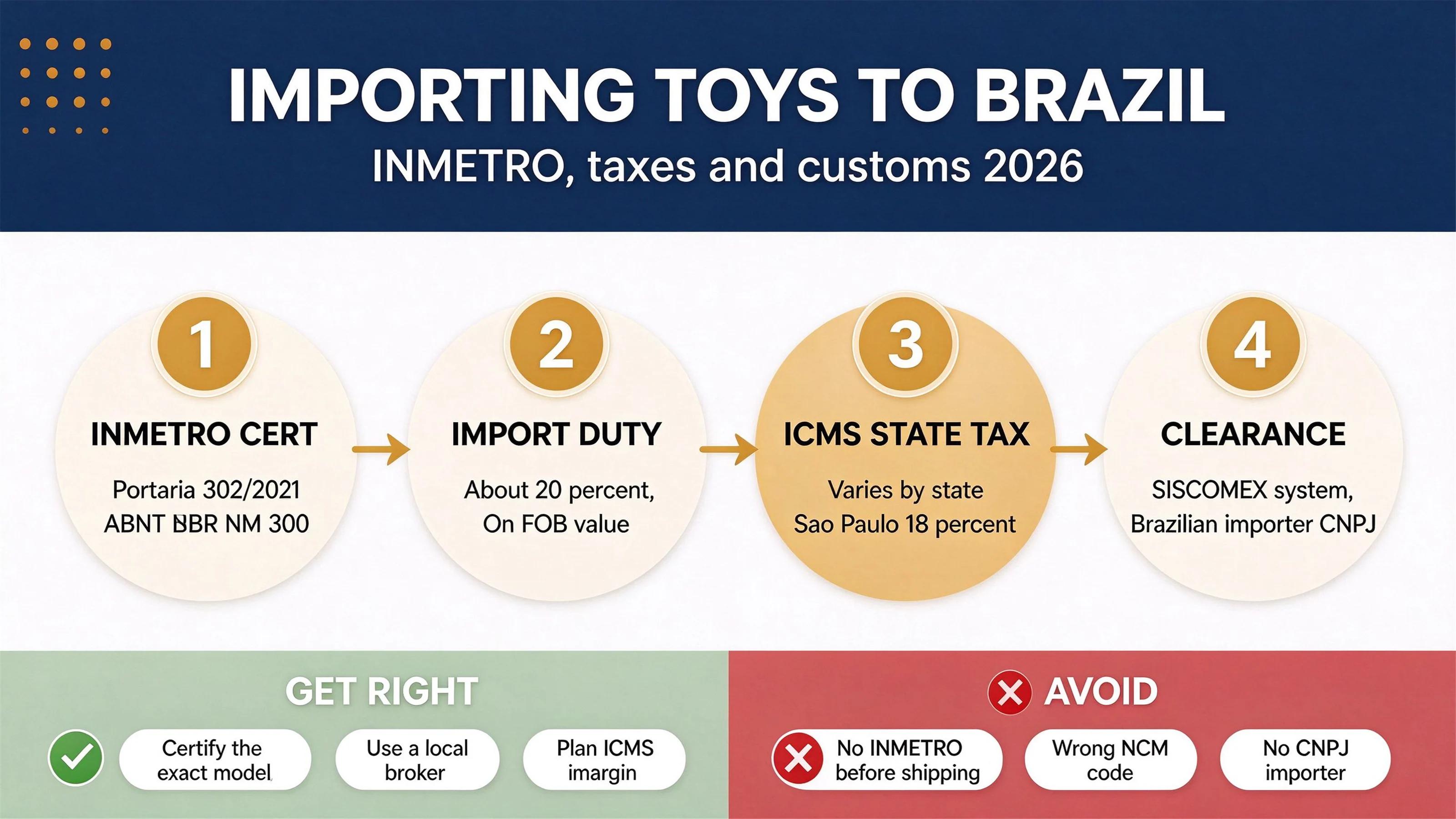
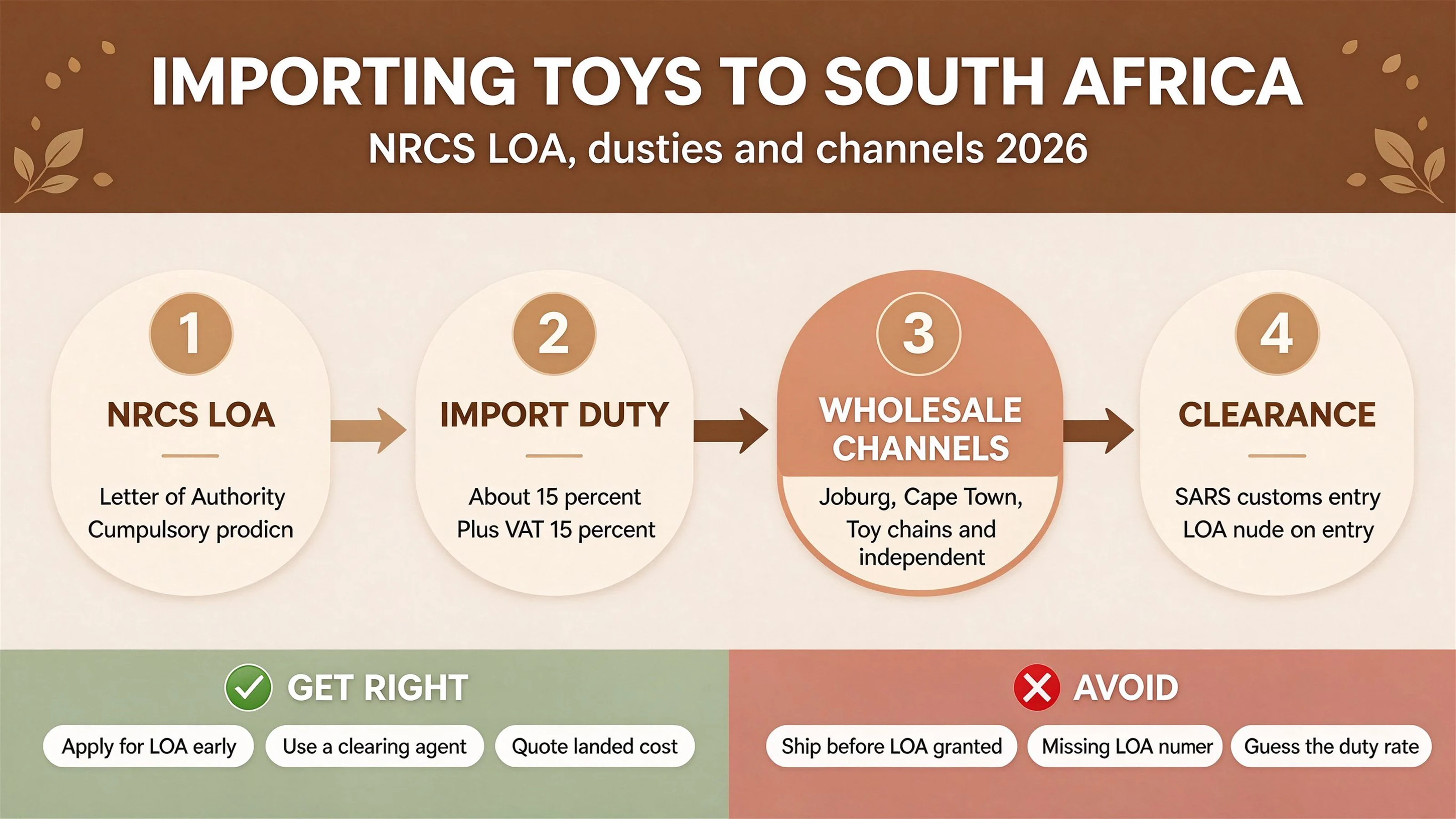
Two more angles on this: Importing Toys to Brazil: INMETRO Certification, Taxes & Customs (2026) covers the sourcing end, Importing Toys to South Africa: NRCS Letter of Authority, Duties & Wholesale Channels (2026) covers what buyers ask about first, and Busy Board Safety Certifications Explained: EN71, ASTM F963, CE & CPC (2026) is the one we send when someone asks for the whole picture.