Busy Board Packaging & Shipping Guide for Wholesale Buyers
Two buyers order the same 1,000 busy boards at the same FOB price. One lands them at a tidy per-unit cost and sells out before the next container. The other finds out — after the invoice — that freight, damage and repacking ate the margin.
The difference is packaging and shipping, the least glamorous and most underestimated part of a wholesale order. This guide covers how busy boards are packed, how they are loaded, and how to control the landed cost.
Why packaging is part of your landed cost
Packaging does three jobs at once, and each one touches your money:
- Protects the product in transit — damaged stock is dead stock.
- Sells the product on shelf — retail-ready packaging saves repacking.
- Determines volume — better packing means more units per container, which lowers freight per unit.
A cheaper box that increases volume or damage is not cheaper. Always price packaging against all three effects, not the carton cost alone.
The three packaging levels
A wholesale busy board order involves three layers, and it pays to specify each one:
| Level | What it is | Who decides |
|---|---|---|
| Inner / retail packaging | The box or sleeve the end customer sees | Your brand |
| Product protection | Wrap, insert or corner protection | Factory, agreed with you |
| Master carton | The export carton that holds many units | Factory, per your spec |
The master carton is where the money is, because it sets how many units fit in a container. Get this right and everything downstream gets easier.
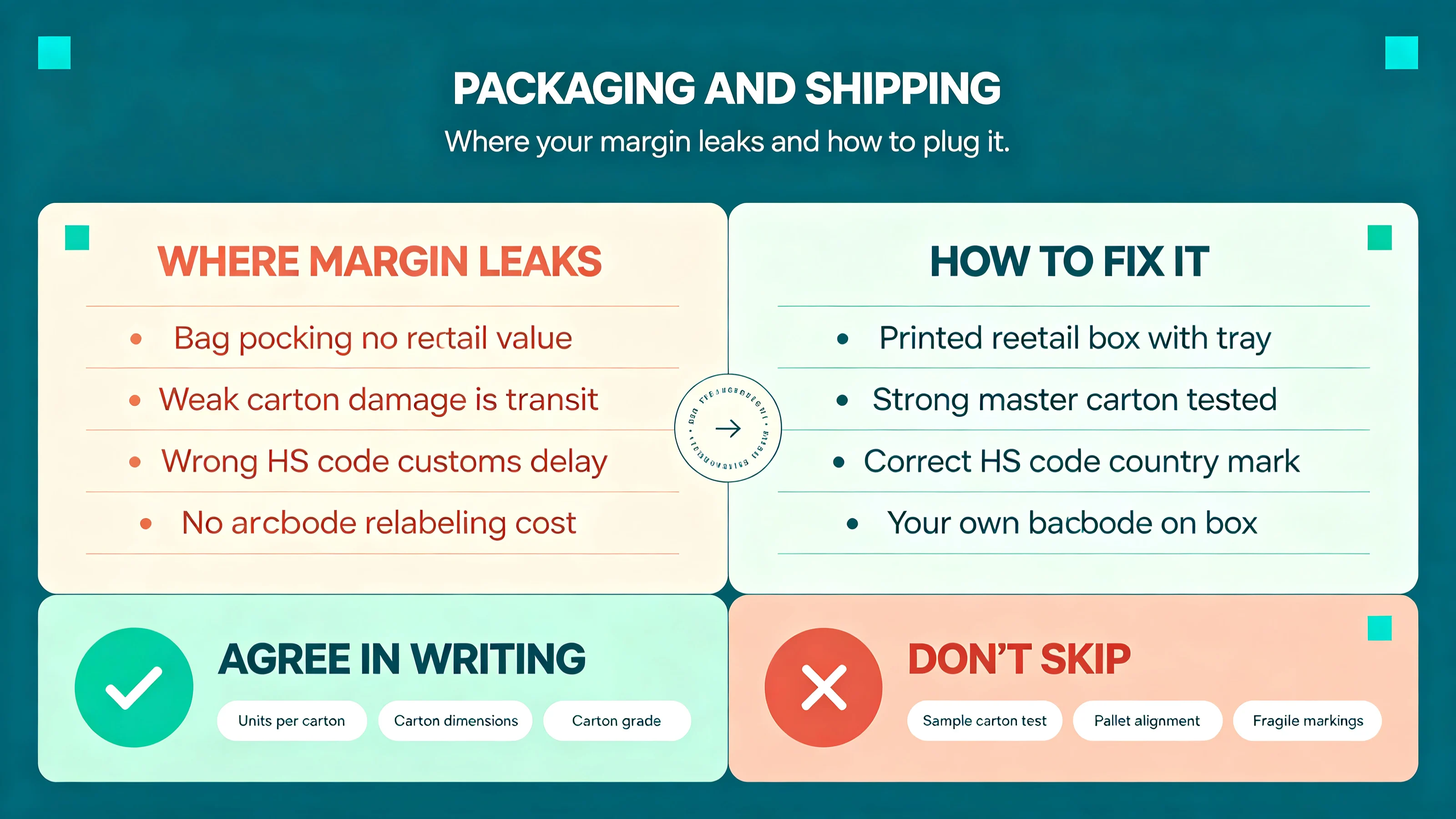
Master carton specs: what to agree
Before production, confirm these numbers in writing:
- Units per master carton — driven by the retail box size
- Carton dimensions and gross weight — must stay within safe manual-handling limits
- Carton grade and board thickness — strong enough for stacking, not so heavy it wastes volume
- Barcode and labelling — your SKU barcode, carton label, and country-of-origin marking
- Reinforcement — corner protection or dividers for a wooden product
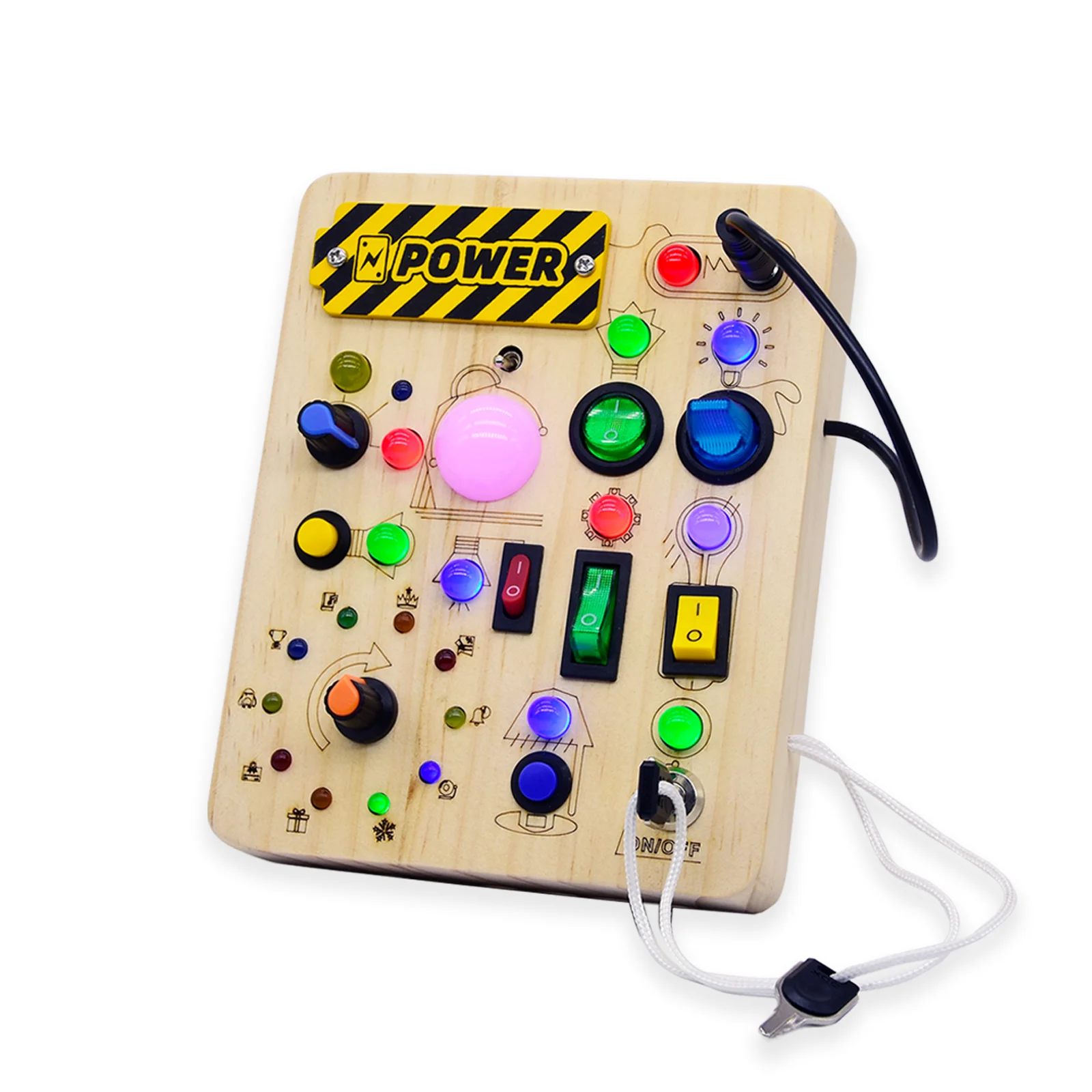
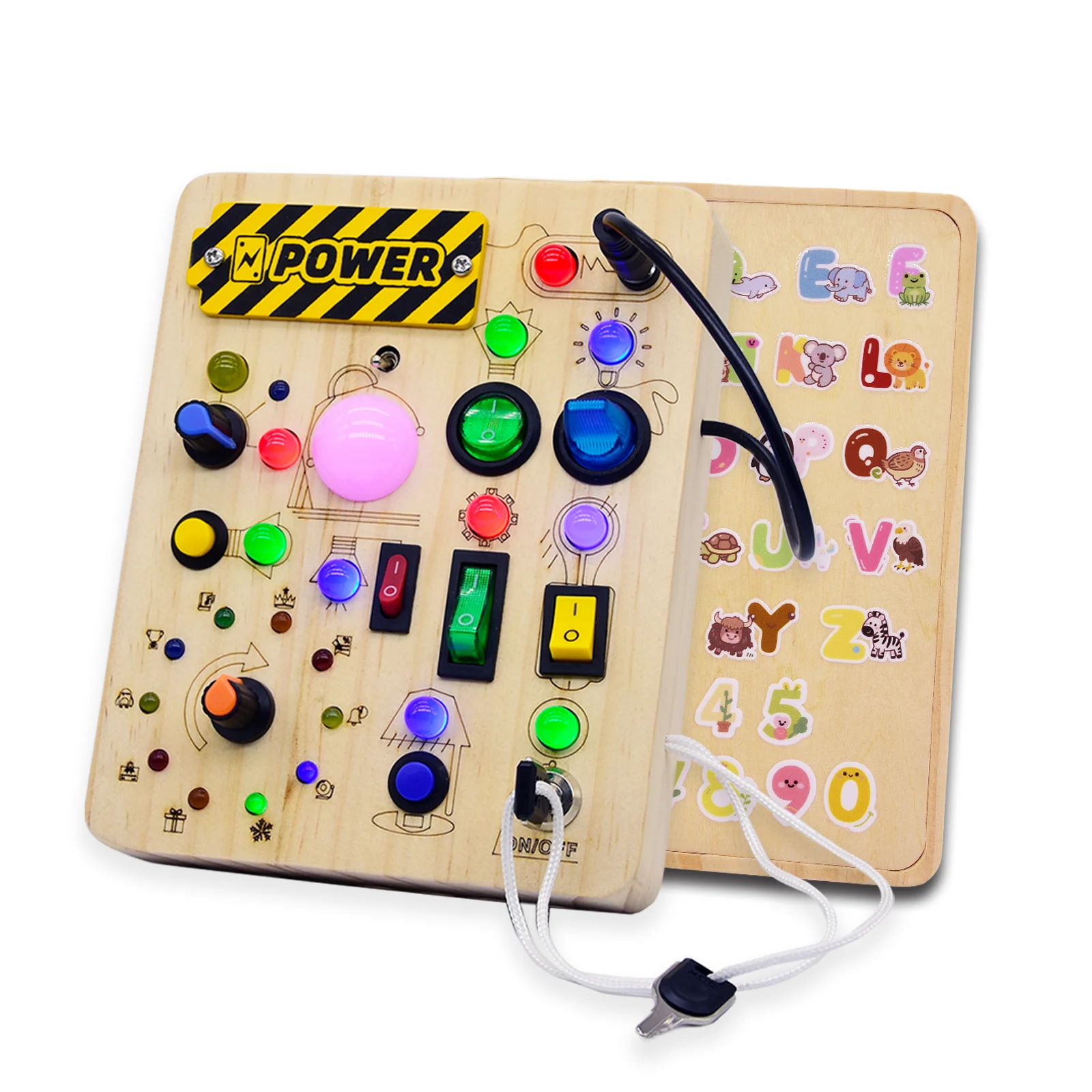
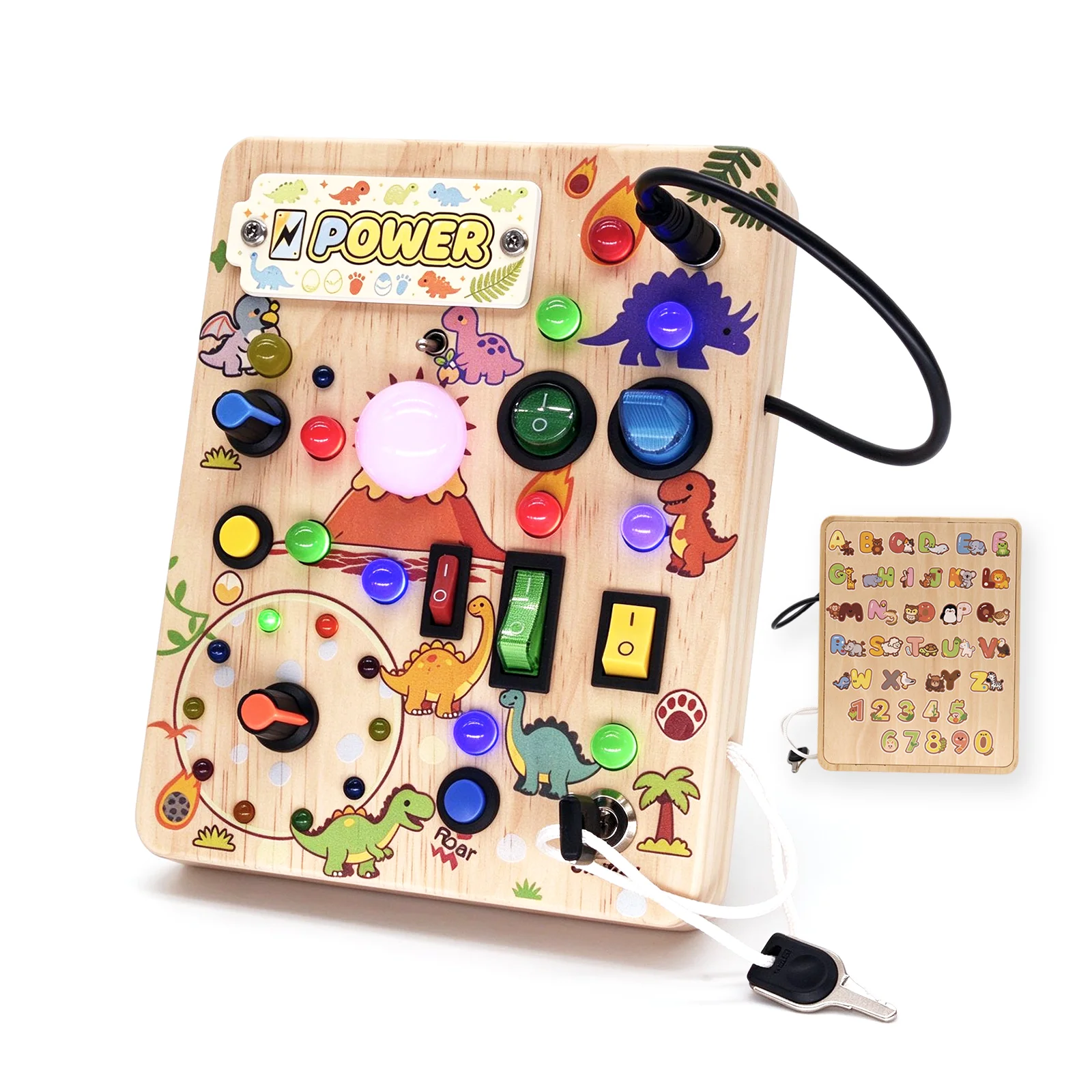
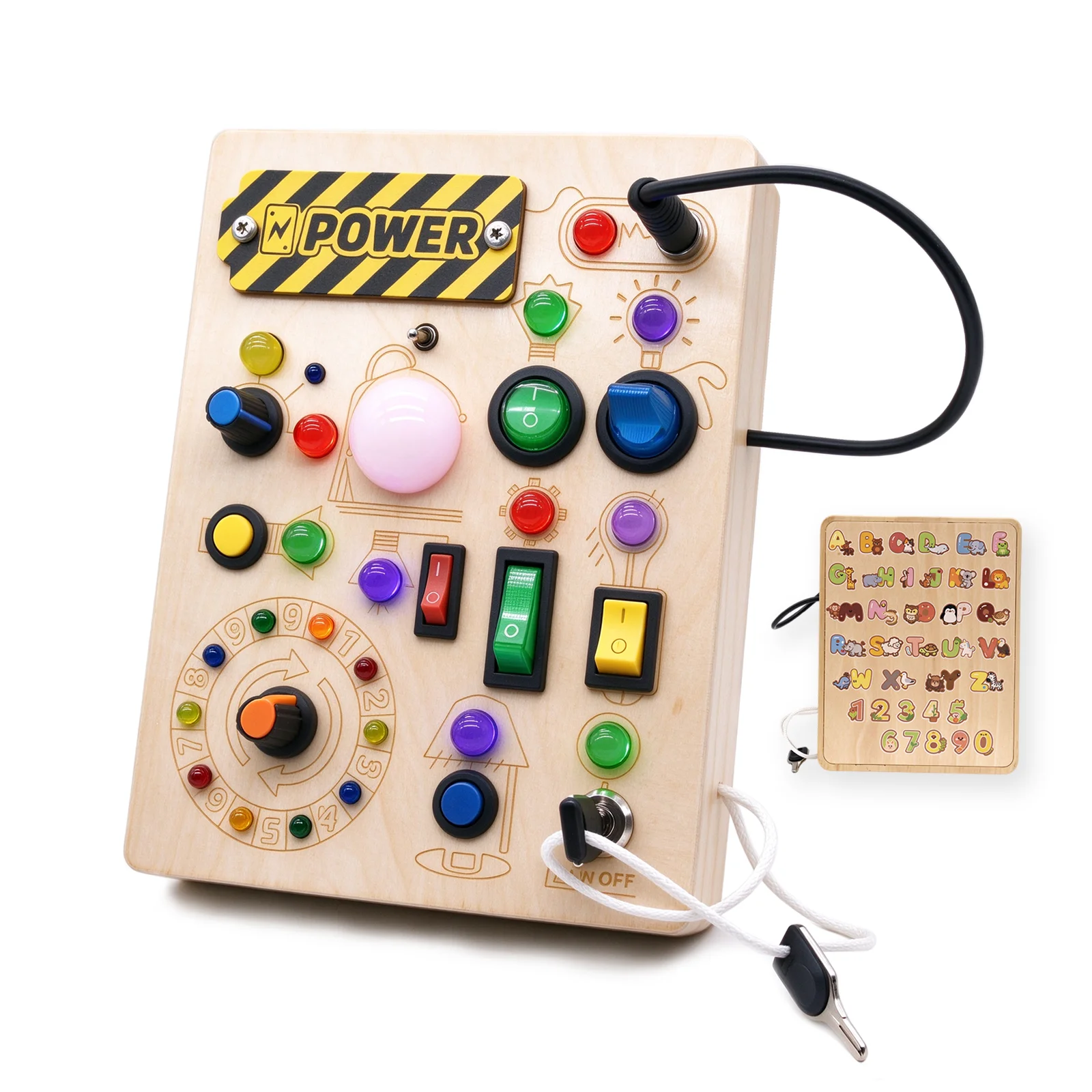
A wooden board is heavier than it looks — even a compact unit like our 12-switch classic board. A carton that is fine for plush fails for wood, so test a full carton before you commit to the spec.
Loading a container: what fits
Container loading is simple arithmetic once you have the master carton size. Rough capacities as a planning guide:
| Container | Usable volume (approx.) | Notes |
|---|---|---|
| 20 ft | ~28 CBM | Small first order |
| 40 ft | ~58 CBM | Most common for volume |
| 40 ft High Cube | ~68 CBM | Best for light, bulky goods |
Because a busy board is light for its size, you are almost always volume-limited, not weight-limited — meaning carton dimensions, not carton weight, decide how many units ship. A carton design that shaves a few centimetres in one dimension can meaningfully raise units per container. Ask your supplier for the packing list and calculate it yourself; the numbers should reconcile.
Choosing a freight mode
| Mode | When to use | Trade-off |
|---|---|---|
| Sea (FCL) | Volume orders, planned stock | Cheapest per unit, slowest |
| Sea (LCL) | Small first orders | More expensive per unit, flexible |
| Air | Urgent, small quantities | Fast, expensive — kills margin at volume |
For a first order at MOQ, LCL is often the sensible start; once you are ordering full containers, FCL brings the per-unit freight down sharply. For how this interacts with supplier terms, see the importing from China checklist.
Protecting goods in transit
Wooden boards survive shipping well, but three things still go wrong:
- Corner damage. Reinforce carton corners; a crushed corner can mean a cracked panel.
- Moisture. Long sea voyages and humid ports damage wood and packaging. Use moisture protection for long routes.
- Crushing under load. Specify stack strength and label the carton "this way up" if it matters.
A little specification up front prevents the most common claim.
Packaging and compliance
Packaging is not just protection — it carries the legal text that lets you sell:
- Age grading and any warnings
- Your details as the responsible economic operator (your company name and address in the destination market)
- Country of origin
- Certification marks where the market requires them, tied to the documentation described in our certifications guide
Getting this right on the retail box, not just the master carton, is what makes a product retail-legal and saves repacking at destination.
Five levers to cut landed cost
You cannot negotiate the exchange rate, but you can control most of what drives landed cost:
- Carton dimensions. Shaving a few centimetres off the master carton raises units per container — often the single biggest saving available.
- Retail packaging. A box that is display-ready saves repacking labour at destination.
- Freight mode. LCL for small orders, FCL once you reach container volume, air only for genuinely urgent stock.
- Damage prevention. Reinforced corners and moisture protection cost little and prevent claims that wipe out a margin.
- Incoterm choice. Who arranges freight changes both your cost and your control — decide it deliberately, not by default.
None of these is dramatic on its own. Together they routinely move landed cost by more than the unit-price negotiation most buyers focus on.
FAQ
Should I use my own retail box or a plain carton? Plain carton is cheaper per unit but costs you repacking later. If you sell retail, a custom retail box usually pays for itself — see the custom busy board guide.
How many boards fit in a 40 ft container? It depends entirely on your master carton size. Ask for the packing list and multiply units-per-carton by cartons-per-container; the supplier should provide both.
Can the supplier ship the boxes flat to save freight? For some packaging, yes — flat-packed boxes ship separately and are assembled at destination. It saves container space but adds assembly labour; weigh both.
Who labels the cartons? The factory prints and applies carton and retail labels to your spec. Supply the artwork and exact text — including compliance wording — before production.
Next step
Packaging and shipping are where an order quietly makes or loses money. Agree the master carton spec, confirm container loading, and you control your landed cost before it controls you.
Ready to plan a shipment? Send us your quantity and destination and we will return the packing spec, units per container and freight options in one reply. For the full picture, start with the complete wholesale buyer's guide.
Related reading
- importing from China — the full import checklist
- MOQ and lead times — how freight sits in your landed cost
- cost per unit — landed-cost components