Importing Toys to Brazil: INMETRO Certification, Taxes & Customs (2026)
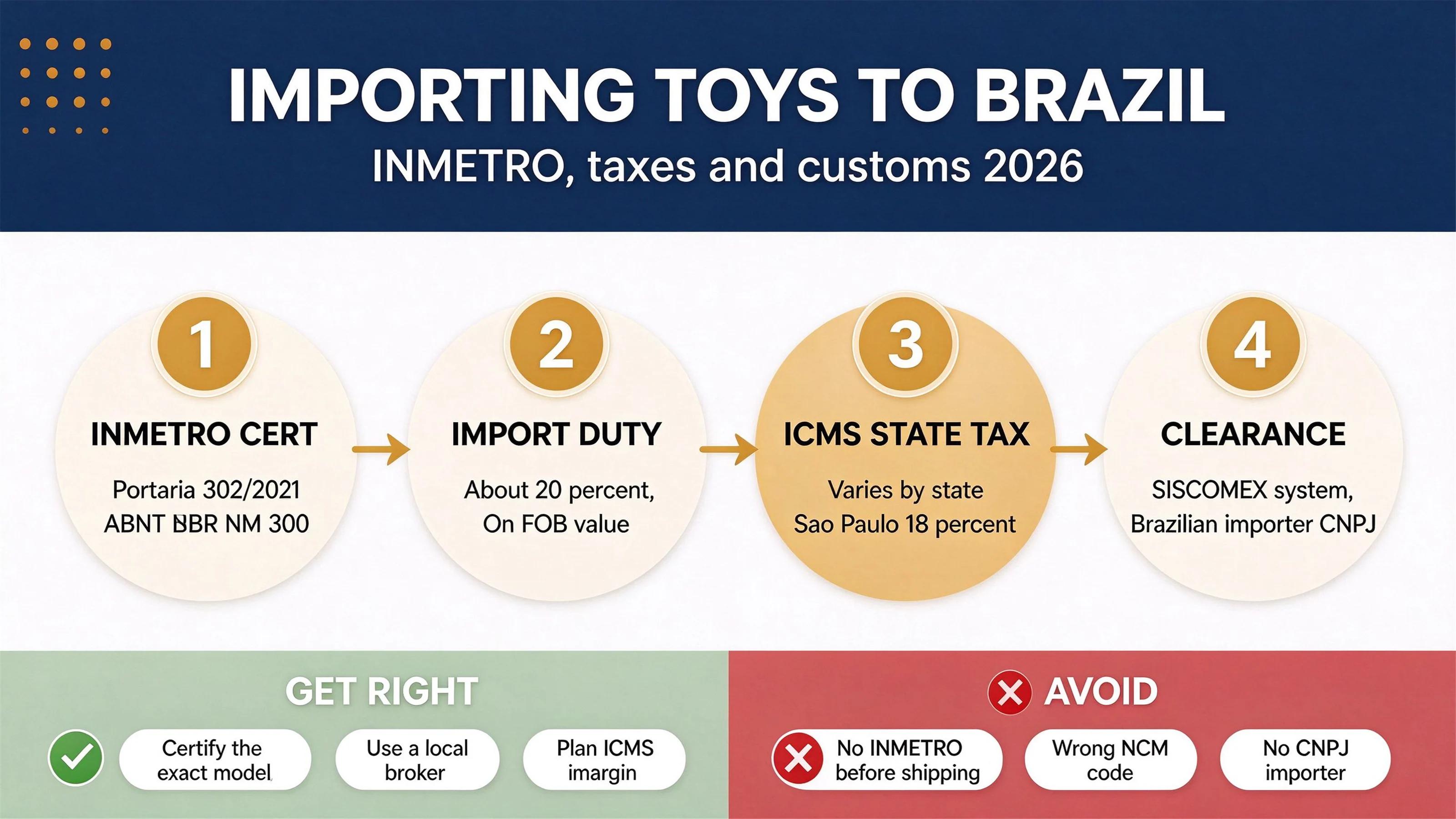
Short answer: importing toys to Brazil turns on a compulsory certification first and a duty rate second. Toys for children under fourteen are a regulated product there, and INMETRO has to certify the model under Portaria 302/2021 before a container clears, with the ABNT NBR NM 300 standards sitting behind that certificate. Only after the certificate do the import duty, the state ICMS and the federal contributions stack onto the CIF value, which is why your landed cost lands well above the FOB price. We build wooden LED busy boards in Wenzhou and ship to more than fifteen countries, so read the closing section knowing we have an interest in what you decide.
Brazil is not the EU with different paperwork. A CE file that convinced a German buyer will not open a Brazilian customs desk, and it will not convince a Brazilian retailer either, because the country runs its own mandatory regime with its own mark, its own test standards and its own label in Portuguese. If you are still working out how to get goods out of China, our walkthrough of importing busy boards from China covers the steps that come before any of this.
The market deserves the homework. Brazil is the largest toy market in Latin America, and São Paulo is the distribution hub the whole region feeds off. The wholesale district around 25 de Março and Brás moves more toy volume in a week than several national markets see in a month. Clear the certification and you are inside the biggest single pool in South America. Miss it and the container waits at the port while storage racks up.
Quick facts
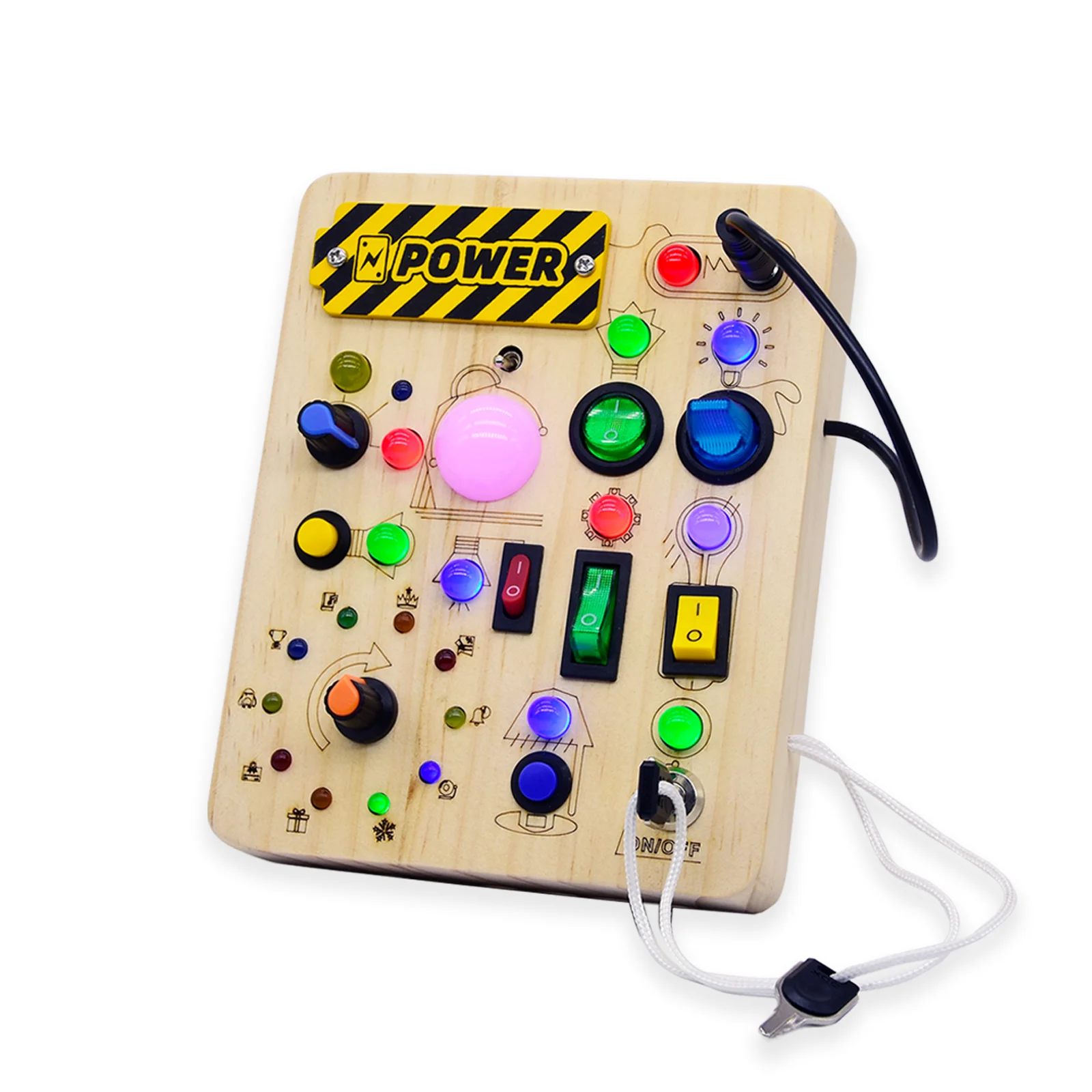
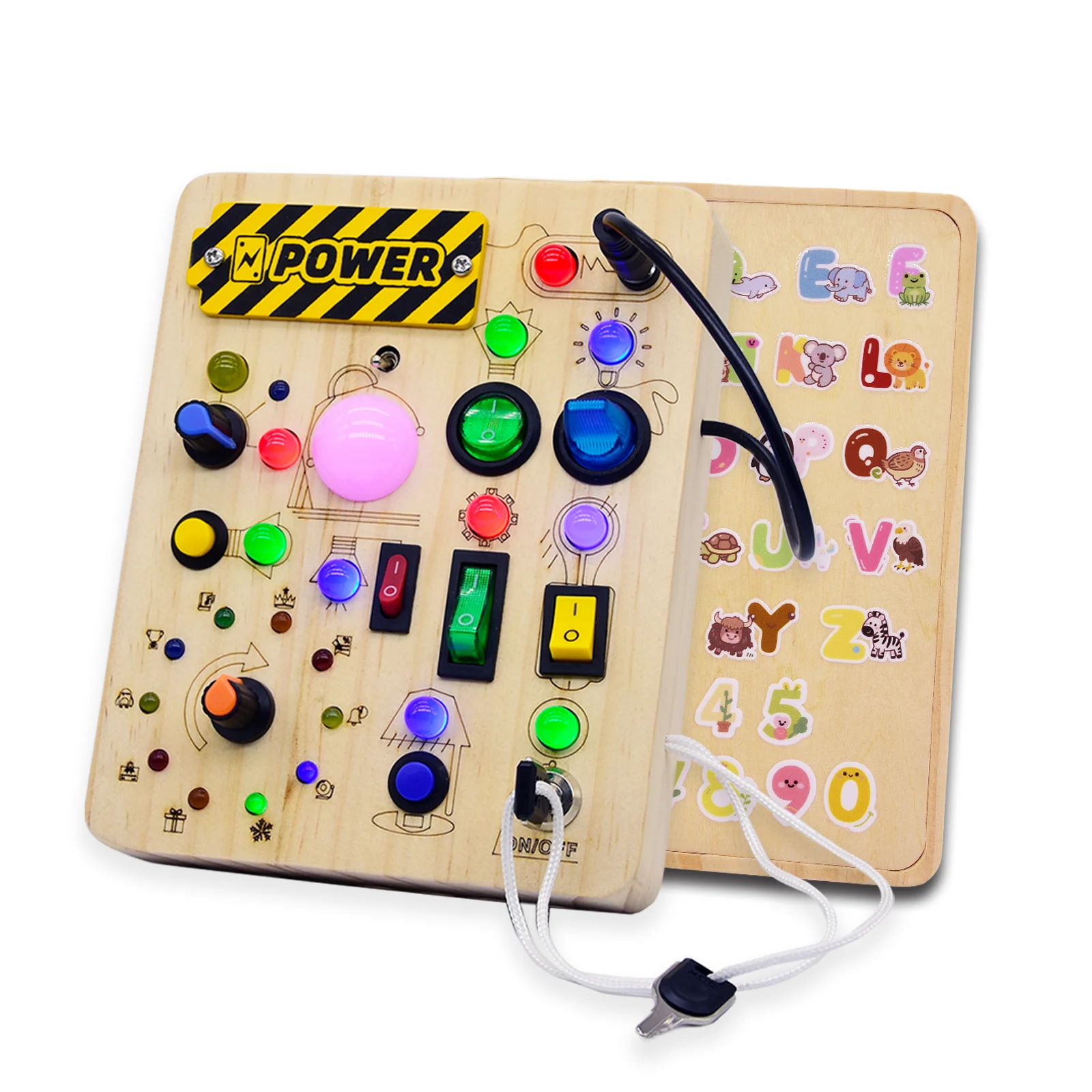
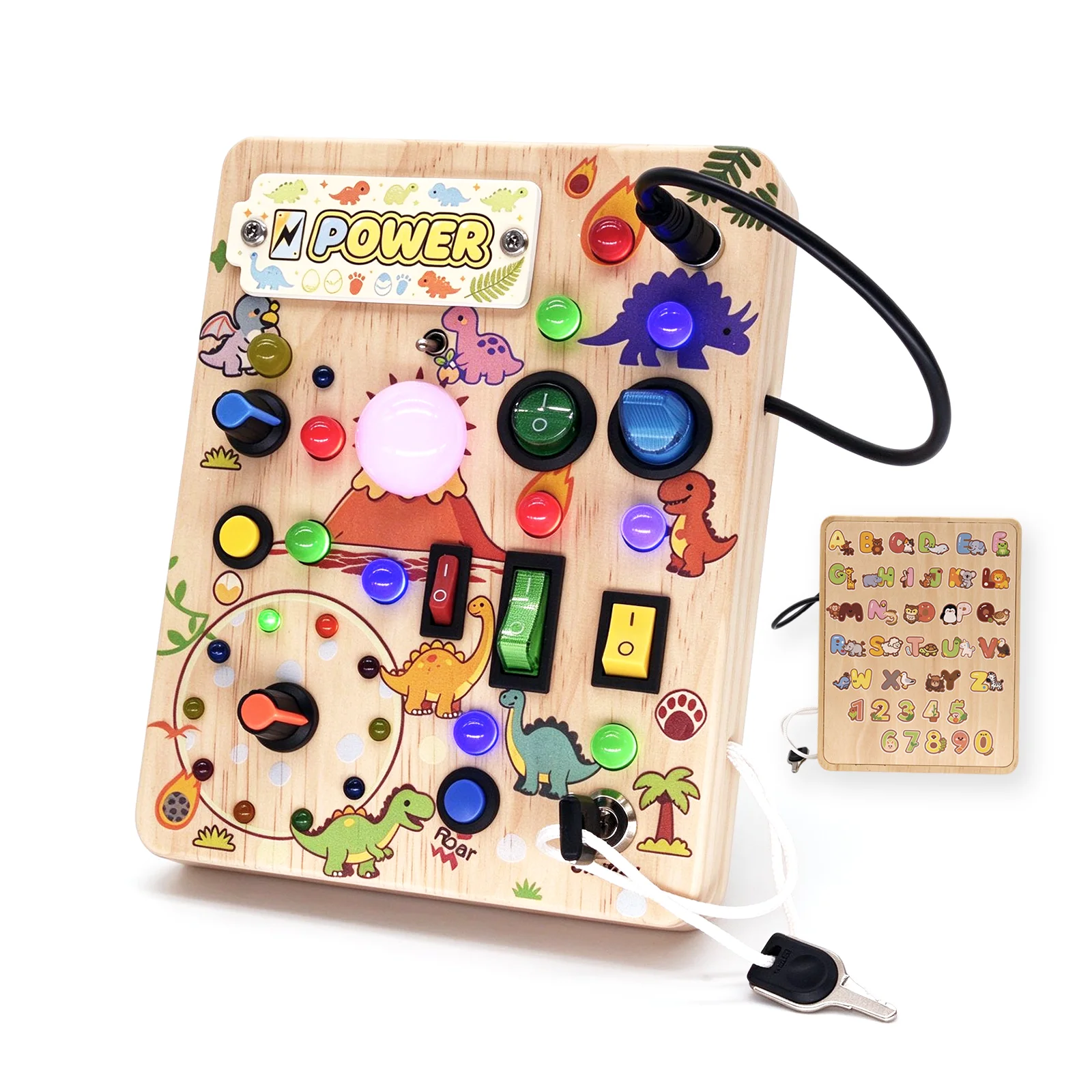
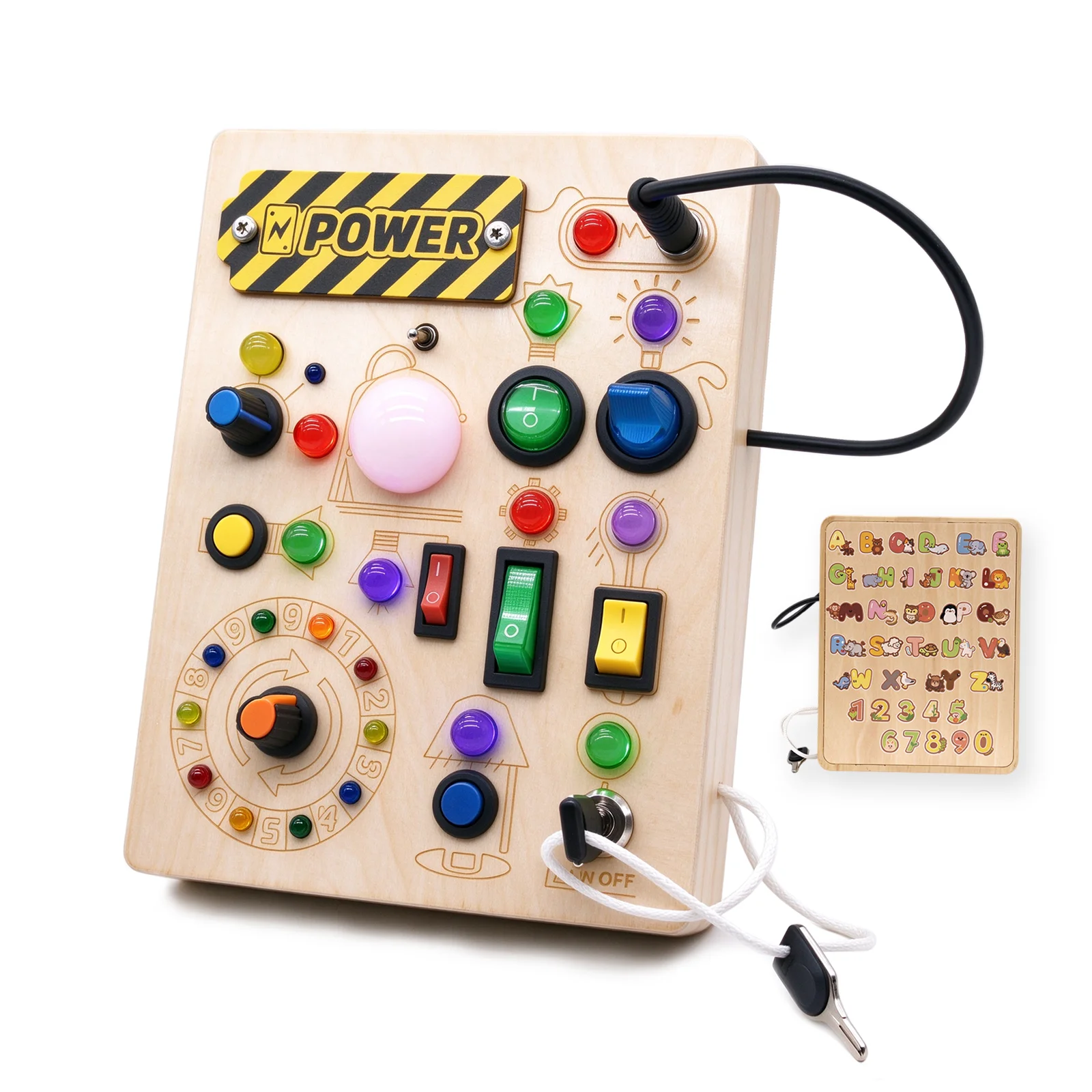
- Product: solid-wood LED busy boards, 12 mixed switches, 23 lighting modes, 2 × AAA batteries (not included)
- FOB at MOQ 100: $8.90 Classic · $9.20 Alphabet · $9.50 Dino · recommended retail $20–35
- MOQ: 100 pcs standard · 200 pcs for your own artwork or engraving · 500–1,000 pcs full OEM private label
- Samples and production: 3–7 days for samples, credited back against the bulk order; 15–25 days bulk after deposit and approved artwork
- Reports on current models: CE, CPC, ST and PSC, tested to EN 71 and ASTM F963
- Brazil gate: compulsory INMETRO certification under Portaria 302/2021 · ABNT NBR NM 300 · RADAR / Siscomex importer registration
- Payment and track record: 30% deposit, balance before shipment · 1,200+ production batches shipped · 98% on-time
Why importing toys to Brazil is a different job from your EU playbook
The first thing to sort out is which gate you are walking through. In the EU a manufacturer self-declares under CE and keeps a technical file; the mark is the producer's own statement, backed by test reports. Brazil does not work that way. A toy meant for a child under fourteen has to be certified by an accredited body through INMETRO, the national institute for metrology, standards and industrial quality, and the certificate is issued against a defined model rather than against a factory's general promise.
That changes who carries the work. In Europe an importer can often hold the compliance file themselves. In Brazil the certification, the factory audit behind it and the yearly surveillance all have to be arranged, paid for and renewed, and they attach to the exact product you intend to sell. A supplier who waves a CE report and calls the toy "Brazil ready" is describing a document with no standing at a Brazilian border.
If you want the European picture as a comparison point rather than a substitute, our overview of EU toy safety compliance covers CE and EN 71. Read the two regimes side by side and the places where they stop overlapping become obvious.
INMETRO toy certification: Portaria 302/2021 and the NBR NM 300 standards
Brazil folded its toy rules into one document, Portaria INMETRO nº 302/2021, published on 14 July 2021 and in force from 2 August that year. It consolidated and replaced the earlier portarias, which is why you still meet suppliers quoting rule numbers that were retired years ago. Two dated steps in the transition matter. From 1 January 2022 only compliant toys could be manufactured or imported, and from 1 January 2023 only compliant toys could be sold.
Underneath the portaria sit the technical standards, the ABNT NBR NM 300 series. These trace back to the same ISO 8124 family that EN 71 and ASTM F963 draw on, so the physical punishment a board has to survive is broadly familiar across markets. What changes is the certification process wrapped around it, plus a couple of limits that are tighter in Brazil than in Europe. If you need the international marks laid out next to one another, our busy board safety certifications guide does that comparison.
What actually gets tested
Physical and mechanical testing comes first, and it is where a wooden board earns or loses its file: small parts that could detach, sharp edges, cord length, drop tests, and pull and torque tests on anything a child can grab. A switch that works loose under a torque test stops being a switch. Flammability is tested next. Chemical safety covers the migration of heavy metals out of coatings, plus phthalates, where Brazil caps each restricted phthalate at 0.1% and is stricter on this point than the EU. Anything electric also pulls electrical safety into scope, which is worth watching on an LED board.
Mode 5, the three-year certificate, and the annual audit
Brazil certifies toys through what the system calls mode 5: sample testing, a factory audit, and continuing market surveillance for as long as the certificate is alive. The certificate holds for three years and is kept alive by an annual surveillance check, so it is not something you buy once and file away. Fail the surveillance and a model can be pulled, which matters to a retailer holding stock.
There is a second layer people miss. Certification sits on a product family, and the certificate number has to be registered and then printed on the packaging. That number is not decoration. A retailer who asks for it and finds a carton without it has a reason to refuse the delivery, and so does an inspector. If you are planning private label, settle early which model numbers you will sell under, because the family registration and the carton artwork both have to agree with them.
The Brazil toy import tax stack: II, IPI, ICMS and PIS/COFINS-Importação
Once the certificate is behind you, the money question is the Brazil toy import tax that nobody can quote precisely until the goods are valued. Four layers usually matter, and they sit on top of one another rather than side by side.
| Layer | Level | Rough rate | Base |
|---|---|---|---|
| Import duty (II) | federal | commonly around 20% on toys | CIF value |
| IPI | federal | depends on the tariff line | often CIF plus duty |
| ICMS | state | about 17–19% | CIF plus duty and IPI |
| PIS / COFINS-Importação | federal | combined, varies by line | CIF value |
Treat every rate in that table as a starting point rather than a quote. The exact duty depends on the goods code you declare and the tariff in force on the day, and ICMS moves with the state your importer is registered in. What does not move is the structure. The base is CIF, meaning goods plus freight plus insurance, and several of the layers are calculated on values that already contain other taxes. This compounding is what Brazilians mean by Custo Brasil, and it is why a board with a modest FOB price can arrive at a landed cost well above the invoice. Anyone importing toys to Brazil for the first time tends to under-budget this by a wide margin.
Put numbers on it, with the caveat that only your broker can be exact. Take a Classic at $8.90 FOB, land it at a CIF of roughly $11 once freight and insurance are in, and the duty layer adds something like two dollars on a 20% rate. From there ICMS and the federal contributions apply to bases that already include the earlier taxes, so the all-in bill at the border can easily run several dollars a board above the goods value. On a product your buyer will sell at $20–35, that is survivable. On a board you hoped to retail at $12, it is not.
If you want the per-unit cost built up from our side before the taxes go on, the busy board wholesale price guide breaks the FOB price into its blocks.
RADAR, Siscomex and the import licence you cannot skip
None of the certification or tax talk matters if the goods cannot be cleared, and clearing them in Brazil requires importer registration. A company needs RADAR, the customs registration that gives it access to Siscomex, the federal foreign-trade system, and without the right RADAR profile a first container cannot be cleared at all. The registration is granted to a Brazilian legal entity, which is the practical reason overseas sellers usually work through a Brazilian importer or distributor rather than importing in their own name.
Ask who the importer of record will be before you sign anything, and ask whether their RADAR profile covers the value and the frequency of the shipments you have in mind. A licence held for small consignments is not the same as one that can handle a full container twice a quarter, and discovering that after the goods have sailed is an expensive way to learn it.
Labels, Portuguese warnings and the model number on the box
The label is where a compliant product quietly turns into a non-compliant one, because the label is what gets checked on a shelf. The packaging needs the INMETRO mark, the certificate number, the batch, the importer's details, and safety warnings in Portuguese. Wording like "não recomendável para menores de 36 meses" is the standard warning aimed at children under three, and it has to be spelled correctly and placed where a shopper can read it. English-only warnings are among the simplest ways to fail after you have already paid for tooling.
This is cheap to get right at the artwork stage and painful to fix afterwards. When you approve a box proof, approve it with the Portuguese text in place, not as a placeholder you intend to drop in later.
Where Brazil orders go wrong
This is the section buyers thank us for afterwards.
Treating CE as the finish line. CE gets a product onto a European shelf. It does not satisfy INMETRO, and a Brazilian retailer checking for the certificate number will not accept it as a substitute. Sellers who assume the two marks are interchangeable find out at the port or at onboarding, and by then the cartons are already printed.
Buying a certificate that names the wrong model. Reports are model-specific. A file that covers the Classic says nothing about the Dino for the purposes of a Brazilian audit, and the number on the certificate has to match the number on the box. Check both, not just one.
Importing without a proper RADAR profile. This is the quiet one. The order is fine, the product is compliant, and the container still cannot move because the importer's registration does not fit the shipment. Sort the importer of record early.
Assuming the certificate is permanent. Three years with an annual surveillance check is not the same as forever. A buyer who has lived through a lapsed certificate asks for the current validity date before the deposit.
Including batteries. Packed cells push a toy into a stricter regulatory category in Brazil, and there is a cost and a paperwork trail attached to that. Our boards ship with 2 × AAA batteries not included, which is deliberate, and on this market it is a genuine advantage rather than a hedge.
English-only packaging. Portuguese warnings are not optional, and neither is the importer's information. This one lands on the importer, which is the person reading this.
What importing toys to Brazil costs at each order tier
Importing toys to Brazil at a sensible entry point is cheaper than most buyers expect, because the certification and the label work scale with volume rather than resetting each time. The product side has not changed from our other markets. The Classic is $8.90 FOB, the Alphabet $9.20 and the Dino $9.50 at 100 pieces, and the recommended retail of $20–35 leaves room for the landed cost and the shelf margin together.
| Order | Quantity | What changes | Unit price |
|---|---|---|---|
| Trial | 100 | standard board, stock artwork | $8.90–$9.50 FOB |
| Custom artwork or engraving | 200 | your design, engraved back panel | base plus artwork charge |
| Full OEM / private label | 500–1,000 | your box, barcode and brand | quoted per spec, falls with volume |
Samples run 3–7 days and the sample fee is credited back against the bulk order, so the first cost of testing a Brazilian listing is small. Bulk production is 15–25 days after the deposit and the approved artwork. Where the calendar stretches is on your side of the table: the Portuguese label proof, the certificate for the model you actually intend to ship, and the importer's registration are the items that decide whether the goods move on schedule. The MOQ, pricing and lead-time guide shows where each tier sits and what moves the timeline.
Questions buyers ask us every week
Do we need INMETRO toy certification to sell a busy board in Brazil, or is CE enough?
CE is not recognised for this purpose. A wooden board for children under fourteen needs certification through INMETRO, arranged against the specific model. Plan for it as a real step in your timeline, not as paperwork you can produce after the goods land.
What does the Brazil toy import tax add to the FOB price?
More than most first-time importers budget. With duty near 20% on toys, ICMS around 17–19% by state, and federal contributions on top, the layers compound on a CIF base. Only your customs broker can give you the exact figure for your goods code, but expect the landed cost to sit clearly above the invoice value.
Our supplier says the toy is already "INMETRO certified". Can we use their certificate?
Usually no, or not without checking. Certification attaches to a named model and a registered product family, and the certificate number has to appear on your packaging. Ask for the certificate, read the model it names, and confirm it covers what you are actually buying. A claim without a number and an issuing body tells you something about how that supplier handles everything else.
Can you ship the board with the AAA batteries included for Brazil?
We ship without batteries on purpose. Packed cells pull the product into a stricter category with extra obligations, and on the Brazilian side that is paperwork and cost you do not need. If you add batteries yourself after import, that exposure can move onto you, which is worth checking before you plan a bundled offer.
How long from placing an order to a compliant product on a shelf?
Production is 15–25 days after deposit and approved artwork, and sampling is 3–7 days. The variable is the certification and the label work, which take days if you start early and weeks if you start after the artwork is signed off. On a first Brazilian order, treat the compliance steps as the long pole and start them while the sample is still in transit.
Is São Paulo the only way into the market?
It is the natural first move. São Paulo is the region's distribution hub and the wholesale streets around 25 de Março and Brás are where a lot of toy volume is priced. Other states and ports work, and the ICMS you pay depends on where your importer is registered, so the geography is a tax question as much as a logistics one.
What we'd do in your position
I would not order a container before two things were settled. The first is the importer of record, with a RADAR profile that fits the shipment size and frequency you are planning. The second is the certificate path: which model number you will sell, who is arranging the certification and the annual surveillance behind it, and whether the Portuguese label and the certificate number are already in the artwork proof. Those two items are what a Brazilian buyer checks before a deposit, and they are the ones that decide whether the goods ever leave the port.
Then I would start small. Order 100 pieces of a stock-artwork board, put it in front of a São Paulo distributor or a listing, and watch two numbers: the return rate and whether the compliance paperwork comes back with questions. The tier table above is built so that a small trial costs little more per unit than a large one, and the money you save on a cautious first order buys you the information to place a confident second one.
If a Brazilian partner insists on a certificate before you have even settled the model, decide that early rather than late, because it changes the price and the calendar together. And if you want to hold the board before any of that, the Classic LED busy board page has the specs and the print files. Send us the model you are leaning towards, the quantity and your port, and the quote comes back with a landed-cost note beside the FOB price. In Brazil the second number is the one that decides.
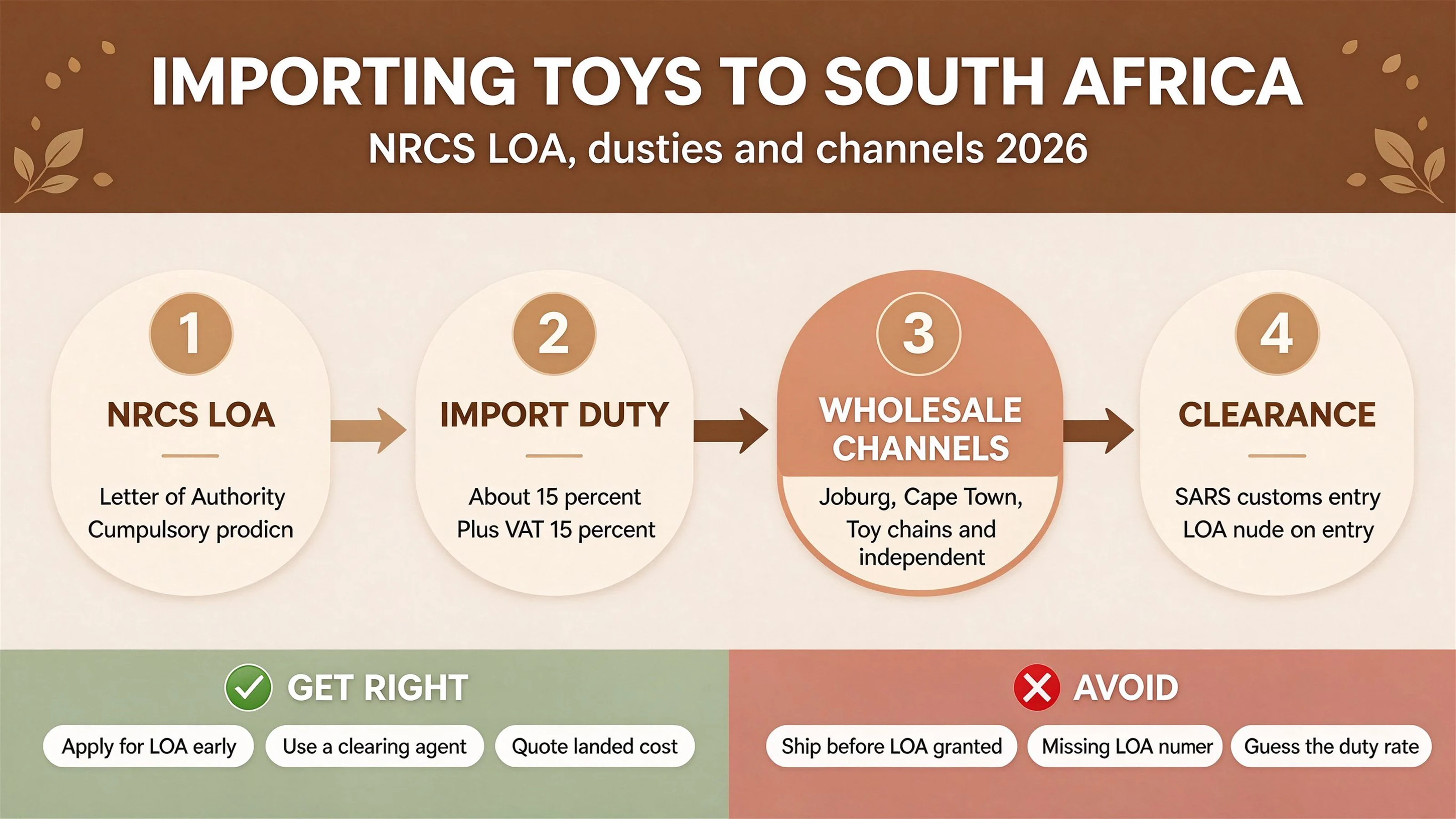
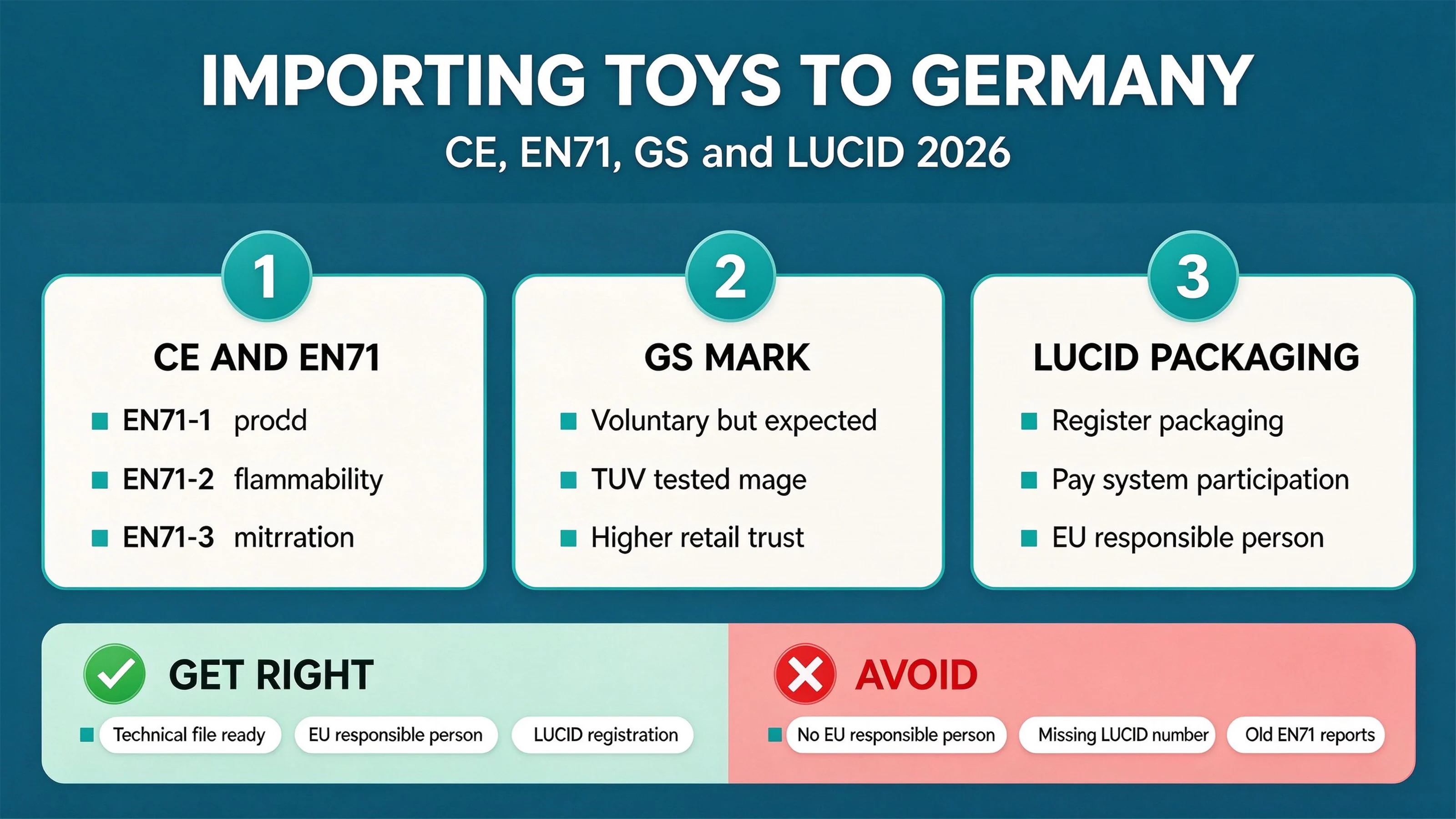
If you are still deciding on the shape of this order, three pages go further: Importing Toys to South Africa: NRCS Letter of Authority, Duties & Wholesale Channels (2026) on the supply side, Importing Toys to Germany: CE, EN 71, GS Mark & the Packaging Act (LUCID) (2026) on the quality side, and Busy Board Import Duty & HS Code: What Importers Actually Pay when the quote is on your desk.