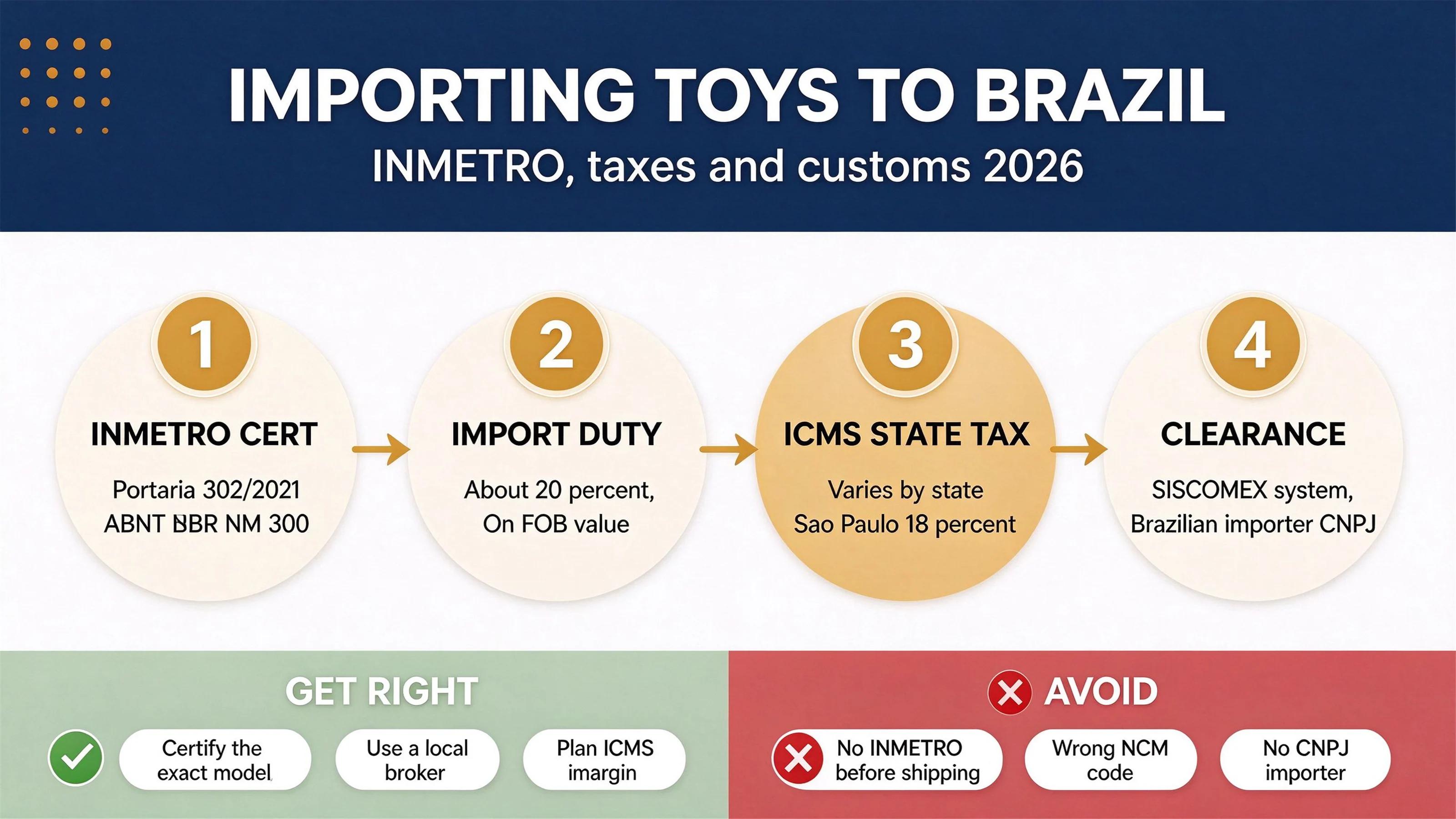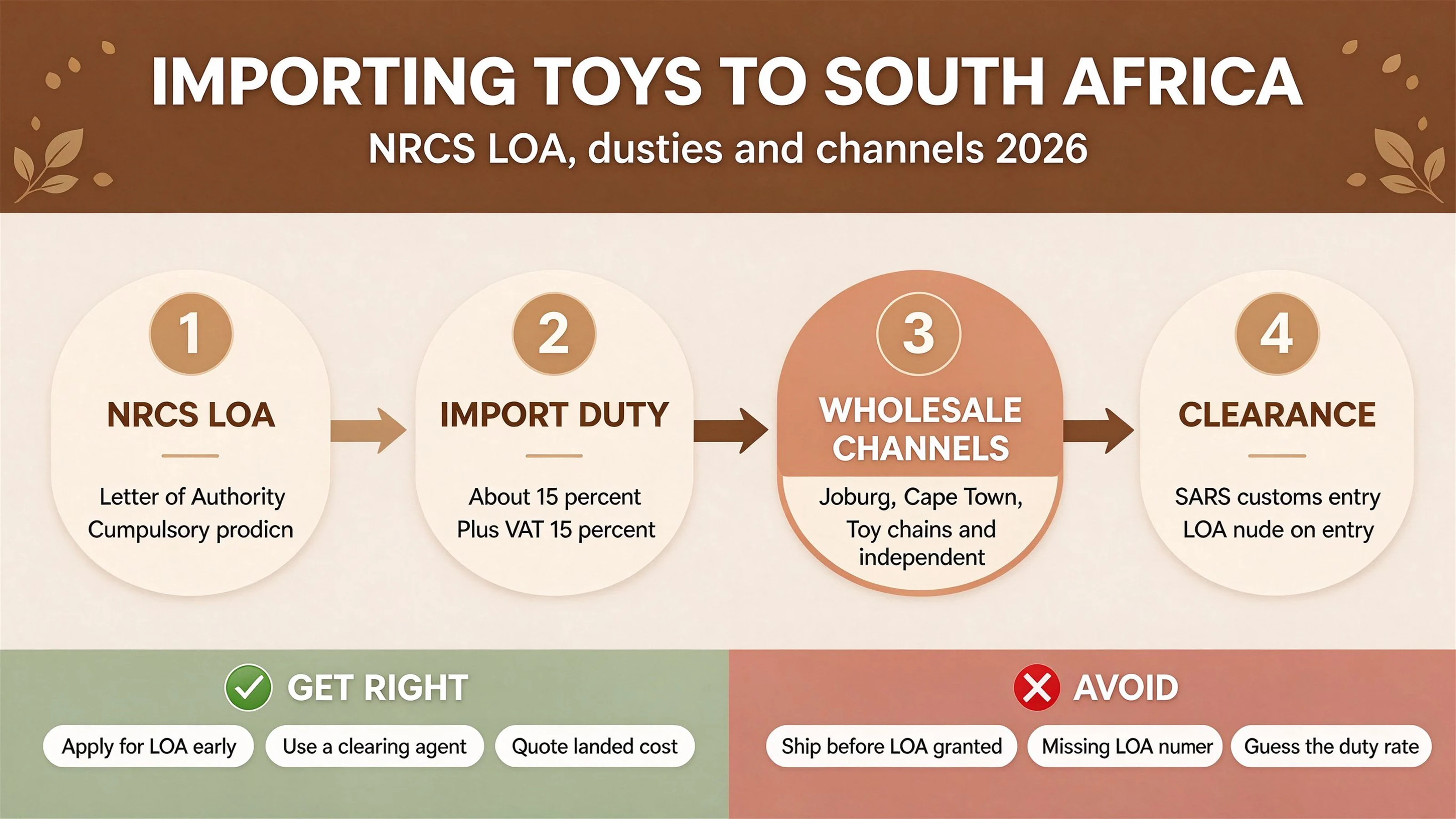
Busy Board MOQ, Pricing & Lead Time: A 2026 Wholesale Buyer's Guide
Once you have confirmed that a busy board is certified for your market, the next three numbers decide whether the order makes business sense: the minimum order quantity (MOQ), the unit price, and the lead time. Get them wrong and you either tie up cash in stock you cannot move, or you quote your own customers a price you cannot hold.
This guide gives you the real numbers from a direct working factory — not a marketplace listing — and explains exactly what moves each one up or down.
What a busy board MOQ really means
A busy board MOQ is the smallest quantity a factory will produce in one run. It exists because every production batch carries fixed setup costs: material cutting, CNC programs, jig changes, printing and QC time. A busy board is a labour-intensive assembly, so the setup component is real.
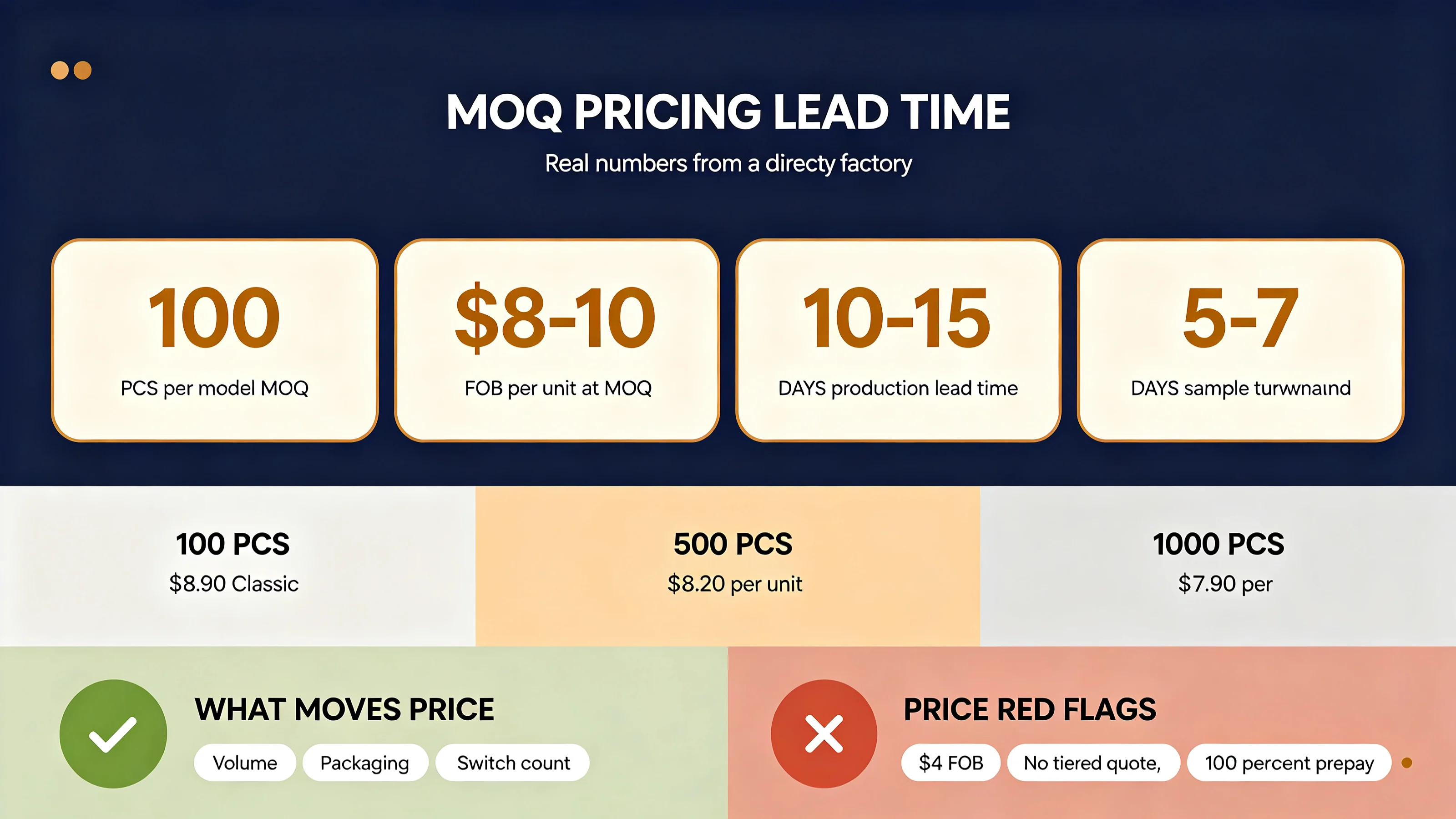
For standard, catalogue models, a reasonable MOQ is 100 pieces per model. That is the level at which the factory's setup cost is spread thinly enough to keep the unit price sensible, while still letting a first-time buyer test a market without a huge commitment.
MOQ rises when the product stops being standard:
| Order type | Typical MOQ | What changes it |
|---|---|---|
| Standard catalogue model | 100 pcs | Lowest setup — reuse existing tooling |
| Mixed carton (2–3 models) | 100 pcs per model | Adds sorting and per-model packing |
| Custom artwork / engraving | 200 pcs | New artwork file, print or laser setup |
| Full OEM (custom shape, packaging) | 500–1,000 pcs | New tooling, packaging print runs |
| Custom box / private label | 500–1,000 pcs | Box die-cut and print minimums |
The key insight for buyers: your MOQ is driven by what is custom, not by the board itself. If you are willing to start from an existing model and existing packaging, you can launch at 100 pieces per model.
Busy board pricing: what drives the FOB number
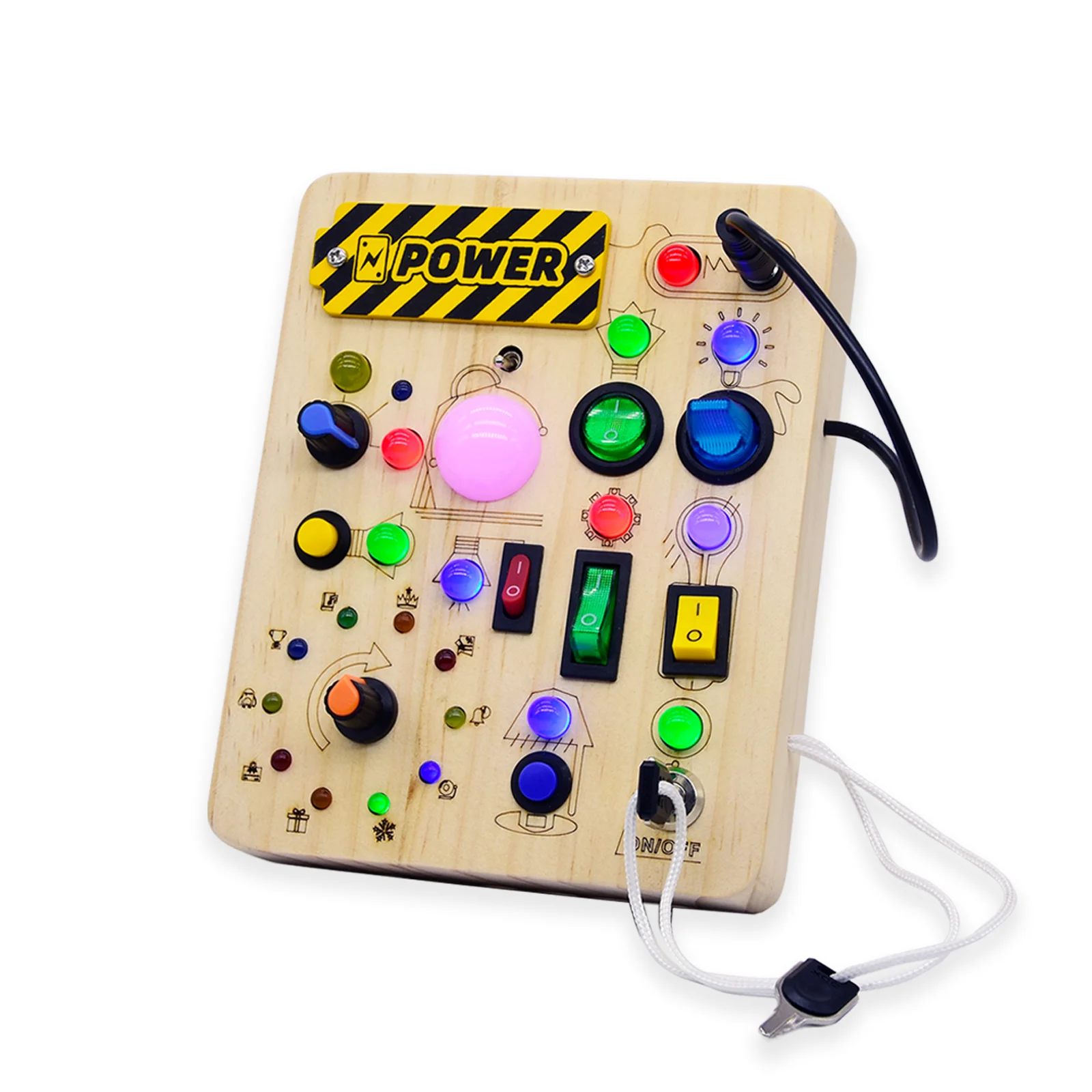
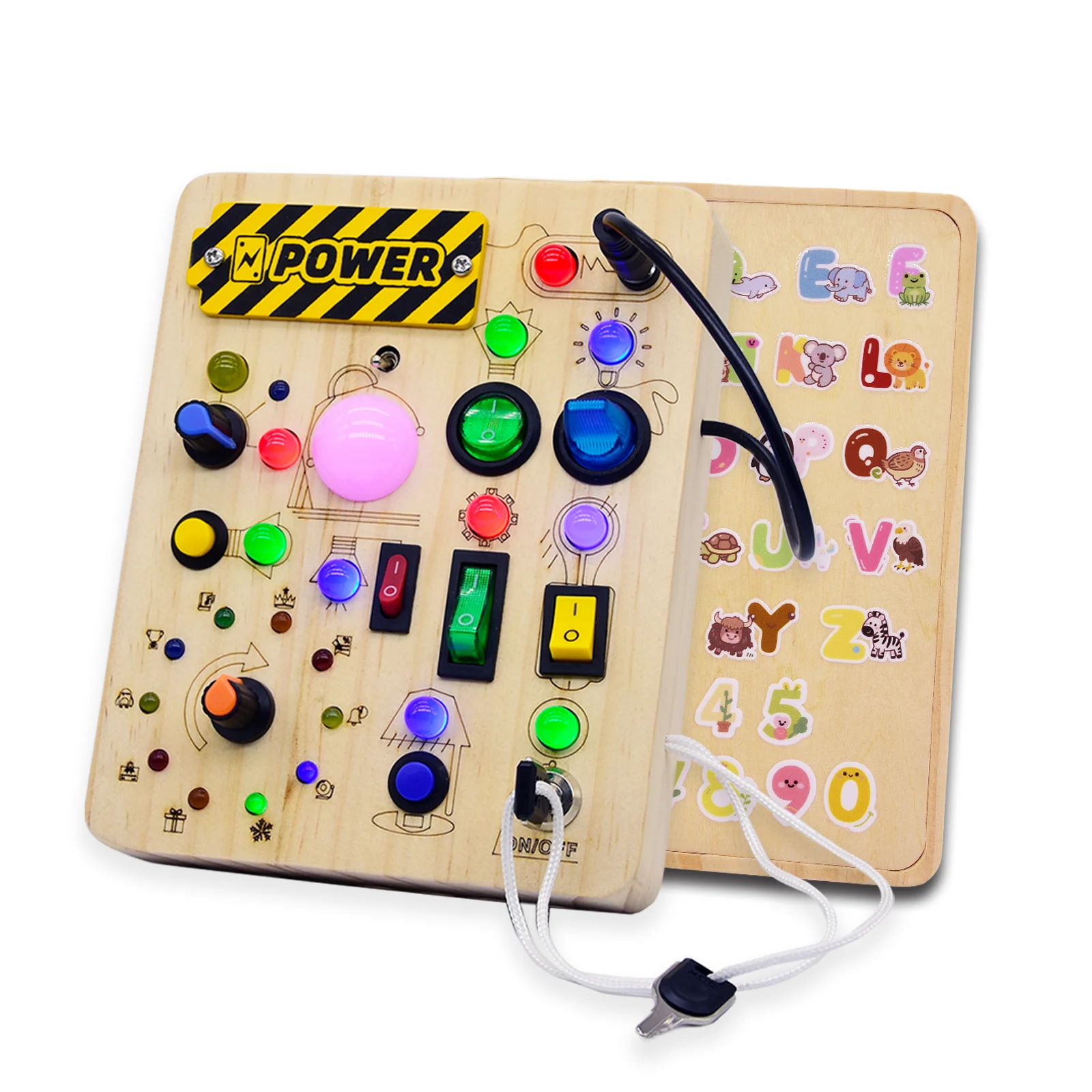
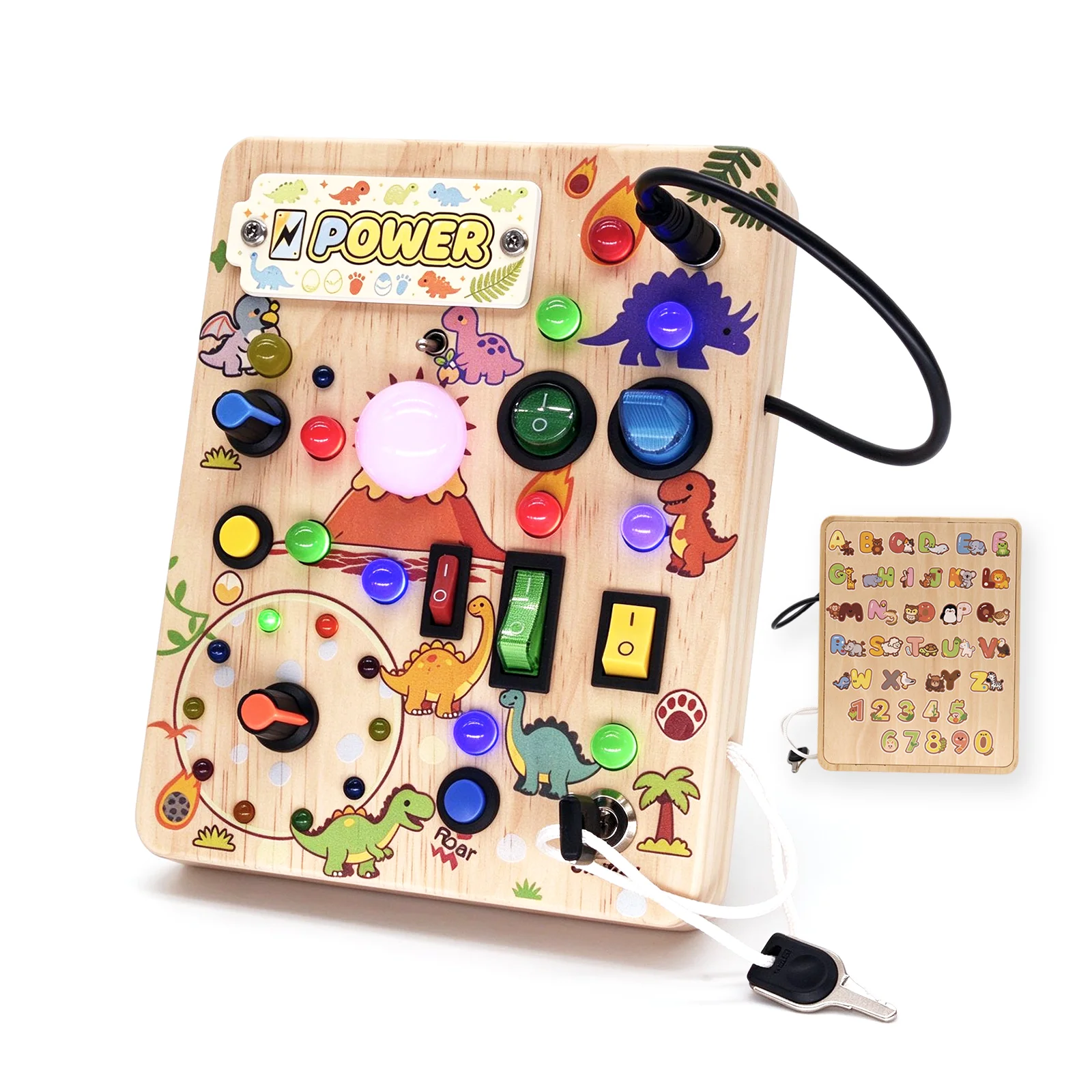
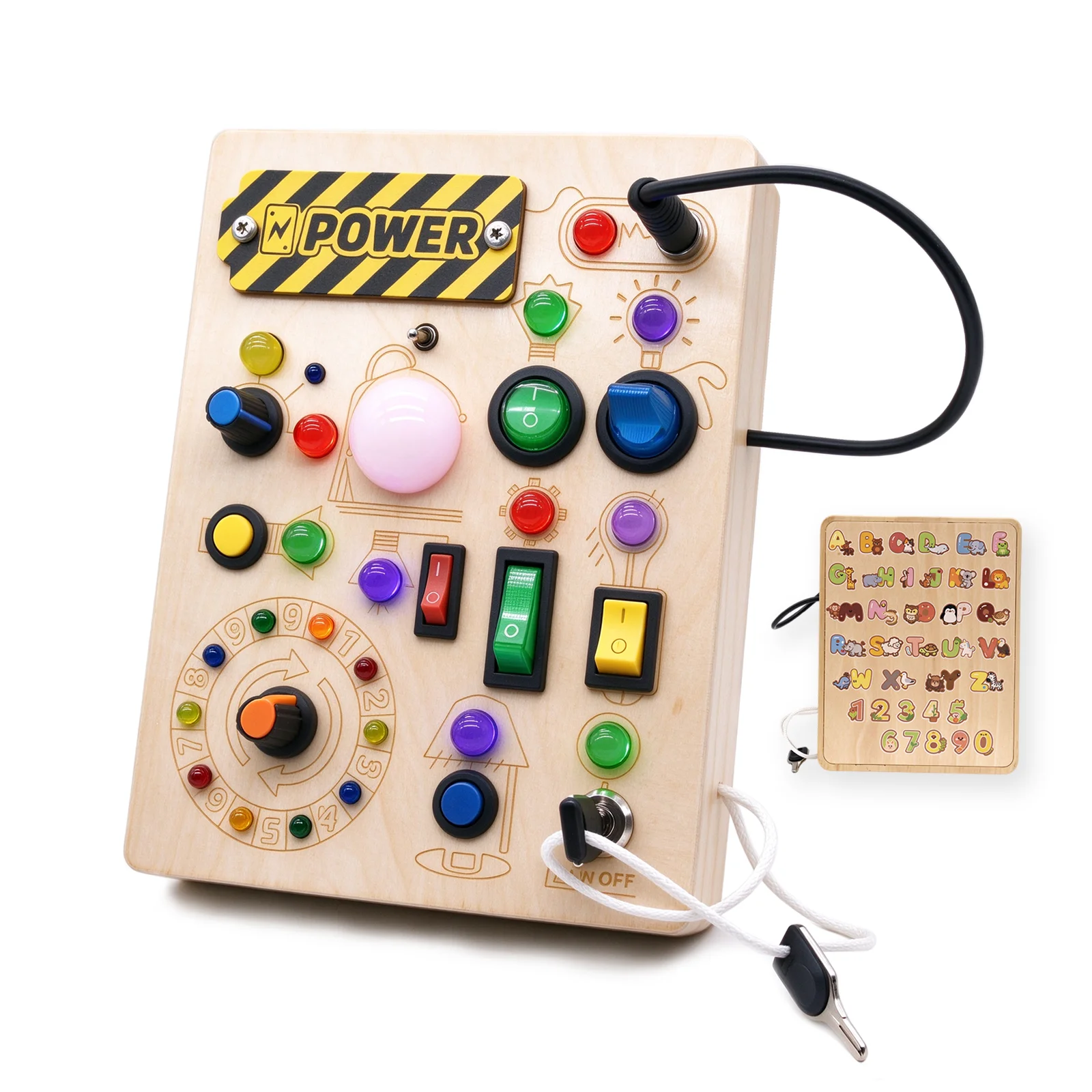
Busy board FOB pricing sits in a fairly narrow band because the product is made from the same raw materials — solid wood, surface finish, switch assemblies, LED components and a small battery compartment. Our own three models — the Classic 12-switch LED board, the Alphabet and the Dino — all built on the same 12-switch / 23-LED platform, land at:
| Model | Description | FOB unit price (USD) |
|---|---|---|
| Classic | 12-switch LED board, blank back | ~$8.90 |
| Alphabet | Adds A–Z and 0–9 on the back | ~$9.20 |
| Dino | Dinosaur front, alphabet back | ~$9.50 |
That is the $8–10 FOB range you should expect for a well-made, certified wooden LED busy board. Beware of quotes far below it: at a $4–5 FOB the wood grade, coating, switch durability or certification is almost certainly being cut somewhere you cannot see.
Four things move the unit price:
- Volume. Unit cost falls as quantity rises — always ask for a tiered quote (100 / 500 / 1,000 / 3,000).
- Complexity. More switches, more engraved detail and extra parts add assembly labour.
- Packaging. A plain white box is cheap; a printed retail box or a blister is not.
- Certification scope. Testing multiple markets or an unusual age grade adds one-off cost.
If price is the deciding factor, the lever is almost always the packaging and the printed detail — not the wood, which should never be compromised for a child's product.
Sample orders: cost, quantity and turnaround
Never place a bulk order on a photo. Order samples first.
- Sample quantity: 1–10 pieces is normal. More than a few pieces is usually only needed for a specific retail buyer's own testing.
- Sample lead time: 3–7 days for standard models.
- Sample cost: charged at or near unit price plus courier, and typically credited against your bulk order if you proceed.
When your samples arrive, test them the way a customer would: open and close every switch repeatedly, check the LED behaviour, inspect the screws and edges, and confirm the wood finish matches the sample you approved. Keep one unit sealed as your "golden sample" — it becomes the reference for every future order.
Lead time: from purchase order to loaded container
Production lead time on a standard busy board order is 15–25 days after the deposit is received and the artwork (if any) is approved. Budget the full timeline like this:
| Stage | Typical time | Notes |
|---|---|---|
| Sample approval | 3–7 days | First order only |
| Deposit + artwork sign-off | 1–3 days | Starts the clock |
| Production | 15–25 days | Standard models |
| QC + packing | included above | Inspect before shipping |
| Freight booking | 2–5 days | Varies by season and port |
| Sea transit | see shipping guide | Depends on destination |
Two things push lead time out: Chinese New Year (a two-to-four-week factory shutdown that books out early) and pre-holiday congestion for Western retail deadlines. If you need stock on a shelf by a fixed date, add four weeks of buffer and confirm the date in writing.
What can push your price up — or down
Cheaper is not always cheaper. Factors that quietly change your landed cost:
- Certification scope — testing for several markets costs more up front but avoids a blocked shipment later.
- Packaging choice — retail-ready boxes cost more than plain cartons, but save repacking at destination.
- Payment terms — a deposit/balance structure affects cash flow, not unit price, but it matters to your plan.
- Freight mode — sea versus air changes landed cost far more than any unit-price negotiation.
How to move a busy board MOQ without paying extra for it
MOQ is not a negotiating position — it is a cost. Every batch carries a fixed setup: cutting, CNC programs, jig changes, artwork plates and QC time. A factory that "drops MOQ to 50 because you asked nicely" is either spreading that setup across your price, or planning to take it back somewhere you cannot see.
That said, the number does move when the setup moves. Four honest ways to lower what you have to commit:
- Start from a stock model. Existing tooling means no new setup. 100 pieces per model is the floor for these, and it is a real floor.
- Mix models in one order. Three models at 100 pieces each is an easier run than one model at 500 — the factory gets a bigger total batch using the same tooling. Ask for a mixed-carton quote rather than a lower MOQ on a single line.
- Drop the custom parts. Custom artwork, engraving, a printed box and your own barcode each carry their own minimum. Strip them for the first order and add them at the second — the product is identical, the setup is not.
- Buy two shipments instead of one. If 500 pieces is a stretch, order 100 twice. The unit price is higher, but you have not tied up five figures in stock you have not tested yet.
What does not work is asking for the 500-piece price at 100 pieces. Volume genuinely lowers unit cost — the full curve, with numbers, is in our busy board wholesale price guide. A supplier who agrees to it anyway is either quoting high somewhere else, or planning to make it back in the material.
Payment terms: what they cost, and what they protect
The price on a proforma invoice assumes a payment structure. Change the structure and the price usually changes with it, whether or not anyone says so out loud.
| Terms | Typical use | What it costs you |
|---|---|---|
| 30% deposit, balance before shipment | Standard, first order | Nothing — this is what quoted prices assume |
| 30% deposit, balance against B/L copy | Established relationship | A small premium, or a refusal |
| 100% before production | Very small or first orders | 1–3% cheaper, and all of the risk |
| Open account, 30–60 days | Long-term, large volume | Several percent, if offered at all |
Two rules worth holding to.
Do not pay in full up front to save 1–3%. The discount is small; the exposure is your entire order value sitting with a supplier you have not shipped from before. Our standard is 30% deposit with the balance before shipment, and we would rather keep it there.
Ask what terms each quote assumes before you compare prices. A quote 3% below another, from a supplier who wants 100% up front, is not 3% cheaper. It is the same price with the risk moved to your side of the table.
For a first order, also keep the deposit and balance on one proforma invoice, with model numbers, quantities and carton marks written out. It costs nothing and it resolves most disputes before they start.
How to get an accurate quote the first time
Send your supplier a short brief and you will get a usable quote in return:
- Target models (or "a 12-switch LED board")
- Quantity per model, and total
- Destination market(s) — this sets certification and packaging
- Packaging requirement (plain carton or retail box)
- Required delivery date and preferred Incoterm
With those five points, a factory can quote price, MOQ and lead time without a round of clarifying emails. For a deeper look at what else to check before you commit, see how to choose a busy board supplier, and for the full sourcing picture start with our wholesale buyer's guide.
FAQ
Can I order below the busy board MOQ of 100 pieces? For a first sample run, yes — a small paid sample order is normal. For production, 100 pcs per model is the practical floor that keeps pricing sane.
Is the FOB price negotiable? At higher volumes, yes. Ask for tiered pricing rather than negotiating a single number, and compare the packing specification behind each quote.
Do you charge extra for certification per order? Certifications for our standard markets are maintained at our cost. Market-specific testing can add a one-off charge.
How much deposit is normal? A deposit to start production with the balance against the bill of lading is standard. Exact terms are confirmed on the proforma invoice.
Next step
Want a specific number instead of a range? Send us your models, quantity and destination and you will get price, MOQ and lead time back in one reply. If heavy customisation is the goal, read the custom and OEM busy board guide next.
Related reading
- cost per unit breakdown — where your money actually goes
- custom and OEM busy boards — what changes the MOQ
- complete wholesale buyer's guide — the bigger picture
If this raised a specific question, Essential vs Classic: Which Busy Board Fits Your Market? (Affordable Busy Board Wholesale, 2026) goes deeper, and Busy Board Import Duty & HS Code: What Importers Actually Pay covers the part most buyers ask about next.