Custom & OEM Busy Boards: What Brand Owners Need to Know
If you are building a toy brand rather than reselling a catalogue item, you will eventually want a custom busy board that carries your name, your artwork and your packaging. That is the point where a standard order becomes a custom or OEM project — and where most first-timers underestimate what is involved.
This guide explains the levels of customisation available on a custom busy board, what each one costs you in time and MOQ, and what to prepare before production starts so the project does not stall halfway.
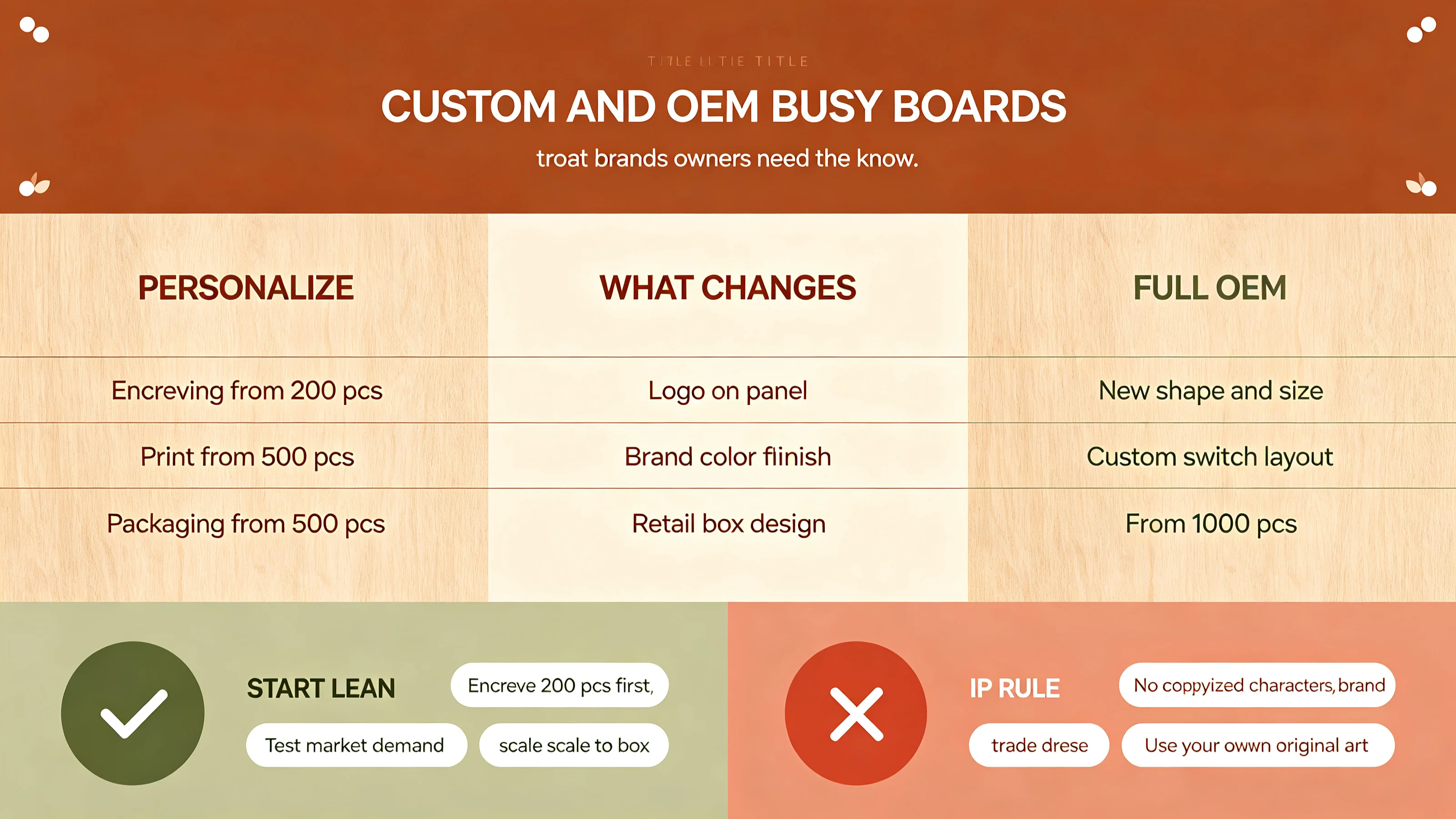
Three levels of "custom"
"Custom" is a broad word. It helps to separate it into three tiers, because each one has a different MOQ, timeline and risk profile.
| Level | What changes | Typical MOQ | Setup effort |
|---|---|---|---|
| Light custom | Engraving, colour, logo on a standard board | 200 pcs | Low — artwork file only |
| Mid custom | Custom front artwork + custom retail box | 500 pcs | Medium — print setup, box die |
| Full OEM | New shape, new features, full packaging | 1,000 pcs | High — tooling and sampling |
Most brand owners start at the top row and grow into the middle. Going straight to full OEM before you have market feedback is the expensive mistake.
Custom artwork: engraving, print and colour
On a wooden busy board, "artwork" means one or more of:
- Laser engraving — your logo or motif burned into the panel or the back. Durable, tactile, no ink, and cost-effective at moderate volumes.
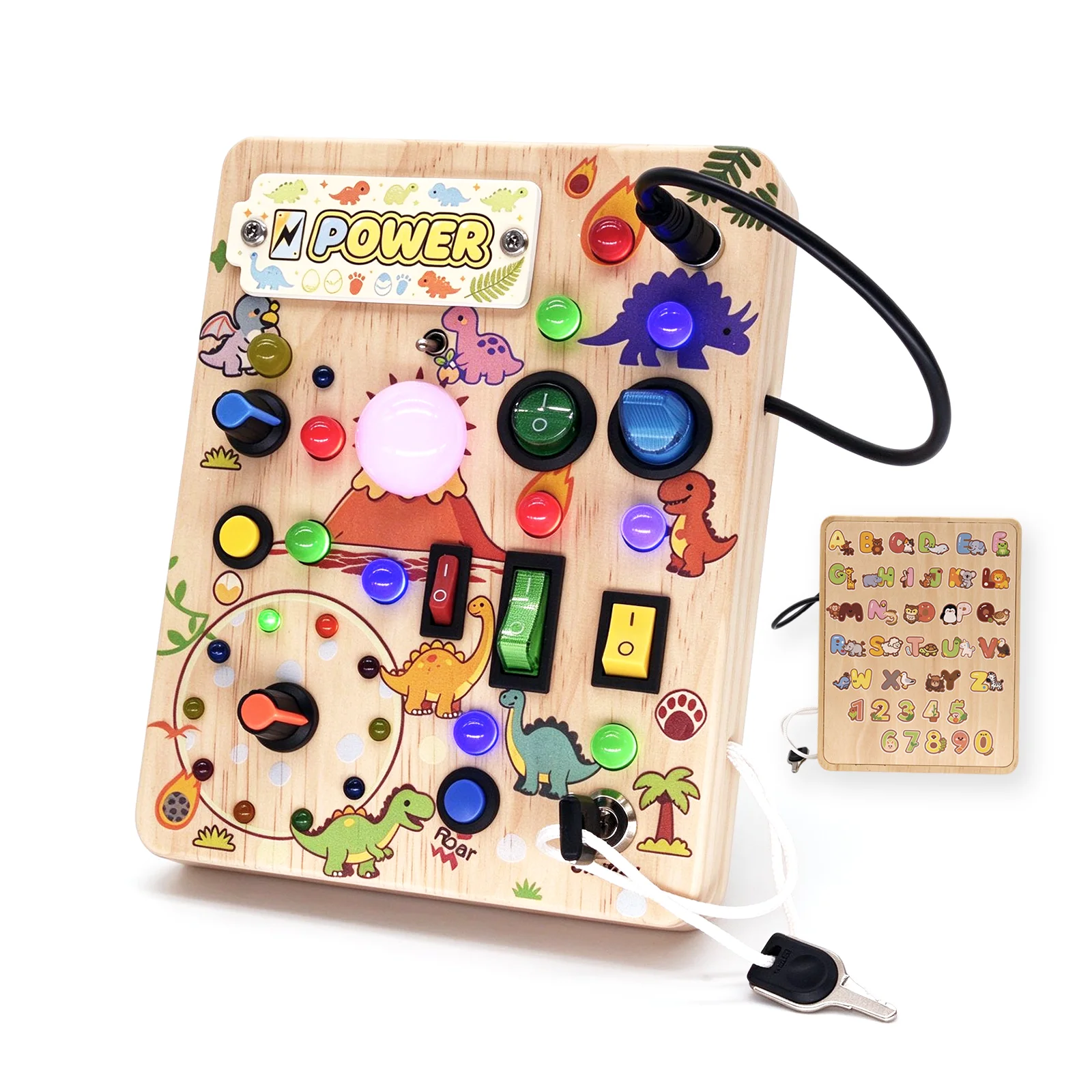
- Screen or UV printing — colour artwork on the front or back panel. Better for multi-colour logos and character designs, but it needs a print setup and careful coating choices to stay within chemical-safety limits.
- Colour staining — changing the wood finish. Simple and cheap, but limited to the finishes the factory can run reliably.
The practical constraint is safety: any ink, coating or dye on a children's product must still pass EN 71-3 and ASTM F963 chemical testing. A bold custom print that has not been tested for migration is a liability, not a feature. Always ask whether your custom artwork has been included in the certification scope — see our certifications guide for why this matters.
Do you need new tooling?
Not always. When you commission a custom busy board, tooling — a mould or a bespoke cutting program — is only needed when you change the physical shape of the board or an internal part beyond what the factory's existing jigs can accommodate.
Ask your supplier this question directly: "Can this be made with your existing tooling, or does it need a new mould?" The answer decides both your setup cost and your MOQ.
- No new tooling: engraving and print changes only → lower MOQ, faster start.
- New tooling: a new board silhouette or a new switch housing → tooling cost, a sampling round, and a MOQ in the 1,000-piece range.
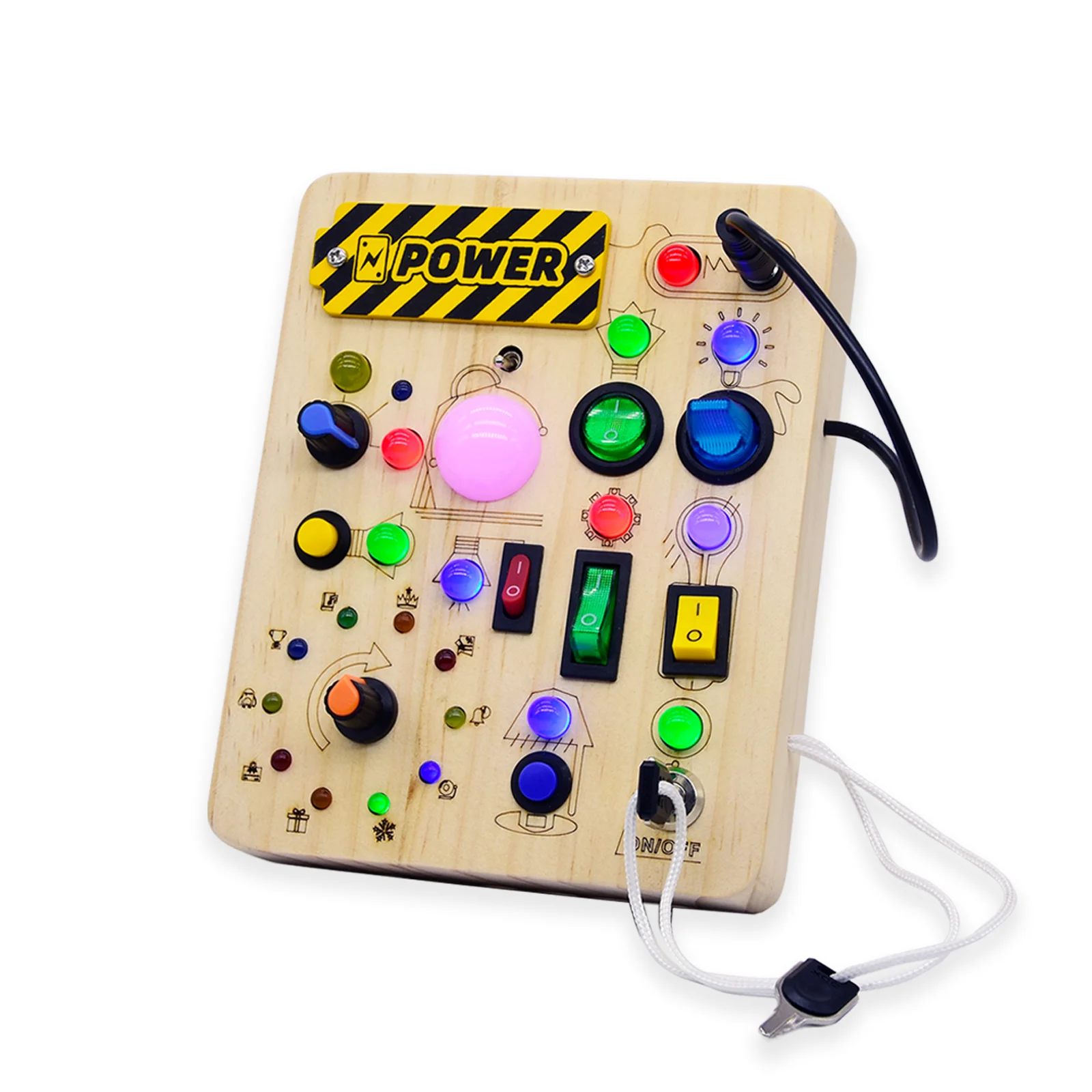
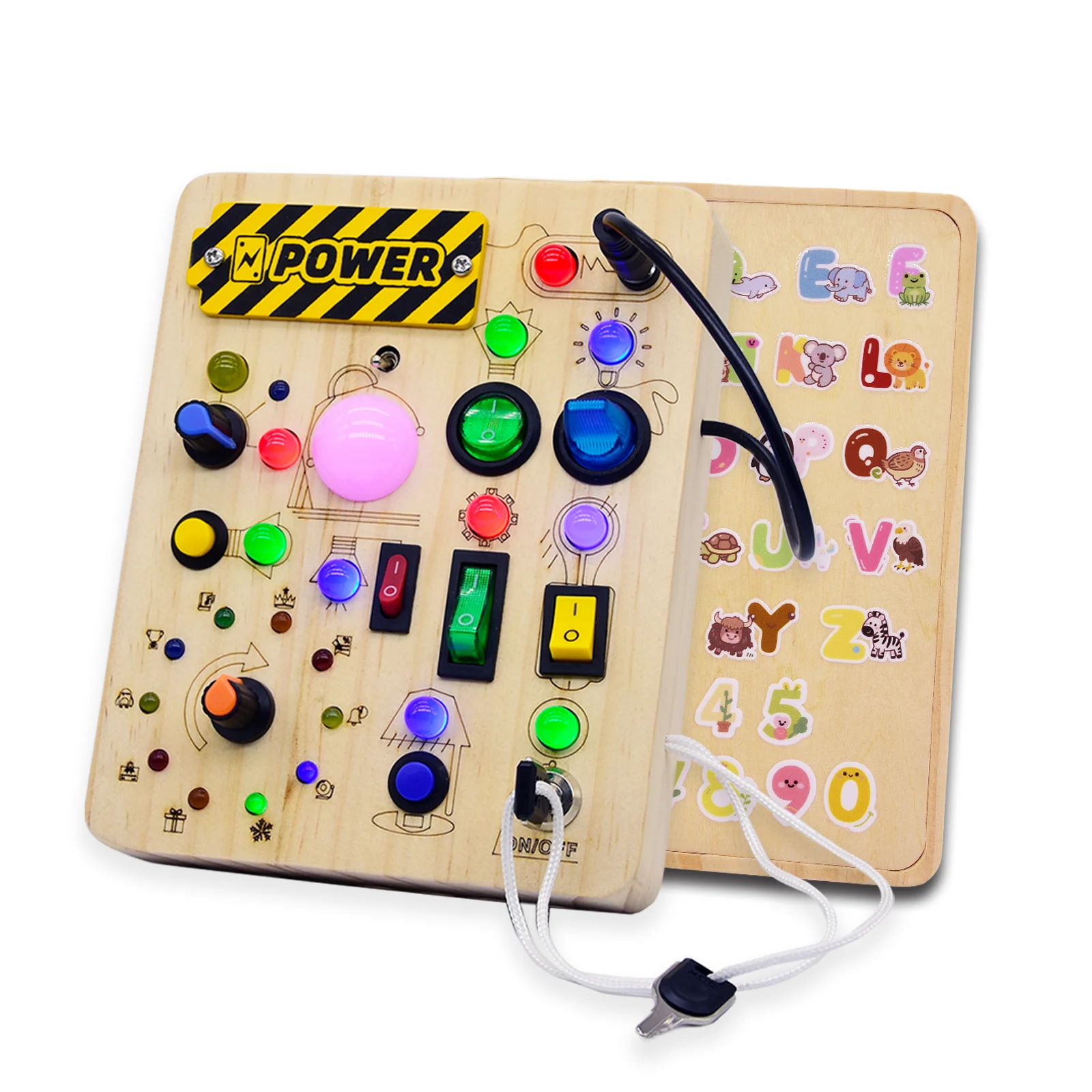
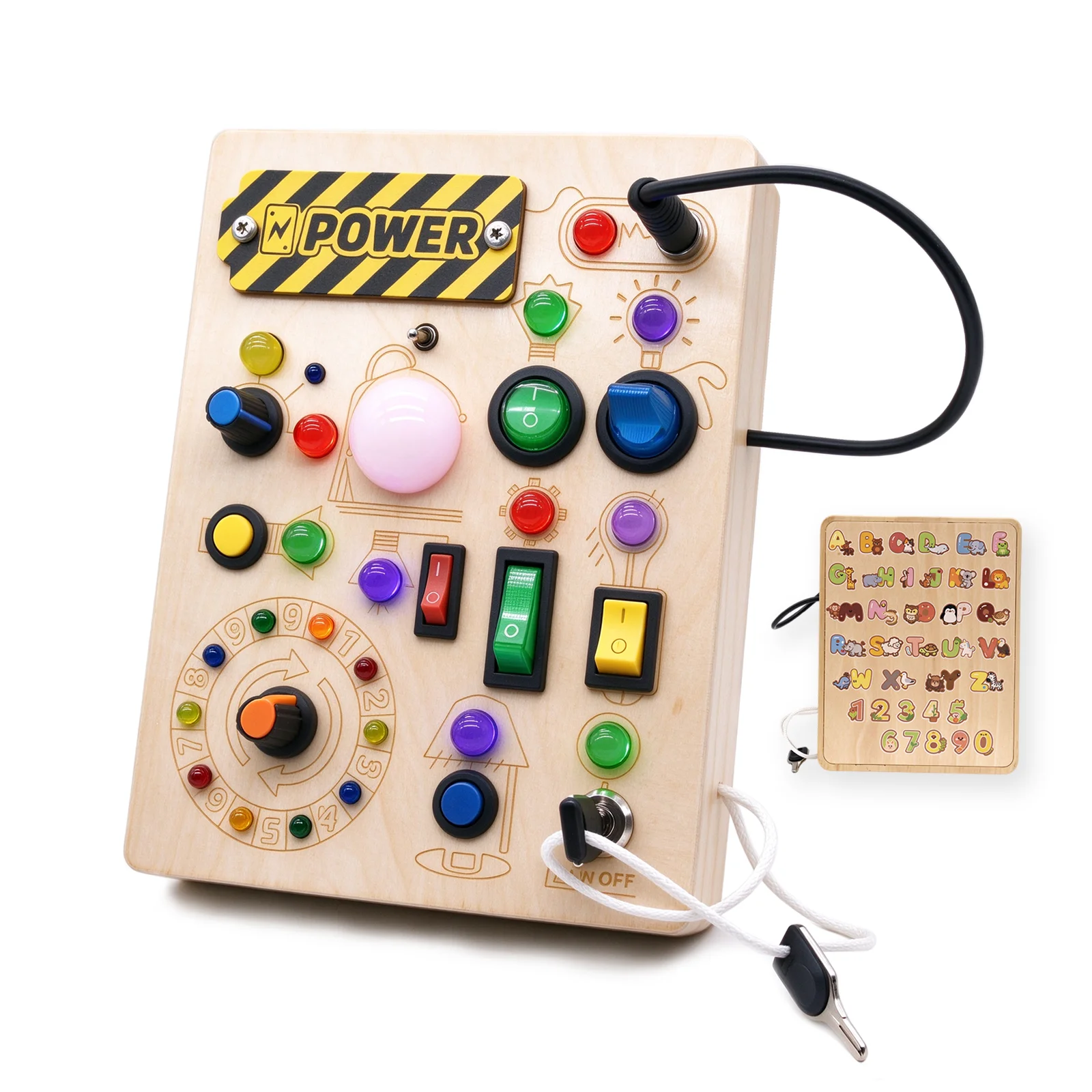
Our own boards are built on a shared 12-switch / 23-LED platform for exactly this reason — it lets a brand owner customise artwork and packaging without paying for a new mould on day one. See the Classic 12-switch LED board for the base platform.
Packaging and private label
Custom packaging is where a busy board starts to feel like your product. Options, in ascending cost:
- Sticker or label on the standard box — cheapest way to put your name on it.
- Custom sleeve over a plain box — a middle ground with good shelf presence.
- Full custom retail box — your own die-cut, print and brand story. Needs a print minimum, usually 500–1,000 units.
Whatever you choose, remember packaging is part of the child-safety file: warnings, age grading and your contact details as the responsible economic operator must appear correctly. For a full breakdown of carton specs and shipping, see the busy board packaging guide.
MOQ and timeline for custom work
Custom projects add two things to the standard timeline: a sampling round and setup time for artwork, tooling and packaging.
| Stage | Light custom | Full OEM |
|---|---|---|
| Artwork / spec sign-off | 2–5 days | 1–2 weeks |
| Pre-production sample | 3–7 days | 2–3 weeks |
| Production run | 15–25 days | 25–30 days |
| Certification update (if scope changes) | as needed | as needed |
Add buffer for any stage that depends on chemical testing, because a coating change can require fresh EN 71-3 or ASTM testing before the goods are legal to sell.
What to prepare before production starts
Give your supplier a clean, complete brief and the project moves in a straight line. Prepare:
- Artwork files — vector (AI/EPS/PDF) with fonts outlined, at the correct size for your panel.
- Colour references — Pantone or CMYK targets, not "a nice green".
- Packaging die line and content — the exact box size, print and legal text.
- Target markets — this drives which certifications the custom version must carry.
- Quantity and delivery date — so MOQ and lead time can be confirmed up front.
The more complete the brief, the fewer costly sample rounds you need. For the commercial side — quantity tiers and price bands — pair this with our MOQ, pricing and lead time guide.
Protecting your design
If your artwork or shape is genuinely distinctive, protect it before you send it out. At minimum, agree in writing that the tooling and artwork are for your orders only and are not to be resold to other buyers on the same platform. For branded lines, a simple signed exclusivity or non-resale clause prevents your design from appearing under a competitor's listing.
FAQ
Can I start custom with a small order? Yes — light custom (engraving and colour) can start around 200 pieces. Full OEM needs 1,000 pieces because of tooling.
Will custom artwork affect certification? It can, if it introduces new inks or coatings. Include the artwork in the test scope so your documentation stays valid.
Do I own the tooling? On a properly structured OEM order, yes — confirm ownership and exclusivity in writing.
How many sample rounds should I plan for? One pre-production sample round is normal; budget for two on full OEM to be safe.
Next step
Have artwork and a target market ready? Send us your brief — panel size, artwork, packaging and quantity — and we will come back with a custom quote, MOQ and sample timeline. New to sourcing? Start with how to choose a busy board supplier so your custom project lands with the right partner.
Related reading
- wholesale price guide — how customisation affects cost
- light-up busy boards — a popular customisable format
- MOQ and lead times — what to plan for
If this raised a specific question, How to Launch a Busy Board Brand: From Sourcing to First Sales goes deeper, and Busy Board Quality Inspection: An AQL Checklist for Importers covers the part most buyers ask about next.