The supplier you choose decides your product quality, your margins, your lead times and — if it goes wrong — your brand reputation. Yet most buyers pick a busy board supplier by comparing quotes and little else.
This checklist gives you twelve concrete points to test any supplier against, from a direct factory to a marketplace seller. It is the same discipline we would apply if we were buying, and it will separate a real manufacturer from a repackager within about twenty minutes of research.
Why supplier choice is the highest-leverage decision
An order of 1,000 busy boards is a four- to five-figure commitment. The quote you sign off is only one line in that commitment. What you are really buying is the supplier's ability to reproduce the approved sample, on time, with valid certifications, order after order.
A supplier who is strong on price but weak on process will cost you far more than the price difference through chargebacks, rejected shipments and emergency re-orders to hit a retail deadline.
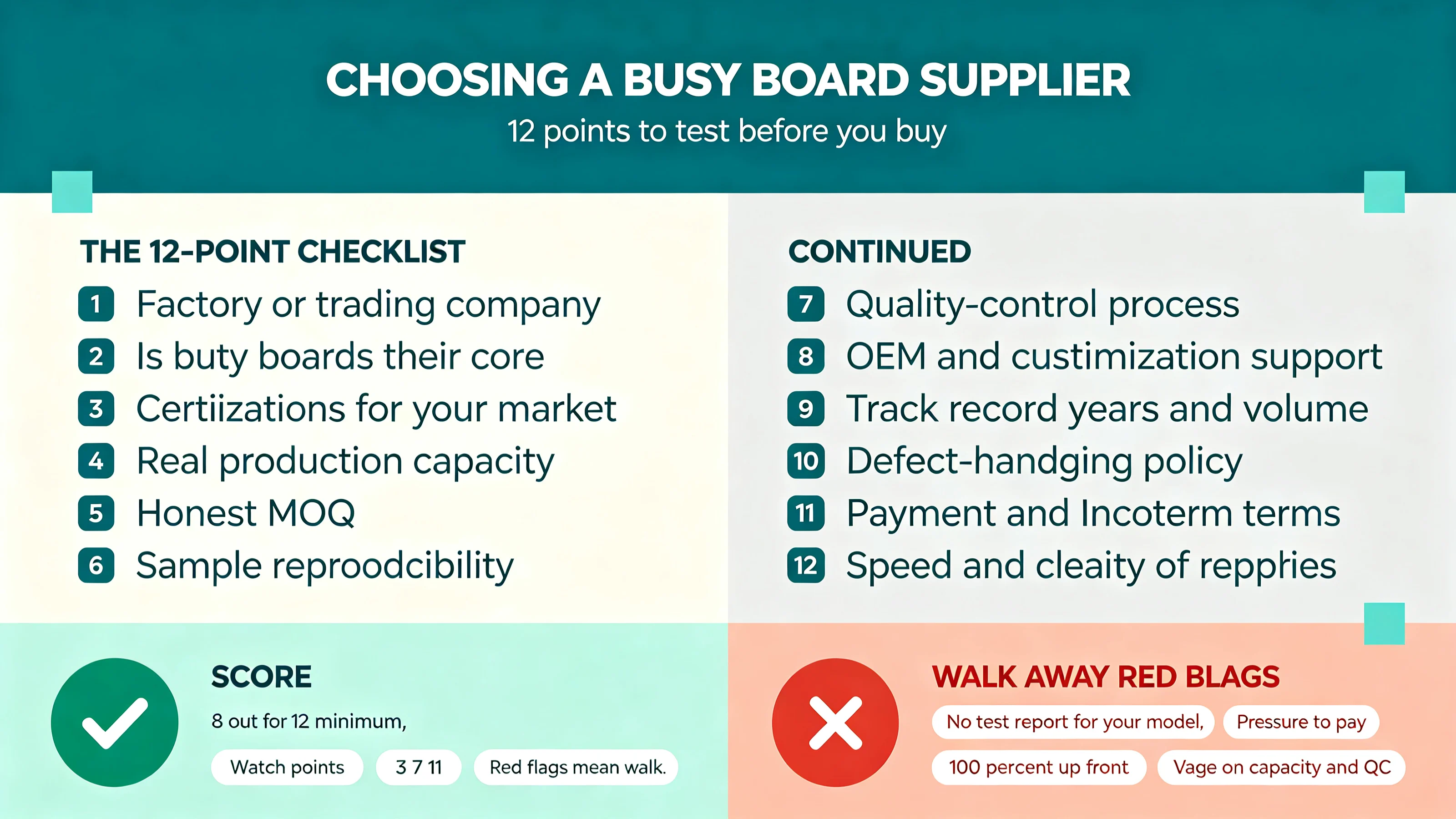
The 12-point busy board supplier checklist
- Are they the factory or a trading company? Both can work, but you must know which. A factory controls lead time and quality; a trading company adds margin but can offer flexibility.
- Do they make busy boards as a core product? You want depth, not a catalogue of everything. Ask what percentage of their output is busy boards.
- Can they show certifications for your market? CE and EN71 reports for the EU, ASTM F963 plus a CPC route for the US. Not a logo photo — the actual report tied to your model.
- What is their real production capacity? A facility that can run thousands of units per month will deliver a 3,000-piece order without drama.
- What is the stated MOQ — and is it honest? A "MOQ 1 piece" listing usually hides a different production reality. A clear 100-piece-per-model MOQ is a sign of a supplier who knows their floor.
- Can they reproduce a sample consistently? Ask for a "golden sample" and the QC checklist they run against it.
- What is their quality-control process? Look for incoming material checks, in-line checks and a final inspection before packing — and a stated AQL level.
- Do they support OEM and custom work? If you plan to build a brand, you need a supplier comfortable with artwork, tooling and packaging.
- What is their track record? Years in business, cumulative units shipped, and named markets served tell you more than a page of marketing copy.
- How do they handle problems? Ask what happens if a shipment arrives with defects. A clear remediation policy beats a vague promise.
- What are the payment and Incoterm terms? A deposit/balance structure and a clear Incoterm protect both sides.
- How fast and clearly do they communicate? Response speed and the quality of their answers in the pre-sale stage is your best predictor of how they behave after you pay.
Score each supplier out of twelve. Anything under eight is a risk you do not need to take.
Red flags that should end the conversation
- Prices well below the $8–10 FOB band for a certified wooden LED board
- Inability to produce a test report matching your exact model
- Refusal to send samples, or samples that differ from the photos
- Vague answers on capacity, MOQ or QC "we will take care of it"
- Pressure to pay the full amount up front
- A website with only stock photos and no factory images
Any one of these is reason to slow down. Two is reason to walk away. Certification verification deserves particular attention — we cover the how-to in our guide to busy board safety certifications.
How to run a supplier audit remotely
You do not need to fly to China to vet a supplier. Do it in stages:
- Desktop check. Website, company registration, and whether their product range matches what they claim to make.
- Document check. Request certifications, a factory video, and capacity figures. Ask for a video call on the production floor.
- Sample check. Order samples, then compare them to a spec — not to a feeling.
- Trial order. Start at MOQ, not at your full year's volume. How they perform on a small order predicts the big one.
A supplier who resists any of these steps is telling you something important.
Working with a factory vs a trading company
| Direct factory | Trading company | |
|---|---|---|
| Price | Lower — no middle margin | Higher |
| Lead time control | Direct | Dependent on their factory |
| Customisation | Deep, tooling in-house | Possible, but one step removed |
| Flexibility on range | Narrower | Wider |
| Accountability | Direct | Split between parties |
For a branded busy board line, a direct factory is usually the better long-term partner. Use trading companies when you need a wide assortment from one source and are willing to pay for the coordination.
What to send a supplier in your first brief
A vague enquiry gets a vague quote. Send five things and you get a usable answer in a single reply:
- Target models, or a plain description ("a 12-switch LED board")
- Quantity per model, and the total
- Destination market — this sets certification and packaging
- Packaging requirement (plain carton or retail box)
- Required delivery date and preferred Incoterm
Everything else — price, MOQ, lead time — follows from those five. A supplier who asks clarifying questions instead of guessing is a supplier who plans their production, and that is a good sign.
Pricing signals: what a fair quote looks like
Price is a signal, not just a number. Read it this way:
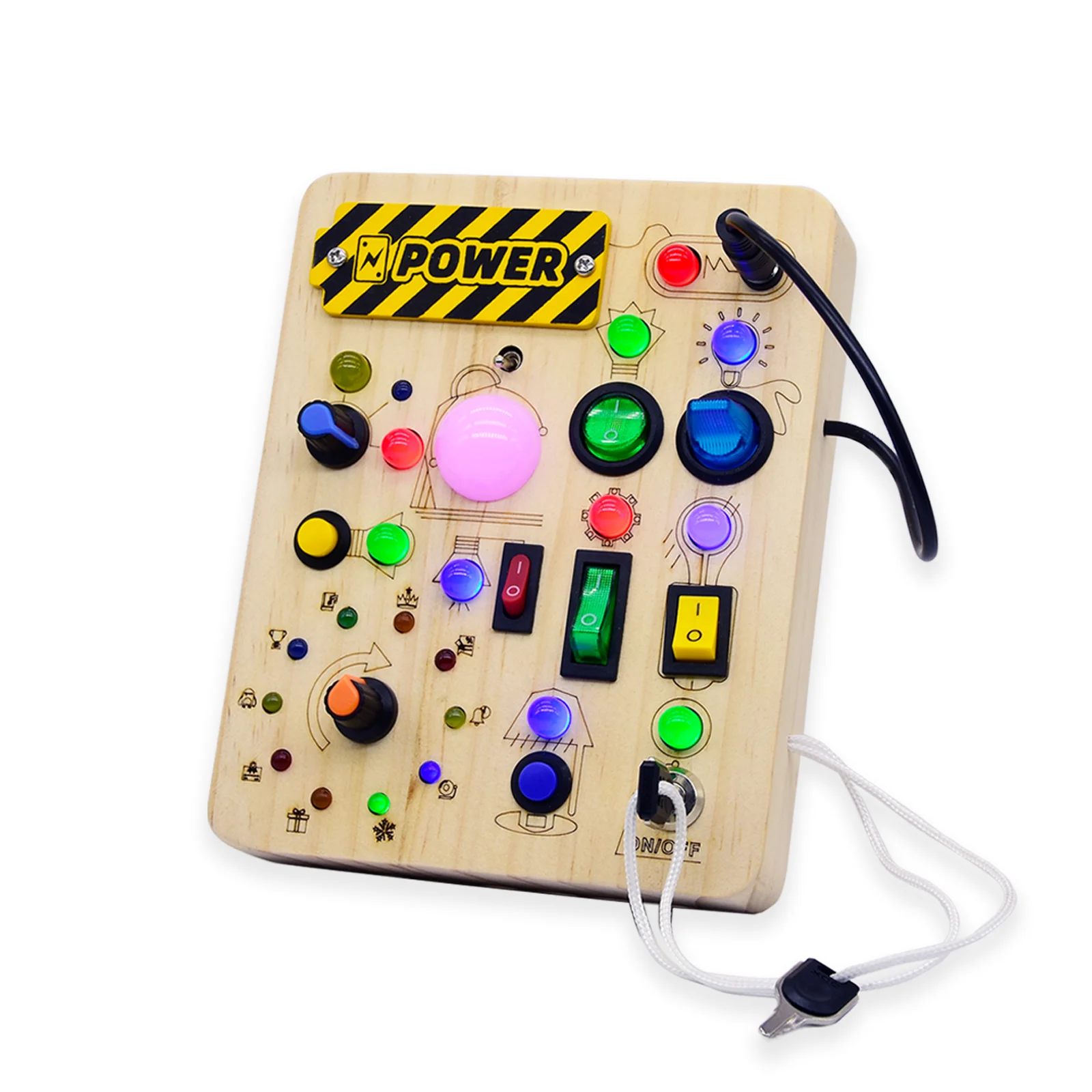
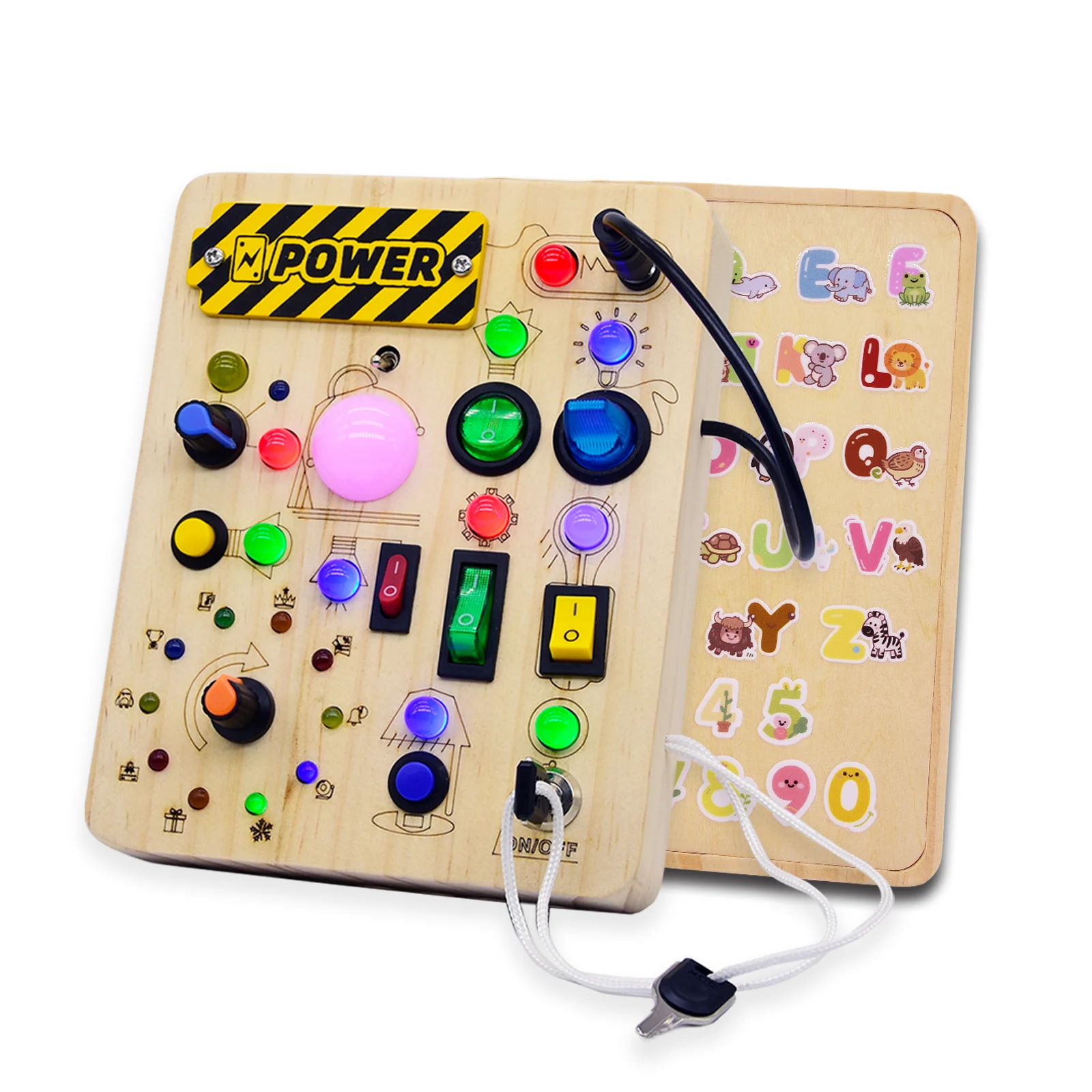
- In the band ($8–10 FOB for a certified wooden LED board like our 12-switch Classic model): normal. Ask for tiered pricing at higher volumes.
- Slightly below: possible, but check where the saving came from — usually the packaging or the printed detail, never the wood.
- Far below: the saving is hidden somewhere — thinner panels, a cheaper coating, weaker switches, or a certification that will not survive scrutiny.
The cheapest quote is rarely the cheapest order once defects, delays and compliance are priced in.
FAQ
How do I know a factory is really a factory? Ask for a video call on the production floor, a walk-through of the CNC and assembly areas, and capacity figures. Distance makes this easy to fake with photos, hard with live video.
Should I use one supplier or several? Start with one strong supplier to get quality and lead time right. Add a second later for redundancy and price comparison.
What is a fair MOQ to expect? 100 pieces per model for standard products, higher for full OEM. Treat an unrealistically low MOQ as a warning sign.
How long should a good supplier relationship last? Years, if they perform. Switching costs — re-sampling, re-certifying, re-learning your spec — are high, so vet well the first time.
Can I ask a supplier to match a competitor's lower price? You can — but first find out what the competitor cut to get there. A matched price on a reduced product is not a saving.
How many suppliers should I talk to before deciding? Three is a good number: enough to compare price, MOQ and responsiveness without drowning in quotes.
Should I sign an exclusivity agreement? For a branded line, yes — at minimum a non-resale clause so your artwork and tooling are not sold to other buyers on the same platform.
Next step
Run the twelve points against any supplier you are considering, including us. Want to audit us the same way? Request our certifications, capacity figures and a factory video and we will send them. Then read the MOQ, pricing and lead time guide to turn a good supplier into a workable order.
Related reading
- choosing a toy supplier from China — the broader toy-category checklist
- EN71 / ASTM F963 / CE / CPC certifications — what a compliant factory must hold
- wholesale price guide — so you can benchmark quotes