Busy Board Safety Certifications Explained: EN71, ASTM F963, CE & CPC (2026)
If you source busy boards to sell in the EU, the US or Japan, the question that decides whether your order can legally reach a shelf is not price — it is certification. A well-made wooden busy board with no valid safety paperwork is unsellable inventory, and a certificate that fails at customs is worse, because you have already paid for the goods.
This guide breaks down the four certifications that actually matter for busy board certifications — EN71, ASTM F963, CE marking and the CPC — explains which markets require which, and shows you how to verify a supplier's documents before you pay a deposit.
Why busy board certifications decide whether you can sell
Busy boards are toys, not furniture and not teaching aids. That single classification triggers some of the strictest product-safety regimes in the world. In the EU, a toy must comply with the Toy Safety Directive 2009/48/EC before it can legally carry a CE mark. In the US, every children's product must meet CPSIA rules and ship with a Children's Product Certificate.
Busy boards carry unusual risk because they combine several hazard categories in one product:
- Small parts — switches, knobs and beads create choking risk
- Fixings — screws and fasteners create sharp-point and entrapment risk
- Surface coatings and paint — heavy-metal migration risk
- Batteries — overheating and ingestion risk on LED models
That is why a genuine busy board certification file is never one document. It is a bundle: accredited test reports, a formal declaration of conformity, and a certificate that together prove the product is safe for the age grade it claims.
The four certifications that matter for busy boards
| Certification | Market | What it covers | Who issues it |
|---|---|---|---|
| EN71 | EU / UK | Mechanical, flammability, chemical safety | Accredited test lab |
| ASTM F963 | US | US toy safety standard | Accredited test lab |
| CE marking | EU | Legal declaration of conformity | Manufacturer (self-declaration + testing) |
| CPC | US | Children's Product Certificate | Importer / manufacturer |
Note the difference between a test and a certificate. A test report is evidence. A CE declaration or a CPC is the legal document built on top of that evidence. You need both, and they must match the exact product, age grade and materials you are importing.
EN71: the European toy safety standard
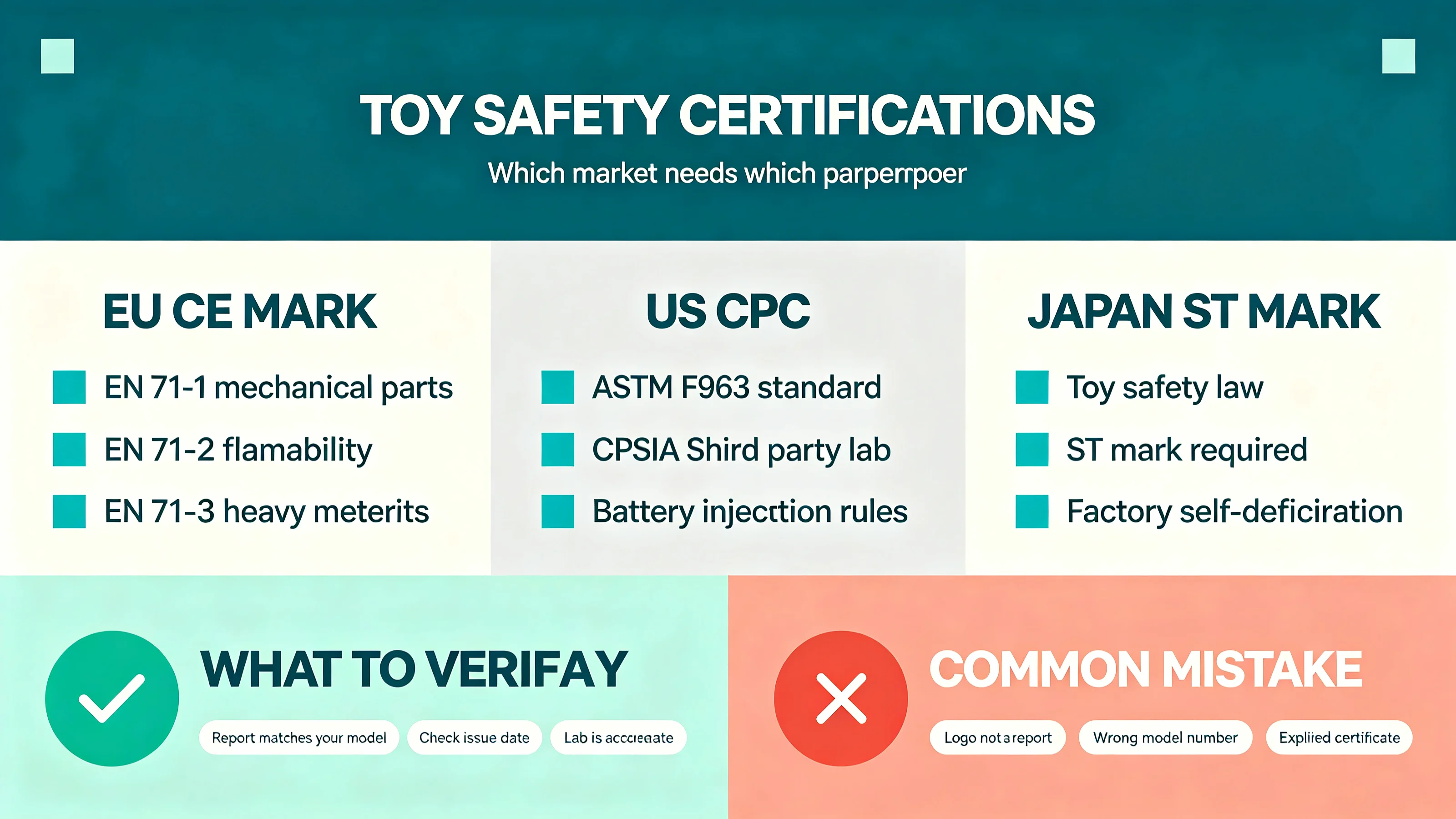
EN71 is the harmonised European standard for toy safety. Meeting EN71 is the usual route to demonstrating compliance with the Toy Safety Directive, and it is what most EU buyers ask for first. It has three parts, and busy boards are affected by all three:
- EN 71-1 — Mechanical and physical properties. Covers sharp edges, small parts, accessible points, and the strength of fixings. For a busy board, this is where switch types, knob sizes, screw retention and panel thickness are tested.
- EN 71-2 — Flammability. Limits how fast certain materials can burn, and bans highly flammable materials outright.
- EN 71-3 — Migration of certain elements. Tests how much heavy metal (lead, cadmium, arsenic and others) can migrate out of coatings, paint and materials a child may mouth.
A compliant busy board should be tested at the age grade it targets — for a 3+ board, EN 71-1 small-parts rules are applied differently than for an under-3 board. Ask your supplier for the report that names your model, not a generic sample.
ASTM F963 and CPSIA: the US route
For the United States, the mandatory toy safety specification is ASTM F963, made legally enforceable by the CPSIA. ASTM F963 covers mechanical, physical, flammability, and certain chemical requirements, closely mirroring EN71 in scope but not in detail.
The US system adds a step the EU does not require in the same way: third-party testing. Children's products must be tested at an accredited, CPSC-accepted laboratory, and the results feed into the CPC described below. Batteries on LED models are also caught here — they must meet the battery-ingestion rules that apply to any toy containing button or small cells.
CE marking: what it really means
CE marking is not a test and it is not issued by a lab. It is the manufacturer's legal declaration that the product meets all applicable EU requirements. On a toy, that means the Toy Safety Directive plus, where they apply, other directives such as EMC and RoHS for anything electronic.
Two practical points for importers:
- The manufacturer signs the CE declaration — not the importer. Your supplier must be able to produce a Declaration of Conformity naming the product and the standards applied.
- CE is self-declared, so it can be faked. That is exactly why you should ask for the underlying EN71 test reports that support the declaration, not just the CE label on the box.
CPC: the US paper trail importers need
The Children's Product Certificate (CPC) is a US document based on third-party testing at a CPSC-accepted lab. It must be issued by the importer or the domestic manufacturer, and it certifies that the product meets the applicable children's product safety rules. Customs and large US retailers will ask for it.
For a busy board importer, the CPC is where your supplier's technical file becomes your legal responsibility. A good supplier will hand you a test report and the supporting data so you — or your US agent — can issue the CPC without guesswork.
ST: the Japanese toy safety mark
If you sell into Japan, the relevant mark is ST (Safety Toy). Japan's toy safety standard tests mechanical and physical properties, flammability, and chemical safety, and the ST mark is issued to products that pass. It is not required to enter the country, but Japanese retailers and parents recognise it, which makes it a strong selling point on shelf.
Do you need all of them? Match the certificate to the market
| Selling in | Required / expected | Typical ask from buyers |
|---|---|---|
| EU / UK | CE + EN71 test reports | EN71-1/-2/-3 reports, DoC |
| US | ASTM F963 + CPC | CPC, third-party test report |
| Japan | ST (market expectation) | ST certificate |
| Multi-market | The above, per destination | Full technical file |
The mistake new importers make is ordering a "CE product" and assuming it is also legal in the US. It is not. CE and CPC are different regimes built on different standards. If you sell in both regions, budget for both sets of testing.
How to verify a supplier's certificates
Claimed certificates are cheap to counterfeit. Verifying them is not hard:
- Match the model. The report must name the exact model and SKU you are buying — not a similar board or a generic "wooden toy".
- Check the lab. Look for an accredited lab (ISO/IEC 17025), and for US compliance a CPSC-accepted one. Search the lab's name independently.
- Check dates and validity. Old reports may not cover a changed material, paint or battery.
- Check the age grade. A report tested for 3+ does not cover an under-3 claim.
- Ask for the full report, not the cover page. The test summary pages list what was actually checked and any failures.
If a supplier hesitates on any of these, treat it as a red flag. Certifications are the one area where you should never accept a photo of a logo as proof — which is the same discipline we recommend in our guide on how to choose a busy board supplier.
What we hold — and how we document it
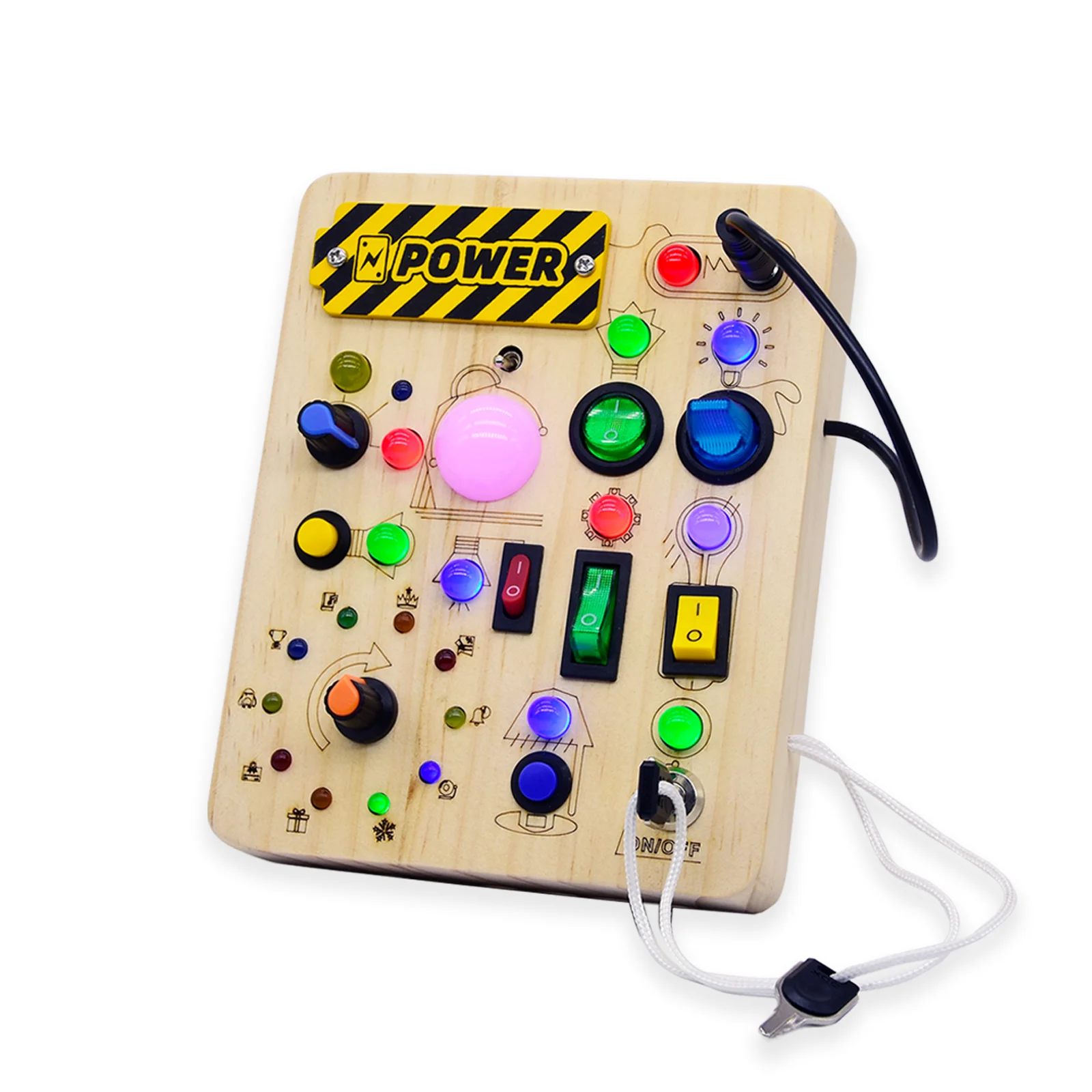
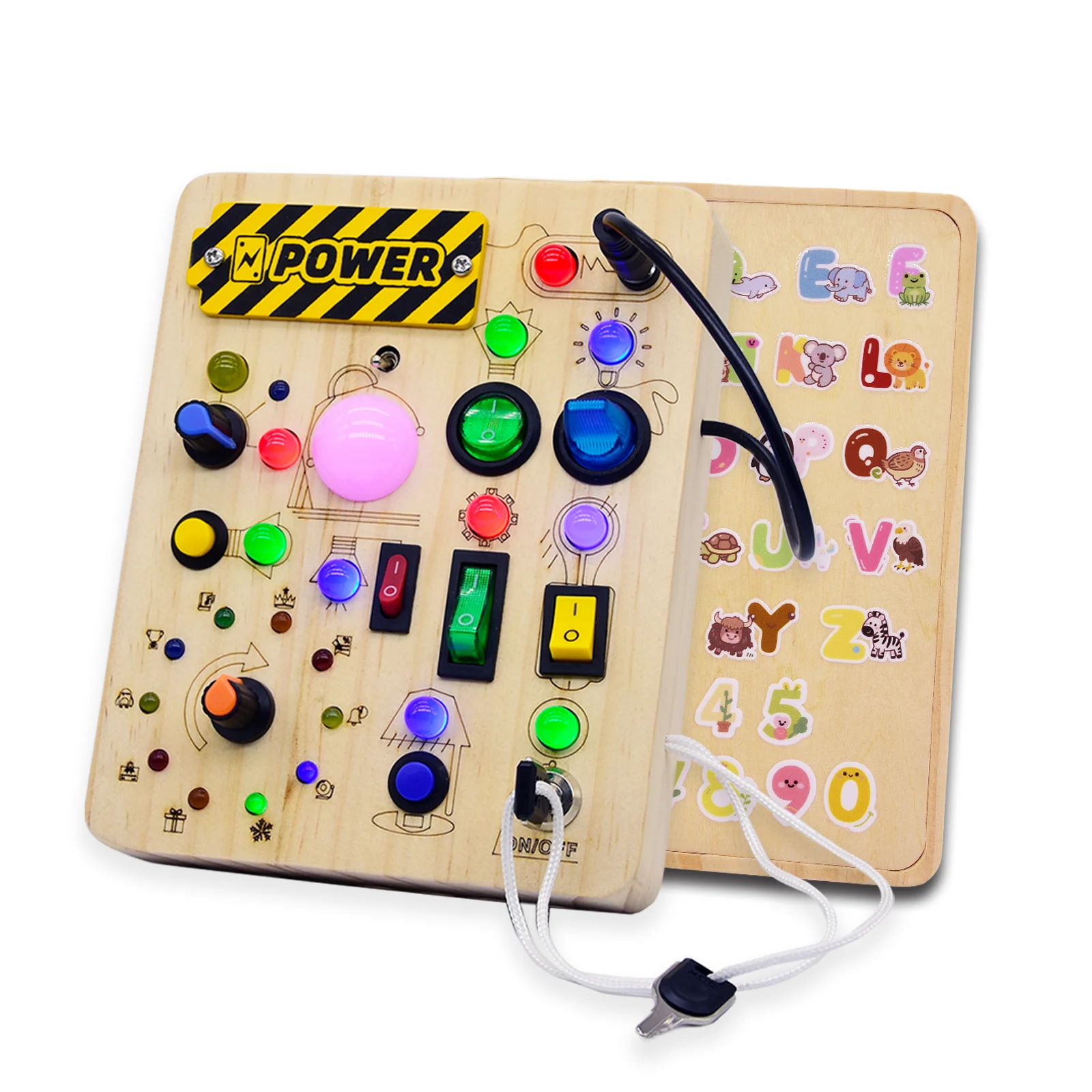
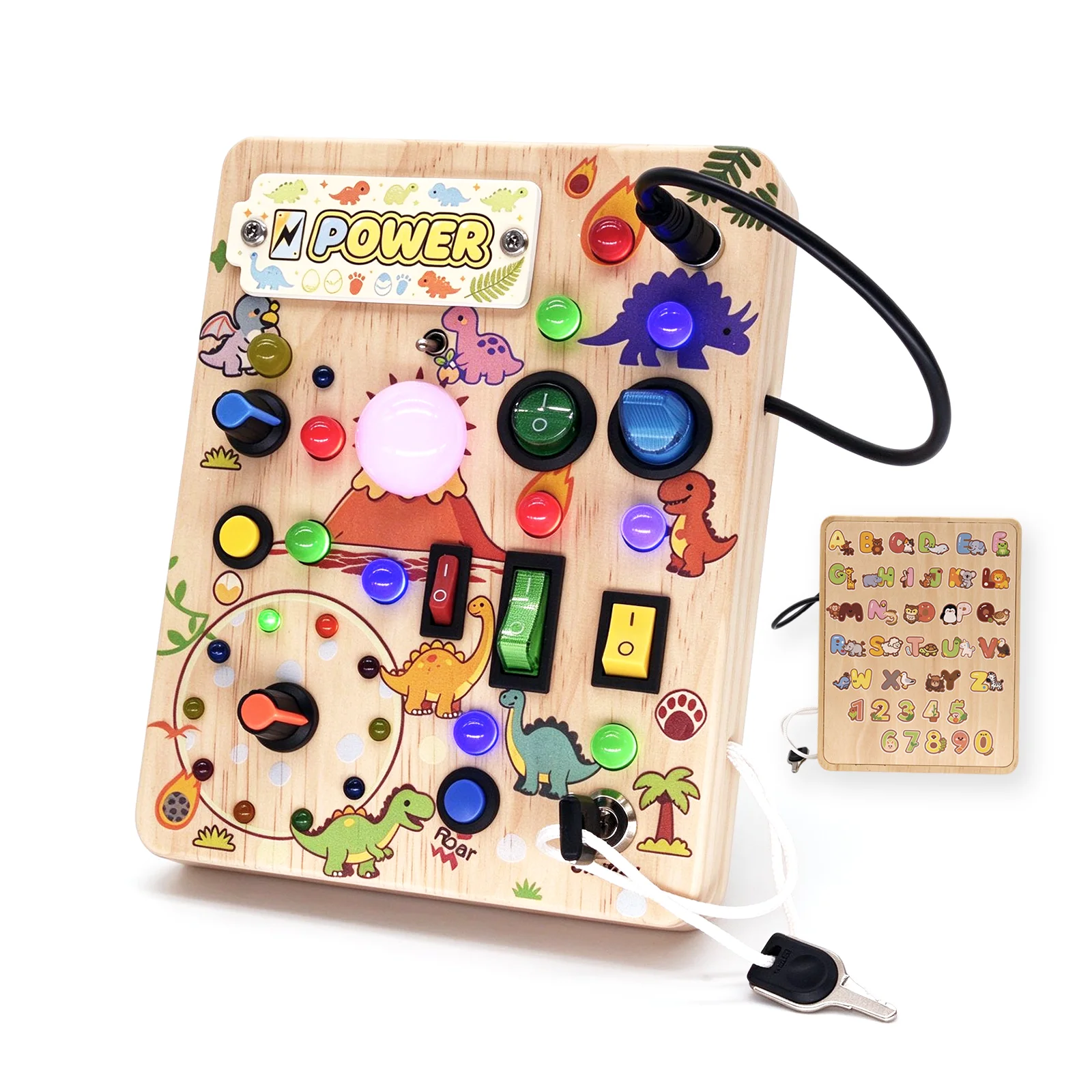
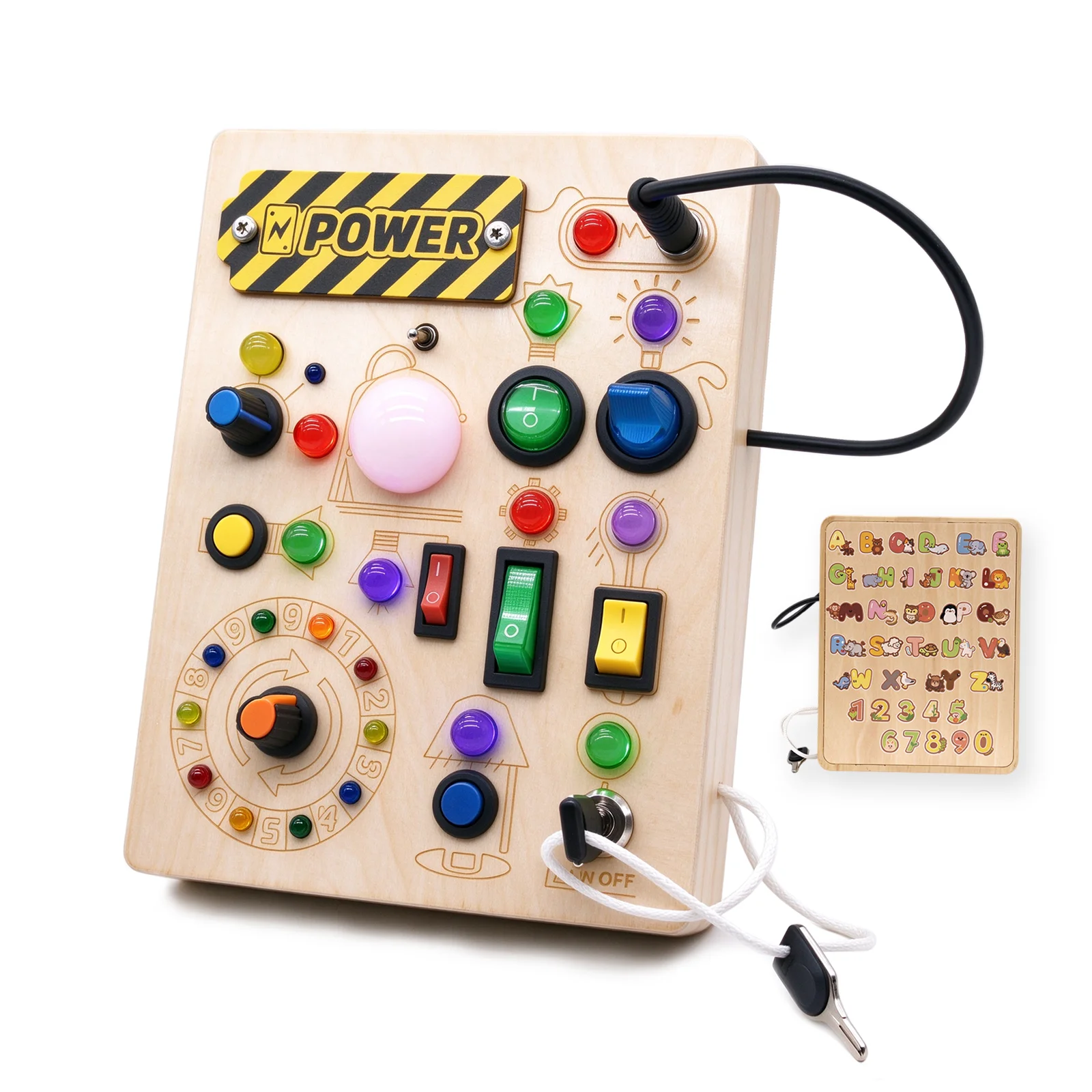
Our three models — the Classic 12-switch LED board, the Alphabet version, and the Dino board — are built in solid wood around a shared 12-switch, 23-LED platform. Each ships with CE, CPC and ST documentation tied to the exact model you order, plus the underlying test reports your customs broker and retailer onboarding team will ask for.
Because we manufacture in our own facility in Yongjia, Wenzhou, we control the materials and coatings that drive EN 71-3 and ASTM F963 results. That control is what makes the paperwork reproducible order after order, rather than a one-off sample result.
FAQ
Is a CE mark enough to sell busy boards in the US? No. The US requires ASTM F963 compliance and a CPC based on third-party testing. CE and CPSIA are separate systems.
Do I need certification for samples? Not for shipping samples to yourself, but you cannot retail a sample that lacks the certificates for your market. Confirm documentation before you scale.
Who pays for testing? Usually the manufacturer carries the cost of keeping certifications current. As the importer you pay for anything market-specific that your destination requires on top.
How long must I keep the documents? Keep the technical file and declaration for at least ten years after the last unit is placed on the market — authorities can request them.
Next step
Certification is the gate; MOQ, pricing and lead time decide the shape of your order. Read the busy board MOQ, pricing and lead time guide next, or work through our complete wholesale buyer's guide for the full sourcing picture. Ready to check documents against your target market? Send us your destination and age grade and we will return the exact certification set you need.
Related reading
- importing busy boards from China — documents and customs steps
- choosing a toy supplier from China — 12-point checklist
- wholesale buyer's guide — end-to-end sourcing