Importing wooden toys from China is one of the most accessible ways into the toy business — but accessible is not the same as risk-free. The difference between a smooth first container and an expensive lesson usually comes down to a handful of steps that first-time importers skip because nobody told them the order to do them in.
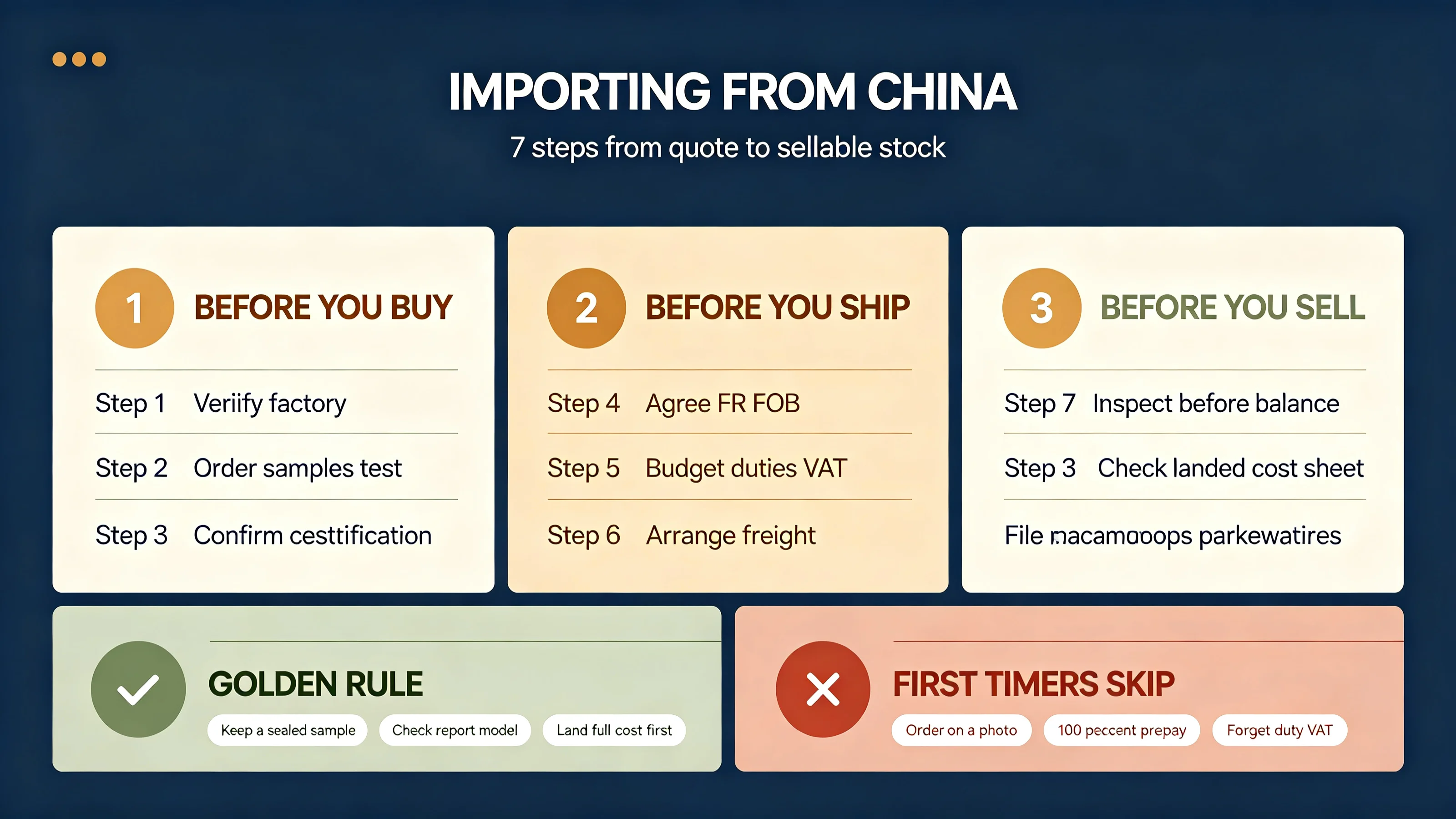
This checklist walks through the seven steps that turn a factory quote into sellable stock, in the sequence you should actually follow them.
Why busy boards are a reasonable first import
A wooden busy board is a good candidate for a first import because it is light, non-perishable, hard to break in transit, and in steady demand across gift, education and toy channels. It is also a product where quality is visible — a buyer can see a bad finish, a loose switch or a wobbly knob immediately, which makes the value of choosing the right factory obvious.
What busy boards are not is exempt from regulation. As a children's product, a busy board must be certified for your destination market before you can legally sell it. That single fact shapes the whole import.
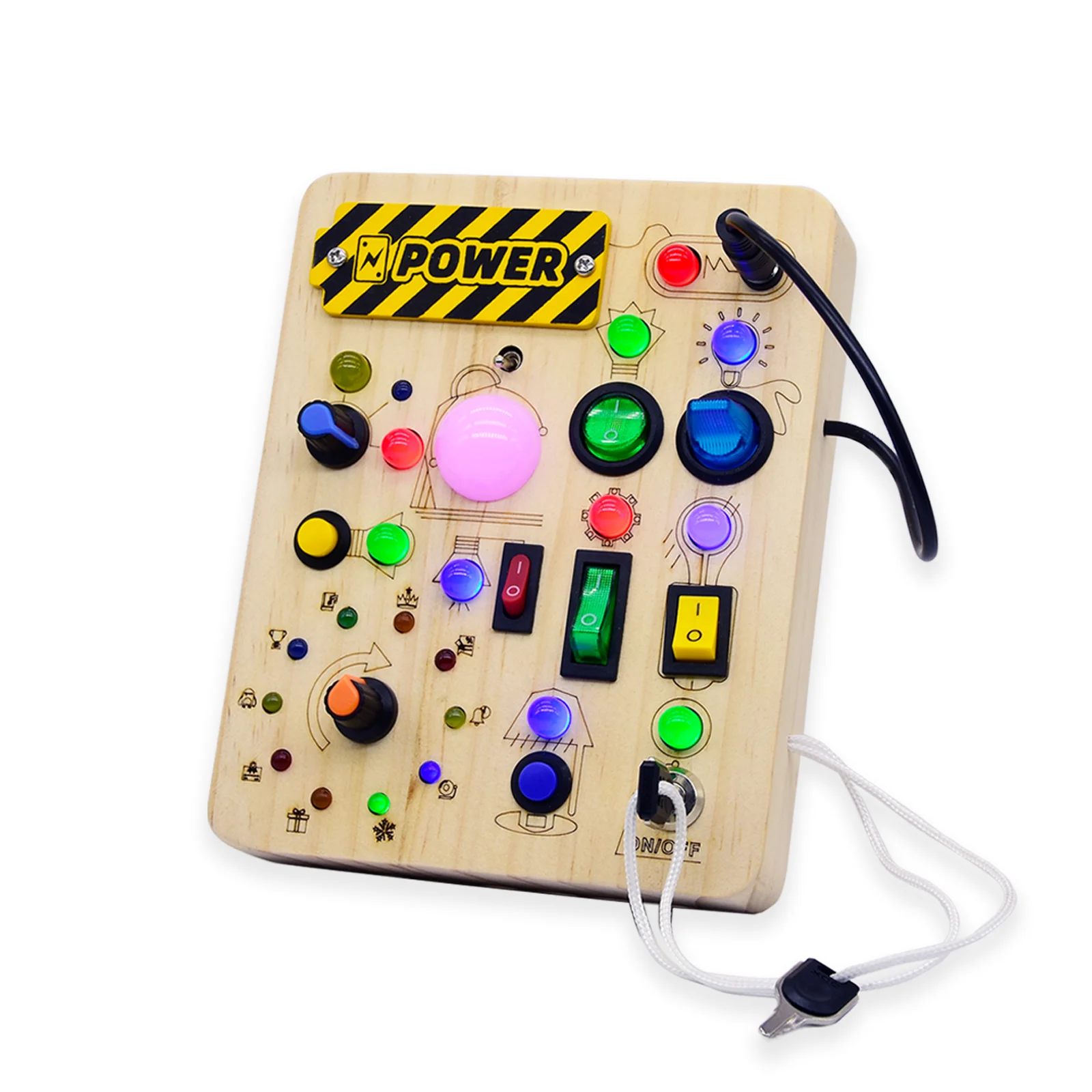
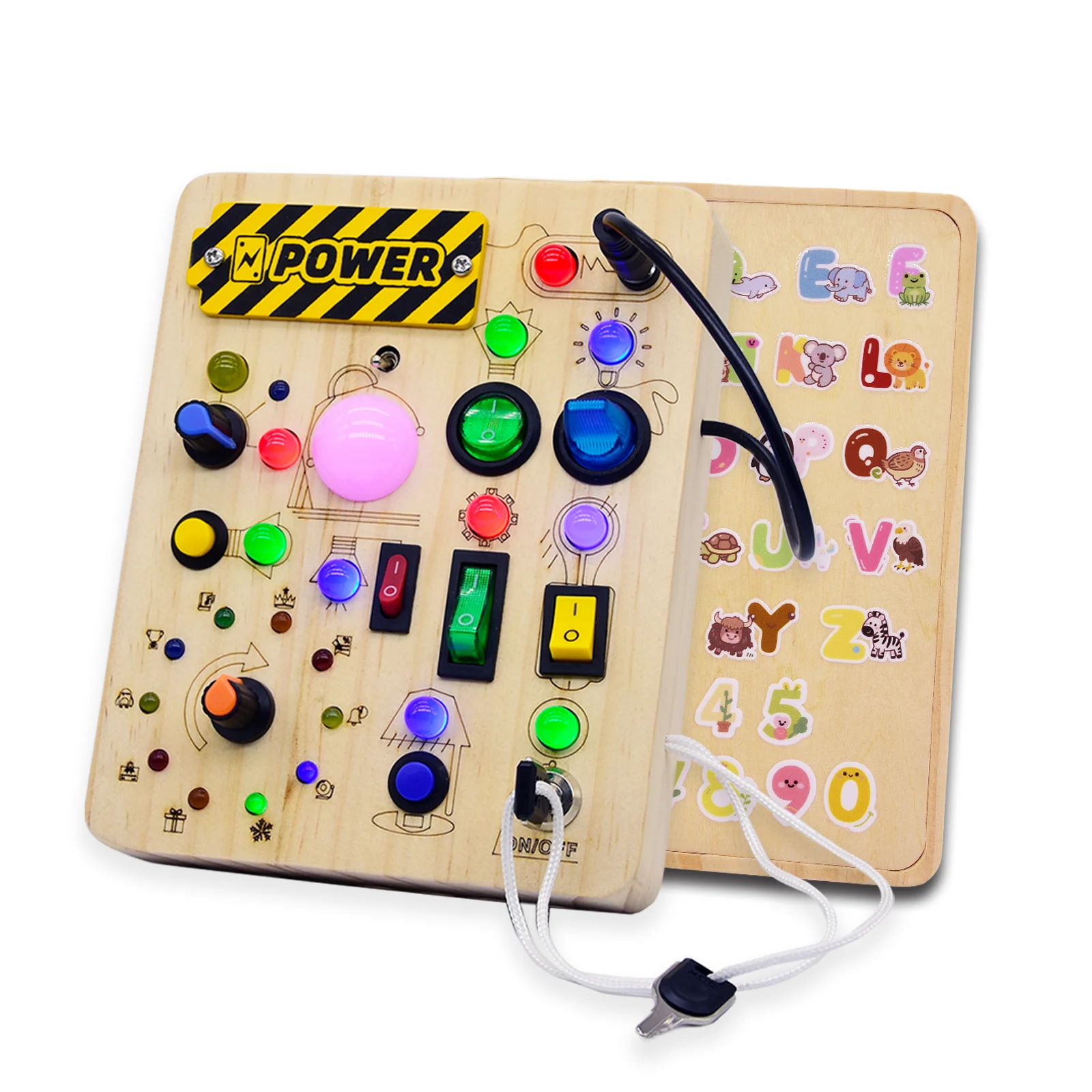
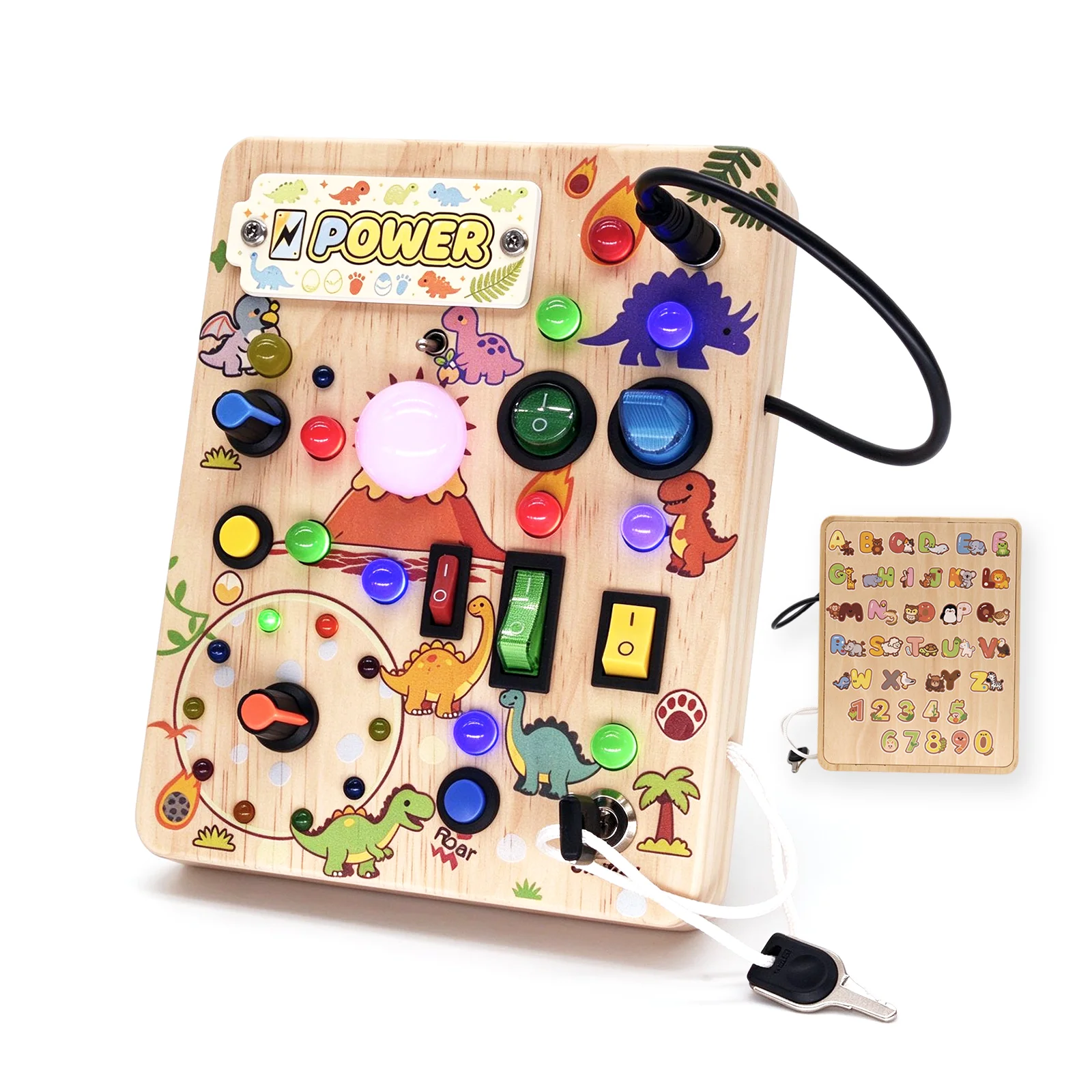
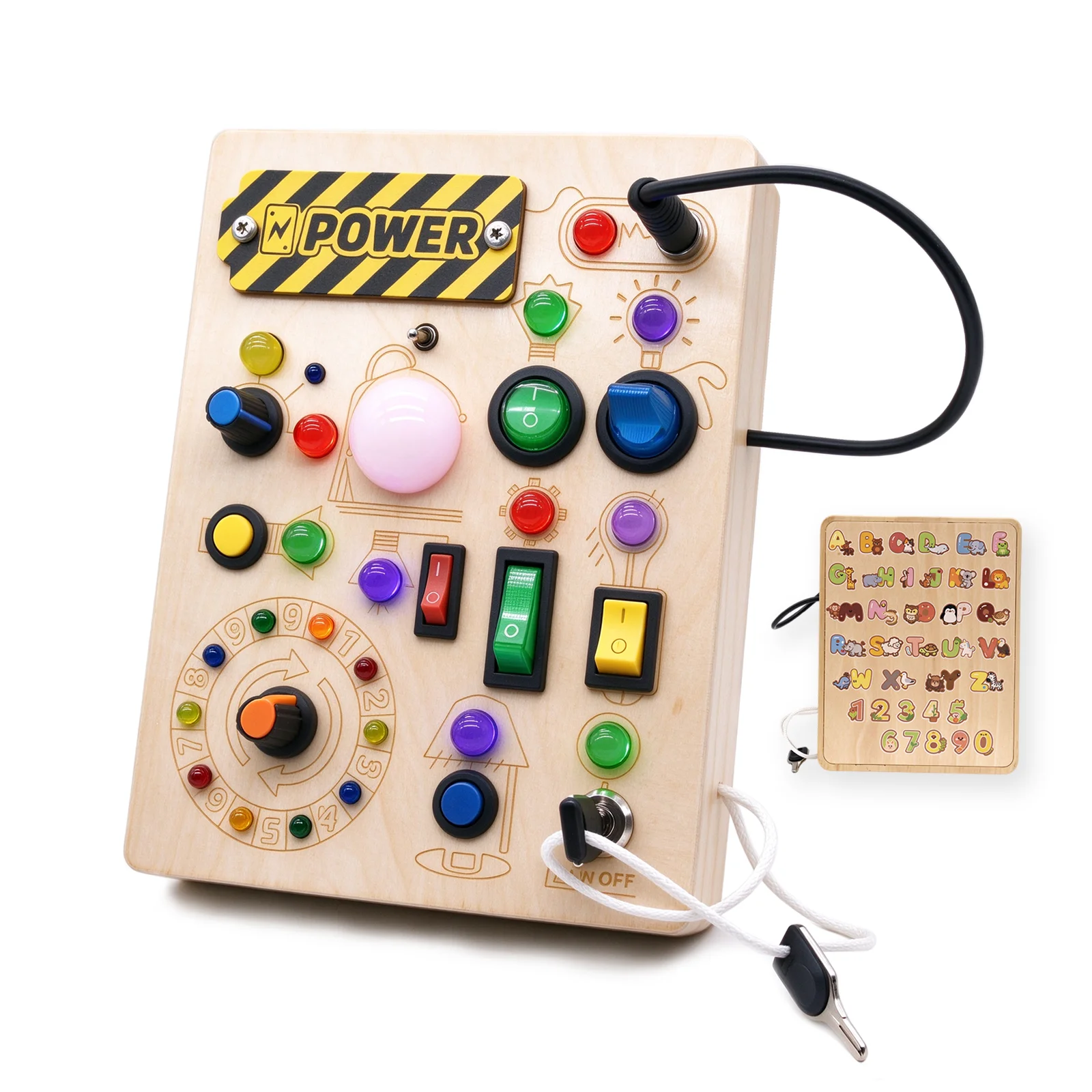
Our own three models — Classic, Alphabet and Dino — are built on one 12-switch / 23-LED platform.
Step 1: Verify the supplier before anything else
Before you discuss price, confirm who you are dealing with. A direct factory and a trading company both have a place, but you need to know which one you are buying from — this guide assumes a direct, certified manufacturer, which is usually the better long-term partner for a branded line.
Do a desktop check: company registration, whether busy boards are a core product rather than one line in a giant catalogue, and real factory evidence (a walk-through video, capacity figures, and ideally a live video call on the production floor). For the full vetting method, see how to choose a busy board supplier.
Step 2: Order samples and test them like a customer
Never place a production order on a photo. Order 1–5 samples — standard models ship in about 3–7 days — and test them the way an end customer would:
- Operate every switch repeatedly and check the LED behaviour
- Inspect edges, screws and fixings for anything sharp or loose
- Confirm the wood finish and colour match what was approved
- Check the packaging survives a realistic drop
Keep one unit sealed as your golden sample. It becomes the reference for every future order and the anchor if a quality dispute ever arises.
Step 3: Confirm the certifications for your market
This is the step that stops shipments at customs. Before you order, confirm the supplier holds valid documentation for your destination:
- EU / UK — CE marking supported by EN71 test reports
- US — ASTM F963 compliance and a route to a Children's Product Certificate (CPC)
- Japan — the ST mark, a strong retail selling point
Ask for the test report that names your exact model, not a generic sample. Our safety certifications guide explains how to spot a fake or out-of-scope certificate.
Step 4: Agree the commercial terms
Two things to settle in writing before production:
Incoterms. Most first orders run on FOB (the supplier delivers to the port of departure; you arrange and pay the main freight). As you gain confidence, CIF or DDP may suit — but be clear on who carries risk and cost at each point.
Payment. A deposit to start production with the balance against the shipping documents is standard. Treat any demand for 100% up front as a red flag.
Confirm the proforma invoice lists models, quantities, unit prices, Incoterm and lead time. For price bands and quantity tiers, see the MOQ, pricing and lead time guide.
Step 5: Understand duties and compliance
Your landed cost is not the FOB price. Budget for:
- Freight — sea is the default for volume; air only for urgent, small quantity
- Import duty — wooden toys fall under the toy tariff heading (HS 9503), but rates vary by country, so check your national tariff
- Taxes — VAT or sales tax on import, usually recoverable if you are registered
- Compliance — some markets require additional labelling, recycling fees or importer registration
Getting this wrong is the most common reason a "cheap" quote turns out expensive. Build a landed-cost sheet before you commit.
Step 6: Inspect before you ship
Once production finishes, inspect before the goods leave — not after they arrive. Options, in rising cost:
- Supplier's own QC report — the minimum, and it is their word
- Third-party inspection — an independent agent checks a sample on site
- Golden-sample comparison — every unit is measured against the approved sample
For a first order, a third-party inspection at the factory is cheap insurance against a container of boards you cannot sell. Confirm the AQL level and the checklist up front so "pass" means something.
Step 7: Plan freight and landed cost
Book freight with a forwarder who handles toys and knows your destination's rules. Give yourself buffer — sea transit plus port handling plus inland delivery adds weeks, and the pre-holiday period books out early. For the shipping specifics of a busy board container, see the packaging and shipping guide.
Five import mistakes that cost real money
- Ordering before verifying certification. The fastest way to own unsellable stock.
- Skipping samples. A $50 sample bill is cheaper than a $5,000 mistake.
- Ignoring landed cost. Duty, freight and tax routinely add a third on top of FOB.
- No pre-shipment inspection. Defects found at the factory cost far less to fix than at your warehouse.
- Choosing on price alone. A few cents per unit is never worth a certification gap or a missed retail deadline.
FAQ
Do I need an import licence to bring busy boards into my country? Most markets allow importing as a registered business without a special toy licence, but you are responsible for compliance and labelling. Check your national rules before your first shipment.
How much does a first order cost? It scales with quantity and market. At MOQ (100 pcs per model) on our wooden LED busy boards, a first order is a modest four-figure commitment before freight — see our MOQ and pricing guide for the numbers.
Can the supplier handle shipping for me? On FOB, you control freight. Many suppliers can quote CIF or DDP if you prefer them to arrange it — agree the Incoterm in the proforma invoice.
How long does the whole process take? Sample approval (about a week), production (15–25 days), inspection, then freight. Budget six to eight weeks door to door for a first sea shipment.
Next step
Importing is a process, not a leap. Work the seven steps in order and most of the risk disappears. Ready to start with a sample or a quote? Tell us your market and quantity and we will confirm certification, price and lead time in one reply. For the whole sourcing picture, start with our wholesale buyer's guide.
Related reading
- packaging and shipping — cartons, CBM and freight
- safety certifications — what customs and retailers ask for
- supplier vetting checklist — before you wire money