Busy Board Gift Market: Holiday & Occasion Selling Guide
Short answer: the person who buys a busy board gift is almost never the person who uses it, and that gap is where gift-channel sourcing succeeds or fails. A gifter is shopping for a present that looks generous and arrives without a worry attached, so the box, the price band, and the safety paperwork carry more weight than the switch count. If you sell into the gift aisle, build your buy around the calendar, because most of the volume in this category lands in a six-week run-up to Christmas and a smaller second wave in spring.
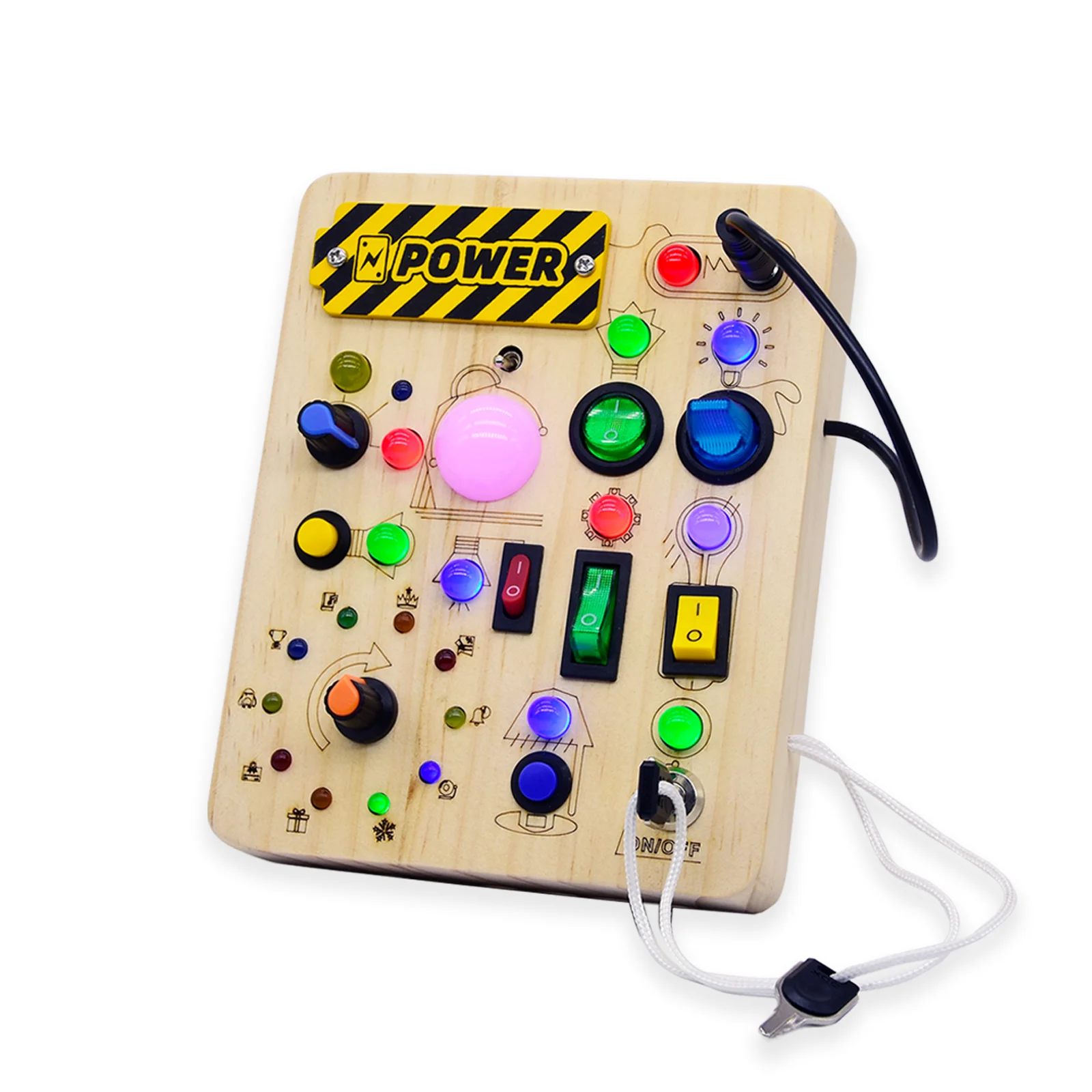
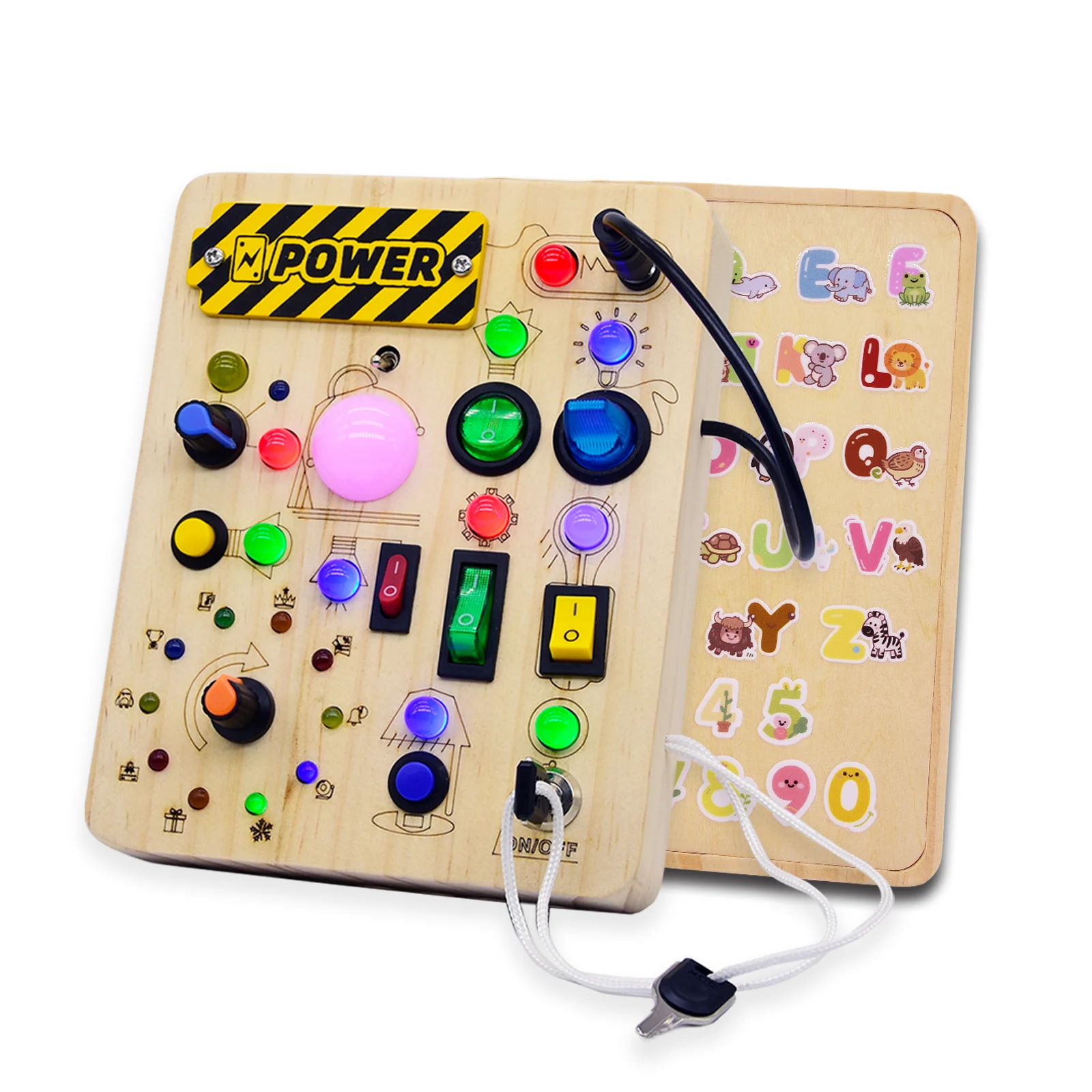
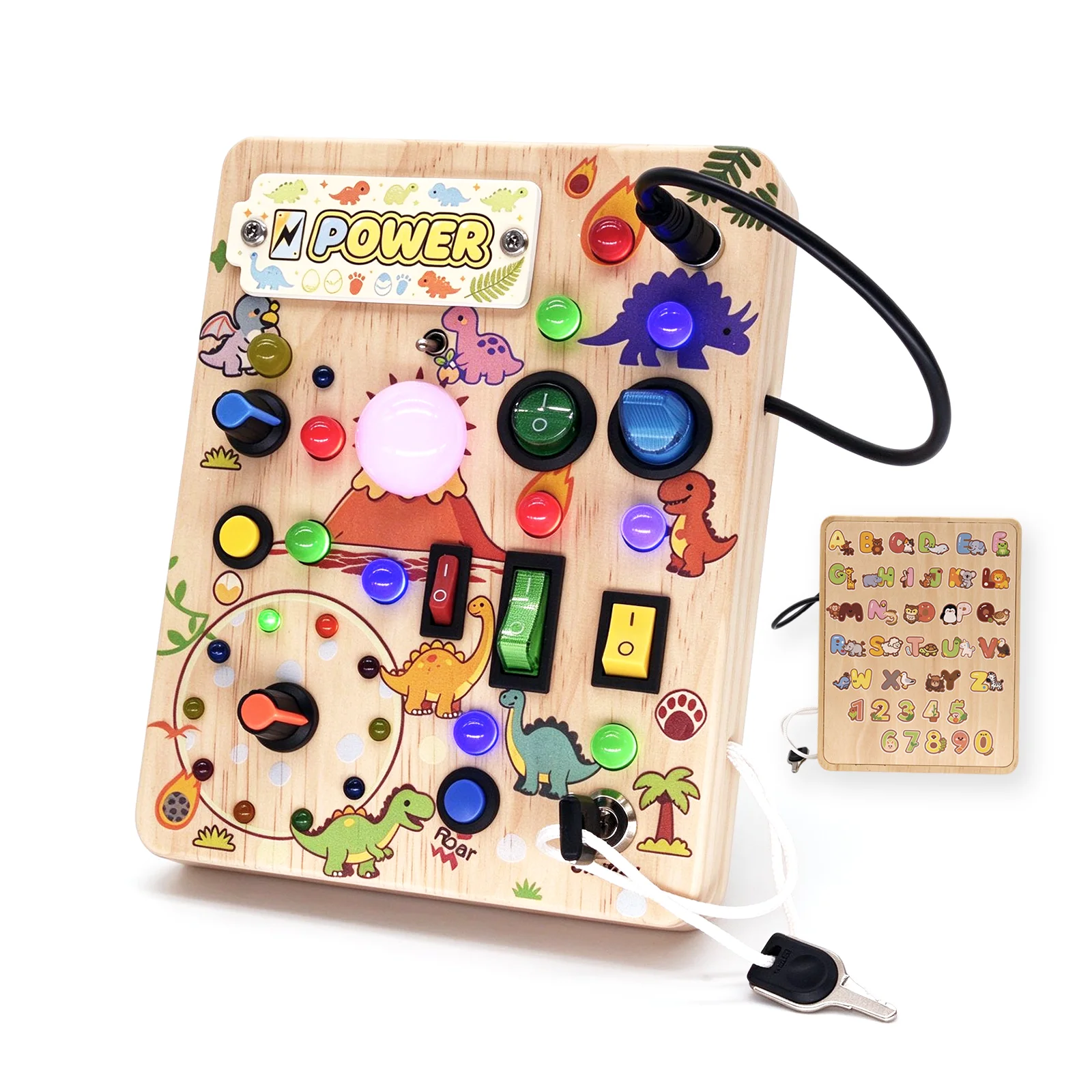
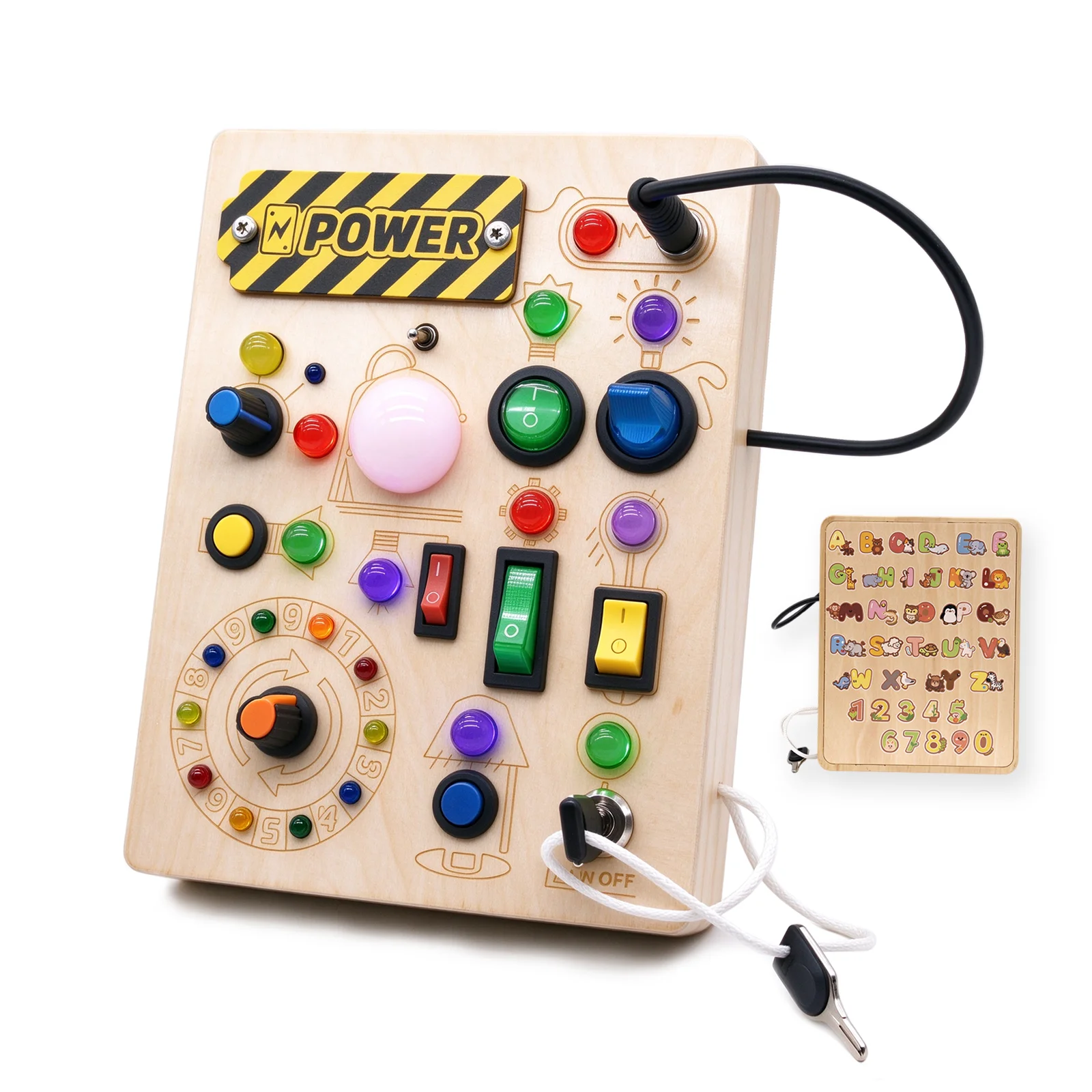
We make wooden LED busy boards in Wenzhou and ship them to wholesalers, gift retailers, and online sellers in more than fifteen countries. A visible slice of those orders is clearly headed for gift shelves: the buyer asks for a printed box, no price sticker, and a card slot. Read what follows knowing we are the factory and we benefit if you order for the gift channel. Our argument is simply that gift selling has rules of its own, and orders that ignore them sit in the warehouse.
Gift selling is no harder than toy selling. It just fails in different places. Inventory picked on toy-catalog instincts tends to stall, and packaging decided at the last minute costs more than packaging decided early.
Quick facts
- MOQ: 100 pcs per model · 200 pcs for custom artwork or engraving · 500–1,000 pcs for full private label
- Samples: 1–10 pcs, 3–7 days, credited back against the bulk order
- Lead time: 15–25 days after deposit and artwork approval
- Certifications: CE / CPC / ST reports on current models (EN 71 and ASTM F963)
- FOB at MOQ: $8.90 Classic · $9.20 Alphabet · $9.50 Dino
- Recommended retail: $20–35, the band most gift shoppers read as "a real present"
Why a busy board gift sells on different rules
When a parent buys a busy board, they are solving a problem. The child needs something to do on a flight, in a waiting room, at a restaurant. That buyer reads reviews, weighs switch counts, and buys on function. Price matters, but it is traded against how many minutes of quiet the thing will buy them.
A gift buyer does almost none of that. The buyer is usually a grandparent, an aunt, a colleague chipping in with others, or a friend at a baby shower. They do not know the child's favourite colour, or how much shelf a nursery has. They work from three signals instead: the price has to look like a real present, the box has to look like a real present, and the parent receiving it must be able to say thank you without quietly worrying about small parts.
That last point is worth sitting with. A gifter is handing over responsibility along with the toy, and they know it. Anything that makes the safety story easy to repeat — a CE or CPC mark, a clear age line, a brand name they can search — lowers the friction. Anything that makes the parent pause, such as loose pieces or a battery compartment a toddler can open, kills the sale at the shelf and the review afterwards.
The practical consequence is that gift stock gets chosen on presentation and reassurance, with play value trailing behind. Two boards can be identical inside and sell at very different prices once one of them has a proper box.
The busy board gift calendar: what to stock, and when
Gift demand stretches across the whole year in several distinct waves. Each has its own price habit and its own packaging expectation, and if you buy the same mix for all of them you will overpay for packaging on the low-end occasions and under-dress the high-end ones.
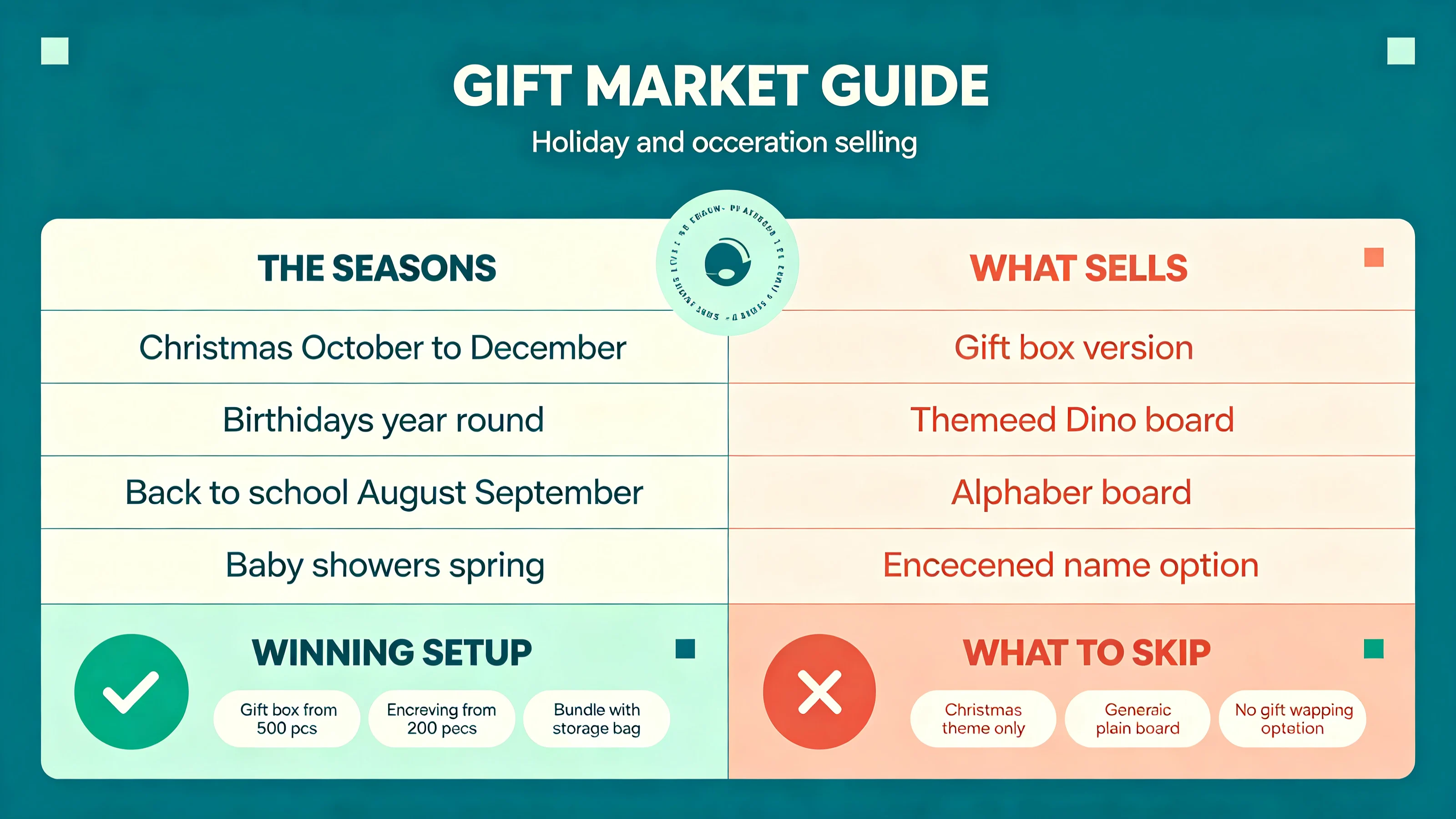
Christmas and New Year
This is the year's profit, in most gift retailers' plans. Buyers here tolerate the top of the range, $25–35, and expect a printed box at the very least. Dino and Alphabet carry Christmas better than the plain Classic because the artwork reads as a real design under a tree. Stock has to be on shelves by early-to-mid November, which means the buying decision was made months earlier, as the timeline below shows.
Birthdays and Children's Day
The steady middle. It runs all year and peaks in late spring around 1 June in several markets. The price habit sits at $20–28, and buyers here are less fussy about a rigid box, since a good printed box is usually enough. This is the right place to test new artwork: volumes are predictable and the risk per SKU is small.
New baby and baby shower
A quieter but loyal segment. New parents register for wooden, neutral-palette toys, which suits our range well. Alphabet does best here, and this is the occasion that most often wants a personalised touch, such as a printed name or a date. Boards bought for this reason tend to be kept rather than used up, so a keepsake-quality box is money well spent. Our approach to engraving and printed names starts at 200 pieces.
Back to school
Late summer, and function-led. The buyer is often a parent restocking for their own child rather than a gifter, so price pressure is higher and presentation matters less. Treat it as a volume occasion for the plain-box Classic, not as a gift moment.
Grandparents
The most valuable gifter, and the least understood. Grandparents buy earlier than anyone, spend more, and often want to send a board straight to a grandchild with a note attached. Give them an engraved option, a card slot, and a box that survives the post, and they will come back next year for the next grandchild. This segment rewards a slightly premium SKU far more than a discount.
Counting backwards from Christmas
This is the part buyers underestimate most. Ocean freight does not speed up in November, and neither does a Chinese factory during the run-up to Spring Festival. Below is a workable backward plan for a Christmas order, built on our own production times plus typical ocean transit. Treat the dates as a starting sketch and shift them for your own port and forwarder.
| Milestone | Target date | Why it sits here |
|---|---|---|
| Artwork and packaging signed off | mid-July | Printing plates and box proofs need a clear run |
| Deposit paid, production booked | early August | Booking early protects your slot in the peak queue |
| Production complete | late September | 15–25 days of line time, plus buffer for a reprint |
| Goods leave the China port | early-to-mid October | Leaves room for peak-season surcharges and queues |
| Arrival at your warehouse or 3PL | mid-to-late October | Adding 30–45 days of ocean transit, port-dependent |
| On retail shelves | early-to-mid November | In time for the gift-buying surge |
The transit figure is the one to watch. A US west-coast lane and a European lane do not behave the same, and a port that is congested in a normal year is worse in December. Peak-season surcharges on top of base freight are common from late summer, and they are the reason an autumn shipment that looked cheap in June can end up costing more than a July one. The mechanics live in our guide to shipping busy boards out of China, and in our experience buyers who cut it close to save a few weeks usually pay that back in air freight or lost sales.
One more date that is not in the table: Chinese New Year. Factories close for two to four weeks around it, and lines fill in the weeks before as everyone rushes orders through. Any spring gift order worth having needs its deposit in well before the holiday, not after it.
Packaging for gifts: what the box is worth
For a normal toy order, packaging protects the product. For a busy board gift, the box is part of the product. It is the first thing the gifter sees, it is what gets wrapped, and it is what the parent photographs before unwrapping. This is the easiest place to lose a gift sale without ever touching the toy.
| Option | Typical add over a plain box | What it buys |
|---|---|---|
| Plain white box | baseline | Protection only; fine for back-of-house or bulk |
| Printed sleeve over a white box | low | A designed front face; cheapest way to look intentional |
| Full-colour printed box | +30–50% | A shelf-ready gift box; the default for Christmas |
| Printed box, inner tray, manual | higher again | Unboxing that feels considered; fewer shipping dents |
| Rigid gift box with a gift bag | highest | Genuine hand-it-over packaging for premium SKUs |
The honest trade-off: a rigid box with a bag can add real money per unit, and it only pays back on SKUs you expect to sell at $30 and above. On a board priced at $22, a good printed box does the same job for less. If you want to see where packaging sits inside the total cost, our wholesale price guide breaks the unit down block by block. The durable-versus-pretty decision is covered in more detail in our packaging and shipping guide.
Gift-channel requirements that catch buyers out
A handful of small specs separate gift-ready stock from stock that ends up discounted, and they are cheap to get wrong.
The box should carry no price. A gifter does not want the person receiving the present to see what was paid, and a printed MSRP on the base of the box is a quiet reason to put it back on the shelf.
There should be somewhere to write. A card slot, or simply a clean panel on the back for a name and a message, turns a stock product into a gift and costs almost nothing at the printing stage.
It should scan. Gift multiples and department stores register barcodes, so your own barcode on the printed box is often a requirement rather than a nicety. That starts at the 200-piece custom-artwork tier.
The return path should work. Gifted items come back through the recipient, not the buyer, and sometimes they are regifted first. A box that survives being wrapped, opened, and carried back to a store matters, and a generous unopened-return policy is itself a selling point on a gift label. Most buyers do not price this in until their first January. If you are building a range from scratch, our Montessori wholesale buyer's guide covers the rest of the sourcing checklist.
Pricing and the discount trap in the $20–35 band
Gift pricing is not the same as toy pricing, because the price itself is doing a job. In the gift aisle, the number is a message about how much the buyer cared, and shoppers read it in a glance as either a throwaway or a serious present.
That is why the $20–35 band holds up so well for wooden boards. Below $20 it reads as a stocking filler rather than a present; above $40 and a buyer who does not know the child starts to hesitate. The middle of that band is where the volume lives.
The trap is discounting. A gift SKU that is permanently marked down trains shoppers to wait, and worse, it signals that the product was never really worth its list price. Once a gift line is known for regular sales, it stops feeling like a present and starts feeling like a bargain bin. We would rather defend the price and add value elsewhere.
The better lever is bundling. A board plus a small bag plus a card, sold as one set at a slightly higher price, protects the headline figure and lifts the basket. If you must clear Christmas stock, do it once in the second week of January at 20–25%, then stop. Buyers who see the same board half-price in March assume the list price was never real.
Which boards are good gifts, and which are not
Not every busy board belongs in a gift box, whatever the catalogue says.
Good gift candidates share a few traits. They fit the $20–35 band at retail. They are compact enough to wrap without a struggle. They look designed in a photo, which is how most gift research happens now. And they are ready to use out of the box, or close to it.
Poor gift candidates are easier to list. Very large boards are awkward to wrap and expensive to ship one at a time. Boards that need assembly lose the gift moment entirely, because the recipient wants to play, not to hunt for a screwdriver. Boards with loose small parts raise a safety question a gifter cannot answer on the spot. And heavy boards become a problem the moment a grandparent tries to post one.
Batteries deserve their own note. We ship without them on purpose, because adding cells pulls the product into dangerous-goods handling that costs more than the batteries ever would. For a busy board gift, though, "no batteries included" is a flat moment on Christmas morning. If you sell into the gift channel, plan to add 2 × AAA cells in your own market, under your own labels and rules, so the board lights up within a minute of being opened. It is the cheapest fix in this whole article and one of the most valuable.
Questions buyers ask us every week
Can the box ship without any price on it? Yes, and for gift lines it should. We print to your artwork, so there is simply no MSRP on the box unless you ask for one. Tell us at the artwork stage and it is done.
Can you add a card slot or a message panel? On the printed box, usually yes. It adds almost nothing to cost if it goes into the original print run. Adding it to an existing plate later means a new plate, so decide it early.
What happens if my Christmas order lands late? Then you are either air-freighting a heavy wooden product, which is expensive, or selling into January at a discount, which is worse. This is why we push buyers to book early even when the July price feels unattractive. The calendar does not negotiate.
Should I stock one design for the gift aisle, or several? For a small retailer, two is usually the sweet spot: one volume board for Christmas and birthdays, one premium board for the grandparent and new-baby occasions. A wall of six similar boards splits attention and complicates every reorder.
Do you include batteries? No, by default. Cells trigger dangerous-goods handling and paperwork we avoid for cost and speed. For gift lines our buyers usually add batteries in their own market. If you want them pre-packed, that is a separate conversation and we are glad to have it.
Can I get my own brand on the box? Yes, from 200 pieces with your artwork, and full private label from 500–1,000 pieces. Whether it is worth it depends on your channel. A single gift shop rarely needs it; a gift chain almost always does.
What we'd do in your position
If you asked us to plan a first gift-channel order, we would keep it small and specific: two SKUs, the Classic for volume and the Dino for the premium shelf, ordered in August for a Christmas launch, in a printed box with no price and a card slot. We would add batteries in-market, list the pair at $24 and $32, and resist the urge to discount before January.
If you already sell toys and want to test the gift aisle, the honest advice is to test with packaging first, not product. Take one board you already stock, put it in a proper gift box with a card slot, and see whether it moves faster at a higher price. Plenty of buyers find that it does.
And if the whole calendar still feels like guesswork, ask us for a quote with your target occasion, your port, and your packaging. We will come back with a backward timeline in the same shape as the table above, so you can compare a plan to a plan instead of hoping the ship arrives on time.
If you are still deciding on the shape of this order, three pages go further: Busy Boards for Dementia & Elderly Care: A Growing Market on the supply side, Selling Busy Boards on Amazon FBA: A Sourcing Playbook on the quality side, and Busy Board Wholesale Price Guide: What Actually Drives Your Cost Per Unit when the quote is on your desk.