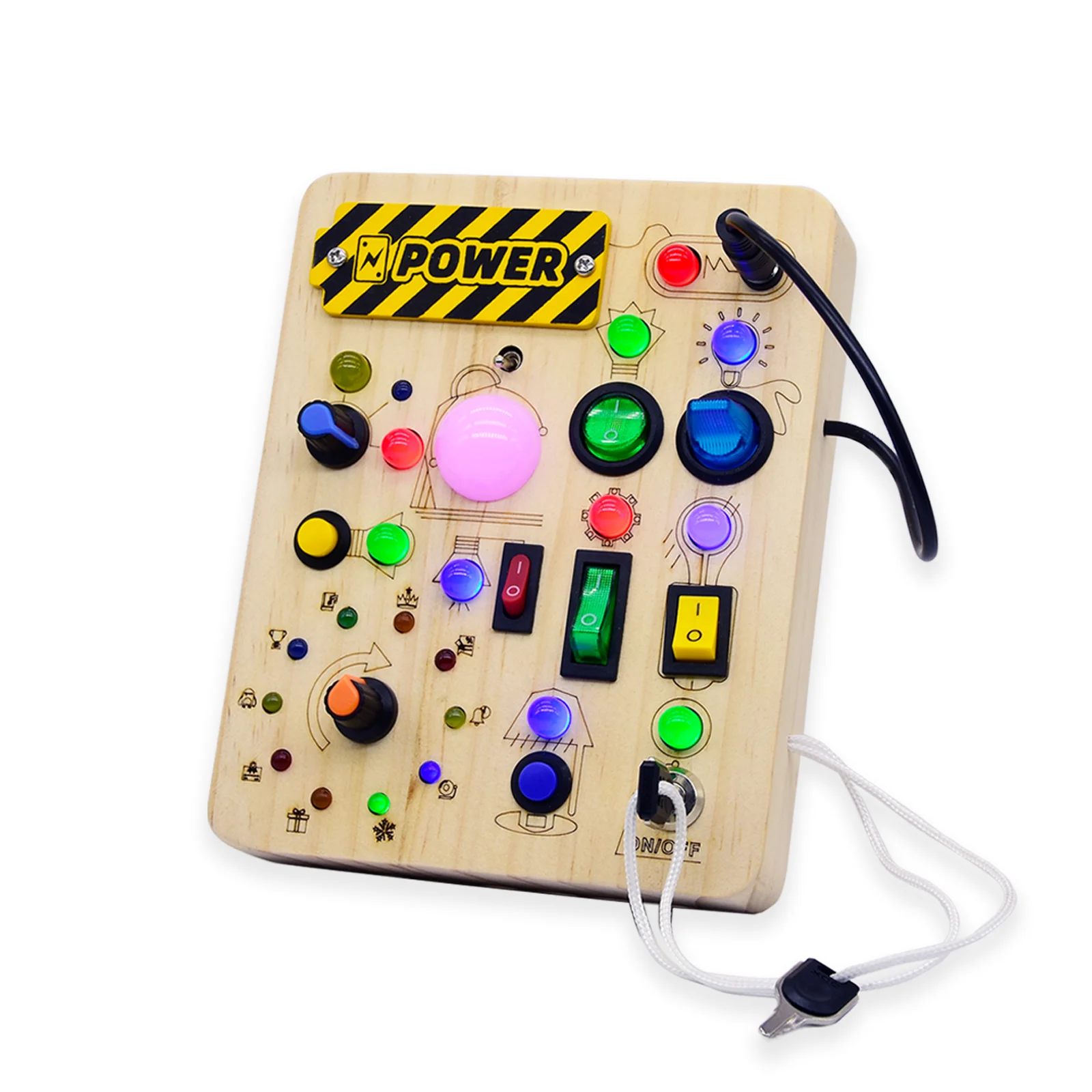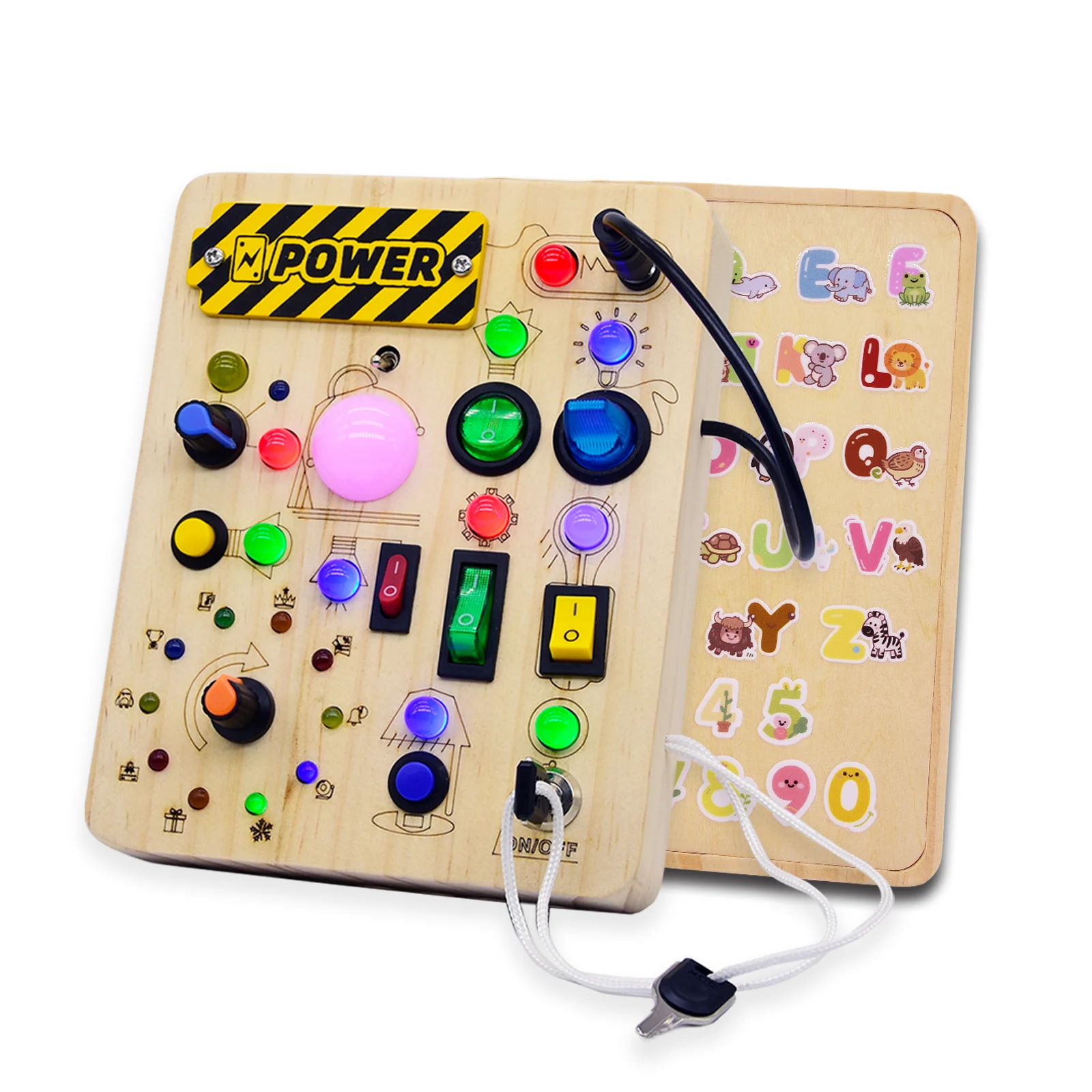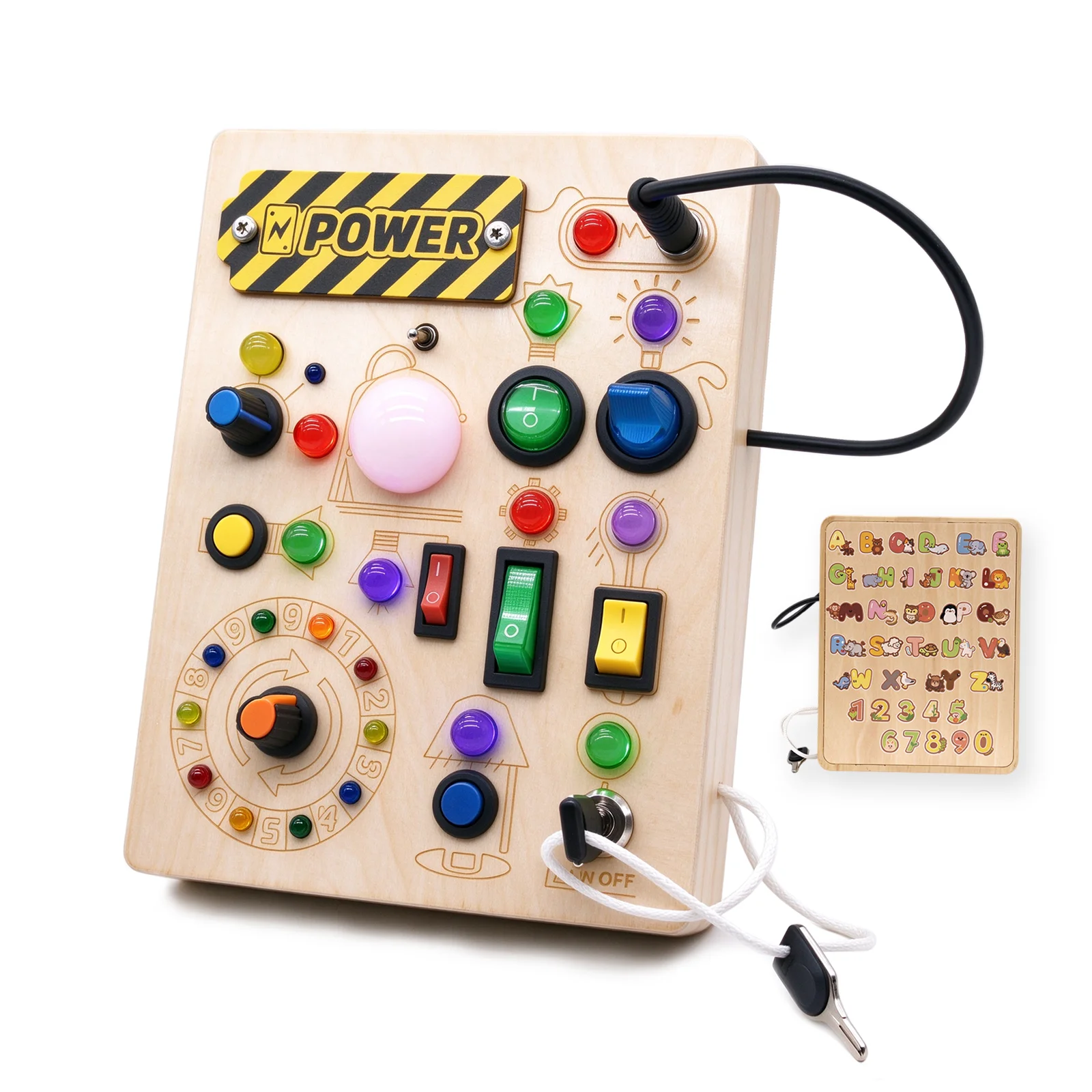
Shipping Busy Boards from China to the US & EU: Cost & Methods
Short answer: the right freight method for shipping busy boards from China is decided by quantity more than by anything else. A first order of 100 pieces usually moves LCL by sea, or by air if you cannot wait. Around 500 pieces you are still on LCL unless the calendar forces your hand. At 1,000 pieces the maths tilts towards a full container, and the freight cost per unit can fall by more than half. What follows is how the four methods differ, how a 1,000-piece order splits into landed cost to the US West Coast and to Rotterdam, and where the charges you never saw on the quote tend to hide.
We build these boards in Wenzhou and ship into both markets most weeks, so read on knowing we are the factory and we have an interest in you importing more of them.
A busy board is light for its size. That one fact shapes almost everything about how these boards move, and it is where most first orders get their landed-cost estimate wrong.
Quick facts
- MOQ: 100 pcs per model · 200 pcs for your own artwork · 500–1,000 pcs for full OEM
- FOB at MOQ, from our Wenzhou line: $8.90 Classic · $9.20 Alphabet · $9.50 Dino
- Production lead time: 15–25 days after deposit and artwork approval
- Freight basis: light and bulky, so most sea quotes are charged on volume, not weight
- Sea transit, port to port: roughly 14–20 days to the US West Coast, 28–38 days to North Europe
- Certifications: CE / CPC / ST reports on current models (EN 71 and ASTM F963), 98% on-time delivery
Why shipping busy boards from China is a volume problem first
A shipping line does not price your product. It prices the space your product occupies. Busy boards take a great deal of space for very little weight, which is the definition of what the trade calls light-and-bulky cargo, the kind that cubes out well before it weighs out.
Two things follow from that, and both of them land on your invoice.
Sea freight is rated per cubic metre, per container, or per weight tonne, whichever the carrier can charge the most for. For dense cargo such as tiles or hardware, weight decides the price. For a busy board, volume decides it. When you compare ocean quotes, the number that matters is CBM, not kilograms.
Air and express freight work the other way around: they are priced on volumetric weight. A carrier measures your carton, divides the volume by a divisor that is typically 5,000 or 6,000, and compares the result to the actual weight. You pay whichever is greater. A board that weighs about a kilogram inside a 40 × 30 × 6 cm carton occupies 7,200 cm³, which becomes 1.2 kg of chargeable weight at a 6,000 divisor. You pay for air the box never used.
Calculating CBM is simpler than it sounds. One cubic metre is 1,000,000 cm³. A master carton of 60 × 40 × 40 cm is 96,000 cm³, or 0.096 CBM. Multiply by the carton count and you have the shipment. That figure, not the unit price, is what moves the freight line.
If a freight quote reaches you as a single number with no CBM and no weight attached, ask for both before you agree to anything.
The four ways of shipping busy boards from China, and when each one fits
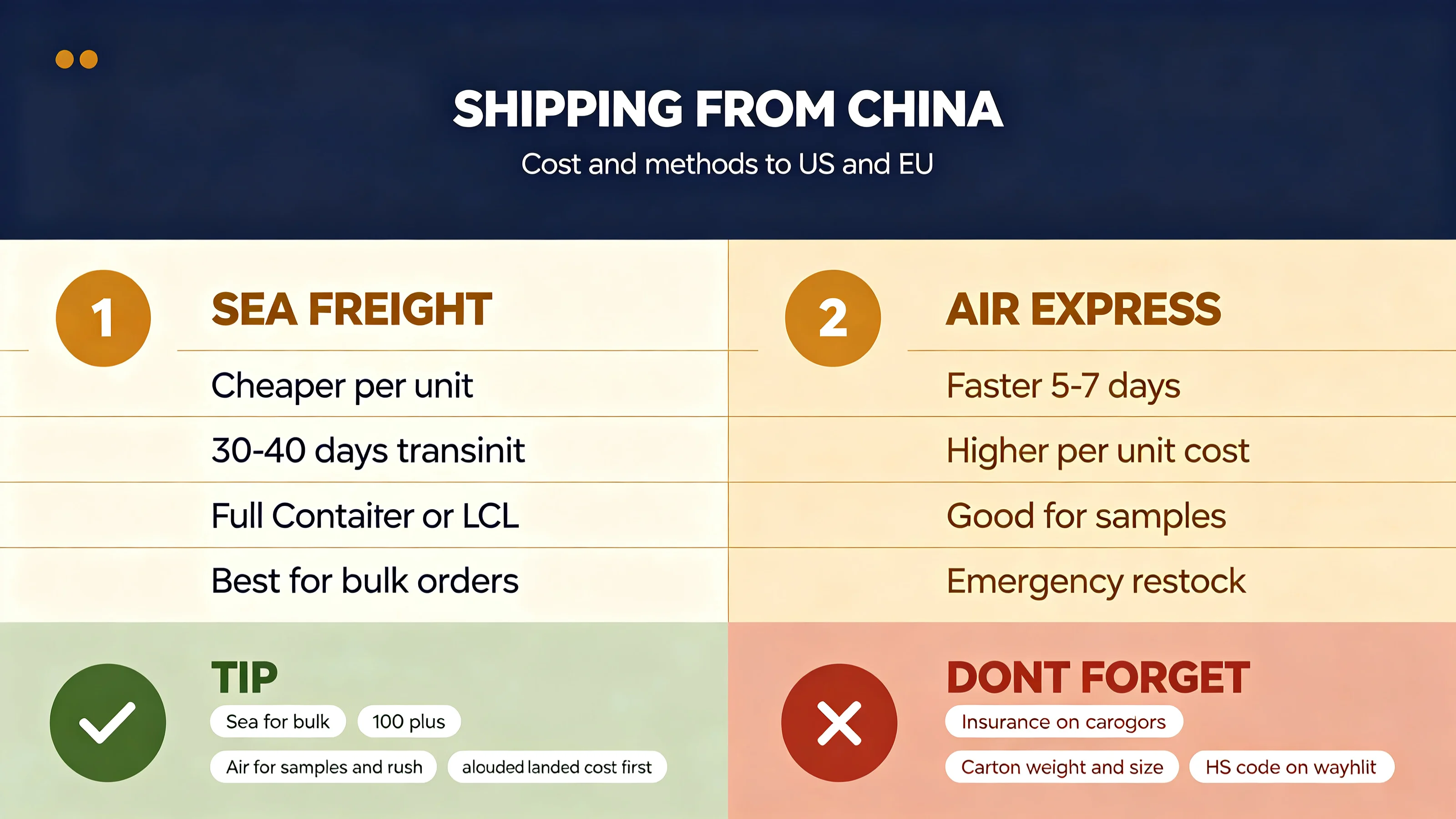
There are four methods worth knowing when it comes to shipping busy boards from China, and the choice is driven first by volume and second by deadline.
| Method | Sensible volume | Speed | Relative cost | Watch for |
|---|---|---|---|---|
| Full container, 20 ft | roughly 500–1,500 boards | Slow | Lowest per unit when full | You pay for the box even when it is half empty |
| Full container, 40 ft high cube | roughly 2,500–4,500 boards | Slow | Lowest per unit | Only pays off when the box is largely full |
| LCL, sea | 100–500 boards | Slow, plus consolidation | Middle | Port to port looks cheap; the local charges do not |
| Air freight | 100–500 boards when urgent | Fast | High | Charged on volumetric weight |
| Express parcel | samples up to about 50 | Fastest | Highest | Fine for samples, ruinous at volume |
A first order of 100 pieces is almost always LCL or air. LCL if you can wait four to six weeks door to door, air if the stock has to be on a shelf sooner and the margin can absorb it. Express belongs to samples and small top-ups, not to a season's stock.
At 500 pieces, LCL is usually still the sensible route, and it is where a lot of buyers stay a little too long. The reasoning runs "we are not big enough for a container," which is true on weight and false on volume. Because boards cube out, 500 pieces may already fill much of a 20 ft box, and at that point LCL is charging you a share of someone else's container while you could be paying a flat rate for your own.
At 1,000 pieces, and certainly beyond it, the picture changes. A 40 ft high cube that is largely full usually beats two LCL shipments on freight per unit, and it removes the consolidation wait. The unit-cost side of this sits in our busy board wholesale price guide. If you are unsure which way to go, price both and compare the landed numbers rather than the headline freight.
How much a busy board container actually holds
This is the question we hear most after "what's the price," and the honest version has a range in it.
A 40 ft high cube offers roughly 68 CBM of usable space, and a 20 ft box around 28 CBM. How many boards fit depends entirely on the carton the factory packs in, because the cargo is volume-limited. In our experience a 40 ft high cube takes somewhere between 2,500 and 4,500 boards with a typical retail-ready carton, and the same box can swing by a thousand units either way once carton dimensions change. A 20 ft box is roughly a third of that.
A few centimetres off one carton face multiplies across hundreds of cartons. This is why we ask buyers to treat carton design as a freight decision, not only a protection decision; the fuller explanation sits in our guide to busy board packaging and shipping, which is the companion piece to this one.
For planning, ask your factory for the packing list before you book: units per carton, carton dimensions, carton gross weight, total CBM. Those four numbers let you check any freight quote yourself, and they should reconcile to the container you are being sold.
What shipping busy boards from China costs: a 1,000-piece split
Here is the part that surprises people. The freight you are quoted and the cost you actually pay are different sums, because the quote covers only one stage of the journey.
A full landed cost for shipping busy boards from China has seven parts: goods, inland haulage and export clearance at origin, main freight, marine insurance, import duty, destination port charges, and inland delivery. VAT sits on top in the EU. A factory quote normally covers the first and sometimes the third.
The table below splits a 1,000-board Classic order, FOB Wenzhou, into the two destinations most of our buyers ship to. Every figure is an indicative range as of publication, not a quotation. Freight rates move with the market, duty rates move with policy, and port charges vary by terminal and season.
| Cost element (1,000 Classic boards) | To US West Coast (USD, indicative) | To Rotterdam (USD, indicative) |
|---|---|---|
| Goods, FOB Wenzhou | 8,900 | 8,900 |
| Inland haulage and export clearance in China | 150–300 | 150–300 |
| Main freight, port to port | 900–1,600 | 700–1,400 |
| Marine insurance | 40–80 | 40–80 |
| Import duty | varies; base is often low, but the US Section 301 add-on can be material | varies by subheading; many toy lines sit near 0%, some around 4.7% |
| Import VAT or tax | handled differently; state sales tax applies on resale | typically 17%–27%, usually recoverable if you are VAT-registered |
| Destination port charges (THC, documents, clearance) | 250–450 | 250–450 |
| Inland delivery to your door | 200–500 | 200–450 |
| Indicative landed total | roughly 11,000–14,000 | roughly 11,000–15,500 before any VAT reclaim |
Two patterns are worth naming. Duty and freight are usually smaller than first-time importers fear, while destination charges are larger than they expect. The EU total looks higher largely because of VAT, and if you are VAT-registered most of that line comes back as a reclaim, which turns it from a cost into a cash-flow item. The full treatment of duty, VAT and classification is in what busy board importers actually pay.
We can send you this same table with your own quantities and port filled in, using current forwarder rates, so you can place it beside whatever else you are looking at. Comparing a quote to a quote is guesswork. Comparing a landed cost to a landed cost is procurement.
Transit times, port to port and door to door
The number that matters to your warehouse is the door-to-door one, and it is always longer than the sailing.
Sea: the sailing is not the journey
Measured port to port and nothing else, sea transit is roughly 14–20 days from South China ports to the US West Coast, 25–35 days to the US East Coast, and 28–38 days to North Europe, with Ningbo and Shanghai inside those ranges. Those are sailing days. Add origin handling, destination discharge, customs clearance and inland delivery, and door-to-door sea runs three to five weeks to the US West Coast and four to six weeks to Europe. Transit times for shipping busy boards from China vary more than any single quote suggests, so treat one figure as a midpoint.
Air freight is the exception to the calendar. Door to door it usually lands in five to ten days once the goods are ready, and express parcels are faster on a small volume. The trade-off is cost, which is why air tends to appear on a first order racing a launch date rather than as a routine channel.
Peak season, when schedules slip
The run-up to the Western holiday season and the weeks before Chinese New Year are the two windows when vessels sail full, rates climb, and bookings get rolled. Peak-season surcharges are applied on top of the base ocean rate during these windows, and they change at short notice, sometimes with only a week or two of warning. If your stock has to be on a shelf for a fixed date, book early, keep a two to three week buffer, and ask your forwarder to name the specific sailing you are confirmed on. The most expensive shipping decision a buyer makes is the one forced on them by a deadline.
FOB, CIF and DDP: where the risk changes hands
The Incoterm on your order decides three things the unit price hides: who books the freight, who clears customs, and who is the importer of record. That last one matters when something goes wrong, because the importer of record is the party the authorities come to.
FOB is where most of our buyers start. The factory delivers to the port of departure, you book the main freight, and you clear customs at your end. You own the goods from the moment they are on board, which means a rate spike between booking and sailing lands on you, but you also see the real freight cost and can shop forwarders. For a buyer who wants control, it is the cleanest arrangement.
CIF moves one step along. The seller books the freight to your port and insures the cargo, so the ocean leg is off your plate. The catch is that the freight they book is often the cheapest that still arrives, and the insurance is usually the minimum the rule allows. You still clear customs and pay duty and VAT. Most first orders we see land on CIF, and it works, as long as you know what you are and are not getting.
DDP is the one to slow down on. A duty-paid-to-your-door price is attractive, and sometimes entirely genuine. But on DDP the seller is usually the importer of record, which means the seller decides what customs value and which HS code get declared. If their landed price sits well under your own maths, one of two things is happening: they are taking a thin margin to win the order, or the shipment is being declared in a way that does not match reality. When customs later reassesses, the goods are held and your name is at the receiving end. You also lose the VAT reclaim, because you were never the importer it was charged to. A DDP quote that comes in 20% under your own numbers is not a saving you keep. If you do go DDP, ask the supplier to state the declared value and the HS code in writing. The honest ones put it on the quote, and the ones that go quiet have already answered. There is a fuller walk-through of the sequence in our import checklist for busy boards.
The three costs buyers forget
Three charges catch first-time importers more than any others, and not one of them appears on a factory quote.
Destination port charges come first. Terminal handling, documentation and customs-clearance fees are billed locally, at your port, and they are real. A container that clears without a hitch still generates a bill of a few hundred dollars before the goods move, and this line is often missing from a budget built on the freight quote alone.
Peak-season surcharges come second. Carriers add a peak-season surcharge or a general rate increase to the base ocean rate when demand spikes, usually with a couple of weeks of notice and sometimes less. These are not negotiable and not on the original quote. If your shipment crosses a peak window, budget for the possibility instead of being surprised by it.
Inland delivery and unloading come third, and they are the quiet one. A 40 ft container of boards cannot always be delivered on a standard truck; you may need a tail-lift, a forklift, or a driver willing to wait while you unload. Waiting time and lift fees add up. Ask your forwarder what the door delivery includes and how long the truck will wait, because the answer is usually shorter than your unloading takes.
Questions buyers ask us every week
Is it cheaper to ship 1,000 boards as one container or as two LCL shipments? Almost always one container, if the timing works. LCL per-unit rates rise with volume because you pay a share of the same fixed local charges twice. The exception is storage: if you cannot warehouse 1,000 boards, two smaller shipments may still be the better business decision, even at a higher freight cost.
Can you quote me DDP so I don't have to deal with customs? We can, and some of our buyers prefer it. But read the trade-off above before you pick it on convenience alone. If you are VAT-registered, DDP usually costs you a reclaim you would otherwise get back. Ask us for the declared value and the HS code in writing either way.
How do I know a freight quote is real? Ask for three things: the basis of the charge, in CBM and weight; whether it is port to port or door to door; and an explicit list of what is excluded. A quote that answers all three is one you can plan around. A single number with no basis is one you find out about later, on an invoice.
What happens if my order misses the sailing? In a quiet month it rolls to the next departure, usually a week later. In peak season, roll-overs stack up and your shipment can wait two or three weeks for space. We keep production lead time to 15–25 days, but the ocean leg is not ours to control, so build a buffer if a fixed date matters.
Why did my last shipment cost more than the quote? Nine times in ten, one of the three charges above. Destination port fees and inland delivery are billed at your end and never appear on the quote, and peak-season surcharges are added after booking. Ask for the full landed breakdown before you order next time, not after.
What we'd do in your position
If this is your first order, move 100 pieces by LCL and spend the saving on getting the product in front of customers. It is enough to test the market before you commit container money. If timing is genuinely tight, air freight on 100 boards is a defensible cost; it is not a defensible cost on 1,000.
When you find yourself ordering repeatedly and each shipment is filling a decent share of a container, stop buying LCL and price a 20 ft box. That switch usually makes sense somewhere between 500 and 800 boards per quarter, and buyers tend to make it a season late.
And when you book, ask us for the packing list, the CBM, and a photo of the loaded container with the seal number. We send all three as standard, because a buyer who can check the freight maths stops worrying about it. Send us your target quantity and destination and we will return the landed table above filled in with your numbers, so you can compare it to whatever else is on your desk.
If this raised a specific question, Busy Board Import Duty & HS Code: What Importers Actually Pay goes deeper on it.