Busy Boards for Dementia & Elderly Care: A Growing Market
When most people picture a busy board, they picture a toddler. But a quieter, fast-growing market is buying them for a very different user: older adults in dementia and elderly care.
The product logic is the same — a wooden board of switches, latches, zips and textures that keeps hands busy — but the buyer, the design emphasis and the pricing are all different. For suppliers and care-industry buyers, that makes it a genuinely underserved niche.
A note before we go further: busy boards in this context are activity and engagement products, not medical devices, and they are not a treatment for any condition. The demand is about dignity, engagement and calm — and that framing is exactly what makes them sell.
What a dementia busy board is — and how it differs from a kids' board
A busy board for dementia takes the familiar activity-board format and adapts it for adult hands and adult minds. It is designed to give a person something meaningful to do with their hands, to prompt memory and conversation, and to offer a calm, repetitive engagement that many care providers value.
The core is often described as a fidget board for the elderly: a self-contained, no-loose-parts activity surface that can sit on a lap or a table. The category overlaps with sensory and cognitive activity boards used in care homes, day centres and hospitals.
The important difference from a child's board is not safety-less — it is safety-different: adult-strength components, no small-parts choking logic, and a design language that reads as respectful rather than infantile.
Why the demand is growing
Three forces are driving the category:
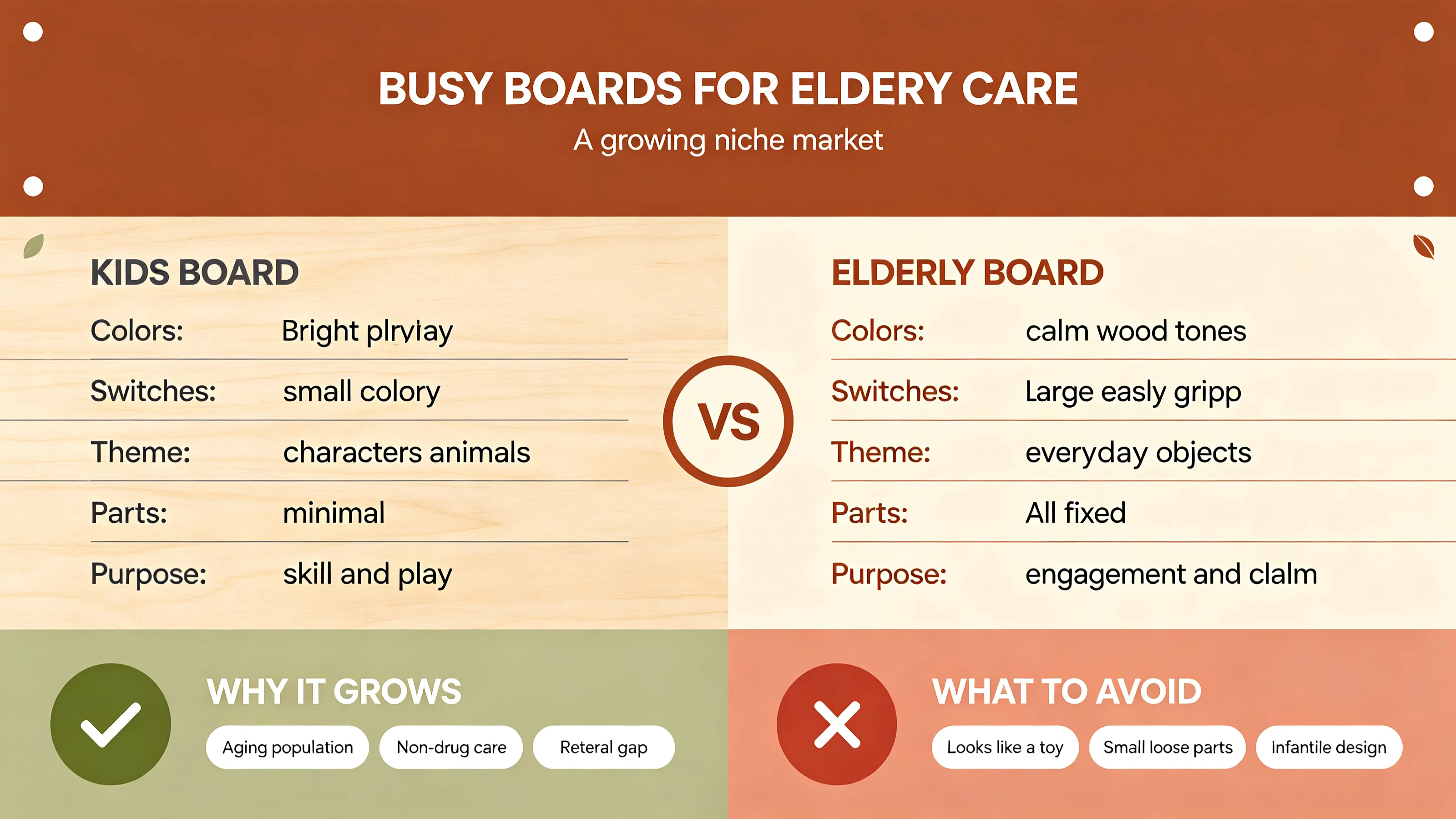
- An ageing population. In Europe, North America and East Asia, the number of people living with dementia keeps rising, and with it the demand for engagement products in care settings.
- A shift toward non-pharmacological engagement. Care providers increasingly look for activities that occupy and calm residents without medication — fidget and sensory products sit squarely in that space.
- A retail gap. Most toy suppliers ignore this buyer entirely, so the shelf is thin. That is the opportunity: a product that already exists, pointed at a market that is not being served.
For a wholesaler, that combination — real, growing demand and few specialist suppliers — is exactly what a good niche looks like.
How the product differs: designing for adults
A dementia busy board should be re-specified, not just relabelled. Key adaptations:
| Design element | Kids' busy board | Dementia / elderly board |
|---|---|---|
| Components | Light switches, zips, beads | Adult-strength latches, buckles, dials, fabrics |
| Fasteners | Small and colourful | Larger, easy to grip, high contrast |
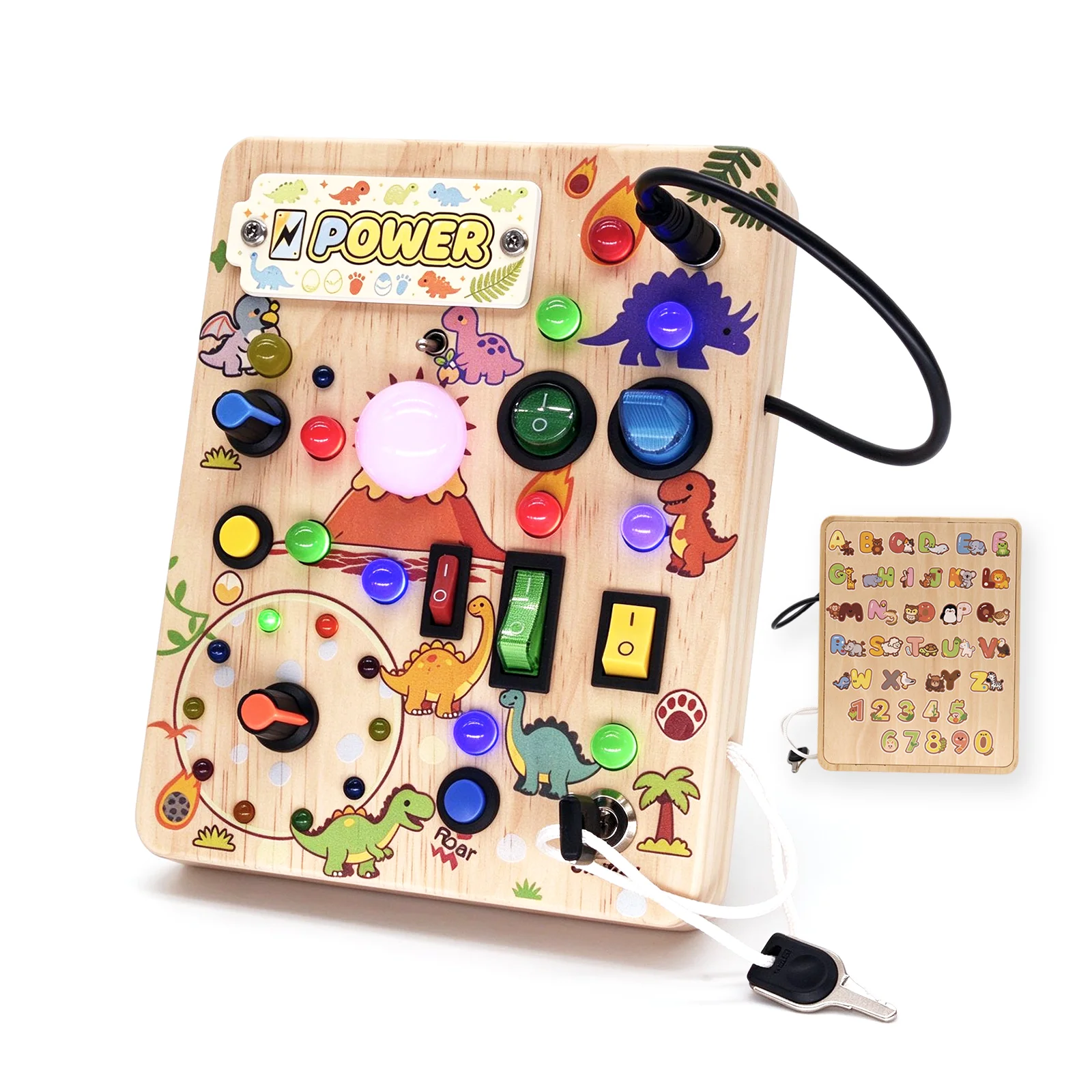
| Themes | Characters, animals | Everyday objects, familiar scenes, memory triggers |
| Aesthetic | Bright, playful | Calm, dignified, wood-toned |
| Loose parts | Minimal | None — everything permanently fixed |
| Purpose | Skill and play | Engagement, calm, orientation |
The design brief is different, but the manufacturing skill set — wood craft, safe fastening, durable finishes — is the same. That is why an existing busy board maker can serve this market well with a modified line.
Safety and materials for care settings
Care settings have their own requirements, and they are stricter than you might expect:
- No removable parts. Everything must be fixed — a swallowed or lost component is both a hazard and a broken product.
- Wipe-clean, durable finishes. Care environments are cleaned frequently; the surface must survive it.
- Non-toxic coatings. Even though the user is an adult, institutional buyers increasingly insist on low-emission, water-based finishes.
- No sharp edges or pinch points, tested with adult strength in mind.
- Dignified appearance. Products that look like children's toys are often rejected by care homes for precisely that reason.
If you are building a care-sector line, document these choices — care procurement teams ask for them.
Who buys, and how they buy
The buying pattern is different from toy retail:
- Care homes and nursing homes — buy in sets, often via a procurement process, value durability and hygiene.
- Hospitals and day centres — purchase for activity programmes, frequently through group purchasing.
- Charities and dementia associations — fund or distribute engagement products at scale.
- Families and carers — buy directly for home use, price-sensitive but motivated.
- Occupational-therapy suppliers — a specialist channel that values a well-documented product.
Notice that most of these buyers order in sets, not singles, and they re-order. That is good news for wholesale: a care-home client is a repeat client.
How suppliers can position it
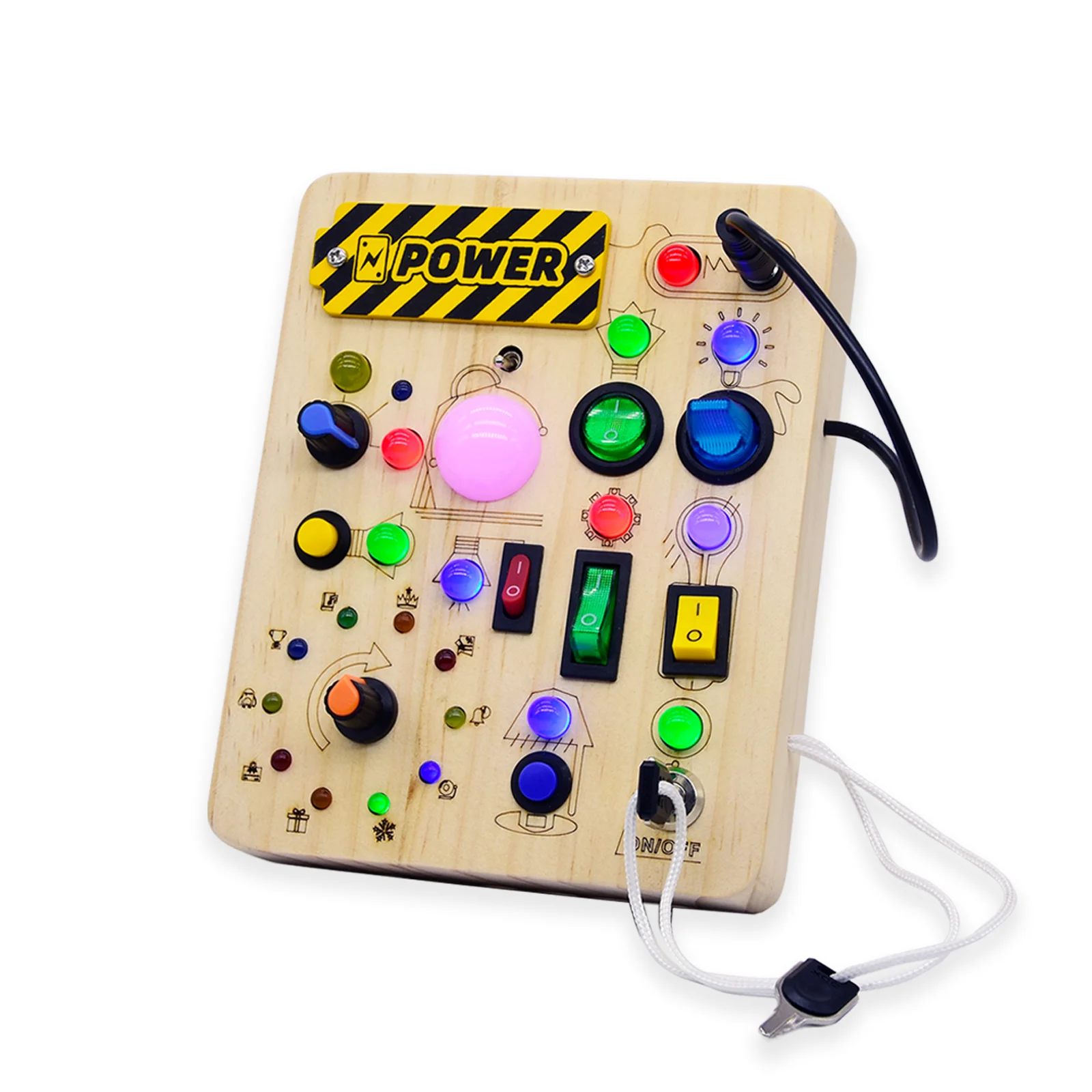
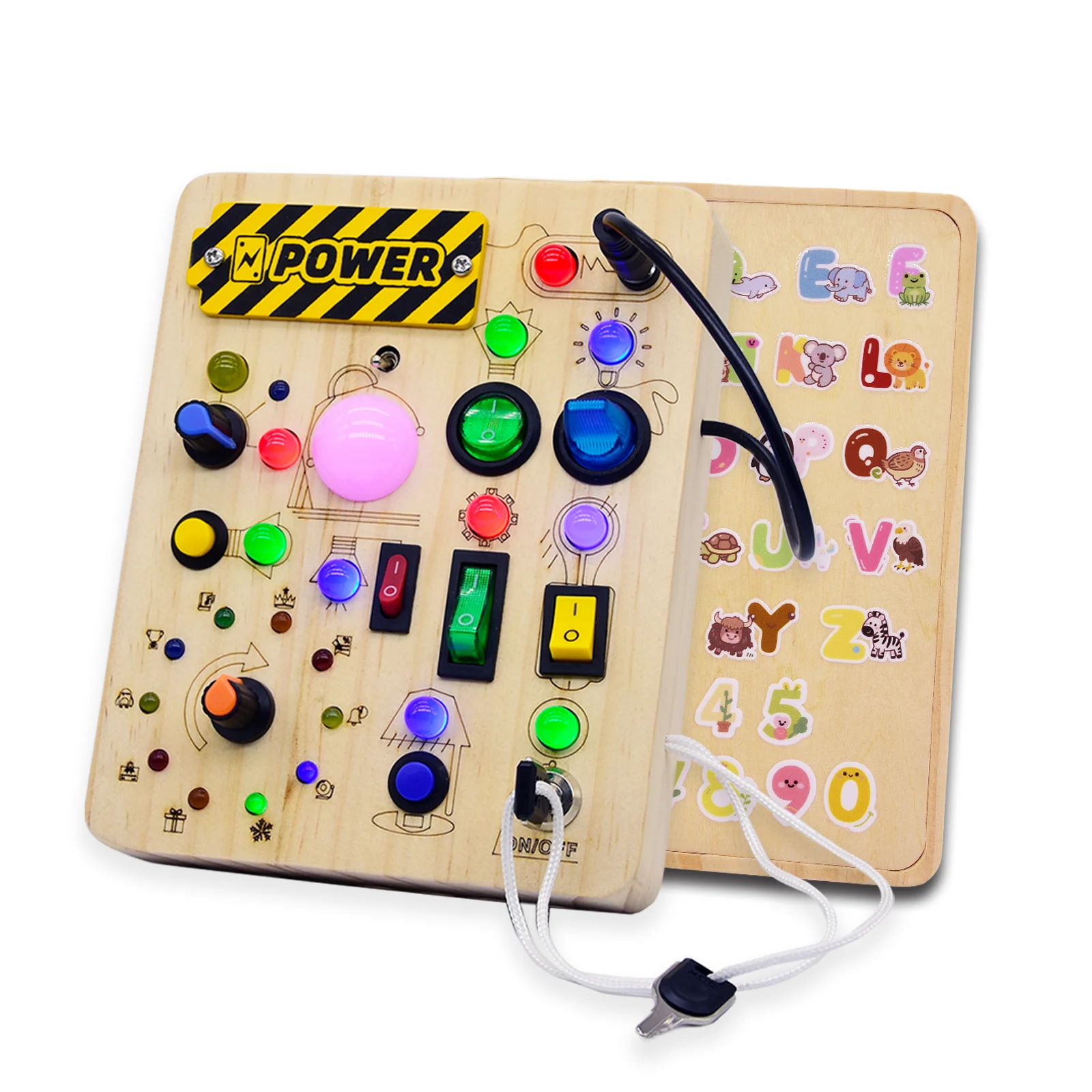
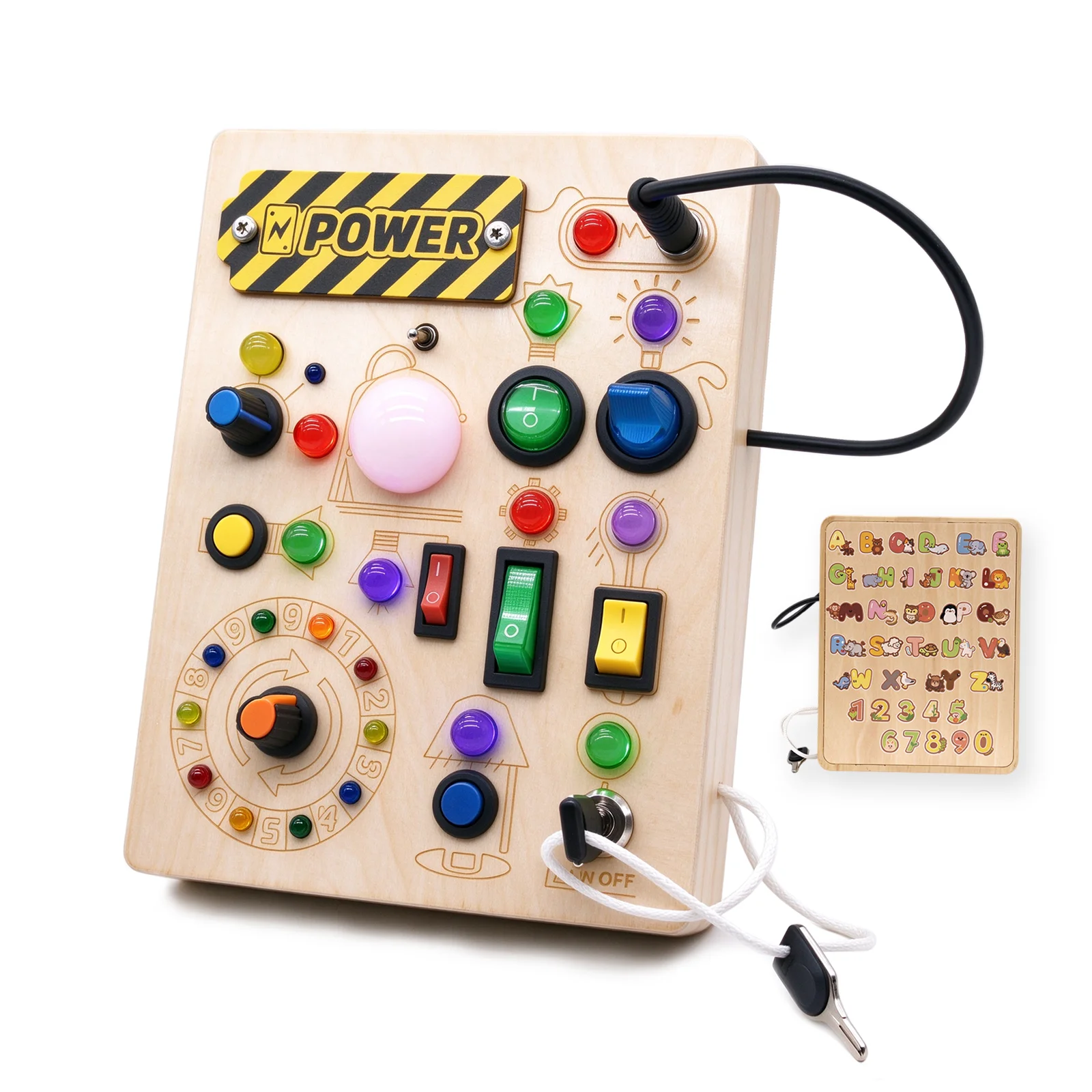
If you make busy boards, the move is to offer an elderly-care variant of an existing platform rather than a from-scratch product. Reuse the board base, the fastening method and the finish — our Classic 12-switch board is the platform we adapt for exactly this — and change the components and the artwork to suit adult users. That keeps tooling costs low and gets you to market fast.
For buyers, the pitch is simple: a durable, dignified activity board for care settings, available at wholesale, customisable with your organisation's branding. See the Custom & OEM guide for how to put your own identity on a board.
What to consider before stocking
- Start small and test. Care-sector buying is relationship-led; one pilot with a care home or day centre will tell you more than any forecast.
- Get the documentation right. Durability, finishes and component security matter to this buyer.
- Watch the language. Position it as engagement, calm and dignity — never as a cure or treatment.
- Plan for sets. Order and price in multiples; this buyer does not buy one.
FAQ
Are busy boards a treatment for dementia? No. They are engagement and activity products that some care settings use to support calm and stimulation. They are not a medical device or a treatment, and should not be marketed as one.
How is a dementia board different from a children's board? Adult-strength components, no loose parts, calm and dignified styling, and familiar rather than childish themes. The manufacturing craft is similar.
Who should I sell to first? Start with care homes, day centres and occupational-therapy suppliers, which buy in sets and re-order. Families and carers are a second, retail-facing channel.
Can I customise boards for a care organisation? Yes — engraving or printing an organisation's name is straightforward and turns a generic product into a funded, branded one. See the custom busy board options.
Next step
The dementia and elderly-care niche is real, growing and uncrowded — and the product is one you already know how to make. If you are a care-sector buyer, tell us your setting and quantities and we will confirm the elderly-care spec; if you are building a care line, read the supplier checklist to pick the right manufacturing partner, or start from the complete wholesale guide.
Related reading
- sourcing for care homes and institutions — institutional buying guide
- wholesale buyer's guide — core sourcing walkthrough
- Montessori-inspired play in early childhood — the same tactile principles