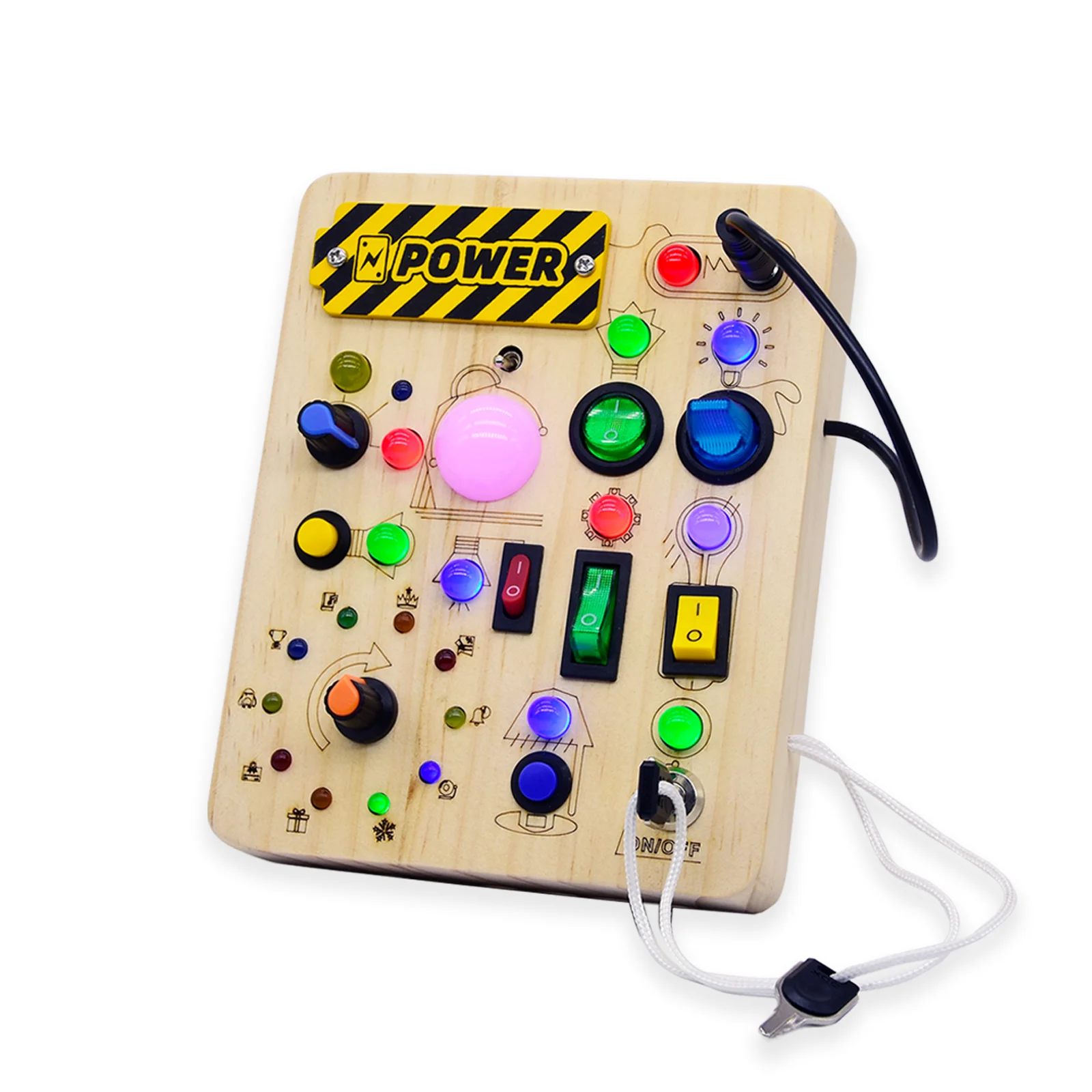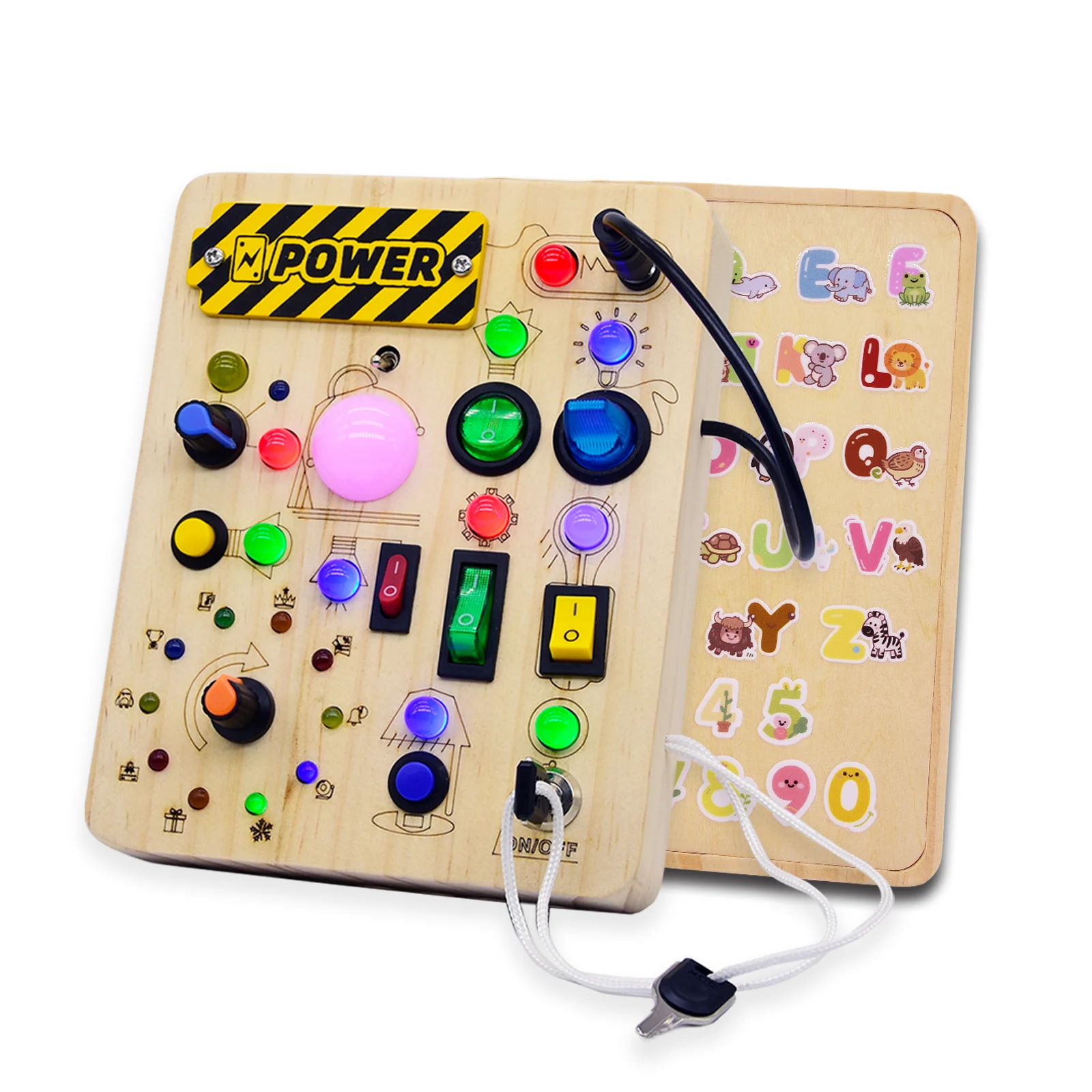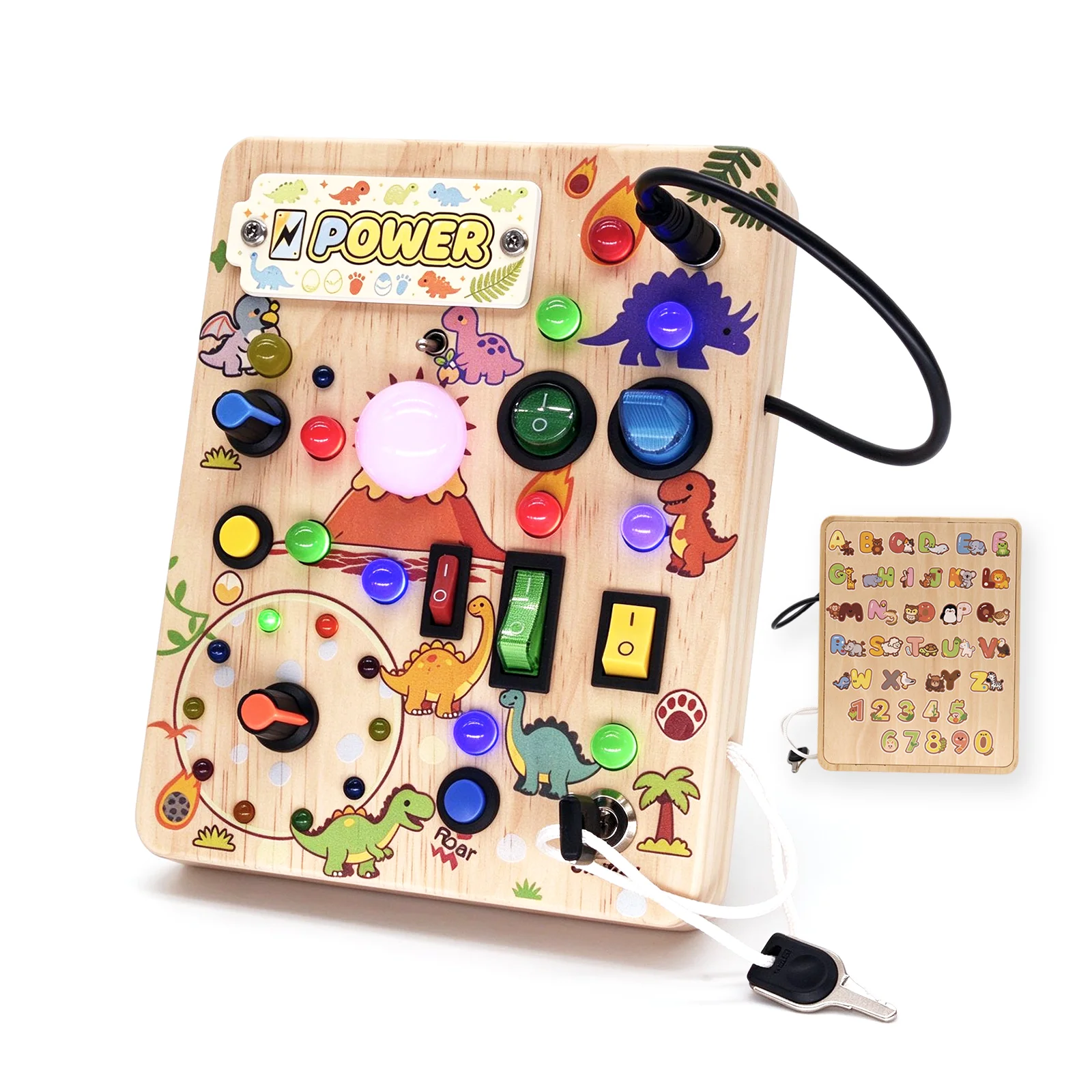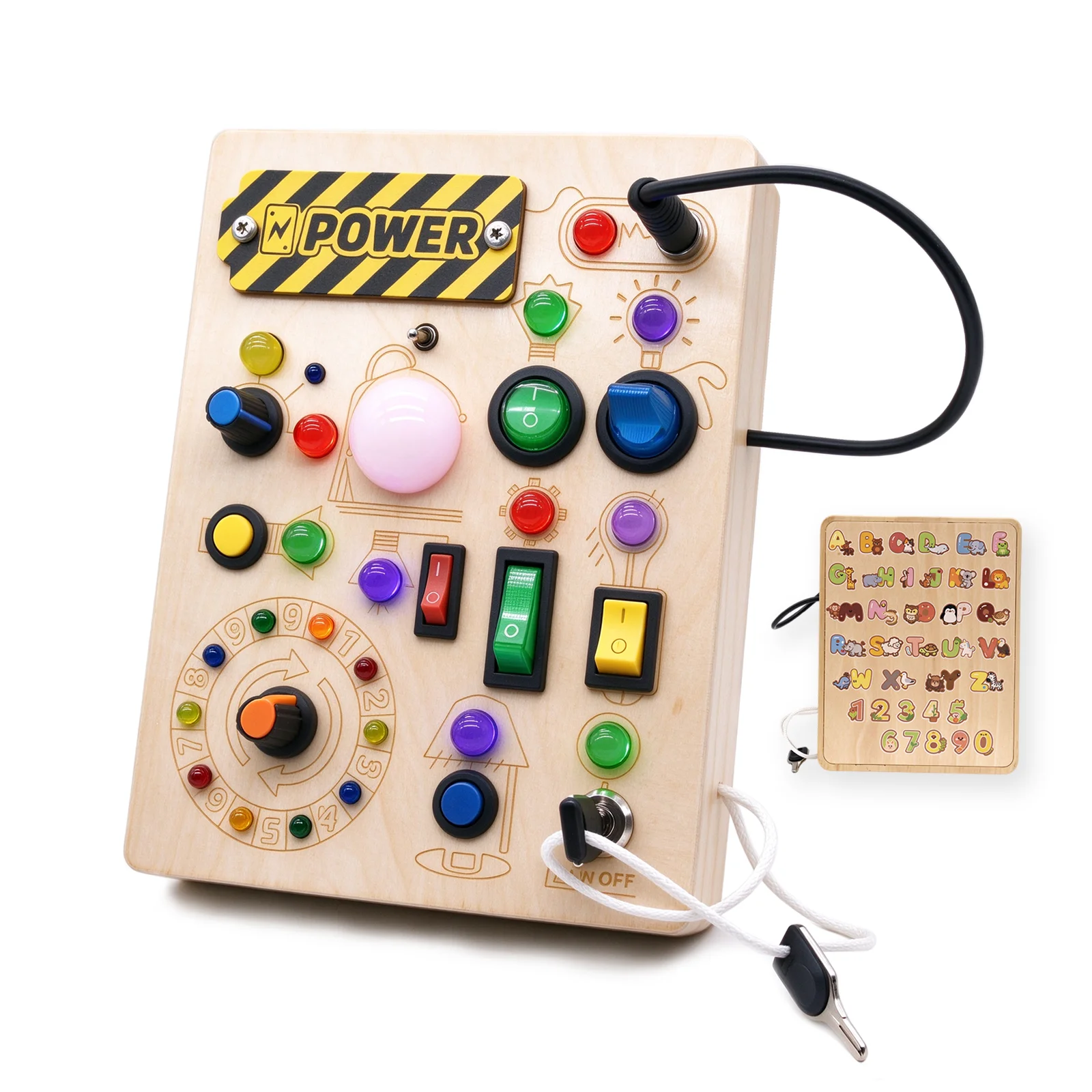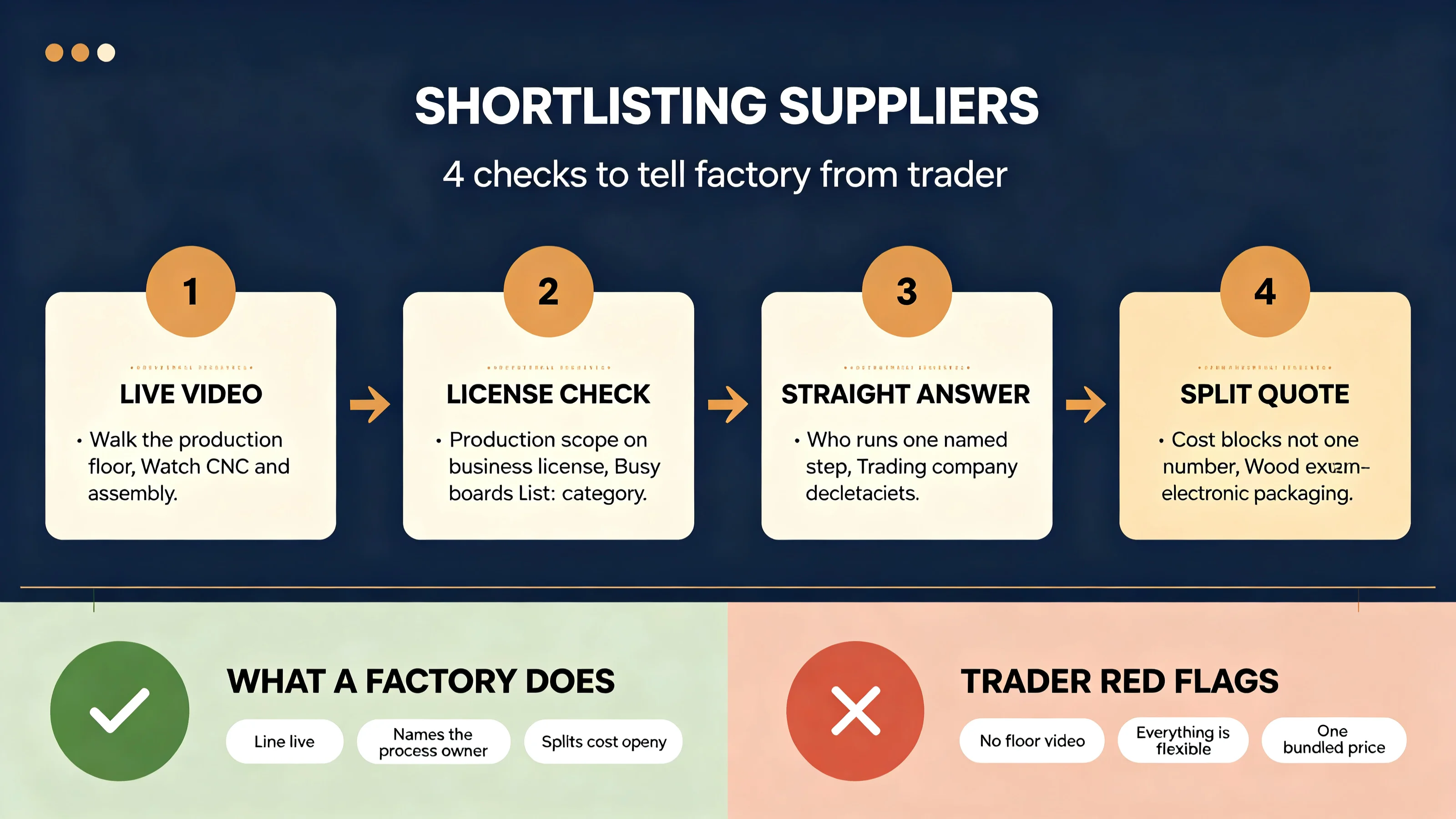
Short answer: the fastest way to find a real busy board manufacturer is to stop trusting directory labels and start demanding proof. On Alibaba, Global Sources and Made-in-China, "manufacturer" is a box a supplier ticks about itself, and plenty of trading companies tick it because it converts better than "trader." Four checks separate the two: a live video walkthrough of the line, the production scope printed on the business license, a straight answer about who runs one named step, and a quote that splits into cost blocks instead of one bundled number. We build busy boards in Wenzhou on our own line, so we have an obvious stake in you learning to tell the difference.
There's a longer piece on the full import process if you want ports, incoterms and customs. This one stays at the shortlist stage: cutting eight candidate names down to the two you'll actually sample.
That stage is also where buyers get hurt most. A supplier you misread now is expensive to unwind later, because by then your deposit, your schedule and your artwork all point at a machine you never actually saw.
Quick facts
- What we are: a wooden LED busy board factory in Wenzhou with our own production line
- MOQ: 100 pcs standard · 200 pcs for custom artwork or engraving · 500–1,000 pcs for full OEM
- Samples: 1–10 pcs, 3–7 days, cost credited against the bulk order
- Lead time: 15–25 days after deposit and artwork approval
- Certifications: CE / CPC / ST reports on current models, tested to EN 71 and ASTM F963
- FOB at MOQ: $8.90 Classic · $9.20 Alphabet · $9.50 Dino — recommended retail $20–35
Why "busy board manufacturer" is the most misused label in the directories
Search any B2B platform for busy boards and you get a wall of blue "verified manufacturer" badges. From the other side of those listings, we can tell you that a good share of them belong to trading companies with no saw, no soldering bench and no line — a catalogue, a phone and a network of factories they can call.
That is not automatically a scam, and it would be self-serving for us to pretend otherwise. A good trading company earns its keep when you want twelve SKUs from twelve factories on one invoice, or when you need someone to consolidate and clear export paperwork. The trouble is that you cannot price, plan or troubleshoot a supplier you have misclassified. If you think you are talking to the line and you are actually talking to a middleman, three things shift: the number you're quoted carries a layer you can't see, the person who fixes a defect sits one step further from the machine that caused it, and every change you ask for has to travel through a second party.
The label carries no penalty for being wrong. Nobody fines a trader for ticking "manufacturer," and the ticked box converts better than the honest one. So when you go looking for a busy board manufacturer, treat the label as marketing until it has been tested. Everything below is a test.
How to tell a real busy board manufacturer from a trading company
These four checks take about an afternoon and cost nothing. Run them before you compare a single price, because they change what the price means.
Ask for a live video walkthrough of the line
Edited factory footage is cheap and largely rented. Live is hard to fake. Book a ten-minute call and ask them to walk the floor while you're on the line: the CNC router cutting the front panel, the bench where the LED wires get soldered, the packing table running. Ask them to pan over to the loading bay and open a carton of switches. The live part is the whole point. A trading company can forward a factory's promotional video in thirty seconds; it is far harder to borrow a running line on a Tuesday morning with you watching. If the answer is repeatedly "the factory is closed today," that is itself an answer.
Check the production scope on the business license
Every Chinese company can send you its business license, and the production scope on it is checkable. A genuine manufacturer is registered to make something specific — wooden toys, educational products, electronics — and that scope lines up with what it claims. A pure trading company is usually registered for wholesale, retail and the import and export of goods, with nothing about production. Treat this as a cross-check rather than proof: some traders register a small production scope, and a large factory may hold a broad one. But when the document and the sales pitch disagree, believe the document.
Ask who runs one specific step
Ask who cuts the CNC slots in the wooden front panel, and who solders the LED wires. A factory answers in process language — the slotting is on our router, two operators; the soldering is on the bench beside testing. A trading company goes vague — "our partner factory handles that." Then ask for the address of the building where that step happens, and how many people work that station. You're testing resolution more than honesty. People who live with a process know its details, and people who merely quote it don't.
Read the structure of the quote, before the total
This is the single most reliable test, and it takes one email. Ask the supplier to break the quote into blocks: wood and sanding, electronics, assembly and testing, packaging, and a thin overhead-and-margin line. A factory can do this in ten minutes, because those blocks are literally its cost centres — we publish our own numbers in the busy board wholesale price guide. A trading company's quote often carries a "service fee," "agency fee" or "handling" layer, or it refuses to split at all, because splitting would show the markup. A supplier who cannot say what the wood costs has probably never bought wood for this product.
What to look at when you actually walk the floor
If you can travel, one afternoon on site beats a month of email, and a live video tour is the next best thing. Skip the showroom; it is staged. Four places tell you more.
The raw-material store answers the first question on its own. You want to see LED strip on spools, switches by the box, and plank stock with visible grain and stacking marks. A unit that only opens a finished-goods room is a reseller, whatever the badge says.
The work-in-progress area is the tell of a live line. Boards sitting half-assembled, waiting for electronics, is what production actually looks like when it is a flow. A room holding only finished, boxed units is a display.
The test station is where a factory shows its real face. Ask how many units in ten get the light function checked, and what happens to a failure. A working station has reject trays, a short log, and someone whose job title includes the word quality.
The packing line is where your order becomes your product: the box, the insert, the barcode, the manual. Ask to watch a single unit get packed with your label on it. The messy, half-tidy parts of a factory are the honest parts. A floor that is spotless everywhere is hiding something, usually the volume of work that isn't there.
The five questions to ask at the sample stage
The sample is your one cheap look at how a supplier works before real money moves. Ask these before you approve anything, and get the answers in writing:
- Was this sample made on the same line that will run my order, or on a separate sample bench?
- Will the wood species and the switch types in mass production match this sample exactly, or is the sample "sample grade"?
- Which model number is on the certification report for this exact unit, and can you send me the PDF?
- After my deposit and artwork approval, when does the first production unit come off the line?
- If I find a defect in this sample, who pays the courier on the replacement, and how fast?
Questions one and two catch the oldest trick in the category: a sample built slowly and beautifully by hand, followed by a mass order that is none of those things. Question three matters because a report carrying somebody else's model number protects nobody, and the marks are worth understanding properly — our guide to busy board safety certifications covers what each one actually tests. If your order involves your own design, the custom OEM busy board guide walks through the artwork and tooling side. The sample itself is almost beside the point. What you're really buying at this stage is the quality of their answers.
What makes us walk away, and what should make you
We've watched deals go wrong from the factory side, and the ones that sour tend to fly the same flags early. Any single flag can have an innocent explanation. Three together is a pattern.
| Signal | What it usually means |
|---|---|
| Refuses a live walkthrough, offers only edited video | There is no line to show, or the line isn't theirs |
| The quote won't be split into cost blocks | A hidden service layer, or no real visibility into their own cost |
| The certification report's model number doesn't match the product | A borrowed or outdated report |
| Lead time that's too short for the quantity | Your order will be squeezed in — or quietly subcontracted |
| 100% payment before production, into a personal account | Your money is funding somebody else's production |
| Agrees to every spec you raise, instantly | Nobody consulted the people who'd have to build it |
The last one is the flag buyers trust most and should trust least. A real line has real constraints. Someone who has never once told you "that isn't feasible at this price" hasn't checked with the floor, and the floor has a way of settling accounts later.
Why "factory-direct" doesn't mean "cheapest"
There is a widespread belief that removing the middleman should give you the lowest possible price. It gives you a clearer price, and clearer is a different thing from lower.
A factory with its own line has a floor, and the floor is made of material. It cannot sell below the cost of the wood, the electronics, the labour to assemble and test, and the packaging without losing money on every unit. So when you push a genuine factory below that floor, the honest answer is no, and the dishonest one is a quieter version where a component gets swapped to fit your number.
A trader can sometimes look cheaper for two reasons. One is a loss-leader: a low first price to win the account, recovered on the reorder. The other is a genuinely cheaper board from a factory you will never see, with a different light system, thinner wood or an older design. A lot of those $4.80 quotes trace back to the second reason.
So what factory-direct really buys you is a number that traces back to a cost structure you can inspect. Here is ours, on a Classic board at 100 pieces, rounded to the nearest half percent:
| Cost block | Share of FOB | What moves it |
|---|---|---|
| Wood, sanding, CNC work | ~22% | Solid wood vs plywood core; edge radius; board size |
| Electrical: switches, LEDs, board, battery box | ~28% | Switch count; controller vs fixed bulbs; battery box design |
| Assembly and testing | ~19% | Switch count; how much of the light function is tested per unit |
| Packaging | ~7% | Plain white box vs printed colour box; inner tray; manual |
| Certification amortisation | ~3% | Whether the model already has current reports or needs fresh testing |
| Factory overhead and margin | ~13% | Order size; payment terms; how much rework the batch needs |
| Freight and duties | not included | Depends on Incoterm — this is why FOB and CIF quotes aren't comparable |
Two things follow. Electronics are the largest block, close to a third of what you pay, and they are the first thing a cheap quote quietly cuts, because they are invisible in a photo. And the margin line is thin, around thirteen percent, most of which funds rework and slow orders. When a factory refuses to go below its floor, that refusal is a feature. The floor is made of wood and copper, not of a promise. If you want to see how that floor moves with volume, the MOQ, pricing and lead time guide covers the curves.
Questions buyers ask us every week
You call yourself a manufacturer. How do I verify that without flying to Wenzhou?
Start with the live video, because it settles most of it. Then ask for the business license and its production scope, ask who runs the CNC slotting and the soldering, and ask for the quote split into cost blocks. Any real busy board manufacturer will field all four in a single call. If the answers keep sliding, you have your answer.
Isn't a trading company fine if the price is lower?
Sometimes, yes — if you're consolidating many SKUs and the price is genuinely better after their layer. But go in knowing it's a trader. The risk isn't the label; it's the surprise. A trader who is upfront is a supplier you can work with. A trader posing as a factory has already told you one lie.
We're ordering 300 pieces. Is all this vetting worth it?
For 300 pieces, do the four desk checks and order a sample. Skip the factory visit. The desk checks cost an afternoon; a bad batch at 300 pieces costs you the batch, the freight and the season. Vetting scales down; it doesn't switch off.
The cheapest quote came with a full certification PDF. Doesn't that settle it?
No. Open the PDF and read the model number and the date. A report for a different model, or one that expired two years ago, protects nobody — and a supplier who sends last year's report for this year's product has told you how they work. Check the numbers before you get attached to the price.
Can you match the $5 quote I saw?
Almost certainly not, and we'd rather say so now than cut a component to pretend we can. If a $5 board works for your shelf, buy the $5 board from whoever builds it honestly and price it as an entry SKU. What you shouldn't do is pay $5 and market it as a $9.50 product.
What we'd do in your position
Shortlist three or four names, run the four desk checks on all of them, and cross off the ones whose stories don't hold together. Order samples from the two best and ask the five sample questions before you approve either. Video-tour the winner, or visit if you can. Then place 100 pieces as a live test before you commit to your real volume.
That sequence looks slow, and it is a fortnight slower than guessing. It also means the supplier standing at the end of it is one you chose on evidence rather than on a badge. The busy board manufacturer worth your time is the one who answers these checks quickly, because the answers are already sitting on the floor.
If you are still deciding on the shape of this order, three pages go further: How to Choose a Busy Board Supplier: A 12-Point B2B Checklist on the supply side, Busy Board Quality Inspection: An AQL Checklist for Importers on the quality side, and How to Launch a Busy Board Brand: From Sourcing to First Sales when the quote is on your desk.