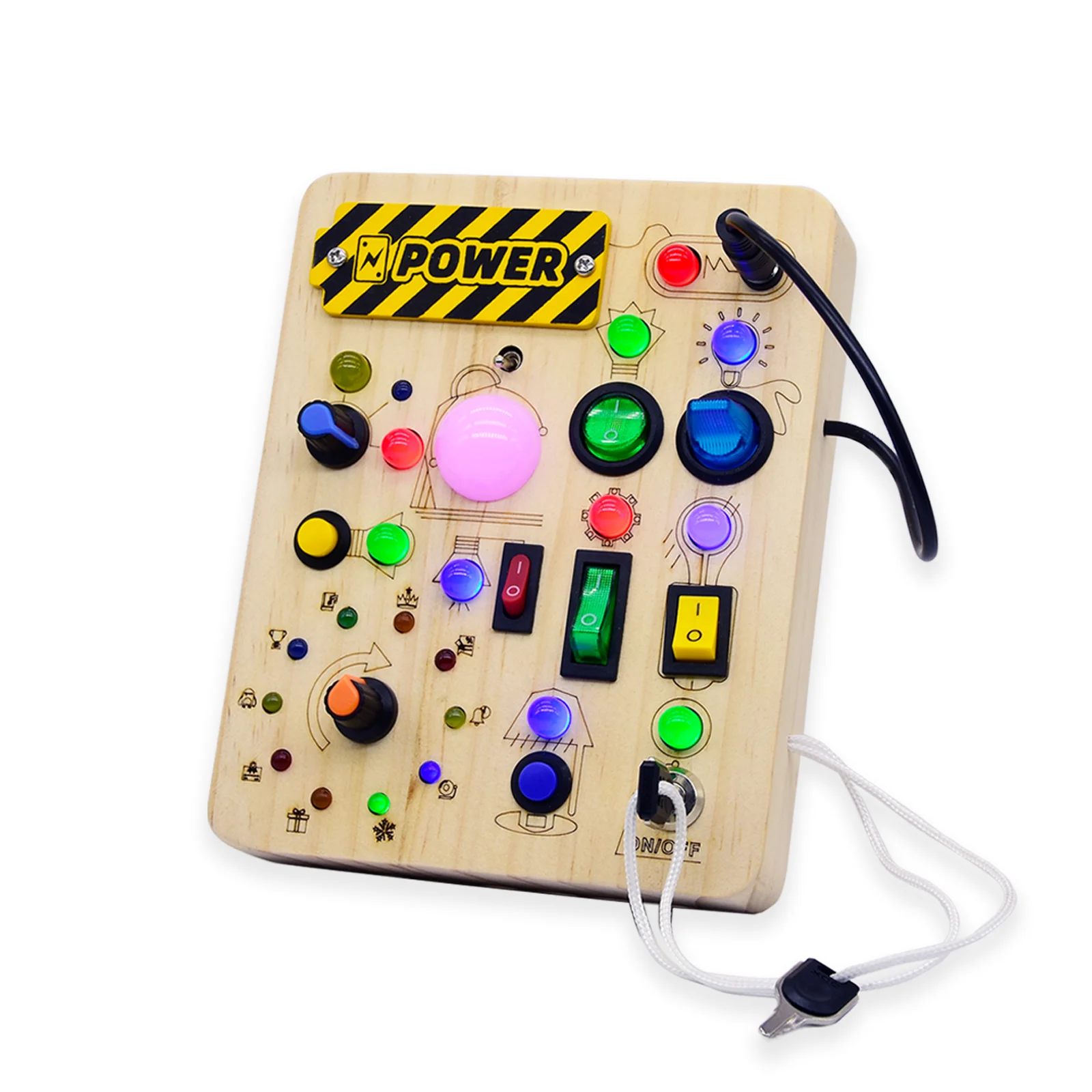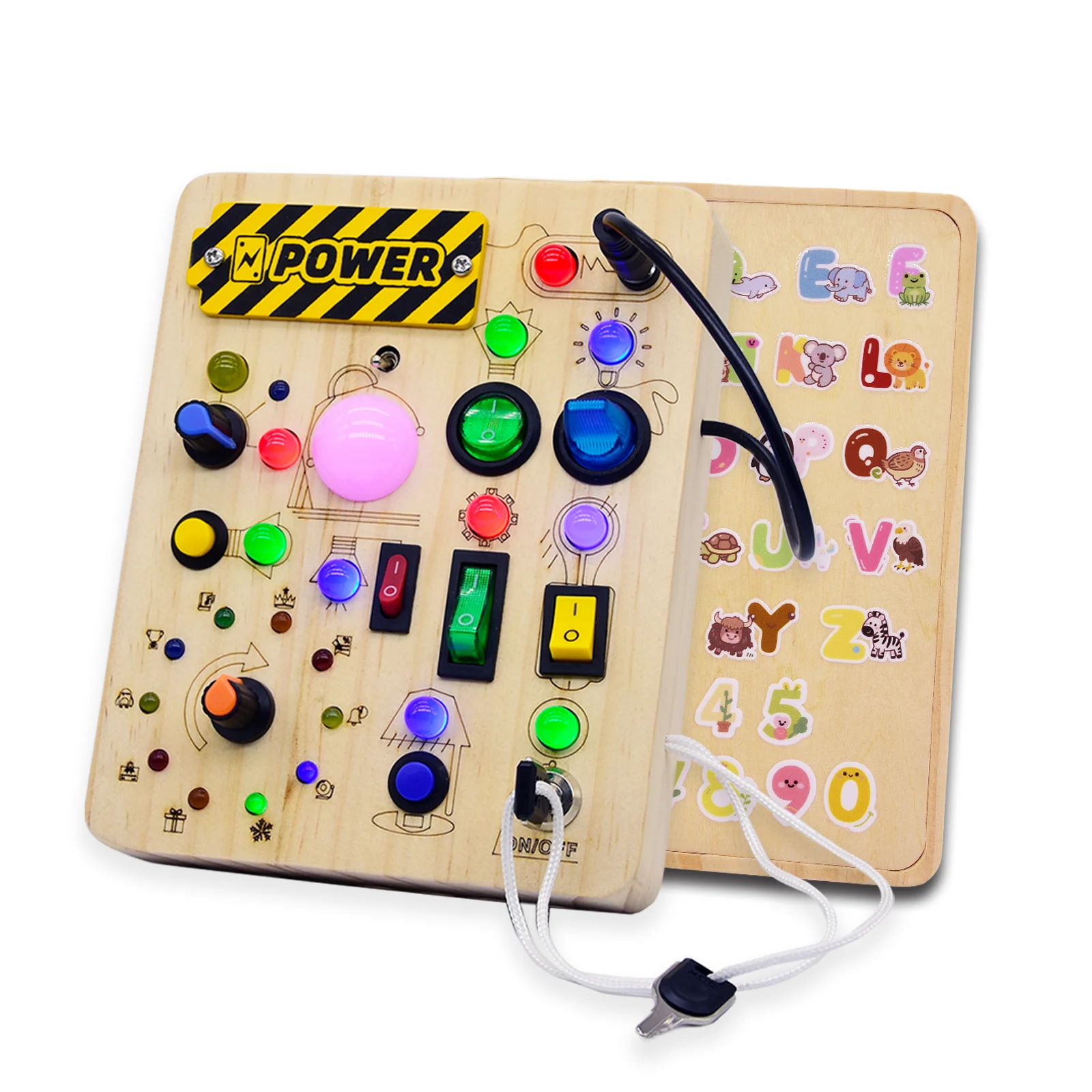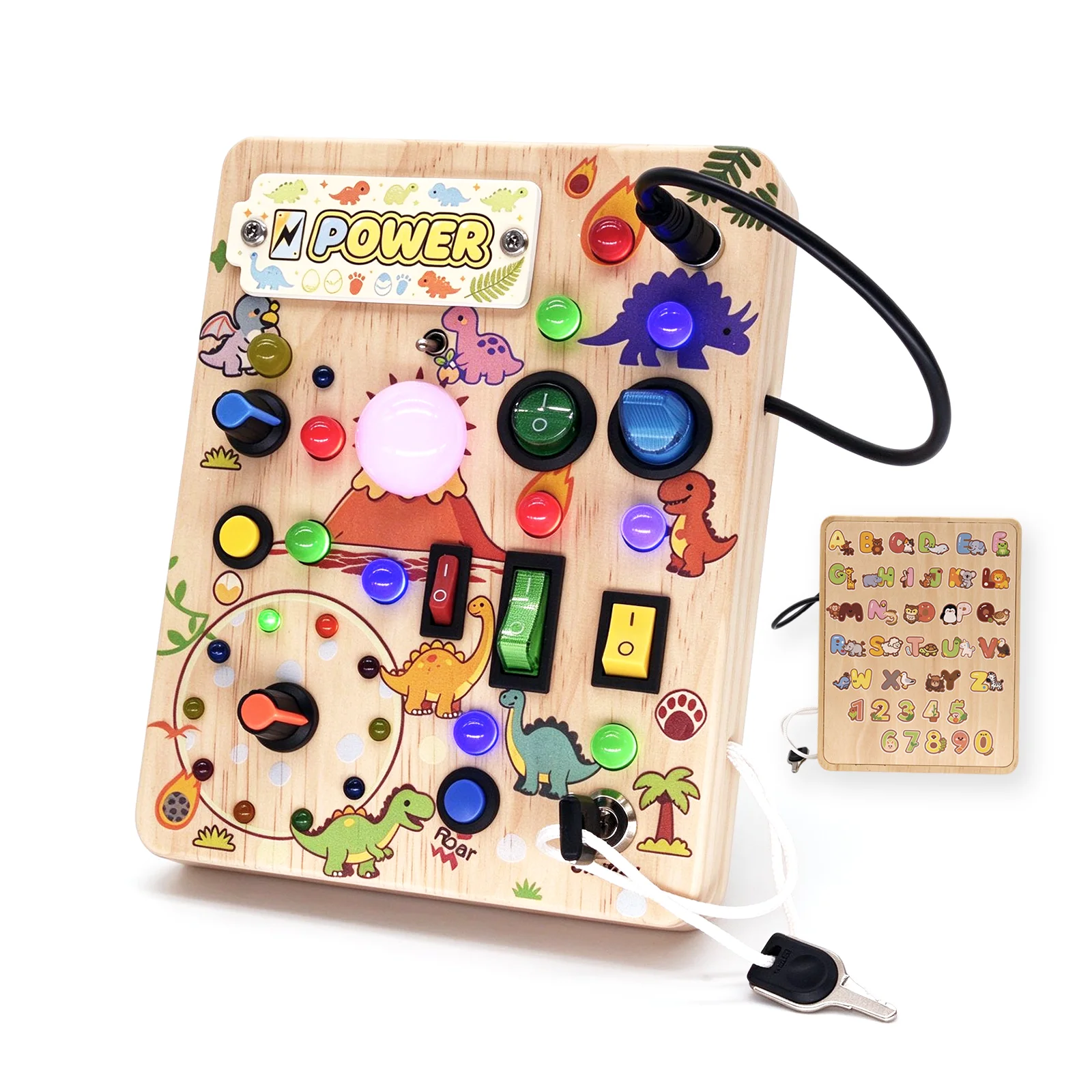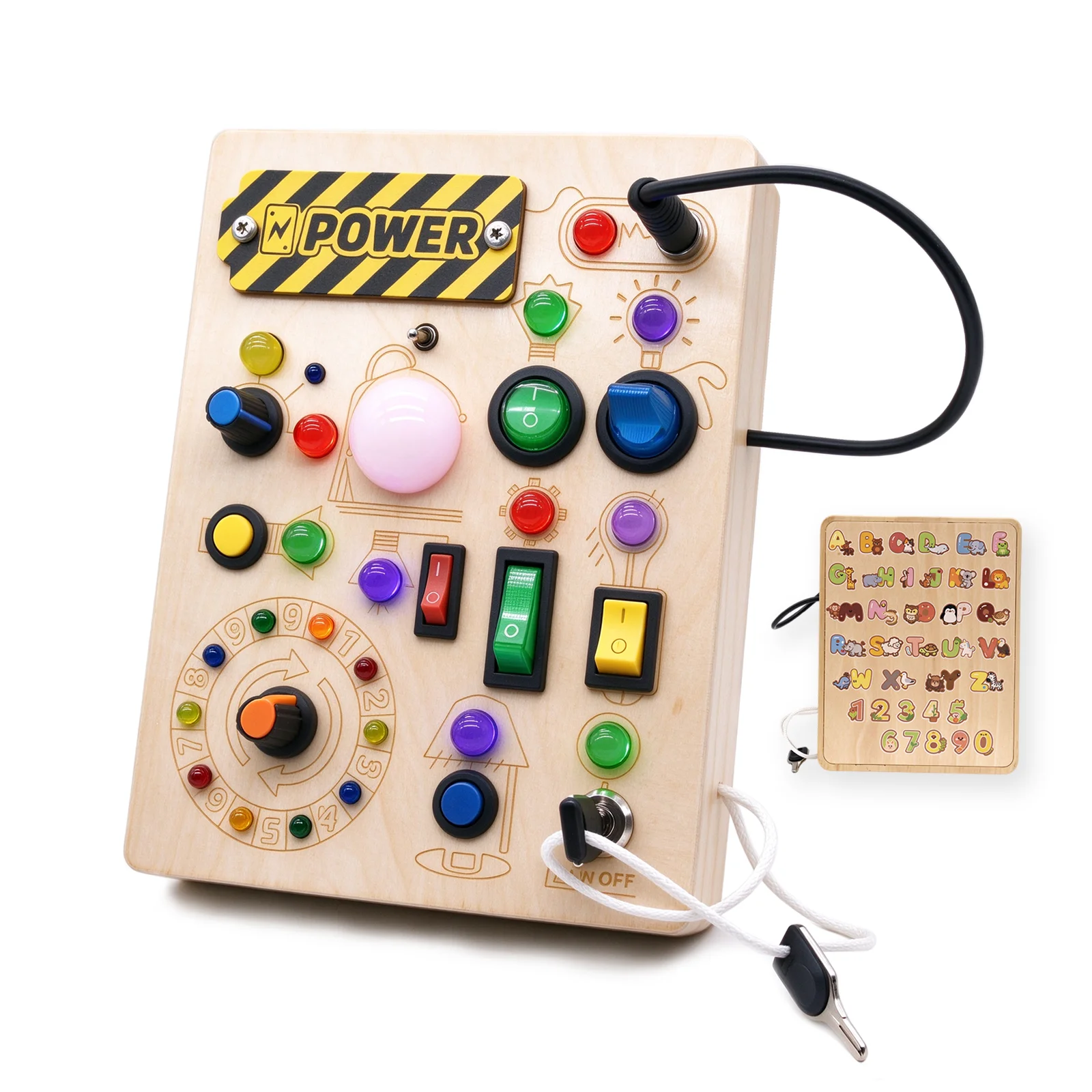
Short answer: sensory toys wholesale is not one category with one margin. On a working shelf it is five different products doing five different jobs: fidgets, sensory bins, tactile mats, weighted blankets and wooden busy boards. Each carries its own price band, its own turnover and its own return pattern. If you are adding a sensory section to an existing range, the busy board is the item you build the section around, and the small pieces are where the repeat traffic comes from. Everything below is written from inside our own busy-board line in Wenzhou, so weigh it knowing we have an obvious interest in where our boards sit on your shelf.
The buyers who ask us about sensory tend to arrive in two shapes. Some already run a nursery, early-years or education aisle and want to add a sensory section without guessing at it. Others are generalist retailers or e-commerce sellers who watched the category grow from a distance and want one credible SKU that lifts the basket without eating into what they already sell. Both groups repeat the same first mistake: they treat sensory as a single product category when it is really several buyer intentions wearing similar packaging.
This piece covers what the category actually holds and how those lines behave commercially, where expansion quietly goes wrong, how a busy board anchors a basket and drags accessories along with it, how the three main sourcing routes differ once you count the costs that never show up on the invoice, and the wording that keeps you safe in the claim-sensitive parts of the market.
Quick facts
- MOQ: 100 pcs per model from our catalogue · 200 pcs for your own artwork or engraving · 500–1,000 pcs for full OEM
- Samples: 1–10 pcs, 3–7 days, credited back against the bulk order
- Lead time: 15–25 days after deposit and artwork approval
- Certifications: CE / CPC / ST reports on current models, tested to EN 71 and ASTM F963
- Indicative FOB at MOQ 100: $8.90 Classic · $9.20 Alphabet · $9.50 Dino. Recommended retail $20–35
- Platform: 12 mixed switches, 23 lighting modes, 2 × AAA batteries, shipped without the cells
What a sensory toys wholesale shelf actually holds
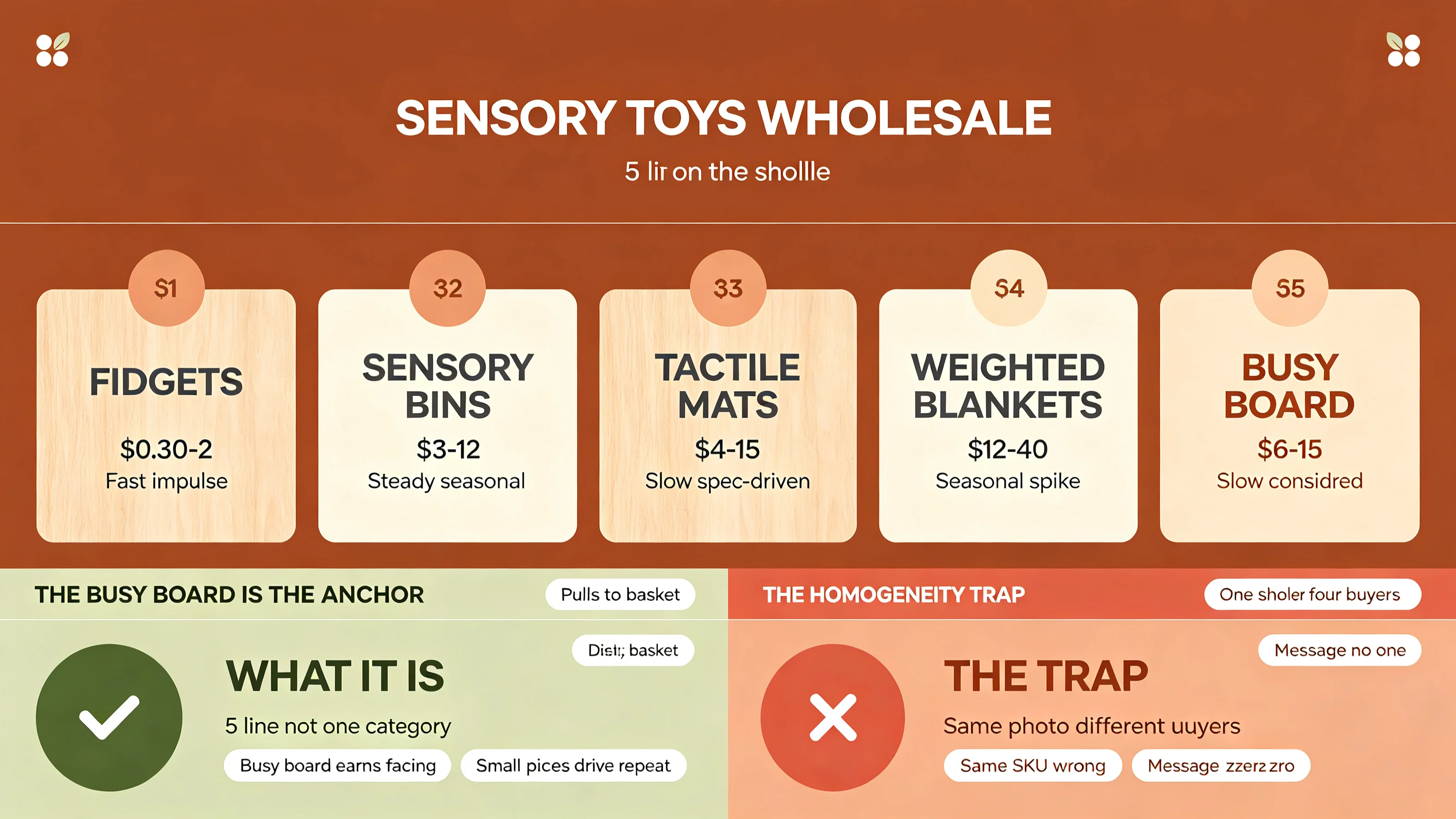
Most buyers picture sensory as squishy little things in a dump bin near the till. That is one line of it. A sensory toys wholesale range that genuinely moves usually carries at least five lines, and they sit in very different places.
| Line | Typical wholesale price band | Turnover | Where the returns come from |
|---|---|---|---|
| Fidgets and small tactile pieces | $0.30–2 | Fast, impulse-driven | Loss and damage; refunds are rare |
| Sensory bins and fill kits | $3–12 per set | Steady, seasonal | Missing or wet fill, loose parts |
| Tactile mats and textured panels | $4–15 | Slow, spec-driven | Almost none |
| Weighted blankets | $12–40 | Seasonal spike | Weight and warmth expectations |
| Wooden busy boards | $6–15 | Slow, considered | Transit damage |
Those are typical trade ranges rather than fixed numbers. They move with specification, order quantity and how much of the price is really packaging. In our experience the busy-board line sits at the top of that last row once you specify solid wood and a real light system, and at the bottom if you don't.
Read the table from the top and a pattern shows up. The lines buyers use to define the category, the fidgets and the fill kits, are the cheap and fast ones. The line that carries real margin, the busy board, is the slow, considered one. Confuse the two and your "sensory section" becomes a low-priced corner with no money left in it.
The homogeneity trap: one shelf, four different buyers
Retailers building out a sensory toys wholesale section usually start from a catalogue photo, and the catalogue is where the mistake begins. Everything looks uniform there: wooden, pastel, shot on a white background. The product does not sell to "the sensory market," though. It sells into four separate intentions, and they barely overlap.
Toddlers and early-years development
The classic buyer, and the one most boards are designed for. A parent of a two-year-old is buying minutes of quiet in a car, on a plane, in a queue, and a screen-free promise they feel good about. Colour, characters and cheerful artwork sell here. This buyer will pay $20–35 for a wooden board that looks like it cost more than it did, but they measure it against other toys, not against therapy tools.
Children with additional needs
Parents, occupational therapists and special-needs schools buy here, and they buy on features rather than looks: quiet operation, durability, portability, components a child can actually grip. This segment is loyal and it reorders, but it is also the most claim-sensitive, for reasons we come back to later.
Older adults in care
Care homes, day centres and families buy adult-strength, dignified boards with no loose parts, and they tend to order in sets and then reorder. The product logic is the same as a child's board. The design language is completely different. We keep a longer note on this segment in busy boards for dementia and elderly care.
Adults who use sensory tools to focus
Office workers and students buying fidgets and desk objects for concentration. Cheap, small, unbranded, high volume. They rarely touch the busy-board end of the shelf at all.
Now bring those four together. A board built for a toddler's shelf reads as childish in a care catalogue, and a calm, wood-toned care board looks dull to a parent shopping for a birthday present. Stock one SKU with one message and you end up with a product that is second-best for everyone. The physical overlap between the segments is partial. The messaging overlap is close to zero, and messaging is what actually closes the sale.
Where the busy board sits in a sensory toys wholesale plan
In a sensory toys wholesale plan, the board is usually the most expensive item per unit and the slowest to turn, so on a stock spreadsheet it looks like the worst line you could add. On the shop floor it does a job nothing else on the shelf can do: it becomes the anchor.
The anchor is the one item that tells a shopper what the section is about and that you take it seriously. A parent who has just spent $25 on a solid wooden board for a two-year-old has decided you are a real sensory destination, and every two-dollar fidget on the same shelf becomes an easy add-on in the same basket. That anchoring effect, more than the board's own margin, is the commercial reason to carry a product you sell slowly. If you want the fuller case for the product on its own terms, it is in our wholesale buyer's guide to Montessori busy boards.
The numbers behind ours are on the record: $8.90–$9.50 FOB at 100 pieces, aiming at a $20–35 retail, and you can see how that cost per unit is actually built instead of taking a headline figure on trust. Two commercial features matter most in this category. Repeat purchase is low, since a family rarely buys a second board soon, and return rate tends to be low as well, because a board is a deliberate, considered purchase, and because solid wood survives a warehouse and a courier far better than a bag of loose fill. When returns are the quiet killer of sensory margins, that trade is worth weighing honestly against the slower turns.
Bundle sourcing: letting the board pull the basket
If the board will not repeat on its own, you make it repeat-adjacent. The mechanics are simpler than they sound.
Attach the accessories a board buyer will actually take. A storage bag or box, a set of spare fasteners, and a handful of small sensory pieces that suit the same customer: fidgets, lacing beads, tactile cards. None of these carries a board's margin on its own, but each one carries a board's customer, and they are what a family comes back for.
Then build a tiered set. A "sensory starter" that pairs one board with three or four small pieces in a printed box lets the board's margin absorb the packaging and lets the cheap accessories ride along at full retail. This is where a light board earns its place: it photographs well, it justifies the top of the price band, and it gives the set a reason to exist as a set. We put the two systems side by side in LED boards versus traditional busy boards.
Finally, ask the factory to co-pack. If you already hold your accessories, we will routinely ship the board with your kit inside the same carton, which saves you a pick-and-pack step and a second round of freight. State it plainly as a service you offer, and accept the honest version of it too: for the sensory toys wholesale buyer, the accessories are the repeat engine and the board is the traffic. A shelf with a board and no accessories is a one-time sale, and you should price it like one.
Direct from China, a local wholesaler, or a trade show
There are three ways to get a board onto your shelf, and they price risk in very different ways.
Buying direct from a factory in China is the lowest unit cost and the one where you carry the most yourself. Your entry is the MOQ, a deposit and a set of import formalities. Ours is 100 pieces per model, 30% deposit with the balance before shipment, and we hold that structure because it is what our pricing assumes. What you own in return is verification: you confirm the wood, the light system, and that the certification report names the exact model you are buying. Freight, duty and paperwork land on you, and a good packaging and shipping plan is what stops a cheap unit price disappearing into damage claims.
A local or regional wholesaler asks for no MOQ and ships next-day from stock, so your cash is not tied up for a season. You pay the highest price of the three, the product is usually generic, and the reports you inherit may not match the exact model you receive. Fine for a first tester unit, thin as a long-term margin engine.
A trade show, whether Canton Fair, Nuremberg or Hong Kong, is where you go to feel samples and build a shortlist, not to place your production order. The travel and time are real costs, the samples that never convert are real costs, and the "show price" is often a best-case figure that does not hold once you sit down and order the volume you can actually afford.
| Route | Entry threshold | Your cash outlay | Hidden cost |
|---|---|---|---|
| Direct from a China factory | MOQ 100+, deposit, import paperwork | Lowest unit price | Freight, duty, QC time; you own the risk |
| Local / regional wholesaler | No minimum, warehouse stock | Highest unit price | Thin margin, generic product, little differentiation |
| Trade show | Travel, samples, follow-up | Medium | Time, samples that don't convert, show prices that don't hold |
Three costs rarely appear on a quote and show up reliably later: the first damaged shipment, the certification report that names a different model, and the fortnight your money sits in a factory instead of on a shelf. None of them is a reason to avoid direct sourcing. All of them are reasons to price it in.
What you can and can't say when the category gets sensitive
Because a busy board does something visibly calming, the temptation to describe it in therapeutic language is strong. Resist it. A toy is not a medical device, and describing it as one creates a problem that a good product cannot solve.
On the wrong side of the line sit words like "treats," "therapy for autism," "calms dementia," "reduces anxiety," and any claim that the board improves a named condition or is intended for a clinical population. In the United States, advertising claims fall under the FTC's rules, and anything that sounds like a medical use pulls a product toward FDA territory. In the EU, toy safety law and medical-device law both apply, and a single claim can push a product across the boundary between them. Marketplace platforms act faster than any regulator: Amazon and Etsy routinely pull listings for therapeutic wording, and reinstatement is always slower than removal.
On the safe side, describe the doing and leave out the fixing. "Twelve fasteners to practise with" and "a quiet activity that fits on a lap" are features. "Improves fine motor skills in children with delays" is a claim about an outcome and about a population, and it is the kind of sentence that gets a listing taken down. Say what the board is and what a hand does with it, then let the customer draw the conclusion.
The two places this matters most are the two care-adjacent segments, additional-needs children and older adults, because their buyers are the ones who most want a therapeutic promise and the ones whose products are watched most closely. We keep our own boards positioned as activity and engagement products, not treatment, and we would rather lose a sale than win one with a claim that later costs you a shelf.
Questions buyers ask us every week
Can one busy board serve a nursery, a special-needs buyer and a care home at once?
The board, partly; the message, no. The same wooden platform can be re-specified with adult-strength components for care or left in bright toddler artwork for the nursery. What cannot be shared is the box copy, the photography and the listing, because each segment shops with different words. Offer them as segments, not as one universal product.
Why is a board $9 when a fidget is 80 cents?
Because they do different jobs on the shelf. A fidget is a fill-in that turns four or five times a year at negligible margin. A board is the anchor that defines the section, justifies a visit and pulls a basket along with it. One board per shelf is usually enough, as long as it is the one a shopper remembers.
Will a busy board cannibalise my other sensory lines?
Almost never, in our experience. It sits at the top of the range and sells to a considered buyer, while fidgets and fill kits sell on impulse and on replenishment. If anything, a strong anchor lifts the cheap lines around it, which is the whole argument for carrying a slow item at all.
Do I have to go through a distributor, or can I buy direct?
You can buy direct from us at 100 pieces per model; that is our standard MOQ and how most of our retail buyers start. A distributor earns its place only when you need tiny quantities or fast replenishment you cannot plan for, and you pay for that convenience in unit price and in control over the specification.
What we'd do in your position
If you have never carried sensory, start with one busy board and a small assortment of fidgets, plain packaging, 100 pieces. Spend what you save on photography, because the board is the line that has to look worth $25 on a screen, and shoot the fidgets in the same basket so the add-on is obvious before a customer ever walks in.
If you are scaling a section you have already proven, build the shelf in three levels: an anchor board, a mid-priced board or mat, and a spread of small pieces. Bring your own printed box at 200 pieces so the set can be sold as a set rather than three loose items, and add the light board as the differentiated SKU once you know the section turns.
If any part of your market is care or additional needs, get the wording signed off before you print anything. Keep features on the label and outcomes off it, and brief every influencer and every marketplace listing on the same rule. That single discipline protects more margin than any negotiation over unit price.
And if you want to know whether a board fits your shelf at all, send us your target segment, your retail price point and your shelf plan. We will tell you which of our three platforms suits it, which accessories are worth attaching, and where the numbers stop working, including the cases where the honest answer is that you should not buy a board from us yet. That is a cheaper conversation than a season of dead stock.
If this raised a specific question, Busy Board vs Sensory Board vs Fidget Board: What to Stock goes deeper on it.