Two busy boards sit on the same shelf. One is plain wood with latches, zips and a mirror. The other lights up when a child flips a switch. They look similar, they do a similar job — and they sell very differently.
If you are choosing what to stock, the LED-versus-traditional question is really a question about your channel, your customer and your margin. This guide breaks down the real differences and helps you decide which an LED busy board or a traditional board belongs in your assortment.
What counts as an LED busy board
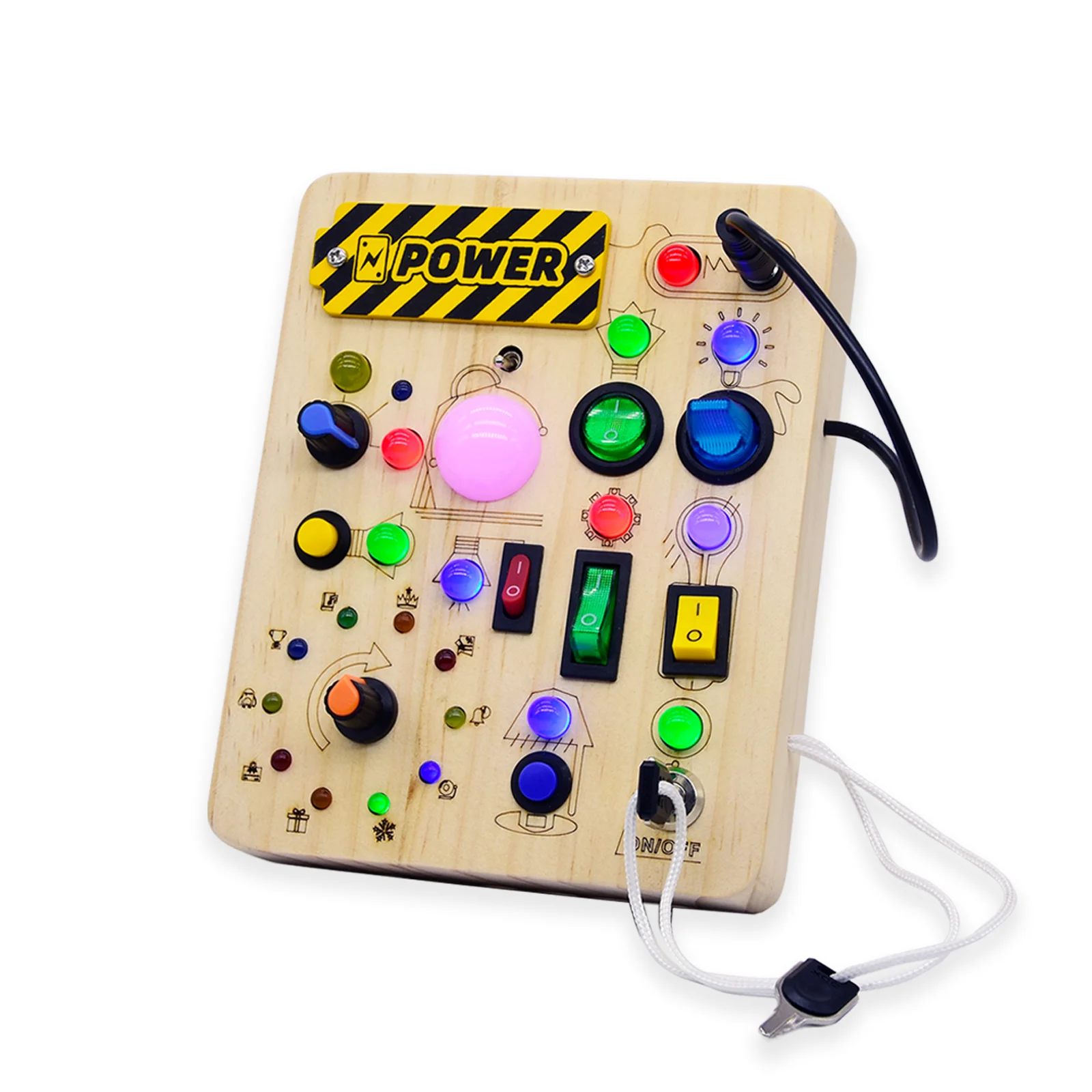
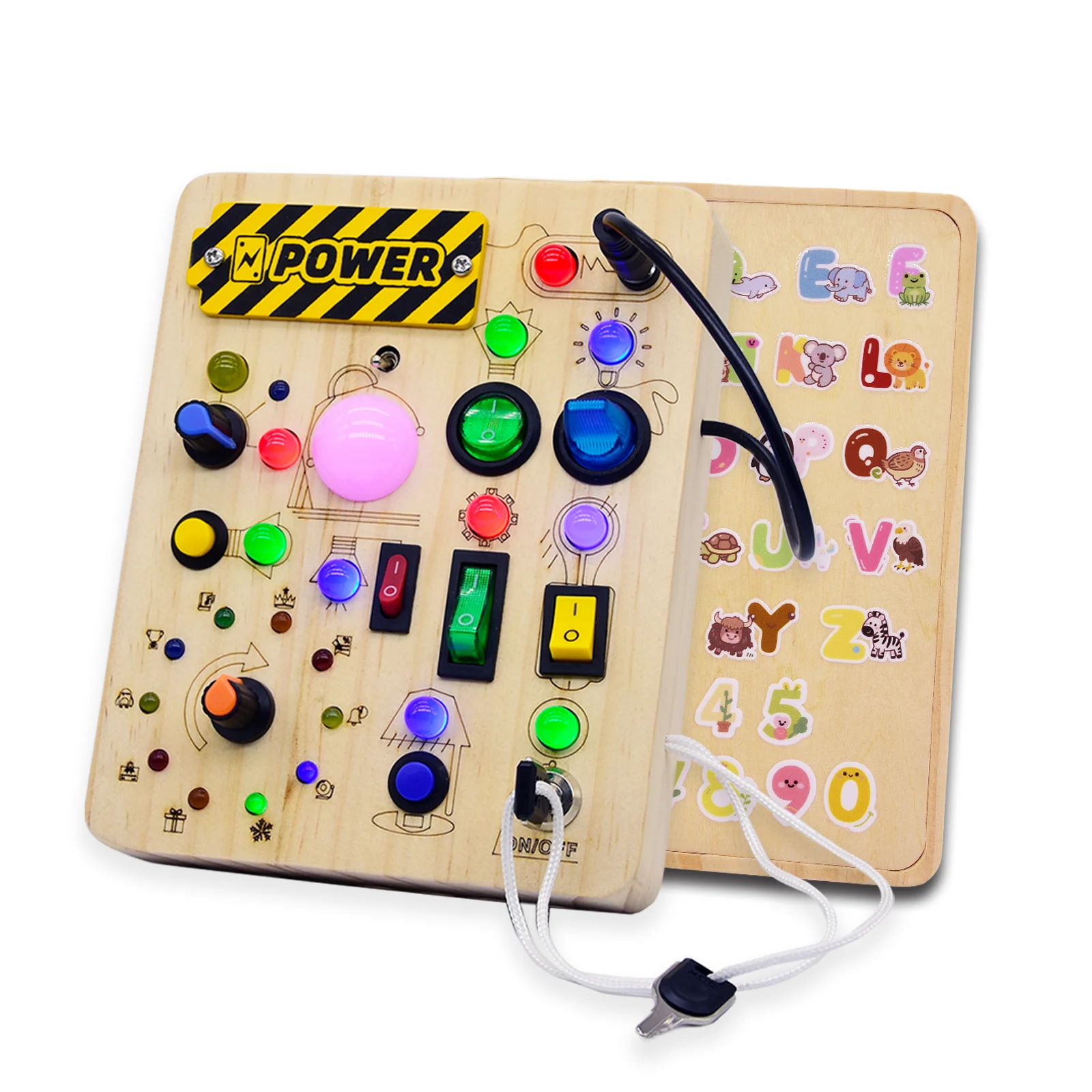
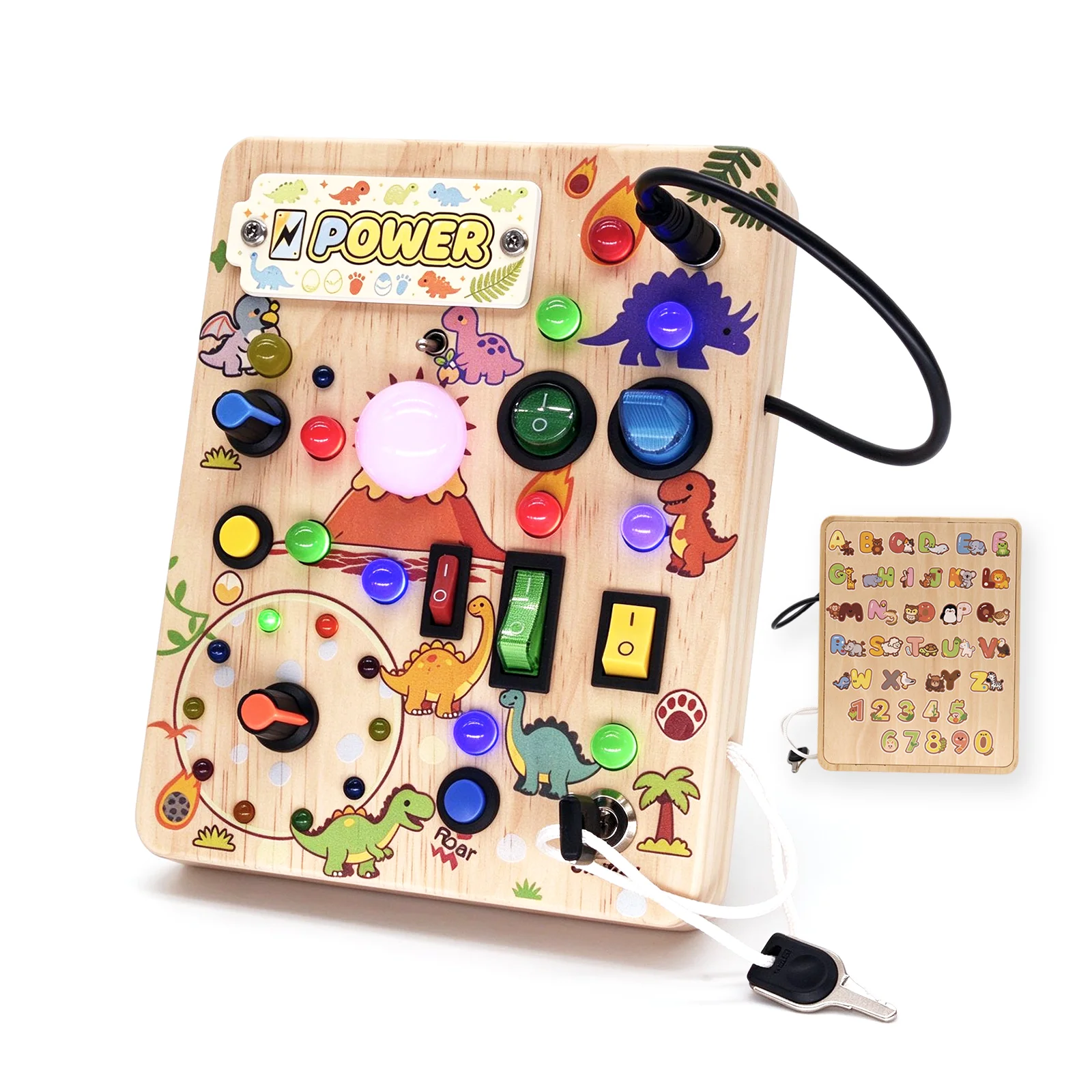
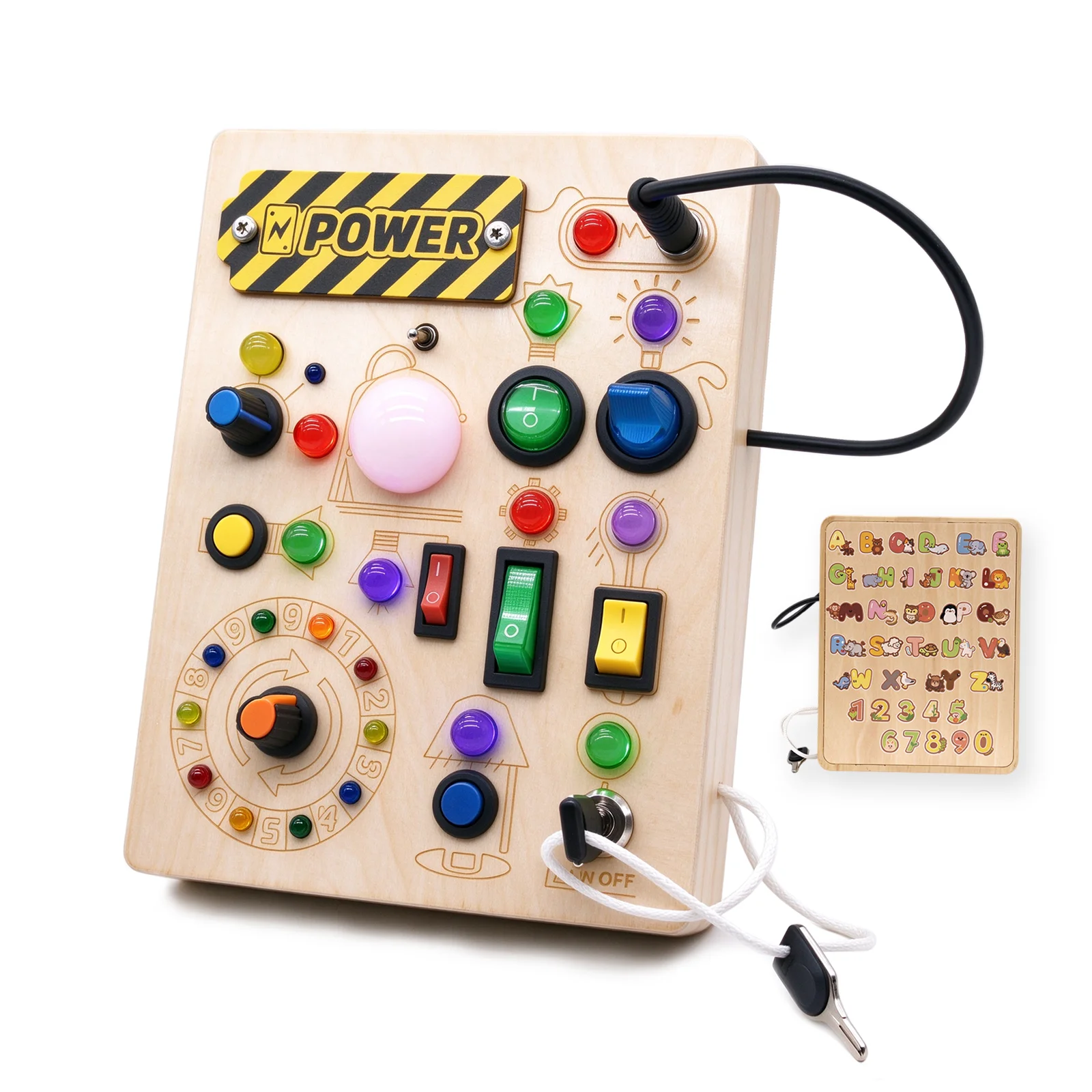
An LED busy board is a wooden activity board that combines classic busy-board features — switches, knobs, latches, gears — with a lighting system: when certain switches are flipped, LEDs light up in patterns. It adds a cause-and-effect, reward-driven layer that plain boards do not have.
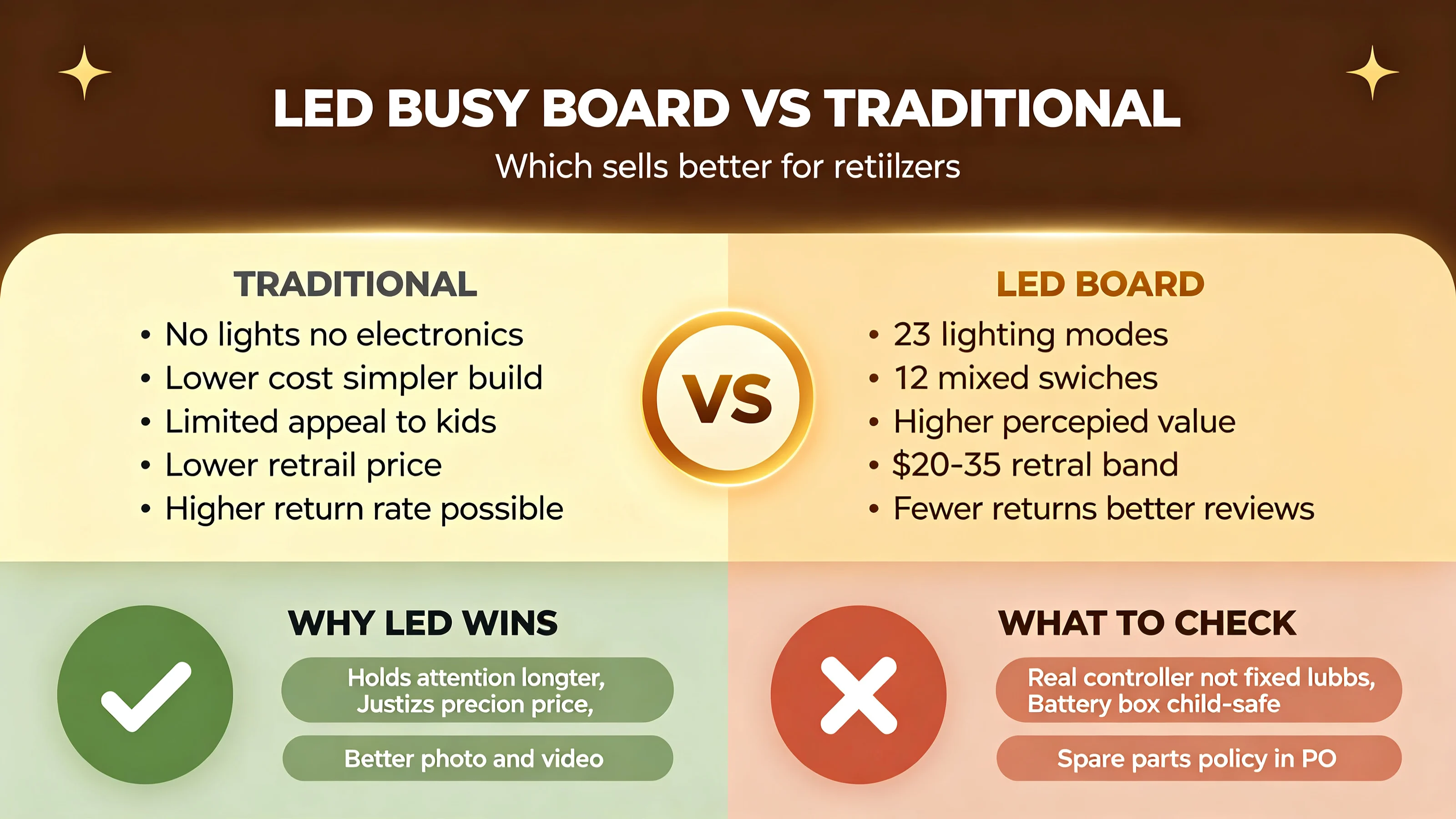
Our own boards follow exactly this model: a shared 12-switch platform driving 23 LED light patterns, so the child learns that an action produces a visible result. That feedback loop is what makes an LED busy board feel "alive" compared with a static board.
The real differences, side by side
| Traditional busy board | LED busy board | |
|---|---|---|
| Core appeal | Tactile, quiet, classic | Visual reward, cause-and-effect |
| Power | None | 2 × AAA batteries |
| Price expectation | Lower | Higher |
| Age appeal | Broad, incl. youngest | Strong for toddlers and up |
| Gift appeal | Good | Stronger — feels like a "wow" gift |
| Certification | Same toy rules | Same rules, plus battery safety |
| Best channel | Education, quiet play, nursery | Retail, gift, e-commerce |
Neither is better in the abstract. They solve different jobs: one is quiet, tactile learning; the other is engagement and delight.
Why LED boards hold a higher price
The LED system adds components — the lighting board, wiring and a battery compartment — plus assembly time. That raises the factory cost, and it also raises the perceived value, which is what matters for retail. A parent comparing two boards on a shelf does not price them by component count; they price them by how engaged their child looks playing with it.
That gap is why an LED board can carry a meaningfully higher retail price than a plain board of the same size. For a retailer, the higher unit price usually comes with a higher absolute margin too.
Battery, safety and certification
Adding electronics does not change the toy-safety regime, but it adds one requirement: battery safety. An LED busy board must still meet EN71 for the EU or ASTM F963 for the US, and on top of that the battery compartment and cells must meet the rules for toys containing batteries — including securing the compartment so cells are not accessible to a small child.
This is a place where a cheap supplier cuts corners. If an LED led busy board quote is far below the market band, ask hard questions about the battery enclosure and the certification scope. Our certifications guide covers what to look for.
Which sells better — by retail channel
There is no universal winner; the channel decides.
- Toy and gift shops: LED boards win on shelf. The light-up feature is the demo, and demo sells.
- E-commerce: LED boards win on click-through and reviews — video-friendly, gift-friendly, higher ticket.
- Education and preschool suppliers: traditional boards often win. Buyers want quiet, durable, battery-free, and they buy in sets.
- Nursery and baby channels: traditional, especially for younger ages where batteries are a concern.
- Department and seasonal gift: LED boards, especially at the $20–40 retail sweet spot where a "wow" gift is an easy purchase.
If you sell across channels, the practical answer is usually both — with the mix weighted to your channel.
Price points and margin
Our LED boards sit at roughly $8.90–9.50 FOB, which supports a healthy retail price at the volume tiers a retailer needs. A traditional board with fewer components is cheaper at factory level and retails lower; its advantage is volume and set-selling, not ticket size.
The retail sweet spot for an LED board is a gift-priced item: high enough to signal quality, low enough to be an impulse or birthday buy. That positioning is what makes the LED version the stronger seller in retail and gift channels.
Building an assortment that works
A practical starter assortment:
- One LED hero board — the demo unit that drives traffic and gift sales. Our Classic 12-switch LED board is built for this role.
- One traditional or lower-feature board — the value and education option, sold singly or in sets.
- A themed variant — alphabet or dinosaur editions to capture repeat buyers and gifting. See the Custom & OEM guide if you want your own artwork on it.
Three SKUs is enough to test a channel without over-committing cash. Add depth once you know which board moves fastest for your customers.
How LED boards sell in store
An LED busy board has an advantage a traditional one does not: it demonstrates itself. Put a live demo unit on a shelf or counter with batteries in, and the board does the selling — a child flips a switch, the lights respond, and the parent stops walking.
Three ways to use that:
- Demo unit. Keep one powered board open on the shop floor. It is the single most effective sales tool for this product.
- Video and UGC. The light-up moment is inherently watchable, which makes LED boards stronger performers in online listings, ads and user-generated content.
- Gift-ready display. Position it as a gift rather than a toy — near the till or in a gift section — and the higher price feels justified rather than expensive.
Traditional boards sell on value and quiet quality, usually through education catalogues or thoughtful parents. LED boards sell on the moment of delight. Knowing which lever your channel pulls tells you which board to stock.
FAQ
Are LED busy boards as safe as traditional ones? Yes, when they are certified and the battery compartment is properly secured. The safety rules are the same plus battery requirements — insist on documentation for both.
Do batteries hurt shipping or shelf compliance? Batteries are not included, which keeps air freight and retail shelf rules simple; the board runs on 2 × AAA that the customer supplies.
Which has a better margin? Absolute margin is usually higher on the LED board because the retail price is higher. Percentage margin is similar when both are sourced well.
Can I sell both in one store? Yes — and usually should. LED boards drive traffic and tickets; traditional boards serve education buyers and quieter budgets.
Next step
Decide by channel: gift and retail lean LED, education leans traditional. Want a demo-ready LED hero board for your shelf? Ask for samples and pricing and we will match models to your channel. For the commercial details, read the MOQ, pricing and lead time guide.
Related reading
- light-up (LED) busy board wholesale guide — full spec and pricing detail
- why materials matter more than LEDs — the build-quality angle
- OEM and custom boards — if you want your own design
If this raised a specific question, LED Busy Board Wholesale: A Product Guide for Retail Buyers goes deeper, and Dinosaur Busy Board Wholesale: A 2026 Sourcing Guide for Retail Buyers covers the part most buyers ask about next.