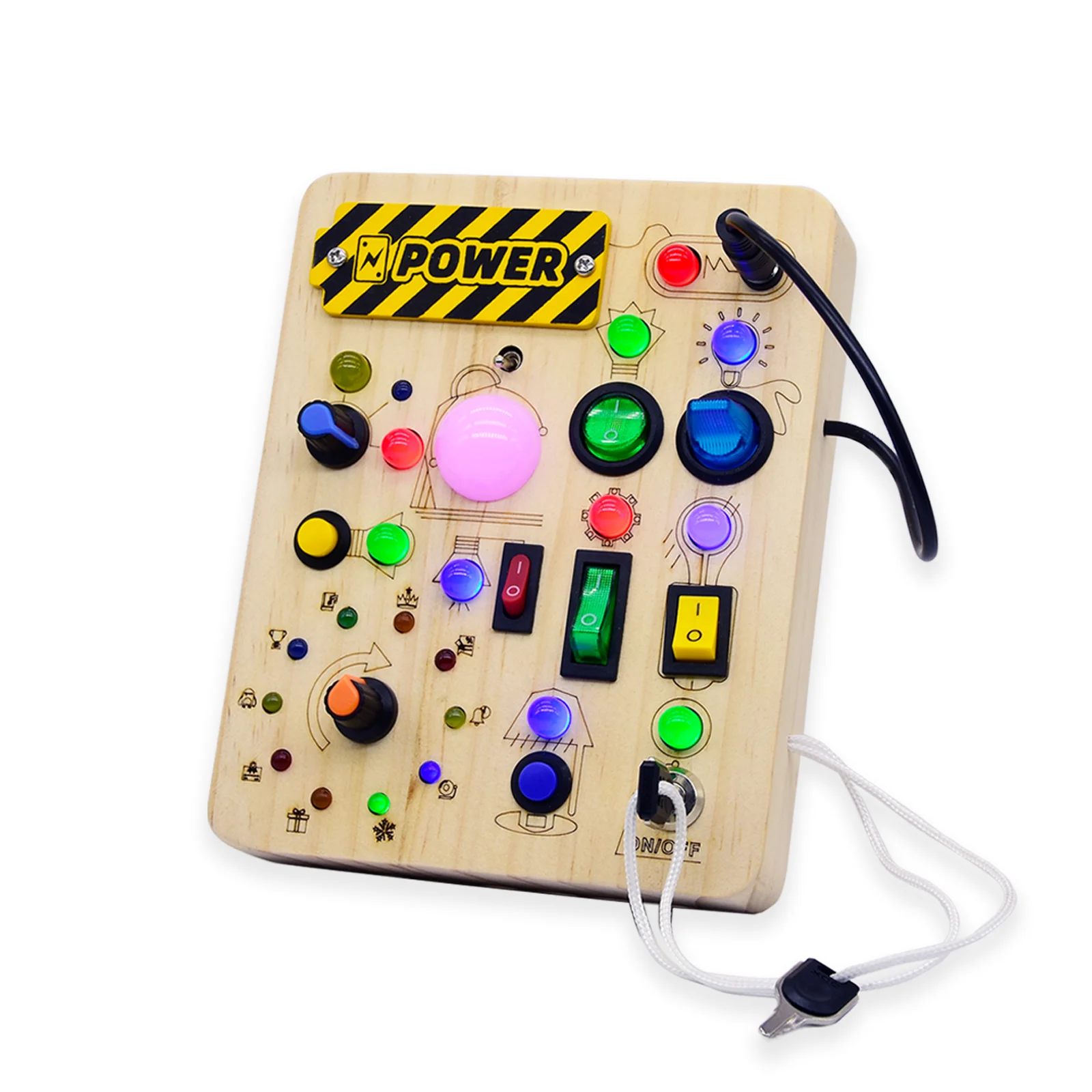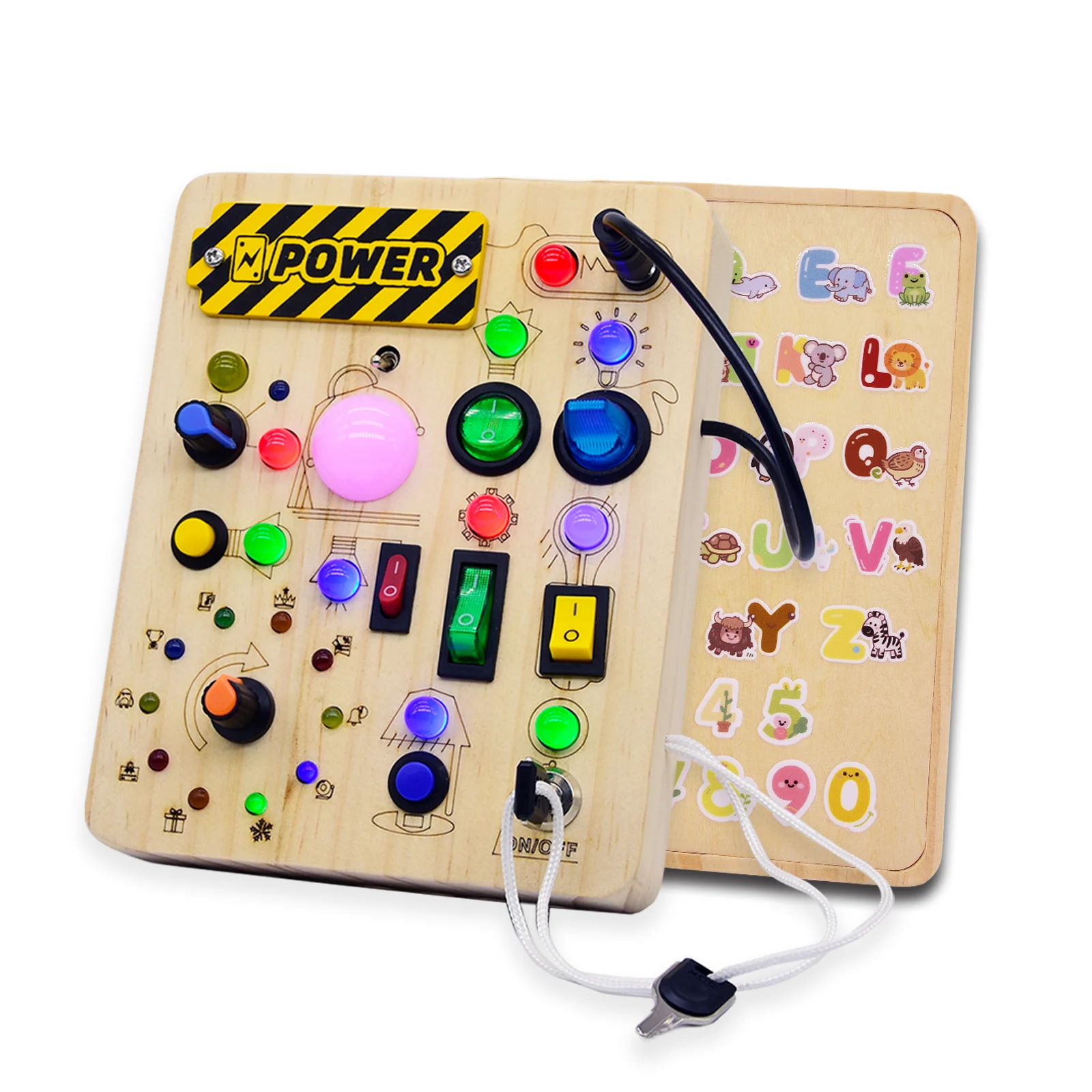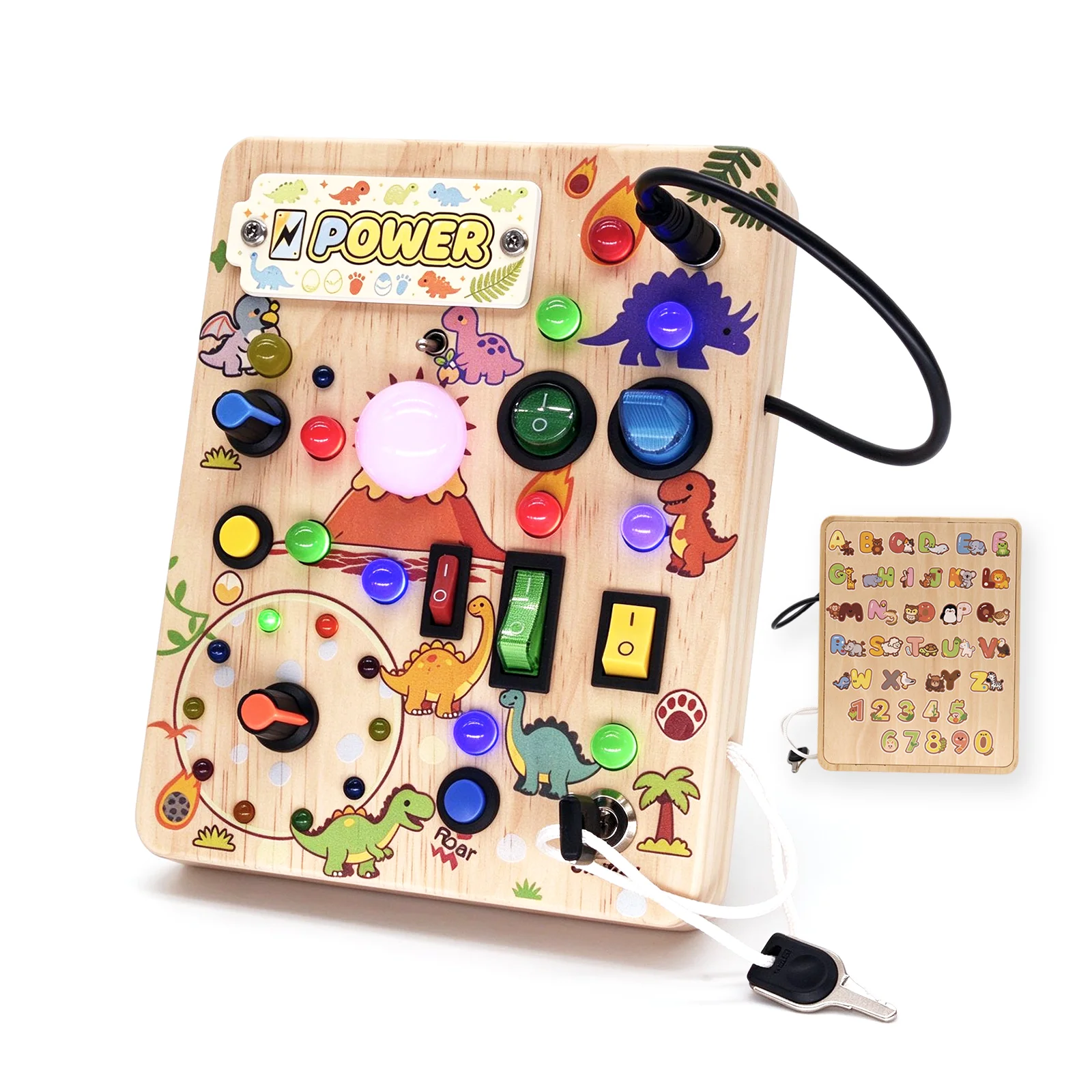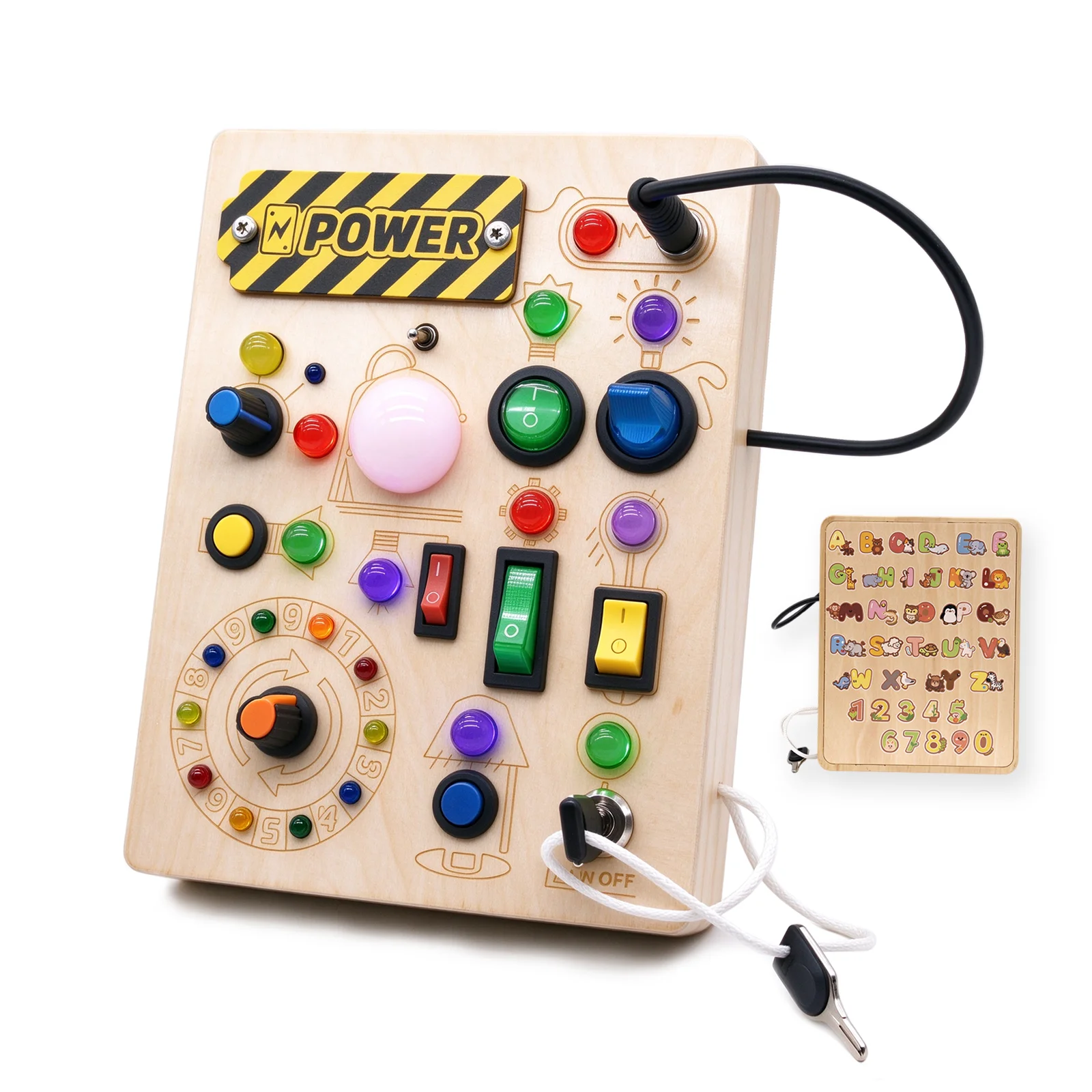
When you’re sourcing busy boards for your retail store, online marketplace, or educational channel, the first question is almost always about price. The second question is usually about design variety—does it have enough zippers, switches, and buckles to keep a toddler engaged?
But here’s what many buyers overlook until it’s too late: what the board is actually made of.
And with Japan’s new safety regulations taking full effect in December 2025 , the material decision is no longer just about quality—it’s about compliance.
The Hidden Cost of Choosing Plywood
On paper, plywood makes sense. It’s cheaper, lighter, and widely available. Many suppliers in major Chinese manufacturing hubs like Zhejiang and Hebei offer plywood-based busy boards at price points that seem irresistible .
But plywood has a fundamental problem when it comes to children’s toys: glue.
Plywood is manufactured by bonding thin layers of wood veneer together with adhesives . The alternating grain structure makes it dimensionally stable and resistant to warping—which is great for kitchen cabinets and flooring—but those same adhesives can be a source of chemical off-gassing, unpleasant odors, and potential long-term durability issues when exposed to heavy handling.
More importantly for wholesale buyers, plywood busy boards have a much shorter practical lifespan. Once the surface veneer is damaged, chipped, or exposed to moisture, delamination begins . Unlike solid wood, plywood cannot be sanded or refinished multiple times to restore its appearance .
For retailers and distributors, this translates to:
- Higher return rates from unhappy customers
- Negative reviews about durability
- Brand reputation damage that affects repeat orders
Why Solid Pine Changes the Equation
Solid wood—particularly pine—offers a completely different value proposition for busy board applications.
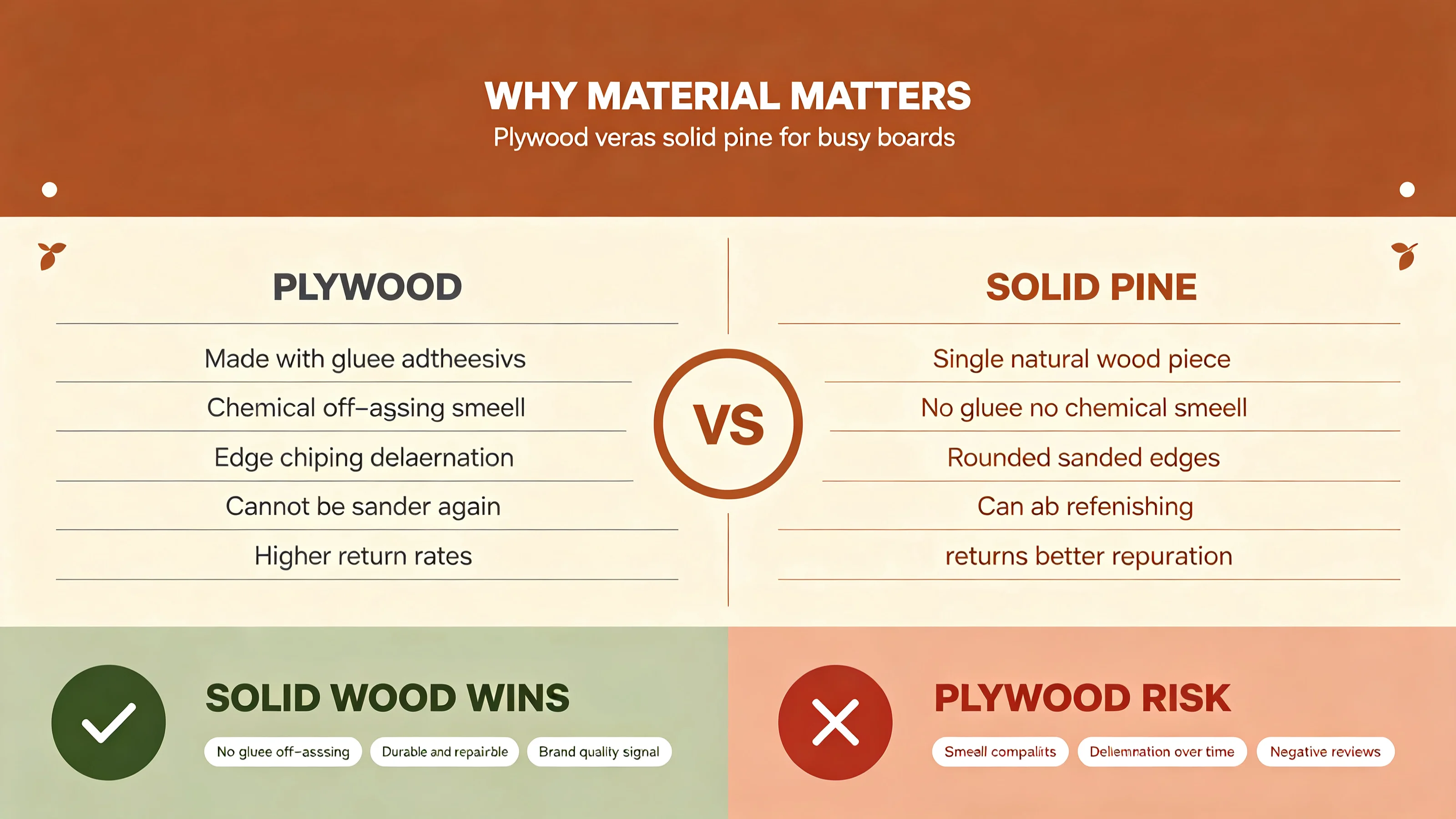
| Consideration | Plywood | Solid Pine |
|---|---|---|
| Material composition | Layered veneers + adhesives | Single natural piece |
| Odor | Can have chemical glue smell | Natural wood scent |
| Durability | Surface damage often irreparable | Can be sanded and refinished |
| Edge quality | Requires edge banding; prone to chipping | Can be rounded and smoothed naturally |
| Long-term appearance | Ages poorly; risk of delamination | Develops natural patina |
| Perceived value | Feels like “mass production” | Feels like “quality craftsmanship” |
Solid pine offers strength, natural beauty, and most importantly for children’s products, chemical-free safety . There are no hidden adhesives, no glue lines, and no mysterious odors that parents worry about.
From a wholesale perspective, the slightly higher upfront cost of solid pine is offset by:
- Fewer returns due to durability
- Stronger brand reputation for quality
- Higher reorder rates from satisfied retail partners
The Regulatory Reality: Japan ST 2025
This is where the material decision becomes critical for anyone selling into the Japanese market—one of the world’s most demanding for toy safety.
On December 25, 2025, Japan’s revised Consumer Product Safety Act takes full effect . Under the new framework, infant toys (designed for children under 36 months) must display the mandatory PSC (Product Safety Consumer Products) mark .
To comply, toys must meet technical standards aligned with:
- ISO 8124-1:2022 and ISO 8124-2:2023
- EN 71-1:2014+A1:2018 and EN 71-2:2020, or
- Specific sections of ASTM F963-23
Compliance with Japan’s ST-2025 standard is recognized as meeting the PSC mark requirements . This is where solid wood has a distinct advantage.
The ST-2025 standards for infant toys are equal to or stricter than international standards . Solid wood, with its natural, chemical-free composition, inherently aligns better with the safety-first philosophy behind these regulations. Manufacturers using plywood must ensure their adhesives meet stringent chemical safety requirements—adding complexity and risk to the compliance process.
The OEM Advantage: Working with the Right Factory
Not all manufacturing regions are equal when it comes to quality and material choices.
Zhejiang Province, home to major production hubs like Yiwu and Ningbo, is known for its strength in wooden educational toy manufacturing with a focus on craftsmanship and sustainable materials . This region specializes in premium materials like solid pine, making it the ideal sourcing destination for brands that prioritize quality over the lowest possible cost.
Working with a factory that:
- Understands the regulatory landscape (particularly Japan’s ST-2025 requirements)
- Uses solid wood as the default material, not a premium upgrade
- Offers OEM/ODM capabilities for custom branding and packaging
…gives you a competitive advantage that price-driven competitors simply cannot match — it's the approach behind our own Classic 12-switch LED board.
A Smart Strategy for Wholesale Buyers
Here’s what this means for your sourcing decisions:
| Priority Level | Strategy |
|---|---|
| High | Source from factories that can demonstrate solid wood construction with verifiable material traceability |
| High | Prioritize suppliers familiar with Japan’s ST-2025 compliance framework—even if you’re not selling to Japan yet, these standards are a proxy for quality that premium buyers respect |
| Medium | Differentiate your product line with “solid wood” branding at retail—parents are increasingly educated about material safety and will pay a premium |
| Medium | Consider a two-tier product strategy: plywood for entry-level price points, solid wood for your “premium” collection with higher margins |
| Low | Avoid factories that cannot clearly state what adhesives are used in their plywood boards |
The Bottom Line
Price is what you pay. Quality is what your retail customers experience—and ultimately what determines whether they come back.
In a crowded busy board market, material is the single most defensible differentiator. While competitors race to the bottom on price, you can build a reputation for safety, durability, and craftsmanship that translates into higher margins and repeat orders.
The factories that use solid pine aren’t just making a better product—they’re making a smarter business bet . And with Japan’s new safety regulations reshaping the compliance landscape in 2025, that bet is about to pay off.
Are you sourcing busy boards for retail or distribution? I’d welcome the opportunity to discuss how we can help you build a differentiated product line that stands out for quality, safety, and long-term value.
Related reading
- LED vs traditional busy boards — which format sells better for retailers
- light-up busy board wholesale guide — specs, MOQ and pricing for LED models
- Montessori busy board buyer's guide — the full wholesale sourcing walkthrough