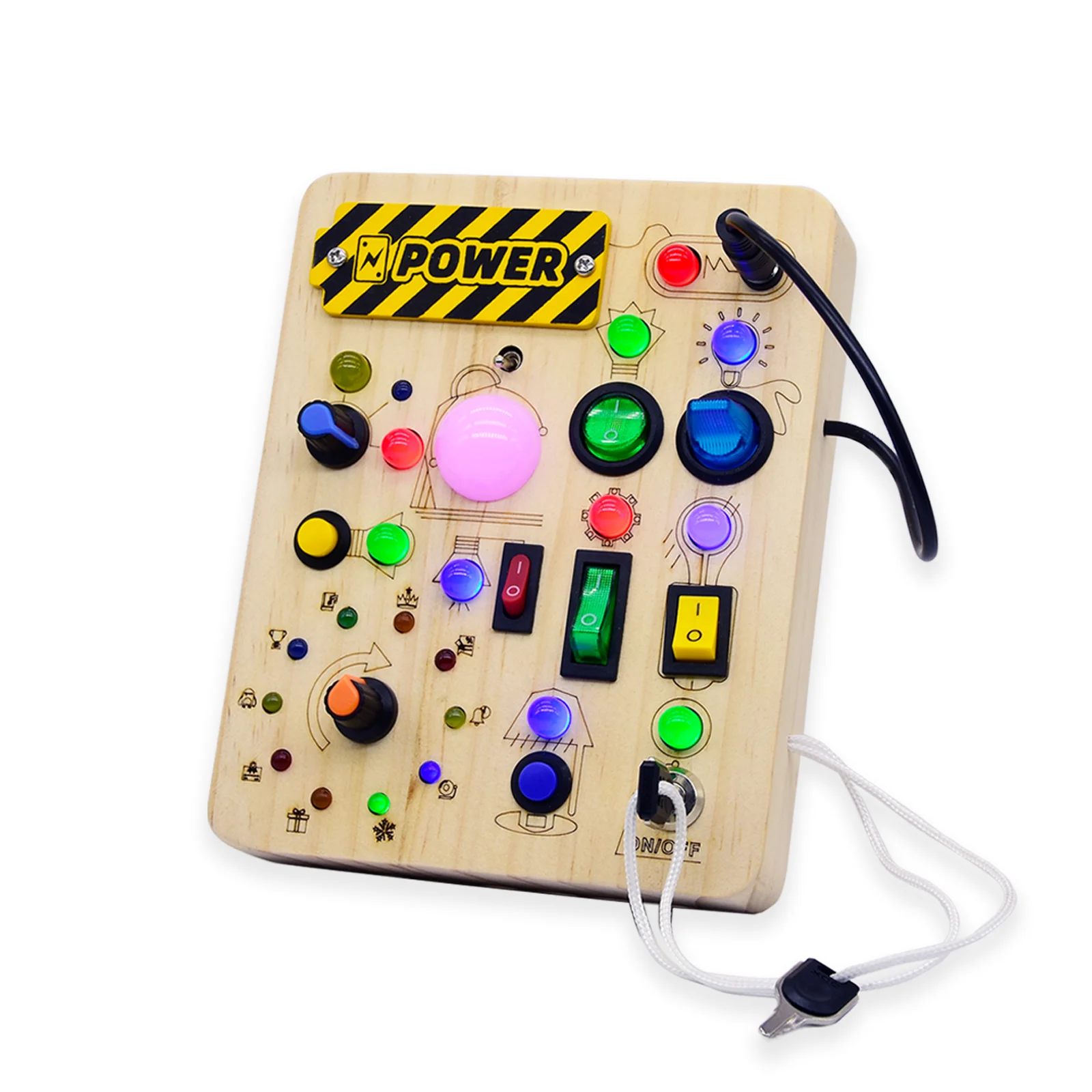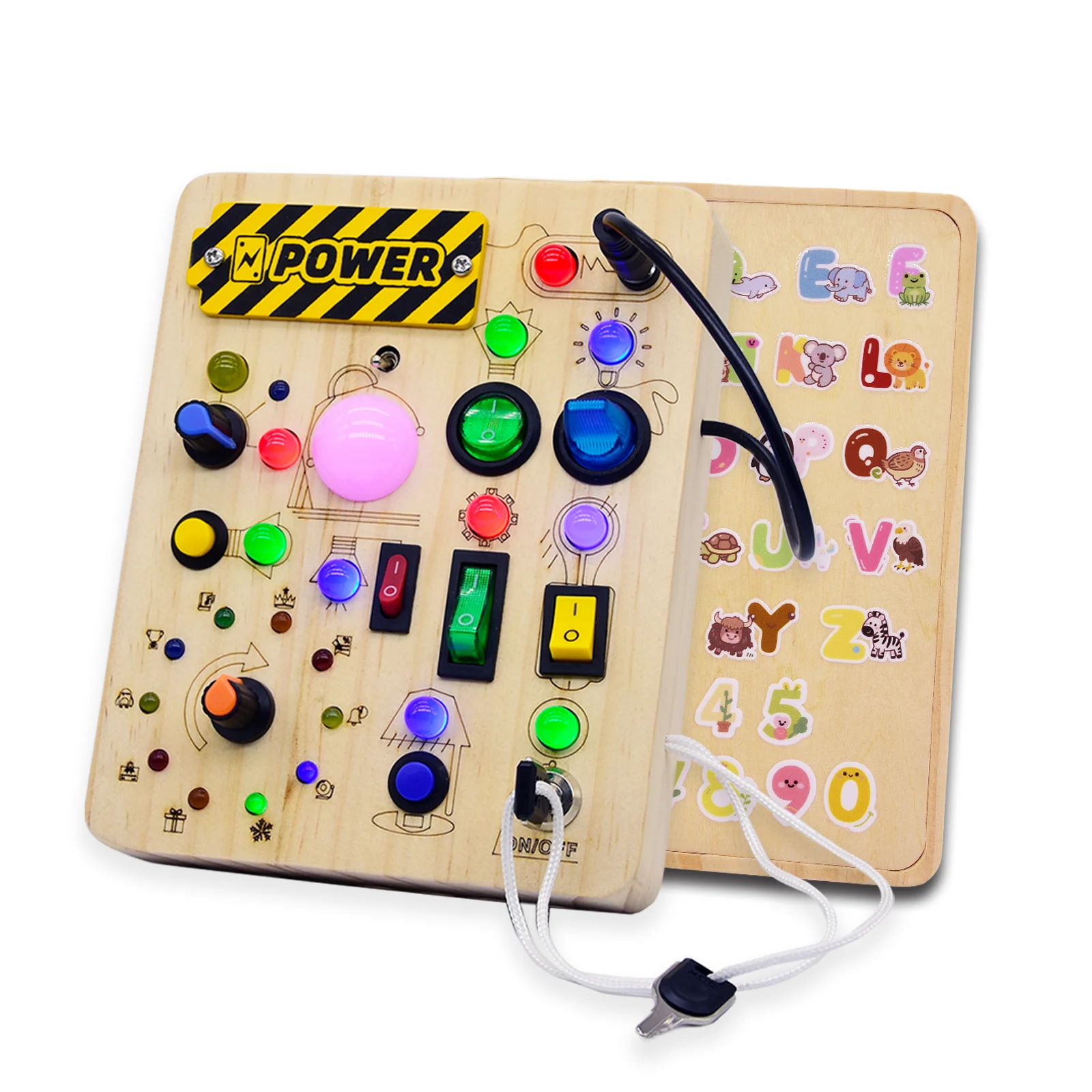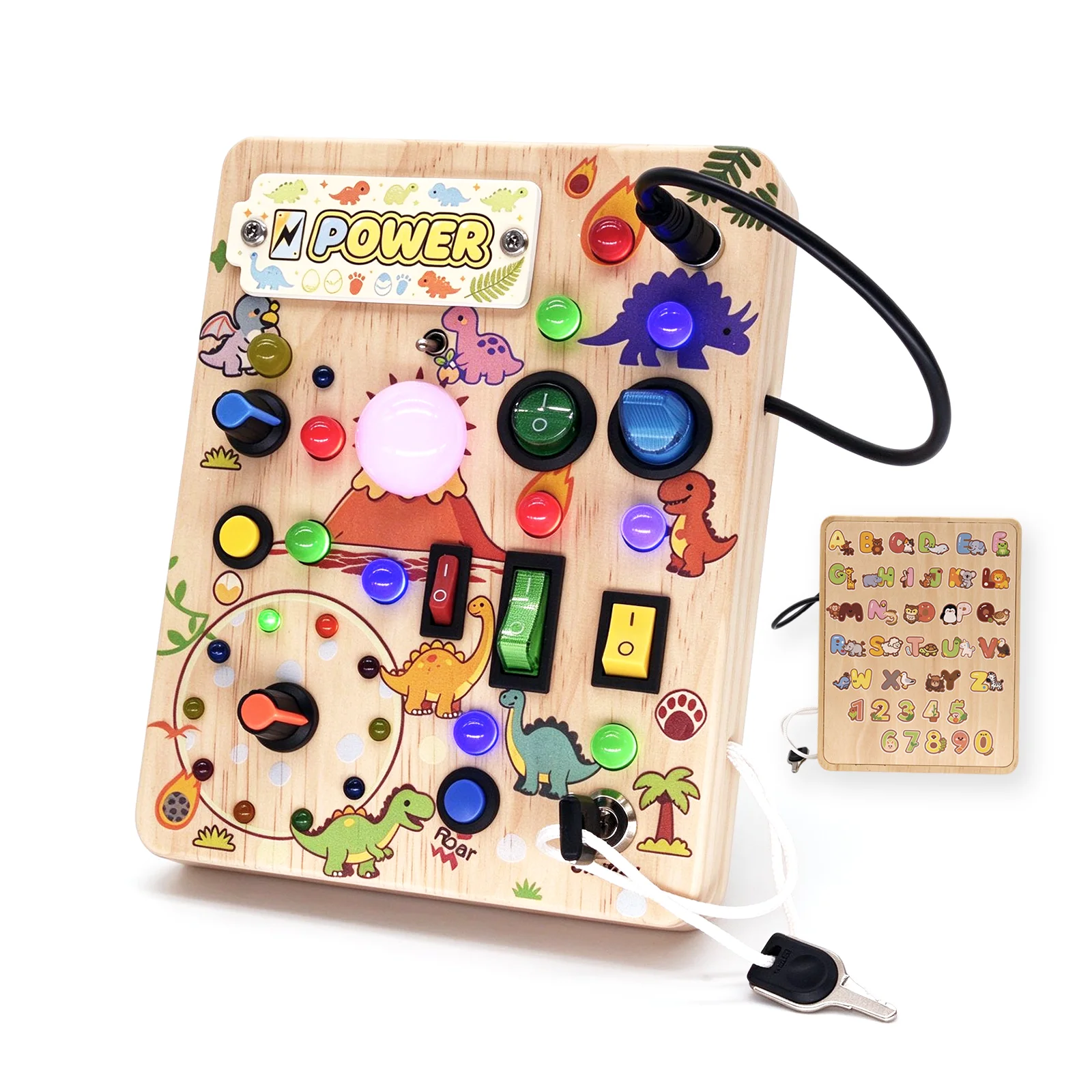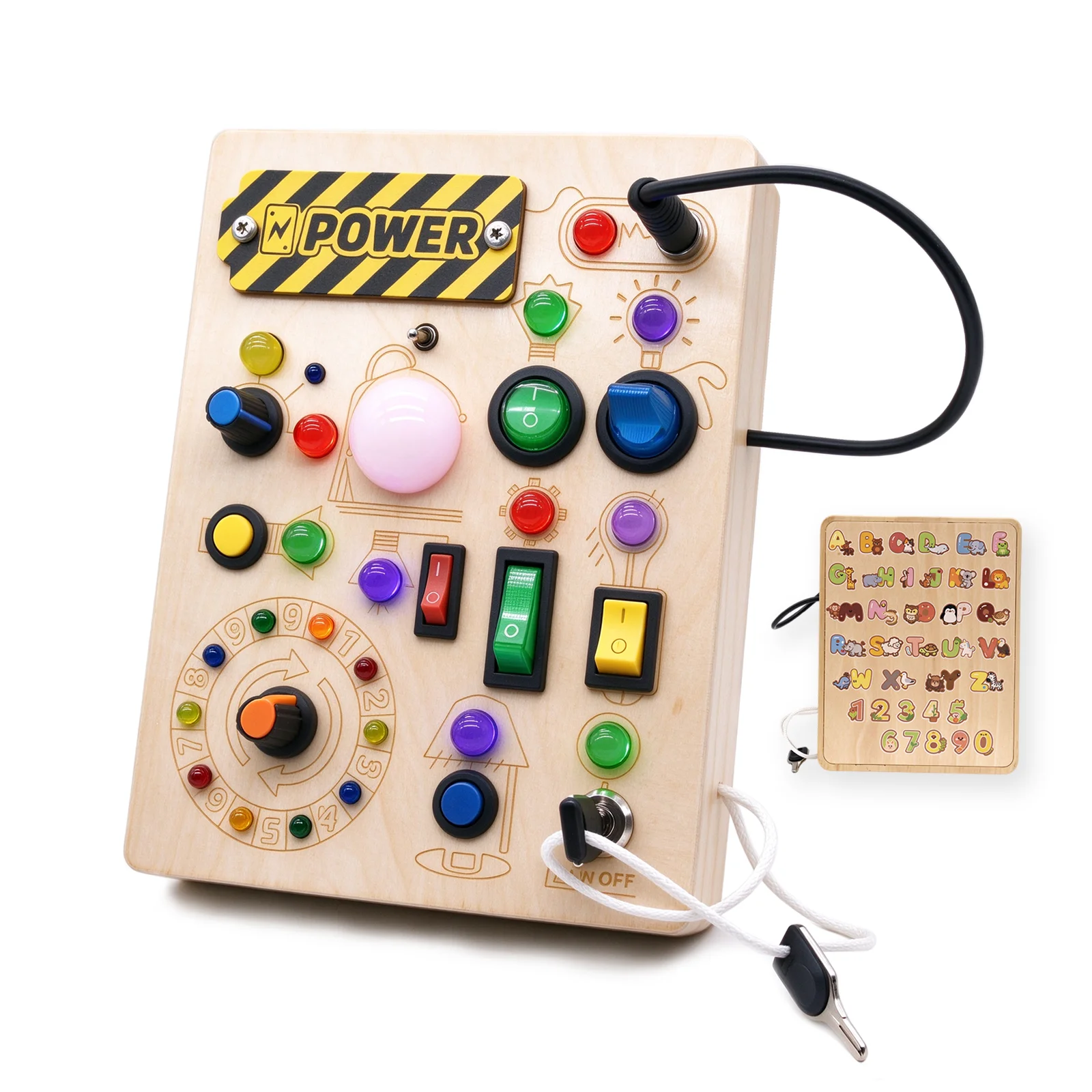
Short answer: montessori busy board wholesale, bought as a retailer, is a shelf problem and a cash problem more than a volume problem. You are choosing two or three boards that each earn a facing, a price tag for every one of them, and the smallest order that keeps you in stock without parking your money in a storeroom. That is the whole job, and it is a narrower job than a distributor's. We are the factory in Wenzhou, so judge the numbers knowing where they come from.
If you are still deciding whether to sell the category at all, our Montessori wholesale buyer's guide covers that ground. If you are buying for a nursery or a school, the institutional sourcing guide is the one you want. Everything below assumes a shop, a marketplace listing, or both, and a buyer who needs to know what to order and what to charge.
Quick facts for retail buyers
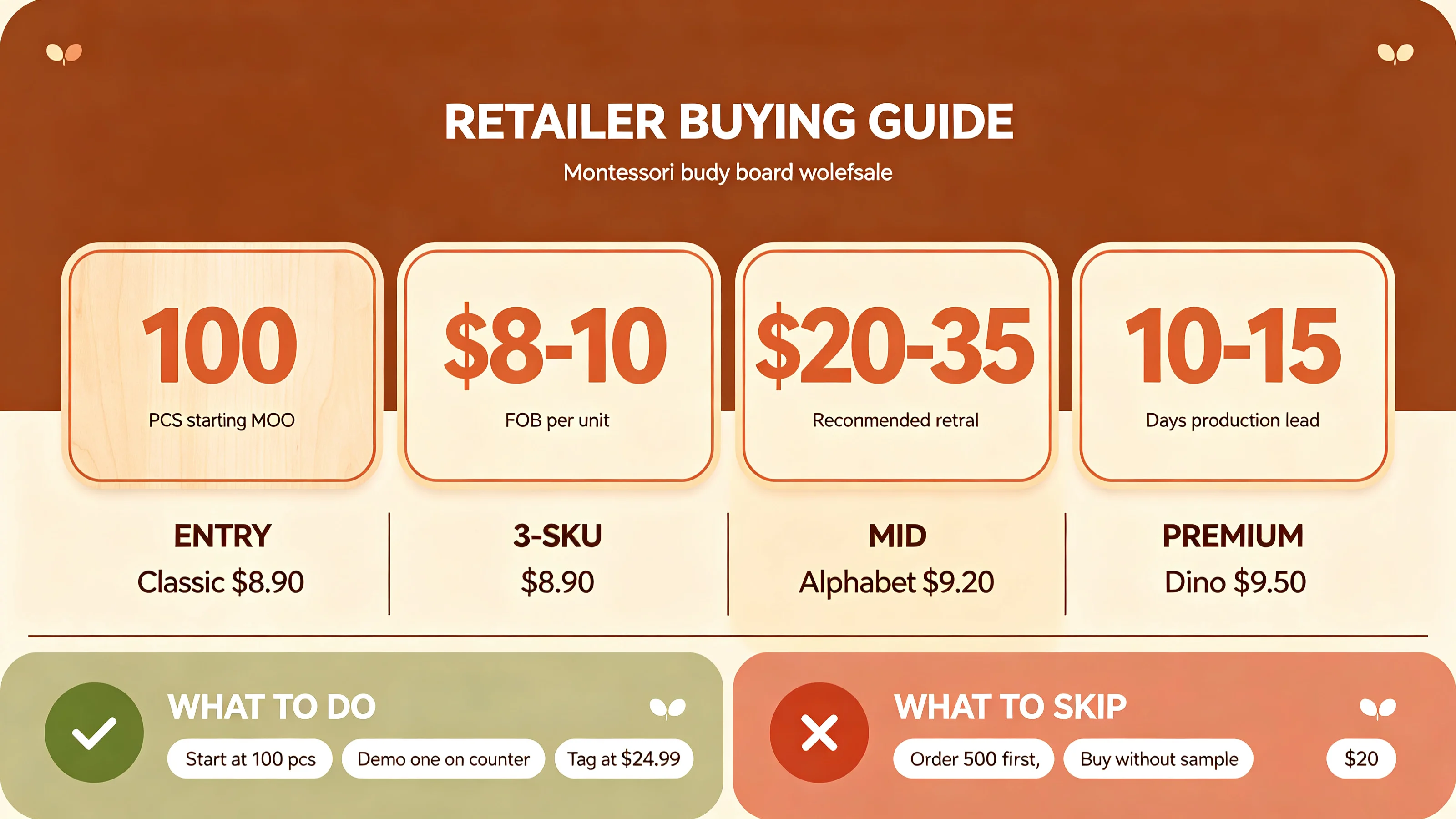
- MOQ: 100 pcs per model from the catalogue · 200 pcs with your artwork or engraving · 500–1,000 pcs for full OEM
- Samples: 1–10 pcs, 3–7 days, credited against the bulk order
- Lead time: 15–25 days after deposit and artwork approval
- Certifications: CE / CPC / ST reports on current models (EN 71, ASTM F963)
- FOB at MOQ: $8.90 Classic · $9.20 Alphabet · $9.50 Dino
- Recommended retail: $20–35
What a shop needs to know about montessori busy board wholesale
A distributor buys a container and sells cartons. A shop buys boards and sells them one at a time, to a parent standing in front of the shelf with a toddler on one hip. The two buyers need different things from the same factory, and the wrong mental model costs the retailer money in both directions: too much stock, or the wrong stock.
Retail has its own metrics and they are specific. Sales per facing. Inventory turn. Cash tied up. Returns. A board that sits for eleven months and sells in December is a loan you made to your own shelf, whatever the price tag says. For montessori busy board wholesale, that means matching quantity to how fast the thing actually moves in your town, not to how cheap the unit looks on a quote.
There is one piece of good news. This product does not go out of fashion. The classic board you buy this year is still the classic board next year, so you are not marking down last season's colourway the way a clothing buyer does. That stability is what lets you reorder the same SKU again and again instead of gambling on a new design every spring. It also tells you the risk you carry is quantity risk, and quantity risk is the one you can actually control.
The three-SKU assortment most shops should start with
You do not need twelve boards, and there is no single correct montessori busy board wholesale order for every shop. You need a small ladder: something cheap enough to be picked up on impulse, something that carries the learning story, and something premium enough to be a real gift. Our catalogue happens to map onto that ladder already.
| SKU role | Model | FOB at MOQ 100 | Retail tag | What it does on your floor |
|---|---|---|---|---|
| Entry / traffic | Classic | $8.90 | $20–25 | The board most people pick up first; the safe sub-$25 gift |
| Educational mid | Alphabet | $9.20 | $22–28 | Carries the learning story; the one parents rationalise |
| Premium / theme | Dino | $9.50 | $25–35 | Theme and gift ceiling; the one that lands on a birthday list |
Look at how little separates them at the factory and how much separates them at the till. The three boards differ by 60 cents in FOB and by up to $15 in what they can sell for. The assortment is where your margin is made, long before any conversation about unit price.
The size question
A smaller board reads cheaper to a shopper, but it does not cost much less to make, so a small board pushed to a low price often carries the thinnest margin of anything on the shelf. If you want a size gradient, use it to separate a travel board from a nursery board in the customer's mind, and hold the price you would have charged anyway. A board that is genuinely smaller for a genuinely lower cost is fine. A smaller board sold as a bargain usually is not.
Single board or a set
A board bundled with a storage bag or a tray lifts your average order value and photographs well as a gift. It also adds parts that can arrive damaged or go missing, and every extra component is one more reason for a return. For a first order, buy plain single boards and keep the entry price low. Save the bundled version for the Christmas window, when the people in the shop are gift buyers and a higher ticket is welcome.
Why this product has to be touched
Some categories survive shrink wrap. This one does not.
A busy board sells on two senses at once. The feel of a real latch or toggle under a small hand, and the light that answers the moment it is flipped. Neither comes through on a sealed box. In a physical shop, that is the entire case for a demo unit. Put one board on the counter with batteries in it and the master switch on, and let children work the switches while the parent reads the box. The demo board costs you the wholesale price once and usually earns it back inside a weekend. We have seen the same effect in small shops that run a low play table: the board is not competing with the toys around it, it is the thing that stops a child and buys the adult thirty seconds to decide.
The same logic sets what your product page has to do online. Because the customer cannot touch the board, your page has to carry the touch for them. A short clip of the light sequence. An honest count of switches and light patterns. The dimensions in both centimetres and inches. The age range. A photo of what is actually in the box. And the flat statement that the board runs on two AAA batteries that are not included. That last line looks like a weakness on a listing. It is the opposite. Saying it up front prevents the most common "it does not work" return, which is a customer who opened the box, found no batteries, and sent it back. The difference between a board that lights up in patterns and one that simply clicks into place is the whole reason a parent pays for the LED version over a plain wooden board, and we wrote a separate piece on why the light system decides whether it sells.
Reorder rhythm: why your first order is 100, not 500
The price break from 100 to 500 pieces is real, but it is not as big as buyers hope. On our line it saves roughly $0.40–0.70 a unit. What 500 pieces really buys you, if the product is unproven on your shelf, is four hundred boards of dead capital and a storeroom problem.
Run the arithmetic on your own numbers before you place a montessori busy board wholesale order. If you sell eight boards a month, a hundred units is already more than a year of cover, which is too much to sit on for a test. The reason most shops still start at 100 is simply that 100 is the floor at which a factory like ours runs a catalogue model at a catalogue price. Below it, setup, artwork plates and the sample run get spread over too few units and the price climbs. So the practical first order is 100 of the one board most likely to move in your shop, plus a sample of the other two so you can feel them before you commit to stock.
Then let the data steer the second order. Once you know weekly sell-through, hold roughly six to eight weeks of cover and lean on the short lead time. Production on a repeat order is 15–25 days, and the model is stable, so replenishing often is cheaper than guessing big and being wrong. A retailer who reorders 100 every quarter does less damage than one who buys 600 once and marks the tail down in January. If you want the longer version of how quantity moves the price, it is in our MOQ, pricing and lead time guide.
One more note on repeat orders: keep the spec identical. Same model number, same box, same barcode. A shop that quietly changes its packaging or its board between reorders confuses its own listing and its own staff.
The margin math of montessori busy board wholesale
Here is where retail buyers get hurt. They compute margin from the FOB price, and FOB is not what the board costs you.
Start from landed cost, not the factory number. Landed cost is FOB plus freight plus duty plus anything you paid separately for packaging. On a board this small, sea freight and duty typically add somewhere between $0.80 and $1.60 a unit, depending on your route and Incoterm, so an $8.90 board lands around $9.70 to $10.50. Only from there do you subtract the cost of actually selling it.
| Line | Classic at $8.90 FOB |
|---|---|
| FOB at MOQ 100 | $8.90 |
| Freight and duty, sea, per unit | ~$0.80–1.60 (depends on route) |
| Rough landed cost | ~$9.70–10.50 |
| Retail tag | $24.99 |
| Gross profit before returns and fees | ~$14.50 |
| Returns allowance (about 5% of revenue) | –$1.25 |
| Platform or payment fees (if online, ~15%) | –$3.75 |
| Contribution left | ~$9.50 |
That contribution, roughly 38% of the tag, is the honest number for an online sale, and it is the honest answer to most montessori busy board wholesale pricing questions. A physical shop replaces the platform fee with rent, which is fixed whether this board sells or not, so its margin per unit looks better but its margin per square foot is the number to watch. The lesson is the same either way: the tag is not your margin. The tag minus landed cost minus returns minus the cost of the channel is your margin, and at $20 it gets thin fast.
That is why we recommend a retail band of $20–35, and why we would put the entry board at $24.99 rather than $19.99. The extra five dollars is the room you need to absorb a return, a free-shipping offer, or a markdown without selling below cost. If your market genuinely will not support anything above $20, treat the board as a traffic driver rather than a profit centre, and know that going in. The full cost structure behind these numbers is in our busy board price guide.
Returns: the cost that never makes it into the buy sheet
Retail buyers build a spreadsheet for cost and another for revenue. Almost nobody builds one for returns, and in this category that omission is expensive.
A returned board costs you the shipping both ways, the refund, a repack or a write-off if it comes back used, and sometimes the customer. Work out your own return rate before you assume it is small: count the boards that came back over a season and divide by the boards you sold. A board you bought for $5 and sold at $19 with a 6% return rate can cost more per unit sold than a $9 board sold at $25 with a 2% return rate. The cheap board is not always cheaper.
Certain buying decisions push your return rate up more than others. Plywood with a veneer tends to arrive smelling of glue, and "it smells" is a return you cannot argue with. Unfinished or badly rounded edges chip, and a chipped edge on a children's product is a safety complaint, not a cosmetic one. A switch that is wired but flimsy breaks in week two and reads to the customer as "poorly made". A board with too few switches, or with five switches that all feel the same, gets learned once and abandoned, and "my child was bored" is a real return reason in this category even though it sounds like the buyer's problem. A board that is bigger or heavier than the customer pictured, or that arrives with a bundled bag missing, comes straight back.
None of that is exotic. All of it is visible before you order, if you order a sample and if you ask the supplier the right questions about wood, edges, switches and packaging. The packaging half of the returns problem, including how a board survives a courier and a carton, is covered in our packaging and shipping guide.
The retail calendar: back-to-school, Christmas and birthdays
The product is not seasonal. The demand for it is.
Three windows matter to a shop. Back-to-school, from August into September, is the learning season and the natural home for the Alphabet board; parents and grandparents buying for a child starting nursery reach for the version with letters on it. Christmas, from late October into December, is the gift peak and the moment the premium and themed board earns its higher tag, so bundled sets and the Dino board belong here. Birthdays run all year, clustered a little in spring and autumn, and they keep the mid and premium SKUs moving when nothing else is. Between them sits a January lull and a slow summer, and both are reasons to carry a core board that sells in any month rather than a novelty tied to one.
For stocking, work backwards from the shelf date. Production is 15–25 days after deposit and artwork approval, and sea transit to most European and US ports runs roughly 30–40 days, so a Christmas buy needs to be placed in late summer, not in November. The most common seasonal mistake we see is ordering themed inventory late — and ordering themed inventory at all. A Christmas-themed board that does not sell out becomes dead stock on 2 January. A neutral Classic or Alphabet board that misses the peak still sells in March. Buy the core design, and let the calendar decide the quantity rather than the print.
Questions retailers ask us every week
What is the smallest order you will take from a small shop?
100 pieces per model. That is the floor for a catalogue price. Below it the price rises, because setup is spread over fewer units.
Can I mix the three models in one order?
Yes, and most shops do. Mixed carts are normal, and we build the carton plan around your mix, so you can take 40 Classic, 40 Alphabet and 20 Dino if that matches your shelf.
Should I stock batteries?
No. We ship without cells on purpose. Shipping batteries adds a dangerous-goods class and paperwork that costs more than the batteries, and a shop selling them separately is one more SKU to manage. Just make sure the box says batteries are not included.
What price should I put on the tag?
Between $20 and $35. Put the entry board at $24.99, not $19.99, and keep the theme board toward the top of the band. Below $20 the math stops forgiving a return.
How many SKUs do I need to start?
One, if you have to. Two is better. Add the third once the first two are turning. Shops that open with five boards usually end up with three dead ones.
Does the board really sell in a small shop, or is it an online product?
It sells in shops that let people touch it. Set one up as a demo and it will outsell a sealed box many times over. If you cannot demo it, your online listing has to do the same job with video and detail.
What we'd do in your position
If we opened a small toy shop tomorrow and placed a montessori busy board wholesale order, we would start with 100 Classic boards and a sample of the other two, put one board on the counter with batteries in it, and tag the stock at $24.99. We would write the product page around the light, the twelve switches, and the honest note that batteries are not included.
Then we would do nothing for eight weeks except watch two numbers: how many boards leave the shelf each week, and how many come back. Those two numbers tell you more than any quote. If the board turns and the returns are low, reorder 200, add the Alphabet before the school season, and let the Dino carry the Christmas window at its higher tag. If it sits, you have lost the cost of a hundred boards rather than six hundred, and you still hold a product you can sell next autumn without marking it down. Order the 500 the first time you have sold 100 twice — not the first time you hope to.
Related, and worth opening before you commit: Montessori Busy Board: The Complete Wholesale Buyer's Guide (2026), then Montessori Boards Wholesale: Sourcing Guide for Schools, Nurseries and Distributors (2026), and if the numbers are the sticking point, Essential vs Classic: Which Busy Board Fits Your Market? (Affordable Busy Board Wholesale, 2026).