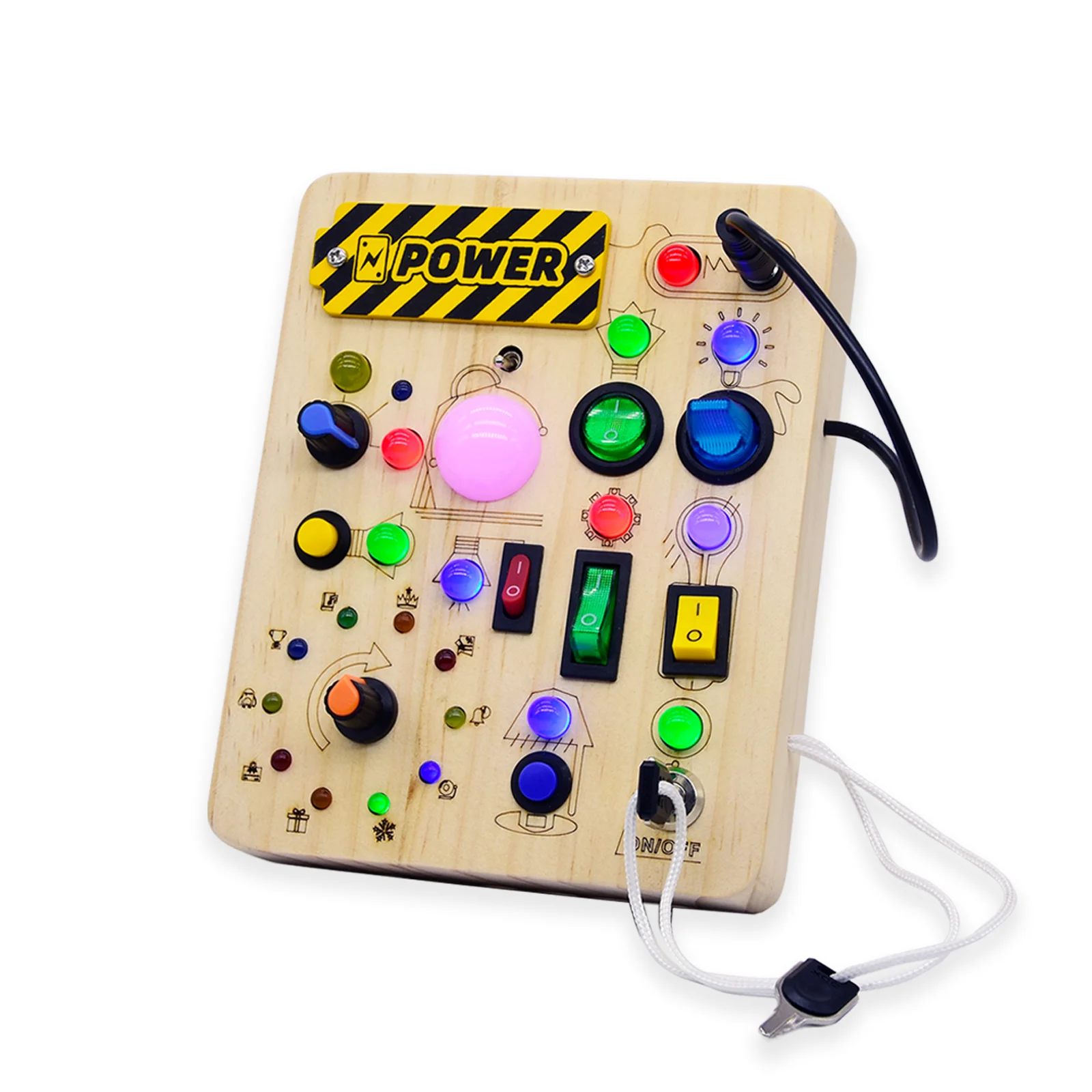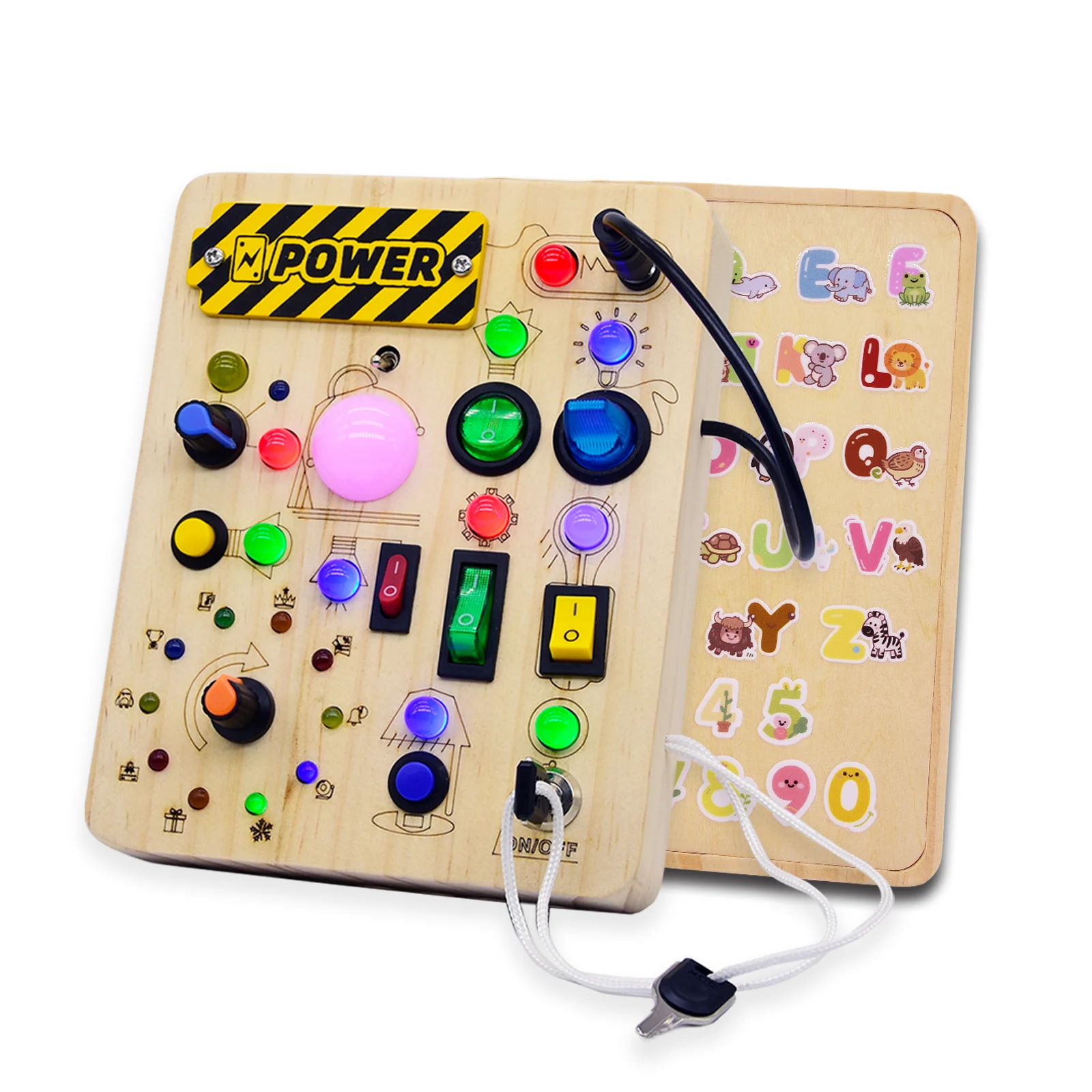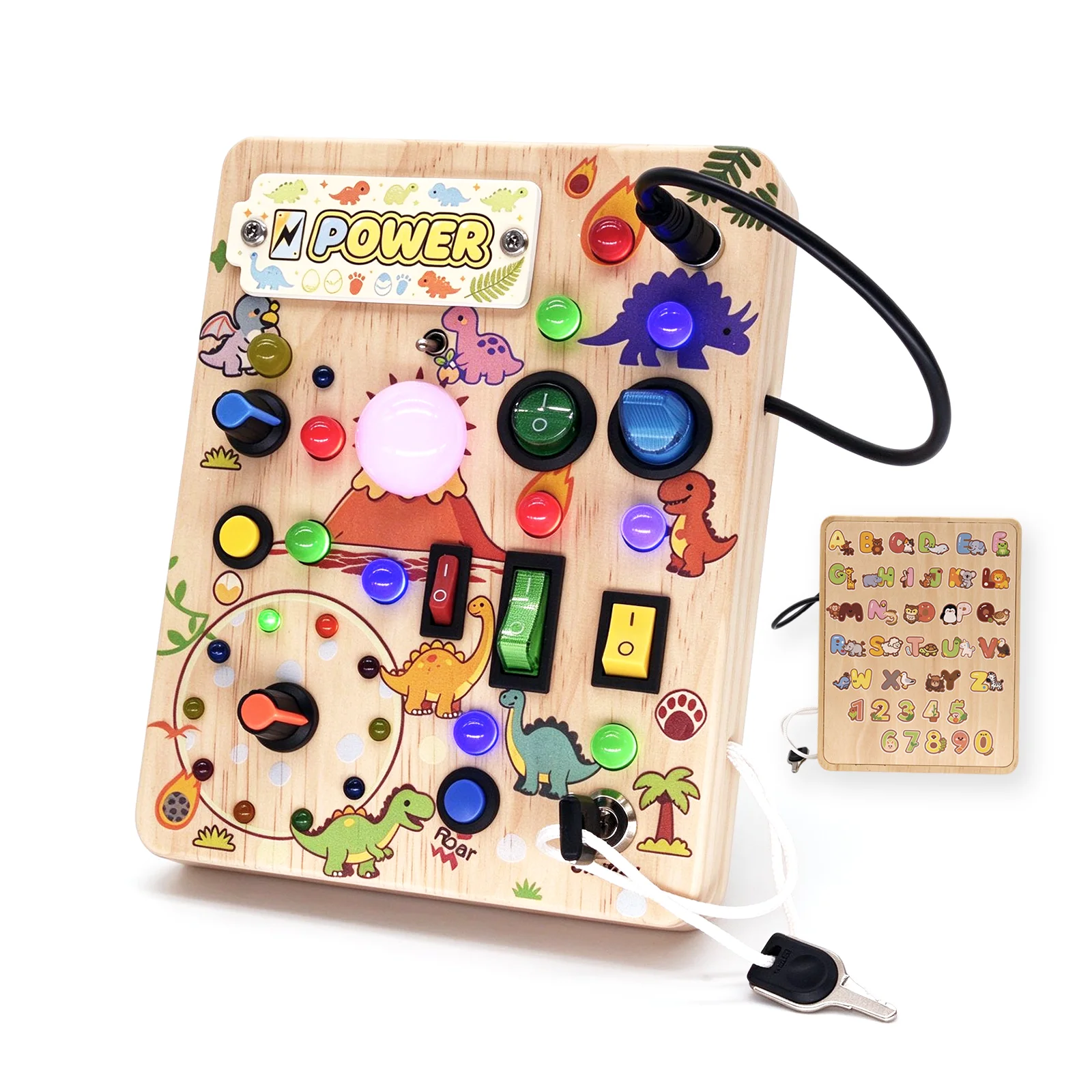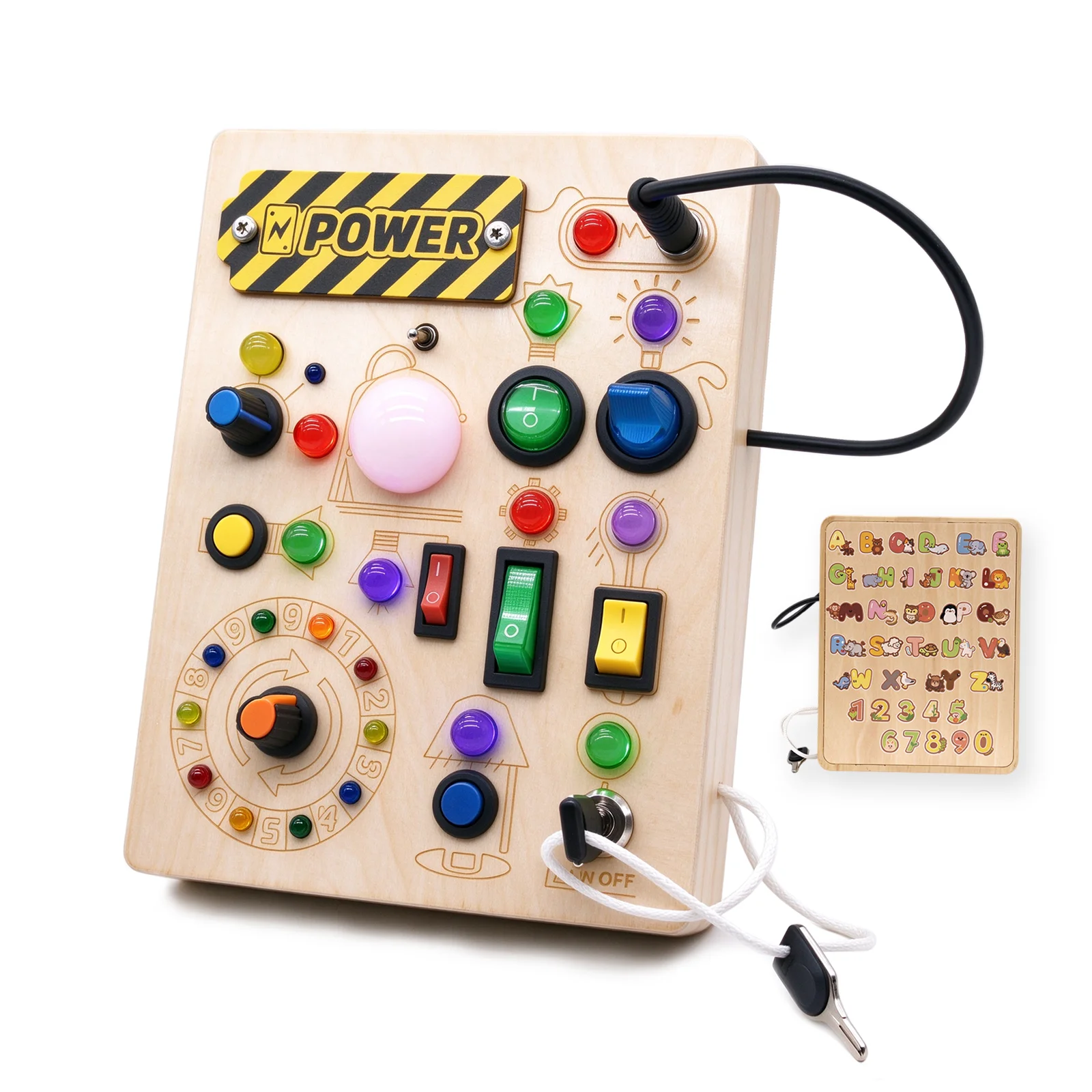
Short answer: educational toys wholesale is not one category. It is at least five, and they behave nothing alike on price, certification load or how fast they leave a shelf. Buy them as a single block and you will overpay on some and get caught out on others. The part that catches buyers is almost never the unit price; it is the certification, because that is the line most quotes leave blank. We make wooden activity boards in Wenzhou, so we sit inside this category and have an obvious interest in you understanding it properly.
Here is what we see from our side of the table. A buyer who arrives knowing their channel and their price band reaches a workable spec in two emails. A buyer who arrives with a photo and a target price spends three weeks collecting quotes for things that were never comparable. The category is wide enough that a $1.20 stacking ring and a $9.50 wooden activity board are both honestly called educational toys, and both are right.
This guide is about buying the whole category out of China rather than one product. We will show where the slices differ, where the country genuinely helps you, where it hurts, and the order we would make the decisions in.
Quick facts
- MOQ: 100 pcs per model from the catalogue · 200 pcs for your own artwork or engraving · 500–1,000 pcs for full OEM
- Samples: 1–10 pcs, 3–7 days, credited against the bulk order
- Lead time: 15–25 days after deposit and artwork approval, longer in peak season
- Certifications: CE / CPC / ST reports on current models, tested to EN 71 and ASTM F963
- FOB at MOQ: $8.90 Classic · $9.20 Alphabet · $9.50 Dino
- Recommended retail: $20–35
How the educational toy category actually splits
Ask ten suppliers to define educational toys and you get ten lists. For sourcing, it is more useful to cut the category by how each slice behaves commercially, because that is what decides your margin and your headaches.
| Sub-category | Typical FOB, small mixed order | Certification load | How it moves |
|---|---|---|---|
| Infant sensory (rattles, soft blocks, teethers) | $0.80–3.50 | Heaviest. Small parts, chemical migration, and for teethers sometimes food-contact rules | Fast. High volume, high return risk |
| Wooden puzzles, lacing, shape sorters | $1.50–4.00 | Heavy. EN 71-3 paint migration is the usual failure point | Fast. Low ticket, high turns |
| STEM and building sets | $2.50–15.00 | Medium to heavy. Age grading, small parts, and EN 62115 for anything with a circuit | Medium. Trend-driven |
| Montessori teaching aids | $3–12 | Split. Light as institutional materials, heavy the moment they reach a retail shelf | Slow. Higher ticket |
| Wooden activity and busy boards | $6–12 | Heavy, plus electronics testing when light-up | Slow. High ticket, best margin |
The bands are ours, drawn from what we build and quote; treat them as the shape of the category rather than a price list, because a given factory on a given day will land outside them. What matters is the pattern. Low ticket and high turns pull one way; high ticket with heavy paperwork pulls the other. A buying plan that ignores which side of that line a product sits on ends up with some lines selling out while others sit in the warehouse growing dust. That is the first thing worth getting right in educational toys wholesale, before a single price is discussed.
Infant sensory is where new buyers get their first surprise. The unit cost looks gentle, the paperwork does not. A teether that might be mouthed by a baby can attract rules closer to food-contact than to toys, and the return rate on anything that goes in a mouth is higher than the price suggests.
Puzzles and shape sorters are the opposite: cheap, forgiving, and they turn fast, which is exactly why they are the filler items on almost every educational rack. The only thing to watch is the paint, since EN 71-3 migration is the single most common reason a wooden puzzle fails a test.
STEM sets sit in the middle and are the most trend-sensitive. A building set can carry a great margin for eighteen months and then stop moving because the theme is dated. Buy them in smaller, more frequent batches than you would a classic shape sorter.
Sourcing educational toys wholesale from China: the honest pros and cons
China is not the only place these are made, but it is the only place where you can source the whole category inside a few hundred kilometres and get every slice at once — wood, plastic, fabric, simple electronics and packaging.
The advantages are real and specific:
- Supply chain density. Woodworking clusters around Zhejiang and Shandong, injection moulding around Guangdong, electronics and small PCBs in the Shenzhen–Dongguan belt. Whichever sub-category you pick, there are hundreds of factories and tooling is cheap.
- Price elasticity. The same shape can be built to three or four quality tiers, so you can enter at a low price and climb once the product proves itself.
- Iteration speed. Samples in days, small-batch customisation from a few hundred pieces, artwork changes without a new mould.
- Component depth. Switches, LEDs, hinges, dials and magnets are all a phone call away, which is why a maker like us can put a 12-switch board with 23 lighting modes together without waiting on imports.
The disadvantages are just as real, and a supplier who only lists the first four is selling to you rather than advising you:
- Homogenisation. The same moulds circulate across dozens of suppliers. A "new" design on a marketplace is often a two-year-old design with a different paint colour, so differentiation has to come from your artwork, your packaging and your brand, not from the shape.
- Certification variance. Some factories hold genuine, current reports for the exact model; some test once and reuse the paperwork; some print a certificate for a neighbouring model. The phrase "we can test it if you need it" means the model you are buying has not been tested.
- Batch-to-batch quality. The problem is usually not one bad factory but one bad batch. Batch one is clean, batch three has a switch that sticks.
- Silent substitution. Solid wood quietly becomes a plywood core, a controller quietly becomes three fixed bulbs. Both pass a photo.
- The school-grade and retail-grade blur. Two identical-looking boards can carry completely different paperwork depending on who they were built for.
None of this is a reason to source educational toys wholesale somewhere else. It is a reason to choose a supplier on process rather than on price, which is the exercise laid out in our guide to choosing a toy supplier from China.
The order you make the decisions in
The sequence matters more than any single choice in educational toys wholesale, and most new buyers run it backwards. The order we would use is channel, then price band, then sub-category, then factory.
Channel and price band first
Where the product is sold and what the shelf can charge decide everything downstream. A bookshop-plus-toys seller moving a $25 gift box wants solid wood, a printed box and a story. A discount e-commerce seller moving the same board at $12 wants it in a plain mailer with the lowest honest spec. Same category, opposite briefs. Settle the channel before anything else, because it tells you the price band, and the price band quietly eliminates half the sub-categories.
Category second
Once you know the band, the category picks itself more than you would expect. Gift and education channels can carry the slower, higher-ticket slices like wooden activity boards and Montessori materials, where the margin rewards patience. High-volume e-commerce runs best on puzzles, blocks and simple sensory pieces, where a 30-cent cost difference changes the whole position.
Factory last
Only now does it make sense to choose a factory, because you finally know what you are asking them to build. Reverse the order and the cost is concrete: pick the factory first and you inherit their range, their price and their minimums, then reverse-engineer a channel that fits. That is how buyers end up sitting on 800 units of the wrong product with a margin that only worked on paper. Decide what you need to sell, then find the maker who can build it.
Wood or plastic: the premium is real, and so is the paperwork
In European and North American retail, a wooden version of a toy usually commands a premium over the plastic equivalent, and in our experience it runs 20–40% higher at retail and holds that premium harder, because there is less direct price competition and the gift and education channels actively want wood for its feel and durability.
That premium is not free money, because wood brings its own compliance work:
- Wood source. Retailers and platforms increasingly ask for FSC or at least documented legal timber, and European due-diligence rules on deforestation are tightening. A factory that cannot show where its lumber came from is a risk on your account, not theirs.
- Paint and coatings. EN 71-3 migration of heavy metals is where wooden toys usually fail. Water-based, tested coatings cost more and are worth it.
- Moisture content. Wood that ships too wet warps, cracks or grows mould on the water, not in the showroom. Kiln-dried stock, typically in the 8–12% range, is what keeps a board flat through a container and a season.
- Glue and finish. Formaldehyde limits apply to the adhesives too, and edges need to be rounded and sanded so they survive a drop test and a toddler.
Our own boards are solid pine or beech with rounded, sanded edges, and we say that plainly because it is the part of the cost that is easiest to cut and hardest to see.
Where educational toys wholesale goes wrong on certification
This is the single most misunderstood thing in the category, and it costs buyers real money in both directions.
Not every educational toy is legally a toy. In the European Union, a product is treated as a toy when it is designed or intended for use in play by children under fourteen, which is why the Toy Safety Directive and EN 71 sit behind that CE mark. A wooden counting frame sold to a nursery for supervised lessons may fall under general product safety rules instead. Put that same frame on a retail shelf next to the plush animals and it is a toy, with toy obligations.
In the United States the logic is similar: the CPSC's children's-product rules and ASTM F963 apply based on intended use, age grading and how the item is presented and sold.
The classification follows intended use, the age grade on the box, the marketing, and the selling channel. It does not follow what the invoice calls the item, and it is decided by the regulator, not by you and not by the factory. Buyers get this wrong in both directions: some over-test everything and burn budget on reports they did not need, while others hide behind a "teaching aid" label on a product they are quietly selling to consumers and discover the gap during a recall, when the liability lands on the importer rather than the maker. The full detail on the two schemes is in our guides to busy board safety certifications and to EU CE and EN 71 compliance. Everything in our own range is sold as a toy and carries CE, CPC and ST reports on the current models.
Building a shelf: one anchor, then fillers
A category review is rarely one product. The useful way to assemble a rack is to choose an anchor and then fill around it.
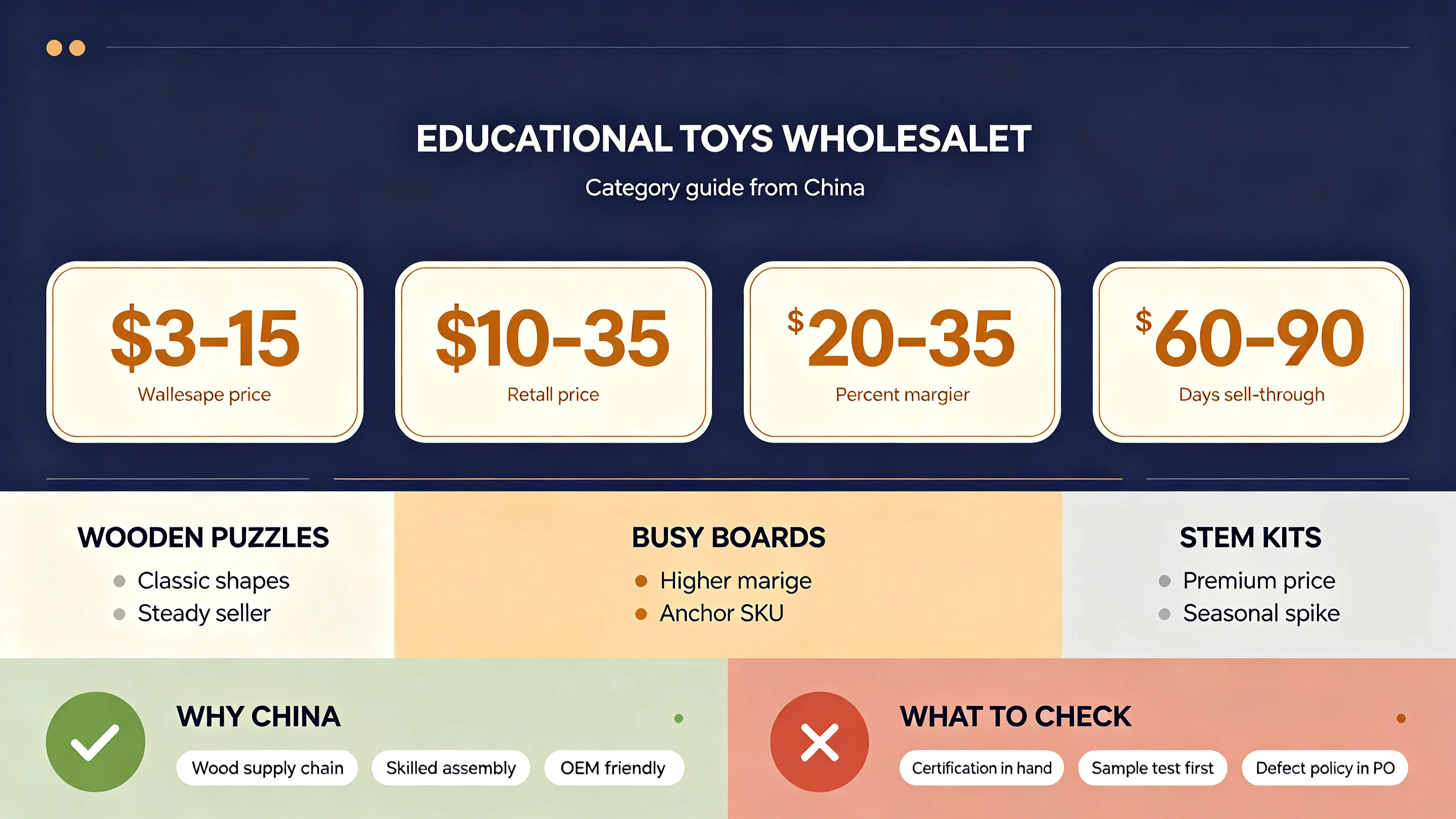
Our wooden activity board is the anchor on many of our buyers' shelves: $8.90–$9.50 FOB, a $20–35 retail target, slower turnover and the best margin per unit. On its own it is too expensive to be the volume item. Paired with cheap, fast-moving pieces it gives the shelf its story and its price ceiling.
| Shelf role | Example item | FOB band | Retail band | Job it does |
|---|---|---|---|---|
| Anchor | Wooden activity / busy board | $6–12 | $20–35 | Attention, margin, the gift SKU |
| Mid | Wooden puzzle, lacing set | $2–5 | $8–15 | Add-on, birthday basket, repeat visit |
| Traffic | Shape sorter, stacking rings, blocks | $1–3 | $5–10 | Low-price entry that keeps the shelf turning |
The maths is friendlier than the anchor price suggests. If the anchor carries a 50–60% margin and the fillers run 25–35%, which is typical in our experience, a rack still works as long as roughly one in three sales is the anchor. The fillers do the volume and pull the traffic; the anchor does the margin. Get the mix wrong and you have either a shelf nobody can afford or a shelf nobody remembers. We go deeper on the sensory end of this in our sensory toys wholesale guide.
The mistakes we watch buyers make
- Comparing unit price only. The lower FOB with no box, no tray and no certification is usually the more expensive quote once testing, freight and returns are added, which is the whole point of our per-unit cost breakdown.
- Declaring a teaching aid as a toy, or the reverse, to dodge a test. Customs and market surveillance decide on intended use, not on the words on the invoice, and the penalty lands on the importer.
- Not reading the certificate. A report is tied to a model number and a date. A current report for a different model is worth nothing to you.
- Treating MOQ as the only lever and forgetting the artwork plates and box tooling that go with a custom run.
- Ignoring peak-season timing. Ten to fifteen days is normal, August to October and the run-up to Chinese New Year are not. A price that holds in March is a promise nobody can keep in September.
Questions buyers ask us every week
Can I buy the whole category from one factory?
Rarely. Very few factories make wooden boards, soft sensory items and electronics under one roof. Expect to manage two or three suppliers and to consolidate the shipments at one port. Single-source convenience usually means someone is subcontracting, and that usually means you do not know who is actually building your product.
Do I really need EN 71 for a simple wooden puzzle?
If a consumer buys it as a toy, yes, and specifically the EN 71-3 paint migration part, which is where cheap puzzles fail. If you are unsure whether your item counts as a toy, assume it does and check before you order rather than after.
Why do you keep saying "current" reports?
Because a report belongs to a model and a date. Suppliers sometimes hand over an older certificate, or one for a closely related model, and it looks official. Ask for the PDF, read the model number, and compare it to the SKU you are buying.
Is wood worth the extra cost, honestly?
In the gift, book and education channels, usually yes, and it is where our line lives. On a pure lowest-price e-commerce shelf it sometimes is not, and we would rather tell you that than sell you wood you cannot move. Look at where it is going before you decide.
How do I stop one bad batch from ruining a season?
Agree the quality standard before production, define the sampling plan, and book a pre-shipment inspection against it. Hold the balance until that inspection clears. The full sequence is in our guide to importing from China.
What we'd do in your position
If you are adding the category for the first time, start with one channel and two slices: a slow, higher-ticket anchor and a fast, cheap filler. Buy 100 pieces of each, plain packaging, and spend the rest of the budget on photography and a small ad test. That tells you more in six weeks than a container tells you in six months.
If you are replacing a supplier who keeps drifting, do not switch on price. Switch on paperwork. Ask for the certification PDFs first, check the model numbers, then a sample, then 100 pieces. The buyers who recovered fastest after a bad season were the ones willing to slow down for two weeks at the start.
If you are building a private label across several slices, start each one at the smaller MOQ so you learn what the artwork and the certification actually demand before you commit real volume. Discovering that at 200 pieces is cheap. Discovering it at 1,000 is a full season.
And if you simply want the numbers, send us your target quantity, port and packaging, and we will lay the quote out in the same shape as the tables above, so you can set it against everything else on your desk. Comparing a price to a price is guesswork. Comparing what is inside the price is procurement.
Related, and worth opening before you commit: How to Choose a Toy Supplier from China: A 12-Point Checklist (2026), then Montessori Busy Board Wholesale: A Retailer's Buying Guide, and if the numbers are the sticking point, Best Busy Board Manufacturers in China: How to Shortlist Suppliers.