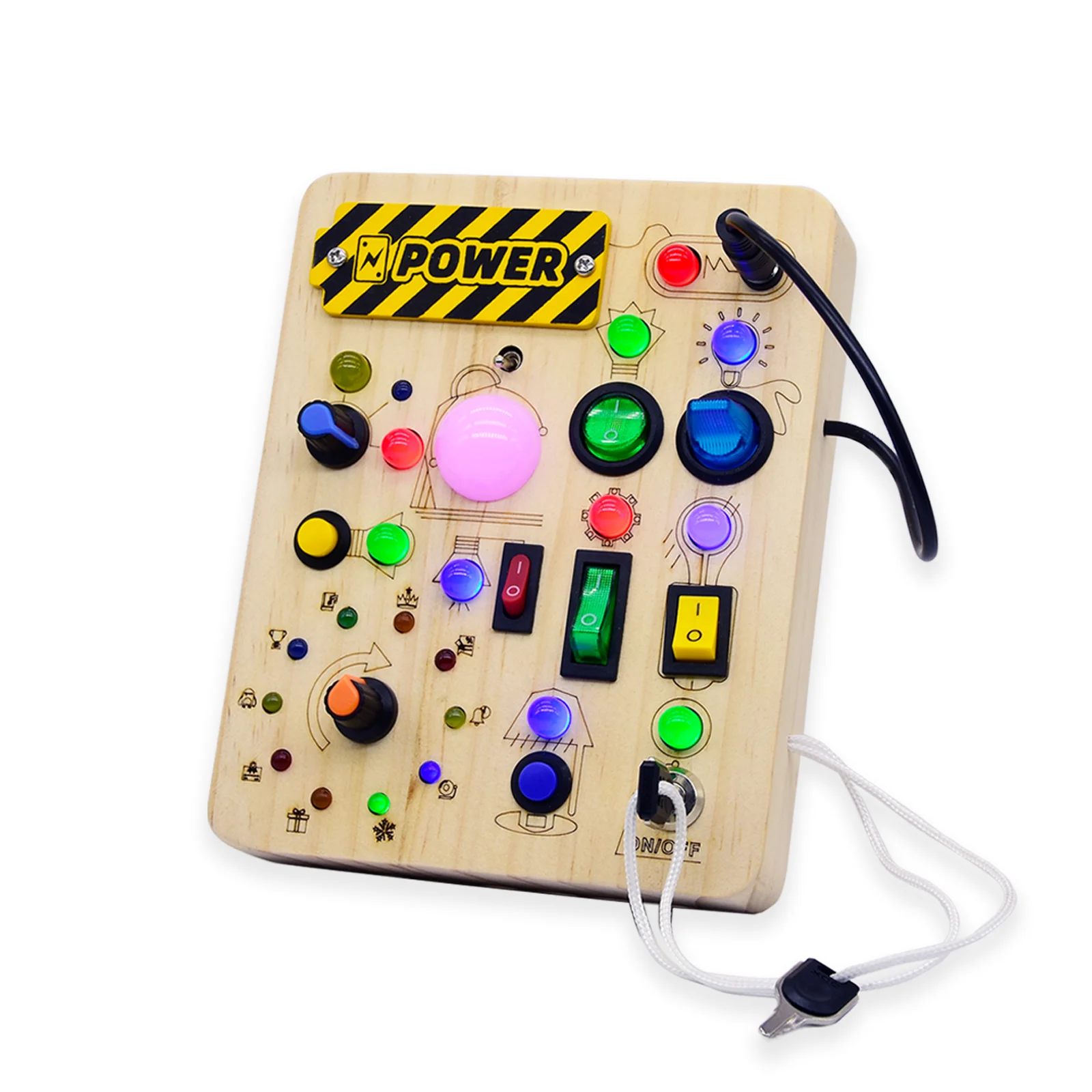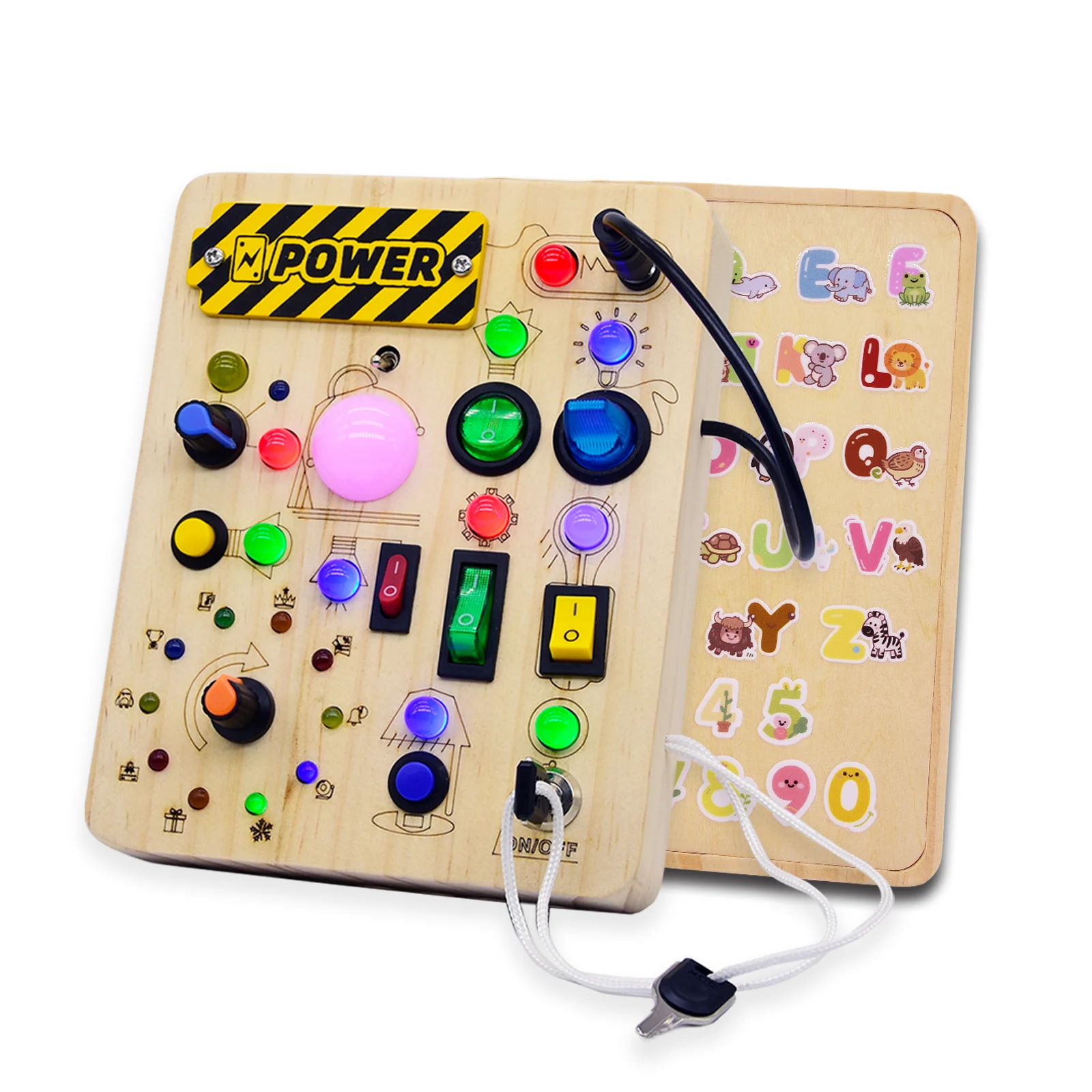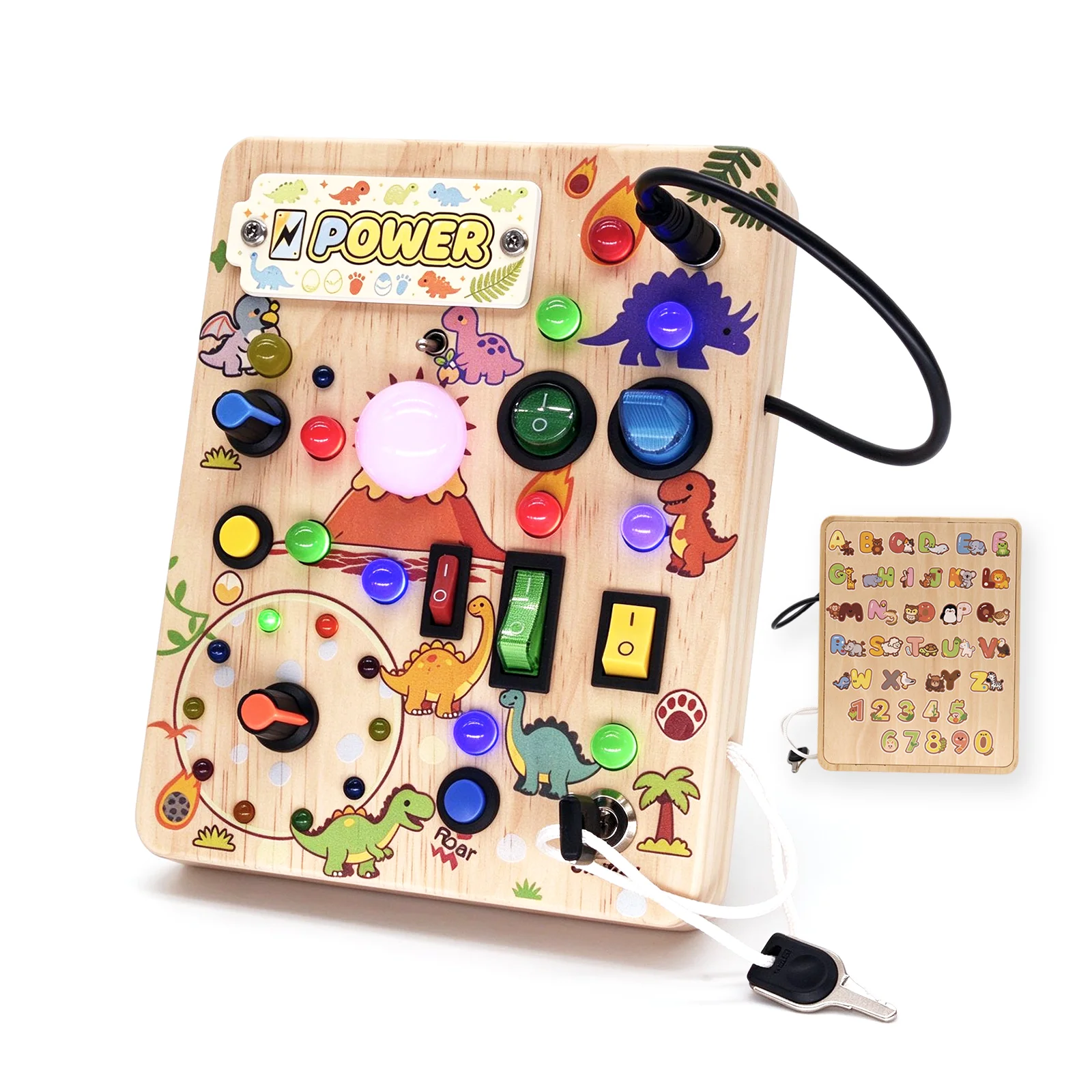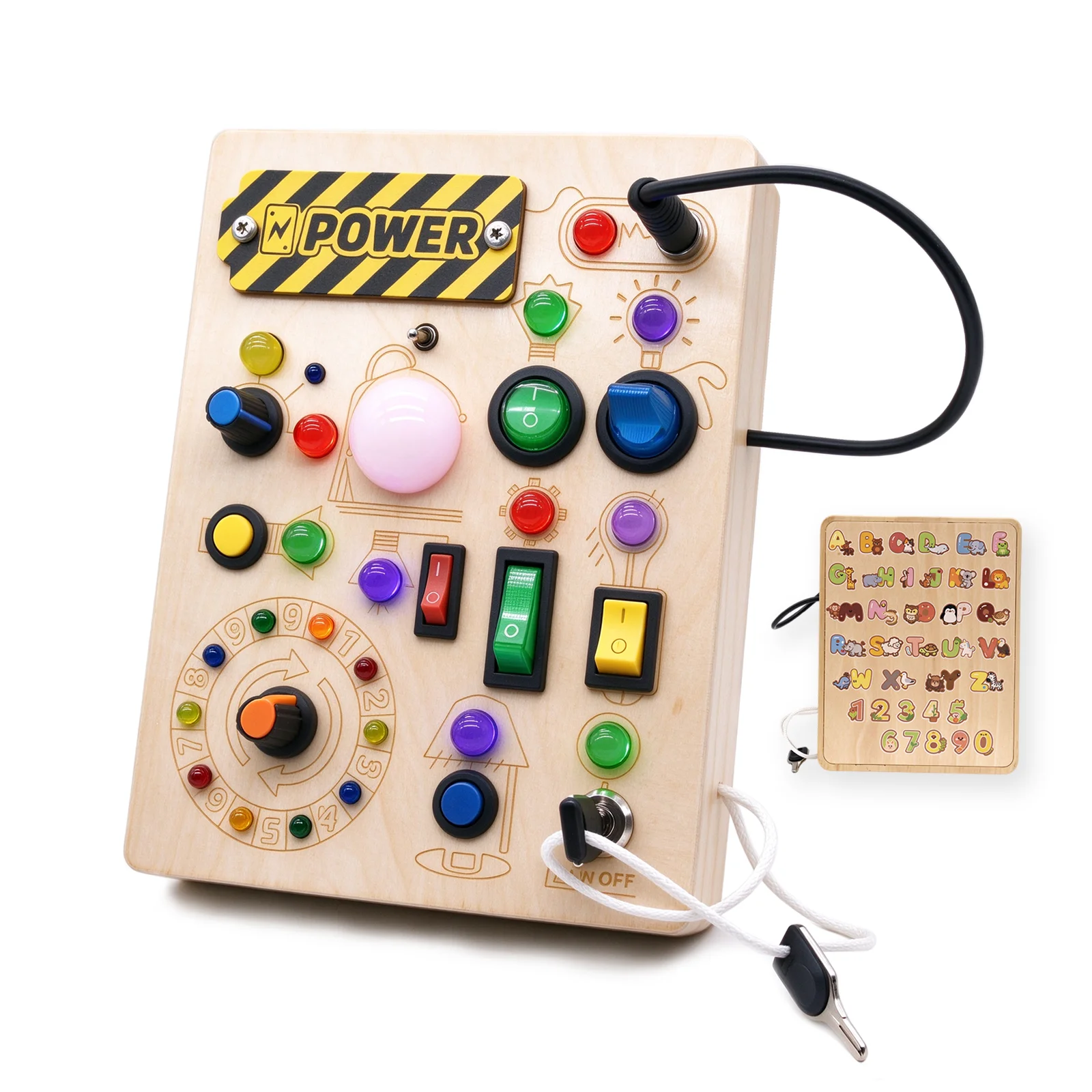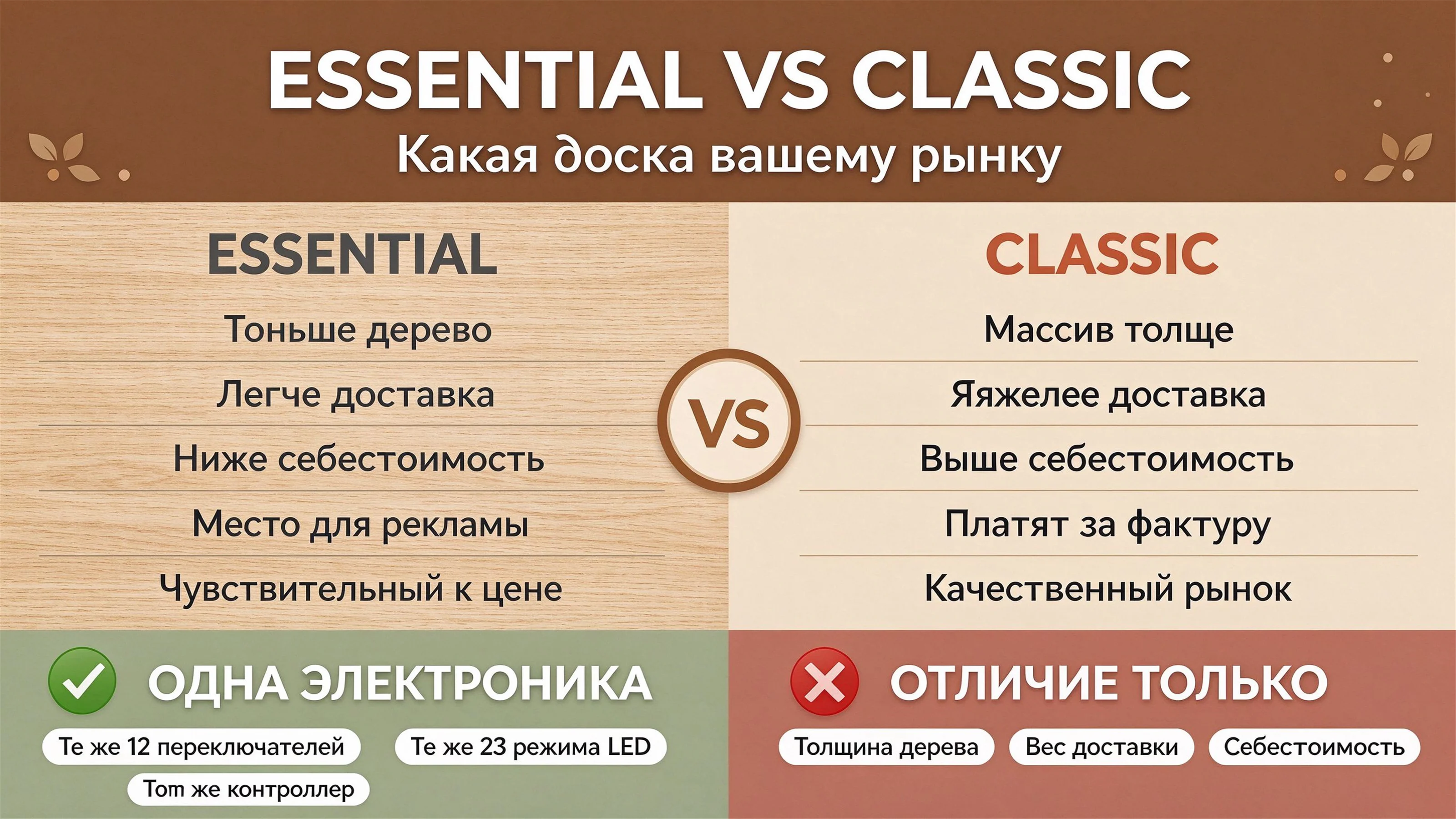
Short answer: sell the Classic to a market that pays for texture, and sell the Essential to a market that pays for a landed cost with room left over to advertise. The two boards run the same electronics, the same twelve switches and the same light system, so the only things that separate them are the wood and what that wood costs to ship and clear. Sourcing an affordable busy board wholesale is not a hunt for the lowest quote on a marketplace. It is a question of matching one of two builds to the shelf you already sell into.
Almost every buyer arrives expecting a ladder: a premium board at the top, a good board in the middle, a cheap board at the bottom. We do not sell it that way, and a buyer who reads the two products as a ladder will pick wrong. The Classic and the Essential are not a downgrade of each other. Each answers a different brief, and the briefs are set by your market rather than by our catalogue. We build both on the same line in Wenzhou, so take the rest of this knowing we make money either way.
Quick facts
- MOQ: 100 pcs per model · 200 pcs for your own artwork or engraving · 500–1,000 pcs for full OEM private label
- Samples: 3–7 days, credited back against the bulk order
- Lead time: 15–25 days after deposit and artwork approval
- Platform (both models): 12 switches · 23 light patterns · 2 × AAA batteries, not included
- FOB at MOQ 100: $8.90 Classic (BB2401) · $7.20 Essential (BB2402)
- Certifications: CE / CPC / ST on current models, tested to EN 71 and ASTM F963
What "affordable busy board wholesale" actually means in this category
The word affordable does a lot of hiding. In this category it covers at least three products at once: the $4 board built around a plywood offcut and a few fixed bulbs, our Essential at $7.20, and our Classic at $8.90. Buyers ask us for an affordable busy board wholesale quote and put all three in the same sentence. They are not the same object.
The word keeps drifting because every season a fresh container of $4 boards resets what buyers think affordable means, and a fraction of them comes back as returns. Affordable is whatever price still leaves you a business once the returns are counted.
So pin down two axes before the word earns anything. The first is the electronics: how the light responds, how many switches are on the front, and how the guts are fixed inside the case. The second is the wood: whether the body is cut from one carved block or built as a frame around a glued core, and what that choice does at the edges after a season of use.
On the first axis the two boards are identical. On the second they part company, and that gap is the $1.70 between them. The rest of this article is about which side of it a given buyer should stand on.
Classic (BB2401): the solid-wood build, and who actually needs it
The Classic is cut from a single block of solid pine. There is no core and no veneer, so every edge is one continuous piece of wood, and we normally leave the surface unfinished. That last decision is on purpose. An unfinished pine board holds the smell of pine for months and feels like wood in the hand: grain you can see, a little weight, a surface that warms slightly as the room does.
For one kind of buyer, that is the entire product. They sell to parents who read the word Montessori and reach past the plastic, to gift shops where the wooden board sits beside a scented candle, to early-years settings where a practitioner picks the board up and weighs it before looking at anything else. Sensory value is hard to write on a spec sheet and easy to feel in five seconds, and the Classic is built for the five seconds.
The Classic LED busy board page carries the current spec sheet and the print files if you want to send them on to a colleague.
The pine smell cuts both ways
We should be honest about this one, because it is the thing that surprises buyers most. Some markets dislike the pine smell on arrival, particularly when a board ships into a humid warehouse and the box has sat sealed for weeks. It fades, and a wipe plus a day of air takes the sharpest edge off, but a buyer who plans to open a container and photograph five hundred boards the same afternoon should know it is there. If your market reads pine as natural, keep it. If your market reads it as a shed, the Essential is the calmer board to open.
Essential (BB2402): where the $1.70 saving comes from
The Essential is a solid wood frame around a plywood core. From arm's length in a listing photo, the two boards look like cousins. In the hand they are different objects. A glued, layered core has seams, and it has burrs where the layers meet the frame, and those are the exact spots where a cheap board fails first: a raw edge lifts, a splinter stands up, a small hand finds the one rough patch on the whole board.
Our answer is a water-based wood lacquer that seals the edges after sanding. That step is why the Essential leaves the line smooth and burr-free instead of raw and open. Skipping it would save us roughly $0.30 a unit. We keep it, because the point of buying an affordable board from a factory that also builds the expensive one is that cheap still has to survive a nursery.
Here is where the Essential separates itself from the boards it will be compared against. The $5–6 build that sits beside it in a marketplace listing goes together differently. Its switches are held to the panel with hot glue and short flying wires, the electronics sit loose in the cavity, and nothing locks a switch down mechanically. It looks the same in a photo and it survives a courier, until it doesn't. Buyers have taken delivery of containers where a share of the switches had already worked loose before the carton was opened. Ours fixes each switch mechanically, runs one integrated PCB, and leaves no flying wire to pull free and no glue joint to let go in transit.
Everything a child experiences is identical to the Classic. Twelve switches, 23 light patterns, one integrated PCB, and the same 2 × AAA battery box that we ship empty on purpose, because loose cells pull a toy shipment into a battery-handling category that loads paperwork onto you as the importer. Once the lights are flashing, no two-year-old can tell the two boards apart.
If you sell into the Montessori niche, the Essential deserves a second look for a reason that has nothing to do with wood. Montessori buyers care about the work a board does, the switching, the sequencing, the independence it invites, and far less about whether the substrate is one block or three layers. A cheap Montessori board bulk order that gets the function right and the edges sealed reads as authentic to most of that audience, and it costs you $1.70 less to bring in.
The Essential is new, and its own page is not live yet, so for now ask us directly for the spec sheet and photos while you weigh it against the Classic.
The affordable busy board wholesale price list, side by side
Here are the two boards as they leave the line. This is the busy board price list we quote from, and it has not moved on the specs in a year.
| Classic (BB2401) | Essential (BB2402) | |
|---|---|---|
| Body | One carved block, solid pine | Solid wood frame + plywood core |
| Surface | Usually unfinished, natural pine smell | Water-based wood lacquer, sealed edges, burr-free |
| Feel | Natural grain and a little weight | Smooth, sealed, even |
| Switches | 12 mixed types | 12 mixed types |
| Light | 23 light patterns, integrated PCB | 23 light patterns, integrated PCB |
| Batteries | 2 × AAA, not included | 2 × AAA, not included |
| Certifications | CE / CPC / ST (EN 71, ASTM F963) | CE / CPC / ST (EN 71, ASTM F963) |
| FOB at MOQ 100 | $8.90 | $7.20 |
| Best for | Buyers selling texture and sensory value | Buyers selling on landed cost and margin |
Read that table top to bottom and notice how few rows move. The electronics, the switch count, the battery box and the certifications are the same line for line. Only three things change: the body, the finish, and the price. The person buying from you will never see the certification row or the switch row. They will feel the wood and see the number.
| Order | Quantity | Classic (BB2401) FOB | Essential (BB2402) FOB |
|---|---|---|---|
| Trial / catalogue | 100 | $8.90 | $7.20 |
| Custom artwork or engraving | 200 | $8.90 plus artwork charge | $7.20 plus artwork charge |
| Full OEM / private label | 500–1,000 | quoted per spec | quoted per spec |
The headline for a retailer is short. On a shelf where both models can sell for $20–30, the Essential hands you about $1.70 more per unit at the same shelf price, before freight. That is the whole case for it, and it holds when your traffic is bought and a dollar of margin decides whether you can afford the ad that moves the board.
What we've seen go wrong when buyers chase the cheapest board
This is the section buyers thank us for after the fact.
The switch that left without being locked down. A buyer saves a dollar a unit on a board with glue-fixed switches, ships a container, and discovers a share of switches loose on arrival. Returns on that SKU ate the saving and a little more, and the review damage lasted longer than the returns did.
The unsealed plywood edge. A layered core that never got sealed will take in moisture, and in a humid warehouse or a coastal market the corners start to lift and the edges feel rough within a season. This is the specific failure the Essential's lacquer step exists to prevent.
Pricing a cheap board like a premium one. A $5 board priced at $29 does not become a $29 board. It becomes a bad review, then a return, then a markdown. The expensive mistake is rarely buying low. The damage arrives when a cheap board gets priced as if it were the Classic.
Reading the Essential as the same thing as a $5 board because both are plywood. They are not. A sealed, mechanically fixed, integrated-PCB board and a glued, flying-wire board share a material name and almost nothing else.
Overpaying for the Classic in a market that only reads price. We have sold solid-wood Classics to buyers whose customers were comparing on a screen, where the sensory advantage never got a chance to work, and the extra $1.70 of cost bought margin nobody noticed.
Landed cost is the number that actually decides between them
An affordable busy board wholesale decision is really a landed-cost decision, and FOB is where it usually starts rather than where it finishes. What matters is what the board costs once it sits in your warehouse.
The two boards weigh close to the same, so the freight difference between them is small. Sea freight on a container of busy boards typically lands somewhere in the range of $0.30–0.80 a unit for a full container, depending on the port, the season, and the fuel surcharge of the week, and that range barely moves with which of the two models is inside the box. Duty is the part that swings with trade policy, so check the rate that applies to your country and your HS line as of the order rather than trusting a figure in a blog.
Put a working assumption on it. If freight and duty together add roughly $0.70–1.60 a unit, which is a fair ballpark for a full container into a major port, then the Classic lands near $9.60–10.50 and the Essential lands near $7.90–8.80. The gap you started with on paper, $1.70, mostly holds. That is the useful thing to know: with these two boards the saving survives the freight, because the saving sits in the wood and the finish rather than in the weight.
Normalise the Incoterm before you compare anything
If a supplier quotes CIF instead of FOB, do not put the two numbers next to each other. FOB and CIF are different creatures, and the gap between them is the freight and insurance the seller has folded in. Convert everything to the same Incoterm first, or you are comparing a price against a price plus a shipping bill.
Sampling, MOQ and lead time for both models
Both models share the same terms. The minimum is 100 pieces per model at catalogue spec. Your own artwork or a back-panel engraving moves the minimum to 200, and a full private-label run sits at 500–1,000 depending on the setup. Samples run 3–7 days and the sample cost is credited back against the bulk order. Production runs 15–25 days after the deposit and the approved artwork, and the artwork sign-off is the step that moves most, because it involves you and your speed is the one variable we cannot control.
Sampling the Essential is worth doing even if you expect to order the Classic, so you can hold both builds and see how each one lands in your hands rather than in a photo. If you want the fuller version of how these numbers behave at each tier, our MOQ, pricing and lead-time guide takes it step by step, and the wholesale price guide breaks the unit cost into its blocks.
One paperwork note, because it catches people. Certification reports are model-specific. A CE / CPC / ST report that names BB2401 does not cover BB2402 for the purpose of a retailer audit, even though the electronics are shared. If you plan to sell both, ask for a report that names each model you buy.
Questions buyers ask us every week
Is the Essential just a cheaper Classic? No. Same electronics, different body and finish. The Classic is one carved block; the Essential is a frame around a sealed core. They solve different problems, and the price gap is the wood and the sealing step, not a hidden downgrade inside.
Which one should I start with if I have never sold a wood busy board? Start with whichever matches the customer you already have. If your buyers pay for natural materials, open on the Classic and let the texture sell it. If you are entering on price with real ad spend behind you, open on the Essential and keep the $1.70 working until you know the product moves.
Why is your Essential $7.20 when I can find plywood boards for $5? Because the $5 board and ours are not built the same way. Ask any budget busy board supplier three questions: how the switches are fixed, whether the core is sealed after sanding, and whether the board runs one PCB or flying wires. If all three answers match ours and the price holds, buy theirs. In our experience they rarely do.
Will the pine smell put my customers off? In some markets, yes, and you should plan for it. It fades within days and a day of open air softens it further, but if your channel involves unboxing photos the same day a container lands, the Essential is easier. If you sell to buyers who equate wood with quality, the smell is part of the pitch.
Can I order both models in one shipment? Usually yes, as long as each model meets its own minimum of 100 pieces. Mixed containers are common and they are the cheapest way to test both builds against your own market before you commit a full run to either.
Can I buy the Essential as a private label for a cheap Montessori board bulk order? Yes, and that is the buyer it was built for. A cheap Montessori board bulk run at 500–1,000 pieces with your box, your barcode and your brand is where the Essential makes the most sense, because at that volume the $1.70 compounds across the whole order.
What we'd do in your position
An affordable busy board wholesale pick is a market pick before it is a price pick. Start by matching the board to the market you already sell into, not to the price you wish you could hit. If your customers touch the product before they buy, order 100 Classics, put the natural pine in their hands, and watch your reorder rate. If your customers meet the product on a screen and a price, order 100 Essentials, price them like the board they are built to survive as, and put the saving into the traffic that moves them.
Either way, hold a sample of the other model before you scale. The two boards are close enough on function that the decision comes down to how each one feels in your hand and how each one photographs for your channel, and nobody can answer that from a spec sheet, including us.
If you want to see the solid-wood build first, the Classic busy board page has the specs and the files. Tell us your market, your quantity, and how you want it packed, and we will quote both the Classic and the Essential side by side, so the $1.70 becomes your number to weigh rather than ours to argue.
Two more angles on this: Dinosaur Busy Board Wholesale: A 2026 Sourcing Guide for Retail Buyers covers the sourcing end, Busy Board MOQ, Pricing & Lead Time: A 2026 Wholesale Buyer's Guide covers what buyers ask about first, and Montessori Busy Board Wholesale: A Retailer's Buying Guide is the one we send when someone asks for the whole picture.